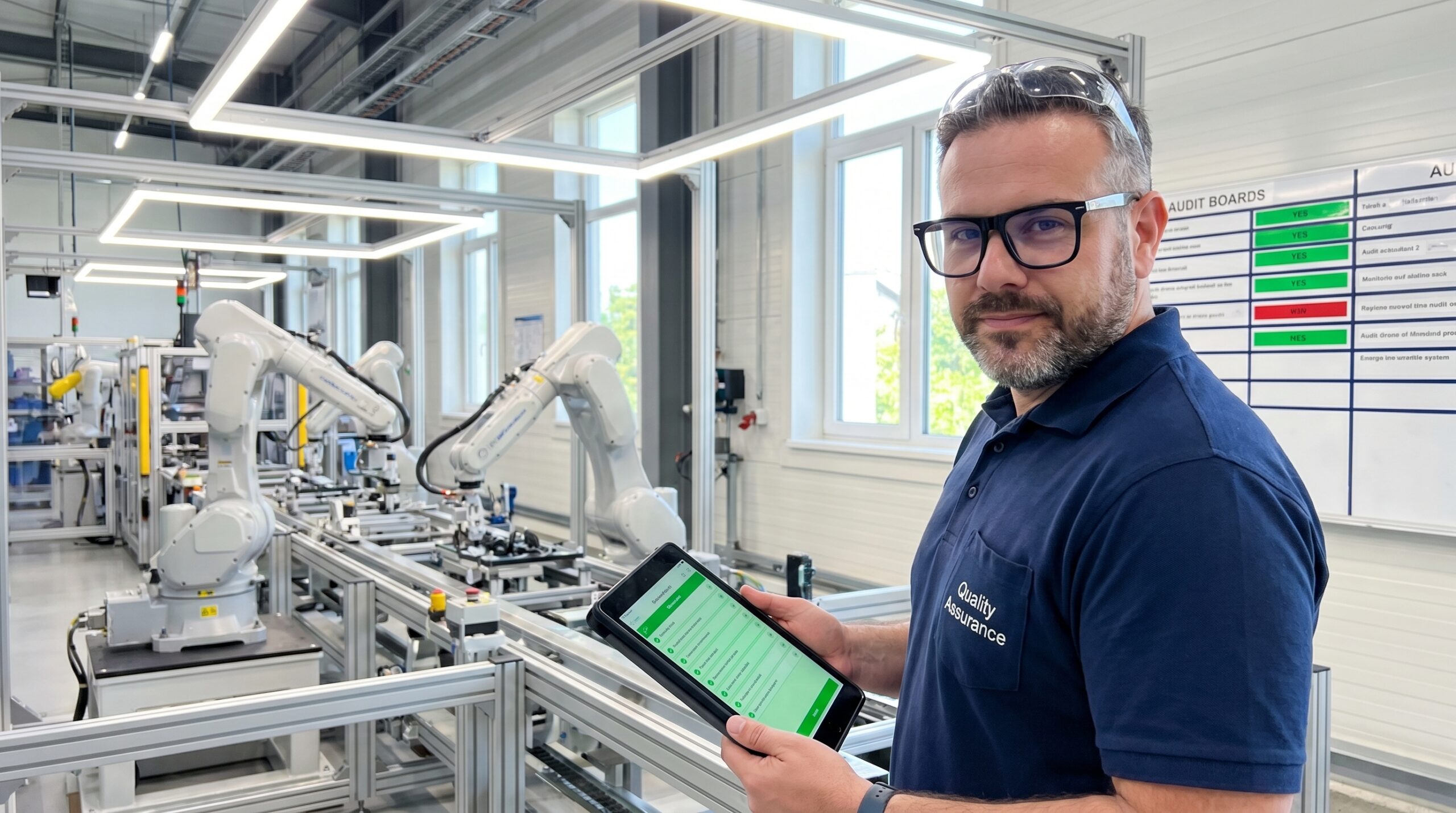
A tier-one automotive supplier operated on a predictable quarterly rhythm. The plant manager would walk the production floor, review control plans, and confirm ISO 9001 compliance. The surveillance audits passed, customer source inspections cleared, and internal documentation was pristine.
Then a customer issued a containment request for a critical dimension that had drifted out of specification. The drift had persisted consistently across three weeks of production. Suspect parts numbered in the thousands, and containment costs exceeded six figures. Every audit on record had passed.
The failure was not in the auditing standard, but in the frequency. Annual and quarterly audits capture a single frame from a process that runs continuously. If process parameters drift on day forty-seven and the auditor arrives on day three hundred and twelve, the deviation remains invisible unless it has already caused a catastrophic failure.
This is the structural limitation Layered Process Audits (LPA) are designed to eliminate. Originating in the automotive industry and formalized by General Motors, LPA divides verification responsibility across multiple organizational levels to catch process drift within hours, not weeks.
The Structural Failure of Traditional Audits
ISO 9001 and IATF 16949 surveillance audits verify system compliance and certification requirements. Product audits verify final characteristics. Internal quality system audits verify procedural adherence. These mechanisms serve necessary legal and contractual functions, but they share three operational weaknesses on the shop floor.
First, they are infrequent. An annual snapshot cannot detect daily variation in material lots, tooling wear, or operator technique. By the time a deviation appears in a formal audit, the corrective cost has multiplied across weeks of suspect production.
Second, they are disconnected from the operator. Traditional audits are executed by quality professionals working at arm's length from daily production. They review records and verify documentation, but they rarely observe the process executing under real production pressure with actual environmental variation.
Third, they generate compliance theatre. When the organization knows an audit is scheduled, workstations are cleaned, documentation is updated, and operators adjust their behaviour. The auditor observes the process at its absolute peak. Once the auditor leaves, the process gradually returns to its actual, less controlled state.
Core Architecture of an LPA System
Implementing LPA requires deliberate architecture: specific checklists, structured schedules, and rigid escalation rules. It is not simply auditing more frequently. It is distributing the verification of process controls across the people who own and operate the process daily.
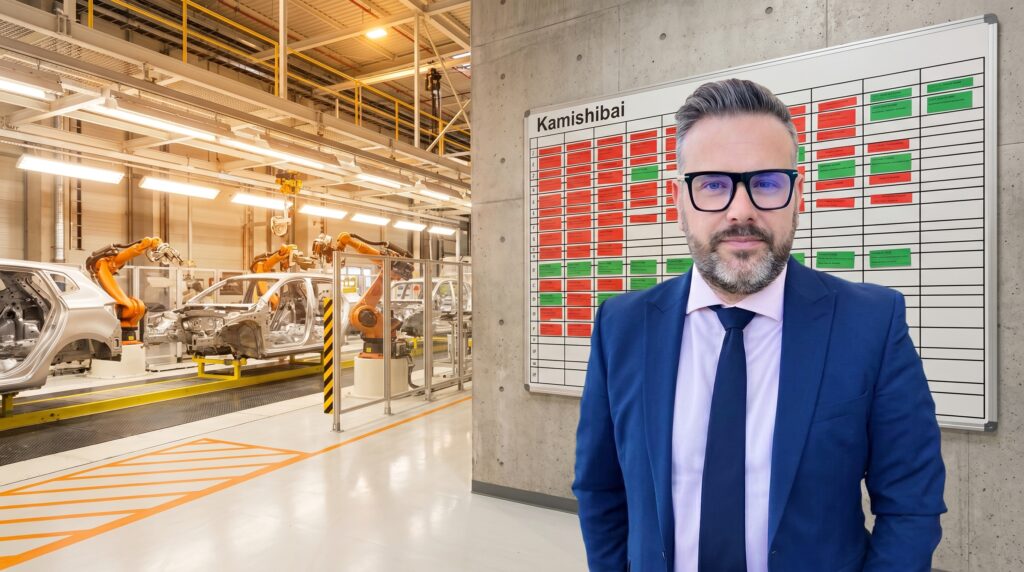
Each layer uses a different checklist designed for its specific altitude. Operator checklists are highly granular, focusing on the immediate process step. Supervisor checklists examine process adherence over a shift or day. Leadership checklists look for systemic patterns, recurring failures, and corrective action effectiveness.
The fundamental principle is that every question must be verifiable. Vague questions produce vague data. A question asking if the operator understands the process is useless. Asking if the operator is following step 4.2 of work instruction WI-2278 yields binary, actionable data.
LPA Escalation Chain
- 01ContainStop the process if required and quarantine suspect product immediately.
- 02CorrectFix the immediate issue: recalibrate the tool, update the ambiguous work instruction.
- 03EscalateRecurring issues trigger a formal corrective action request to the leadership layer.
- 04TrackLog all findings to feed trend analysis and verify corrective action effectiveness.
Designing Effective Verification Checklists
Operator checklists typically contain five to ten questions focused on the immediate process step. These verify if the correct material is loaded, if the torque tool is calibrated to the correct value, and if the current work instruction revision is posted. These are binary yes or no questions designed to be completed in under five minutes.
Supervisor checklists step back to examine process stability. They ask if all operator checks are completed on schedule, if control plan parameters remain within specification, and if the reaction plan is being followed when a nonconformance is detected. This layer looks at adherence over time, not just in the immediate moment.
Leadership checklists take the widest view. They ask if LPA results for an area are trending positive, if previous corrective actions have been implemented and verified, and if there are systemic issues across shifts. Plant managers use this layer to assess overall quality culture and resource allocation.
Checklist length is critical. An operator checklist with thirty questions will be pencil-whipped. Every checklist must remain under ten questions, strictly focused on the highest-risk process parameters. Shorter, more frequent verification yields better data than long, infrequent documentation.
Discipline of the Schedule and Escalation
Frequency is the heartbeat of the LPA system. Operators verify their own process parameters at the start of each shift and at defined intervals. Team leaders audit designated processes daily. Plant managers and senior leaders audit weekly or bi-weekly, rotating across the entire facility.
The schedule must be posted, visible, and non-negotiable. If the plant manager's audit is scheduled for Tuesday at 10:00 AM, it happens then. Not after the budget review, and never delegated to an assistant. The moment a senior leader skips an LPA, the signal propagates that the verification is optional.
An LPA that finds zero nonconformances is either auditing a perfect process or asking the wrong questions. When an auditor finds a parameter out of spec or a tool past its calibration date, the response must be immediate. Contain the product, fix the immediate issue, and escalate recurring systemic failures to the next layer.
This escalation chain transforms daily checking from a passive recording exercise into a continuous improvement engine. A supervisor who finds the same issue three days in a row does not simply fix it three times. They trigger a formal corrective action request, root cause analysis, and permanent process modification.
Compliance stops being something imposed from outside and starts being something the organization does for itself.
Measuring LPA System Health
An LPA system generates a continuous stream of compliance and performance data. Measuring the health of the system requires tracking specific indicators that reveal whether the checks are actually being performed and whether the findings are driving real change.
Audit completion rate is the foundational metric. A healthy system maintains a completion rate above 95%. Anything below 90% signals a discipline problem, almost always originating at the leadership level. If the audits are not being performed, the system does not exist.
Repeat nonconformance rate is the most telling metric. If the same failure appears in audit after audit, the corrective actions are ineffective. This metric exposes the gap between fixing a symptom and eliminating the root cause of the problem.
Core LPA Performance Indicators
Implementation Pitfalls and Operational Realities
I have implemented LPA systems across multiple plants, and the failure modes are remarkably consistent. Treating LPA as a quality department program is the most common error. If the quality department owns LPA, it becomes just another administrative task. Operations must own the system, with quality acting as the facilitator.
Failing to act on findings destroys the system's credibility. Nothing kills a verification process faster than discovering that reported nonconformances disappear into a black hole. If an operator reports an issue and nothing happens, they will stop reporting. The corrective action loop must be visible, timely, and communicated back to the auditor.
Abandoning the schedule during a crisis is a fatal mistake. The temptation is to maintain LPA during normal production and drop it when a line goes down or a customer complaint arrives. This is exactly when the verification frequency should increase, not decrease.
Digital LPA platforms built on low-code tools or commercial software offer significant advantages over paper. Real-time data capture, automated scheduling, and trend dashboards make patterns instantly visible. Mobile access allows auditors to complete checks at the point of use, closing the gap between observation and data entry.
However, technology amplifies the system; it does not replace the people. A digital platform with poor leadership engagement will produce comprehensive dashboards and zero process improvement. The discipline must precede the technology.
Deploying LPA: The Ninety-Day Roadmap
Implementation begins with a focused pilot. Select one high-risk production area. Develop three distinct checklists for operator, supervisor, and leadership layers. Keep them short, specific, and strictly verifiable. Train the auditors and post the schedule visibly.
Execute the system on the pilot area and collect data daily. Hold weekly reviews to discuss findings, close corrective actions, and refine the questions. Expect resistance during this phase. Personnel will question the value and test whether leadership is genuinely committed to the schedule.
Evaluate the pilot data at day sixty. Analyse what was found and what changed. Adjust the checklists based on actual findings, then expand to a second production area. Within six months, the system provides more real-time visibility into process compliance than any traditional audit programme.
Layered Process Audits distribute the responsibility for quality across every level of the organization. The mechanism ensures the gap between what a process is supposed to do and what it actually does never grows wide enough to let a defect escape. It replaces hope and assumption with direct, daily observation.