
In manufacturing, defects are frequently treated as an unavoidable cost of doing business. Scrap rates are budgeted, rework lines are built, and warranty reserves are maintained. Zero Defects is often dismissed as a motivational slogan rather than a rigorous operational target. This mindset persists because organisations calculate the cost of their existing failure rates without ever calculating the cost of the systemic dysfunction that produces them.
Achieving zero defects does not mean counting every error to prove a perfect track record. It means engineering a management system where errors are physically and procedurally prevented. When you quantify the true cost of poor quality—encompassing internal rework, external warranty claims, and the catastrophic risk of safety failures—you realise that building preventative controls is significantly cheaper than running containment cycles.
Over twenty years of implementing and transitioning ISO 9001 systems across automotive and aerospace plants, I have consistently found that zero defect methodologies fail when they are treated as campaigns. They succeed when they are embedded into the core operating system through rigid process design, unambiguous metrics, and absolute leadership accountability.
Prevention Over Containment
The foundation of a zero-defect system is a radical shift from reaction to prevention. Most quality departments spend the majority of their resources detecting and sorting defects after they occur. A preventative system moves that investment upstream into process design, risk analysis, and supplier validation. The objective is to engineer the failure mode out of the process entirely before production begins.
This shift relies on the rigorous deployment of core quality tools. Advanced Product Quality Planning (APQP) and Production Part Approval Process (PPAP) must be treated as strict operational gates, not administrative paperwork. When Process FMEAs are conducted correctly, they expose process vulnerabilities early. Validating these processes with robust capability studies ensures that the expected long-term Cpk will meet the required 1.33 threshold before steel is ever cut.
Supplier quality management is the critical boundary of this phase. An organisation cannot achieve zero defects internally if its supply chain operates on variable standards. Incoming material quality must be secured through strict PPAP adherence, source inspection protocols, and transparent data sharing. If a supplier's process capability drops, the receiving plant's zero-defect target collapses with it.
Ultimately, prevention requires stabilising the manufacturing environment. You cannot predict quality if your processes are subject to uncontrolled variation. Standardising work instructions, maintaining machine capability, and removing ambient fluctuations are prerequisites. Prevention is impossible in a chaotic, unstable manufacturing cell.
Detection and Immediate Response
Even with rigorous prevention, processes degrade and anomalies occur. The speed at which an organisation detects and responds to a deviation dictates whether it becomes a minor containment event or a major customer escape. Fast detection transforms a potential catastrophe into a controlled learning opportunity.
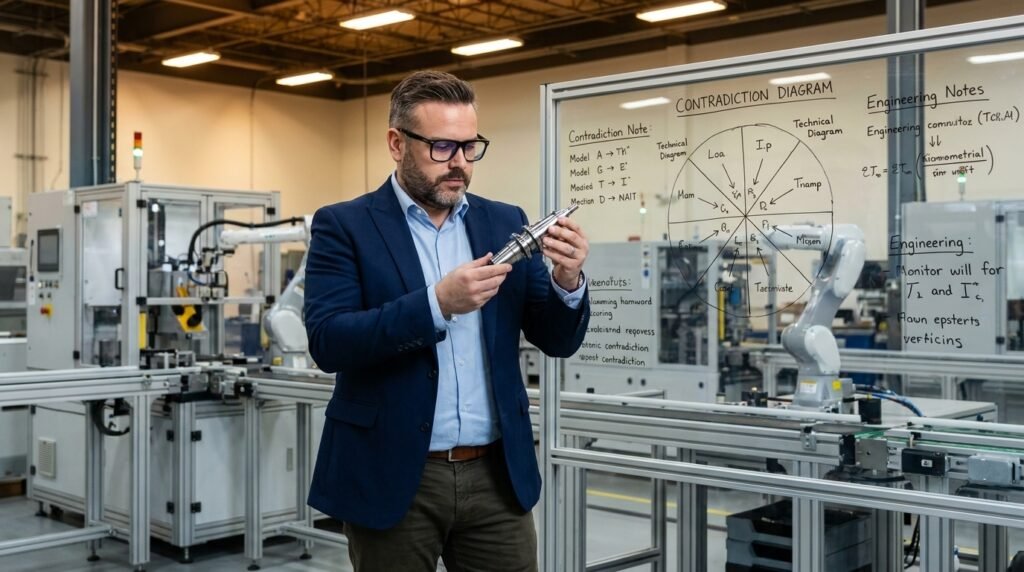
In-process inspection and automated control systems are essential for catching deviations instantly. However, the technology is useless without a defined escalation path. Quick Response Quality Control (QRQC) is a highly effective framework for this. It forces the organisation to address the defect at the machine, on the shift it occurs, rather than waiting for a delayed engineering review.
Effective detection requires clear, binary criteria. Operators must know exactly what constitutes a defect without subjective interpretation. Gauges must be validated through Measurement Systems Analysis (MSA) to ensure that measurement error is not masking process variation. If the measurement system itself contributes significant noise, the entire detection mechanism fails.
The QRQC Escalation Cycle
- 01DetectionDeviation identified via in-process gauge or automated system.
- 02Local ContainmentProduction halts; suspect stock is immediately quarantined.
- 03On-shift AnalysisCross-functional team investigates the discrepancy immediately.
- 04Interim ActionProcess is temporarily modified to safely resume production.
- 05VerificationFirst-piece and subsequent parts are validated before the run continues.
Solving Systemic Root Causes
When a defect breaches the preventative and detection layers, the response must be surgical. The most common failure in problem-solving is stopping at a symptom rather than the systemic root cause. Applying temporary containment actions and declaring victory guarantees the defect will return. True prevention requires addressing the underlying system failure.
Methodologies like 5 Whys, Ishikawa diagrams, and Fault Tree Analysis are standard requirements for a reason. When applied with engineering rigour through an A3 problem-solving format, they force teams to look beyond operator error. 'Operator error' is rarely a root cause; it is usually a symptom of a poorly designed process, inadequate training, or a missing poka-yoke device.
Root cause analysis must be validated with data. If you hypothesise that a specific machine vibration is causing dimensional variation, you must prove the correlation. Once the mechanical fix is implemented, the process capability must be recalculated. If the Cpk does not improve, the root cause hypothesis was incorrect.
Finally, the verified corrective action must be standardised. This means updating the PFMEA, revising the Control Plan, and retraining the operators. Without closing these loops, the problem-solving effort becomes an isolated incident rather than a systemic upgrade to the quality framework.
Overcoming the 'Zero is Impossible' Pushback
Implementing a zero-defect programme reliably triggers organisational resistance. The most common pushback is the belief that defects are an inherent reality of high-volume manufacturing. Operators and engineers will argue that zero is mathematically impossible. This resistance is overcome not by argument, but by demonstrating the financial and operational cost of the current failure rate.
Quality decisions are made at the process, not in the report that describes it afterwards.
Short-term production pressure is the second major obstacle. When schedules are tight, the temptation to bypass a rigorous PPAP or skip a preventative maintenance window is immense. Leadership must counter this by proving that rework and containment take significantly longer than executing the process correctly the first time. In manufacturing, quality actually dictates speed; instability causes downtime.
The third obstacle is the siloing of quality as a departmental responsibility. Organisations frequently assign quality metrics strictly to the Quality Director and their team. Zero defects requires decentralising this ownership. Quality KPIs—such as First Time Yield (FTY) and scrap rate—must appear on the performance scorecards of production managers, shift supervisors, and operators.
Overcoming this resistance requires absolute commitment from the plant leadership. When a quality issue forces a line stop, the plant manager must publicly support the stoppage. If management prioritises short-term delivery metrics over containment, the zero-defect initiative is dead. Cultural transformation follows operational behaviour, not mission statements.
Building the Greenfield System: A Case Study
The practical application of this philosophy is best demonstrated in a greenfield environment. When I built the QA/QC department for SNOP, an automotive components manufacturer with over 900 employees, the starting position was a highly reactive culture. High defect rates and customer complaints were standard. The initial task was not to police the floor, but to establish the foundational metrics that would expose the true cost of poor quality.
The first phase involved standardising workflows and stabilising the manufacturing processes. We implemented comprehensive APQP and PPAP gates for all new product introductions, refusing to run unstable processes. We strengthened our process controls through Statistical Process Control (SPC) and fundamentally restructured our supplier quality management. Incoming material defects were no longer accepted as a norm.
By the third year, the systemic focus shifted heavily toward culture and capacity building. We established a strict QRQC framework, ensuring that problems were solved on the shop floor during the shift they occurred. Employee engagement in quality initiatives rose sharply as operators were given the authority to stop the line and the tools to analyse defects. The focus moved entirely from sorting bad parts to engineering robust processes.
Systemic Quality Outcomes Over Four Years
Translating Quality Across Sectors
The mechanics of zero defects remain constant across industries, but the operational context dictates the intensity of the controls. In the automotive sector, governed by IATF 16949, the driver is high-volume production where a single systemic failure can trigger massive warranty campaigns. The focus is intensely on process capability, supplier PPAP compliance, and strict adherence to control plans.
In aerospace, governed by AS9100 and oversight from bodies like EASA, the environment changes drastically. The tolerances for error are effectively non-existent. The cost of an internal failure is high, but the cost of an external failure is catastrophic. Here, zero defects transitions from a cost-reduction strategy to a fundamental safety requirement. Traceability and rigorous first-article inspections are paramount.
I currently apply these principles on a final assembly line. In aerospace assembly, quality is fundamentally a matter of life and death. The zero-defect philosophy is not a corporate strategy for margin improvement; it is the baseline operational requirement that ensures every aircraft we build is structurally sound and safe to fly. The focus is relentlessly on engineering prevention into complex assembly steps.
Whether manufacturing electronics, automotive components, or commercial aircraft, the underlying systemic requirements do not change. You must standardise the work, measure the true cost of your failures, engineer preventative controls, and demand absolute accountability from leadership. The tools differ; the discipline required to execute them does not.