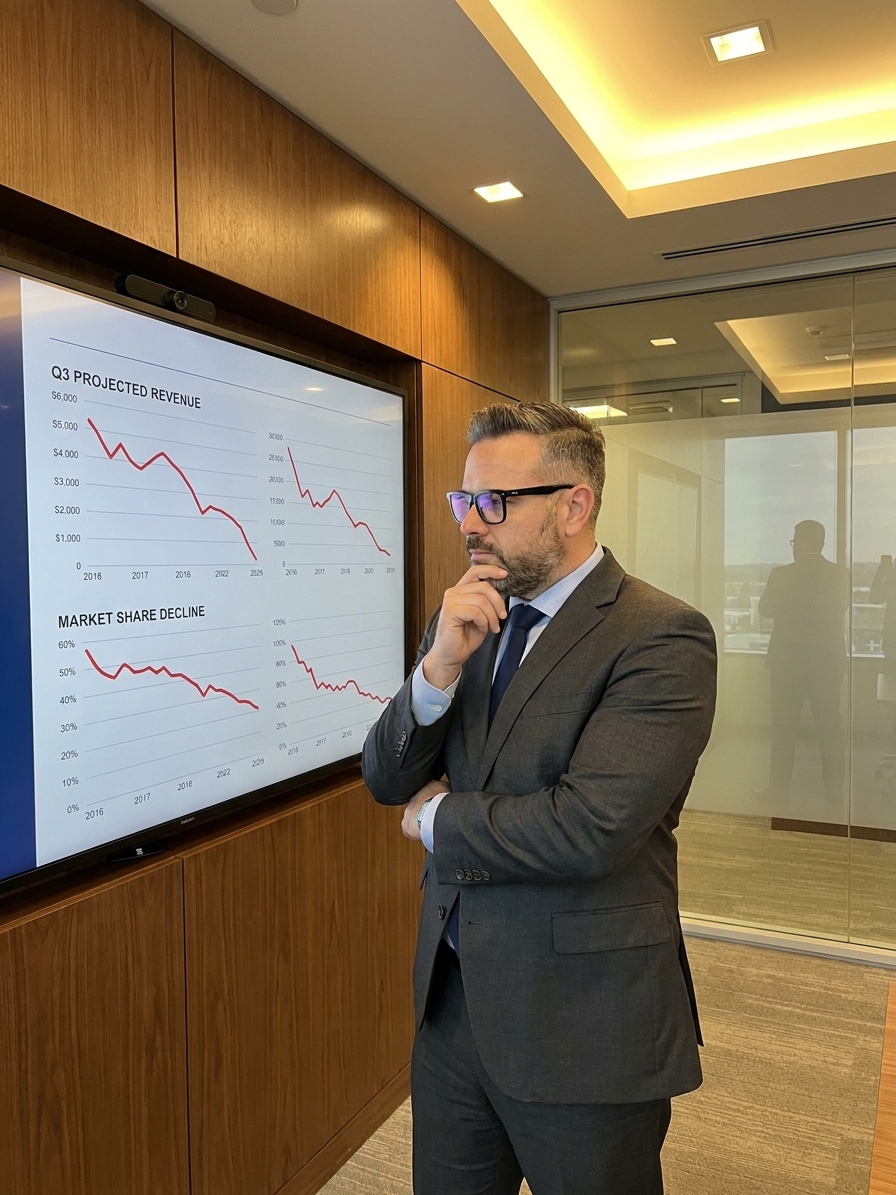
Quality system implementations fail at a staggering rate. When they do, the immediate technical problem is rarely the root cause. The destructive force is the psychological escalation of commitment—the sunk cost fallacy applied to enterprise quality management software and process transformations.
I have audited manufacturing plants where leadership continued pouring capital into failing QMS software simply because they had already spent a million euros. The original business case had collapsed, the system failed user acceptance testing, and shop-floor operators had reverted to paper routing. Yet the project continued, driven entirely by the pain of writing off the sunk investment.
This cognitive bias destroys more capital than nonconformance scrap or supplier defects combined. When a Quality Director champions an IATF 16949 transition or a new eQMS platform, their professional credibility becomes bundled into the decision. Abandoning the initiative requires admitting a mistake publicly to the executive board, peers, and the production floor. The personal cost of reversal creates a powerful incentive to keep pushing forward, regardless of the technical reality.
Why Quality Functions Are Structurally Vulnerable
Quality improvement projects suffer from ambiguous metrics during implementation. Unlike a machining centre where you measure parts per hour and OEE, the progress of a methodology rollout is heavily subject to interpretation. This ambiguity provides perfect cover for escalation. Project sponsors can always argue the team is almost there, or that the next configuration phase will resolve the integration failures.
The visible budget is only a fraction of the actual damage. Capital expenditures appear on the P&L, but the invisible costs compound silently on the shop floor. Consider the 4,200 hours of operator time consumed in training for a system that was ultimately abandoned. Consider the critical PFMEA and MSA updates that were deferred because engineering resources were tied up babysitting a failing software vendor. These opportunity costs rarely appear on any project dashboard.
Corporate culture actively punishes the rational termination of failing projects. Management frameworks celebrate resilience and finishing what you start. This framing guarantees that struggling initiatives are dragged across the finish line in a compromised state, delivering a fraction of their promised value. Terminating a flawed project is framed as a personal failure rather than disciplined portfolio management.

The Mechanics of Project Escalation
Escalation does not happen through a single catastrophic decision. It arrives through a series of individually defensible choices made under stress. Recognising the pattern early is the only reliable defence. Once the dynamic takes hold, the organisation stops investing in a viable solution and starts investing in a narrative.
The Escalation Timeline in Failing Quality Projects
- 01Month 6: Rational AdjustmentEarly deadlines slip. Supplier issues surface. The decision to continue is defensible based on standard implementation friction.
- 02Month 12: Loss AversionBudget overruns hit 60%. Timeline doubles. The sponsor fears writing off a year of work. Decisions shift from projected ROI to fear of loss.
- 03Month 18: Narrative InvestmentThe project is too big to fail. Additional funding is justified by saving face, not by the probability of technical success.
- 04Month 24: Forced TerminationA new executive kills the project. Total cost reaches three to five times the original budget. Trust in the quality function is severely damaged.
Distinguishing Perseverance from Irrational Escalation
Not every delayed project is a sunk cost trap. Complex implementations of standards like AS9100 or VDA 6.3 sometimes require legitimate timeline extensions. The challenge is distinguishing between valid technical perseverance and irrational psychological escalation. The signals are found in how the project is justified.
Examine the core rationale. If the original business case promised a 40% reduction in defect rates, but the justification has morphed into vague statements about digital maturity, you have a problem. When a project's primary rationale collapses and leadership substitutes a vaguer ambition to keep it alive, the sunk cost fallacy is driving the decision.
Listen to the language used by the project team. In healthy initiatives, engineers actively hunt for disconfirming evidence and test assumptions. In failing initiatives, the team shifts into performance mode. They spend their time managing stakeholder perceptions rather than solving technical problems. The internal question changes from checking if the system works to figuring out how to prove it works.
Evaluate the competitive landscape. Often, a project struggles because better alternatives have emerged since it started. A new supplier landscape, a disruptive technology, or a shift in regulatory requirements can render the original plan obsolete. Forcing an outdated implementation forward in the face of superior, cheaper options is the sunk cost fallacy operating at its most expensive and destructive level.
The Compounding Damage to Quality Infrastructure
The financial waste of a failed QMS implementation is obvious, but the secondary damage to the quality infrastructure is worse. When operators watch leadership pour resources into a failing initiative for two years, they learn a damaging lesson. They learn that leadership values saving face over process discipline. This trust deficit taints every future continuous improvement rollout.
Methodology contamination is equally severe. When an organisation forces a struggling Lean Six Sigma deployment to completion and declares false victory, the methodology itself becomes toxic. Workers experience it as a meaningless management exercise. The next time you try to implement a genuinely valuable tool, you are fighting the lingering resentment of that previous failed rollout.
Talent retention takes a direct hit. The best quality engineers and auditors can see the escalation dynamic forming. They raise concerns during Phase reviews and are told to be team players. The strongest performing professionals will eventually leave for organisations that respect data over hierarchy. The organisation loses exactly the critical judgment required to prevent the next disaster.
The visible cost of a failed project is the capital spent; the invisible cost is the process improvements never made because resources were tied up.
Structural Defences Against Escalation
Individual willpower cannot overcome cognitive bias. Protecting a quality organisation requires structural governance mechanisms. The most critical defence is hard-coding exit criteria into the project charter before a single euro is spent. Define the exact conditions under which the project will be stopped, not restructured. Agree on these metrics before emotional investment clouds engineering judgment.
Separate the project advocate from the termination decision-maker. The Quality Director who championed the supplier should not be the sole authority deciding whether to continue funding them. Proximity creates attachment. Institute an independent portfolio review panel with zero personal investment in the original choice. Ask them one question: given what we know today, would we start this project from scratch?
Project Sponsor Behaviour: Healthy vs Escalating
Healthy Recovery
- Testing assumptions against new data
- Evaluating future costs versus future benefits
- Focusing on resolving technical bottlenecks
- Accepting early termination as a valid outcome
Irrational Escalation
- Managing stakeholder perceptions and narratives
- Justifying continuation by citing past expenditure
- Defending the original supplier or technology choice
- Framing termination as an unacceptable personal defeat
The Decision Framework for Troubled Projects
When you suspect a project is trapped in escalation, strip away the emotional context. Apply a rational reset by asking four specific questions. The goal is to evaluate the investment purely on its future merits, completely ignoring the capital and time already consumed. The money spent is gone regardless of the next decision.
First, ask if the organisation would start the project today with a zero baseline. If the answer is no, the project must end. Second, quantify the opportunity cost. Identify exactly what could be achieved if the trapped resources, engineering hours, and remaining budget were immediately redirected to a high-priority Cpk improvement initiative or supplier audit program.
Third, map the incentives. Determine who is advocating most strongly for continuation and evaluate what they have at stake professionally. Personal reputation compromises objectivity. Fourth, use spatial distance. Ask what objective advice you would give to a peer in another organisation facing the exact same situation with the same failing software and missed milestones.
Evaluation Metrics for Project Viability
Normalising Project Termination
The most effective intervention is cultural. If the only way a quality initiative can end is through absolute success or public scandal, the organisation has guaranteed that every struggling project will be dragged to a compromised launch. You must normalise termination as a standard, expected outcome of portfolio management. Stopping a failing project is a sign of disciplined engineering judgment.
Some of the highest-performing automotive and aerospace plants I have worked with explicitly celebrate killed projects. They hold blameless retrospectives focused purely on technical learnings. They communicate clearly to their teams that they will start ten initiatives, expecting a fraction to succeed, a fraction to pivot, and a fraction to be stopped. This mathematical expectation strips the stigma from failure.
The organisations that sustain manufacturing excellence over decades are not the ones that never fail. They are the ones that fail fast, adjust course without drama, and ruthlessly redirect their resources toward what actually works. The cost of a wrong decision is always less than the cost of a wrong decision defended. Execute the termination, absorb the temporary discomfort, and protect the integrity of your quality management system.