
A leader discovers A3 reporting, mandates it for every problem, and distributes templates across the plant. Six months later, a binder full of reports says the same thing: root cause was operator error, countermeasure was retraining, and the follow-up section is blank. This is A3 theatre. The practice Toyota developed to force disciplined, evidence-based thinking has been reduced to a formatting exercise.
An A3 is a single sheet of ISO 216 A3 paper that walks through a structured problem-solving sequence. The format forces you to tell a complete story: what happened, why it matters, what is causing it, what you will do about it, and how you will know it worked. The power is not in the section headings. It is in the analytical thinking each section demands.
I have audited plants where the A3 process actively obstructs quality. When the template becomes the goal, teams complete paperwork instead of solving problems. To make the transition from ISO 9001 compliance to genuine process control, organisations must stop grading documents and start coaching the thought process.
Confusing the Format for the Method
An engineer attends a Lean conference, sees a well-constructed A3, and builds a corporate template. They add the company logo, distribute it to all departments, and declare A3 implementation complete. But the template is just the container. When you hand someone an empty form without coaching the reasoning process, you get documents that look correct superficially but contain no actual analysis.
The telltale sign is a root cause section containing a single sentence. 'Investigation found that the operator did not follow the procedure.' That is not a root cause. It is a conclusion dressed up as analysis. A functional A3 chases that observation through multiple layers of why until it reaches something actionable.
A real investigation uncovers that the procedure was ambiguous, the training was a one-time event with no verification, or the work environment made the standard method physically uncomfortable. Perhaps the tooling had drifted out of specification, meaning the correct procedure no longer produced good parts. The operator's deviation is a symptom of a systemic failure, not the cause.
This failure pattern destroys the value of the 8D methodology just as rapidly as it undermines A3 thinking. If your corrective action requests consistently identify human error as the root cause, your investigation process is broken. Human behaviour is almost always a symptom. Ask why the system made that behaviour the path of least resistance.
Treating A3 as a Report, Not a Process
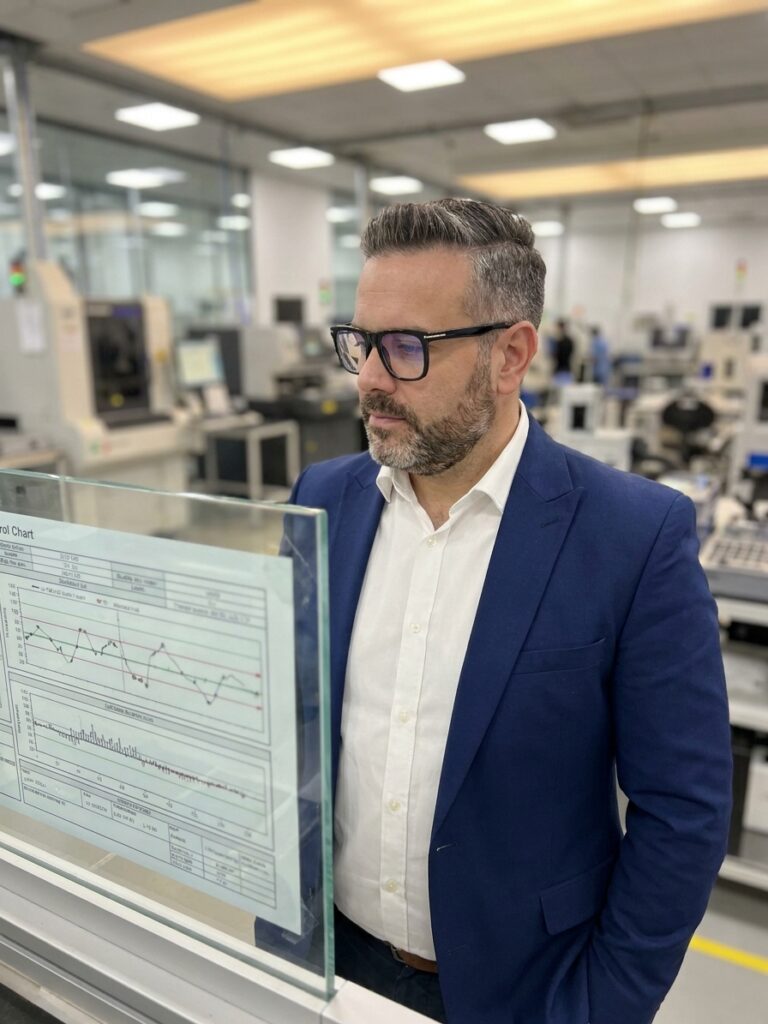
Many organisations require A3s only as closure documents. They treat the report as proof that problem-solving happened. This backwards approach means the A3 captures what people already decided, not what they discovered. The thinking happened elsewhere, if it happened at all, and the A3 becomes paperwork retrofitted to justify decisions already made.
A functioning A3 is a working document that evolves as understanding deepens. You start with a rough current condition, refine it through direct investigation, develop hypotheses about root causes, test countermeasures, and update the A3 throughout. This iterative cycle is what aligns the methodology with IATF 16949 requirements for continuous improvement.
In Toyota's practice, an A3 is developed through dialogue. A problem-solver works with their manager iteratively. The manager reviews drafts, asks probing questions, identifies gaps in logic, and pushes for deeper analysis. The A3 goes through multiple revisions before it is considered complete.
When companies remove this coaching relationship, the author works alone. They fill in the sections to the best of their individual knowledge and submit it for approval. There is no challenge to their assumptions, no pressure to dig deeper, and no iterative refinement. The quality of the analysis depends entirely on the individual's skill level.
Current Condition: Observation Over Interpretation
Most A3s fail in the current condition section. The author writes what they think is happening instead of what they actually observed. The difference is critical. Interpretations are vague, unmeasurable, and impossible to refute. Observations are specific, measurable, and falsifiable.
Writing 'operators struggle with the fixture' is an interpretation. Writing 'in 12 observations, the operator needed 3-5 taps with a rubber mallet to seat the part, averaging 18 seconds per cycle' is an observation. A strong current condition section forces the reader to agree with the facts before debating the causes.
| Weak Interpretation | Strong Observation |
|---|---|
| The machine is unreliable. | Unplanned downtime: 7 events in June, averaging 42 minutes each, primarily on spindle bearing overheating. |
| Quality has been poor. | Defect rate trend: 2.1% in April, 2.4% in May, 3.8% in June, concentrated at Station 4 weld inspection. |
Make this section visual. A hand-drawn sketch of the process, a run chart showing the trend, or a floor layout highlighting where defects cluster. Visuals force specificity in ways that prose does not. You can hide vagueness in sentences. You cannot hide it in a process map you had to draw yourself.
This is why functional A3s often look rough and hand-sketched. The polish is not in the graphic design. It is in the accuracy of the observation. A hand-drawn diagram that captures exactly what is happening on the shop floor beats a polished slide that oversimplifies reality.
Root Cause: Beyond the Surface
The Five Whys technique gets embedded in A3 thinking for good reason. It is simple and effective when applied with intellectual honesty. But 'five' is not a magic number. Sometimes three whys get you to a systemic cause. Sometimes you need seven or eight. The test is whether you have reached a cause you can act on.
Consider a manufacturing example. Parts are failing final inspection due to dimensional variation. The CNC machine is producing inconsistent bore diameters. Tool wear is accelerating beyond the expected replacement interval. The coolant system is not maintaining adequate temperature during cutting.
The coolant chiller's heat exchanger is fouled with particulate contamination. The filtration system uses a 50-micron filter, but the process generates sub-50-micron particles that pass through and accumulate. Now you have something actionable: upgrade the filtration system to capture finer particles.
When your A3 blames individuals, you haven't gone deep enough.
Notice that 'retrain the operator' would never have appeared in this chain, because operators are not the cause. The root cause is an engineering gap in the filtration specification. This depth of analysis is what differentiates a genuine 8D or A3 process from a basic corrective action log.
Follow-Up: The Section Everyone Skips
The follow-up section is the most important part of the A3. It creates accountability for results. When countermeasures are implemented and nobody checks whether they worked, the same problems recur. I have seen plants where the same root cause appears in three consecutive A3s, each time with a different countermeasure that was never verified.
A robust follow-up plan must specify a target metric with a deadline. If your Cpk was 0.9 before the intervention, state the target of 1.33 and the date you will measure it. Assign a specific person responsible for checking the data, not a general department name.
Verification Metrics for Closure
Crucially, the plan must state what happens if the countermeasure fails to achieve the target. Without these three elements, follow-up becomes optional. Optional tasks do not happen in busy manufacturing environments. Problems persist, scrap rates climb, and OEE degrades while the team moves on to the next fire.
Building Capability That Sticks
Do not train people on hypothetical scenarios. Identify an actual, current problem in your operation. Use that as the training vehicle. The motivation to solve a real problem produces far better thinking than any manufactured case study.
Select problems that are significant enough to matter but contained enough to be solvable. A massive, systemic issue like an unreliable supply chain is too broad. Bearing failures on Line 3 increasing 40% in Q2 is perfect. It has boundaries, it has data, and it has a clear business impact.
Effective A3 Implementation Cycle
- 01Select ProblemDefine a specific, measurable defect with clear financial impact.
- 02Assign CoachPair a problem-solver with a manager trained in Socratic questioning.
- 03Draft IterativelyRefine the analysis through direct floor observation and dialogue.
- 04Implement PlanExecute countermeasures with strict deadlines and responsibilities.
- 05Verify ClosureConfirm statistical targets are met before closing the document.
Review completed A3s publicly. Hold a monthly review where authors present their findings to peers. Focus the discussion on the quality of thinking, not the elegance of the document. What did they discover? What surprised them? This creates a learning loop that benefits the entire team.
De-link A3 completion from performance metrics. The moment you measure departments by the number of A3s they produce, you have incentivised volume over quality. People will fill out the form to hit the target, and the thinking will evaporate. Measure outcomes: problems solved, recurrence rates, and cycle time reduction.