
When I audit a plant's quality circle programme, I do not start by observing a circle meeting. I start by asking for three documents: the problem registry, the decision log, and the facilitator training matrix. Most plants present attendance sheets, presentation decks, and photographs of people gathered around a whiteboard. Those artifacts prove a meeting happened. They do not prove an improvement system exists.
The difference matters because a meeting leaves traces that look like evidence, while an engineered system leaves records that can be independently verified. Attendance registers and meeting minutes are the most commonly produced documents in circle audits, and they are the least informative. They tell you who was in the room and when. They tell you nothing about whether the room produced a verified countermeasure that reached the process floor.
Across two decades implementing ISO 9001, IATF 16949, and AS9100 systems in automotive and aerospace, I have reviewed dozens of circle programmes. The programmes that survive audit scrutiny share a common trait: every claim about operator empowerment is backed by a document trail that a third party can trace from problem identification through to implemented countermeasure. The programmes that fail audit produce emotional narratives about engagement with no retrievable data.
The Problem Registry: Proof That Operators Drive the Agenda
The first artifact I request is the problem registry. This is the visible log where operators record issues at their workstations in real time. When a plant produces a spreadsheet of management-assigned topics handed down to circles, the programme has already failed its first structural test. Management-assigned topics produce correct answers to questions nobody on the floor was asking. The registry must be operator-controlled and management-visible.
A functional registry serves as auditable evidence in three specific ways. It proves problems were captured while fresh and specific, before degrading into vague complaints. It proves problem identification was treated as a recognised contribution rather than an act of complaining. And it creates a prioritised backlog the circle can attack using Pareto analysis. When I ask a facilitator to show me how the team selected its current project, the registry entry should be traceable to that decision.
What auditors typically find instead is a list of topics curated by a supervisor or quality engineer, presented as if the team had chosen them. I test this by asking the operators directly: where did this problem come from, and when did you first flag it? If the answer requires the supervisor to intervene and explain, the input pipeline is not operator-driven. The registry review cycle—weekly by the facilitator, monthly by plant management—must be documented with dates and outcomes.
Facilitator Evidence: Training Records and Time Allocation
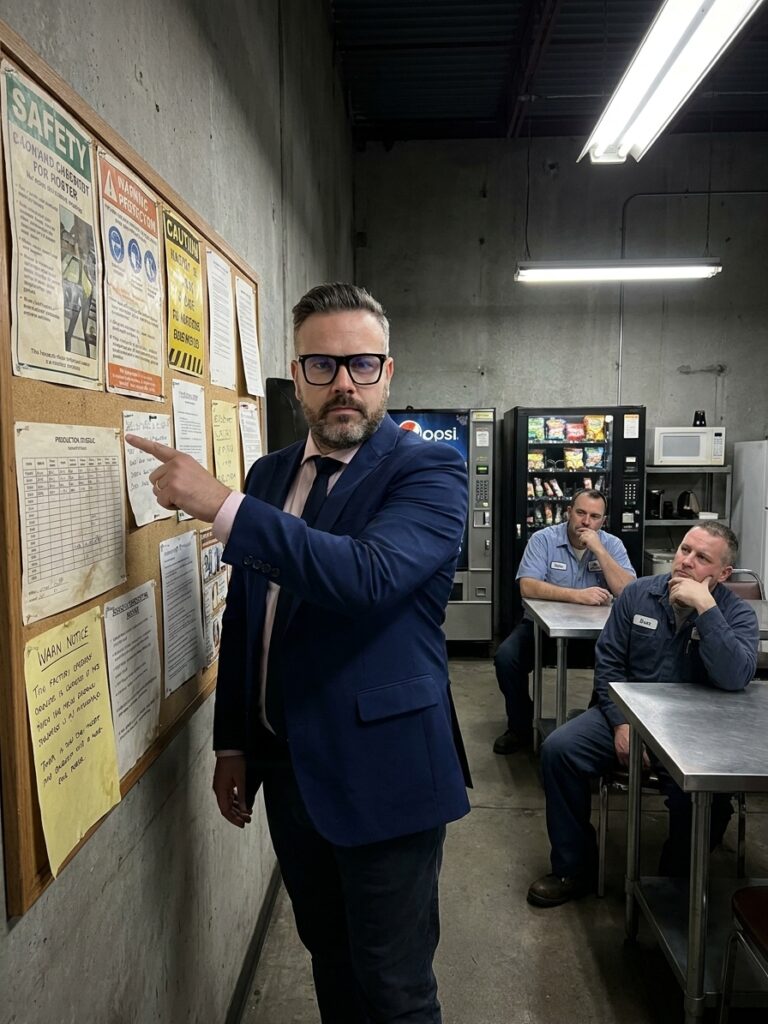
The next evidence set I examine is the facilitator corps. Plants routinely claim they have trained facilitators, but when I ask for the training matrix, it either does not exist or lists names without curriculum, dates, or competency verification. A facilitator is not the team leader and not the most senior operator. The role requires documented training in group dynamics, the seven basic quality tools, and structured root cause methods such as 8D or 5-Why.
Facilitator allocation is equally auditable. I ask to see the production schedule for the areas where circles operate, looking for the dedicated one hour of paid production time during the regular shift. Plants that schedule circles before shift, during lunch, or after hours are signalling that improvement work carries no economic value. If the production planning system does not reflect a protected weekly allocation, the programme has not been formally approved by the organisation that controls the floor.
Facilitator performance evaluation is the structural element most often missing from the evidence trail. I request the job descriptions and evaluation criteria for the facilitator role. If facilitation is not a measured responsibility with explicit weight in the performance review, facilitators will prioritise the line over the circle every time. This is not a cultural observation. It is a structural design fact, and the documentation either supports it or exposes the gap.
Decision Cycle Evidence: The Seven-Day Audit Trail
The single most diagnostic record I examine is the management decision log. For every proposal a circle has submitted, I expect to find a documented response within seven calendar days: approve, reject with rationale, or request further analysis. The decision log is the fulcrum of the entire system. If leadership allows proposals to sit unanswered, the circle interprets the silence immediately and participation collapses within two cycles.
What plants present instead is revealing. Many produce a year-end summary of circle activities, listing projects completed and savings achieved. When I cross-reference the submission dates against the decision dates, the gap often exceeds thirty days. Some decisions were never formally documented at all. The quality manager recalls approving something verbally, but there is no retrievable record. An improvement system without a decision log is operating on memory, not infrastructure.
The gap between stated commitment and actual decision cycle time is the single most reliable predictor of programme failure.
The decision log must capture four data points per proposal: submission date, management response date, the decision itself, and the assigned process owner with a target implementation date. I verify the log against the actual production records to confirm that approved countermeasures were implemented as specified. A proposal that was approved but never appeared in the updated work instructions or process control plan is a gap in the output loop, not a completed project.
Effectiveness verification closes the audit trail. After implementation, the circle or quality department must verify the countermeasure using the original baseline data. I ask for the before-and-after data set. If the countermeasure did not produce measurable improvement, that is itself a valid data point—the circle records what was attempted, what was expected, and what actually happened, then returns to analysis. Programmes that only document successes are not reporting reality.
The Circle Decision and Implementation Audit Trail
- 01Proposal submittedWritten countermeasure with baseline data, root cause, and expected impact. Facilitator signs off before submission.
- 02Management response within 7 daysApprove, reject with documented rationale, or request further analysis. No response is treated as rejection.
- 03Implementation assignedApproved countermeasure assigned to a process owner with a target date. Circle may participate but does not own it alone.
- 04Effectiveness verifiedCountermeasure validated against original baseline data by the circle or quality department.
Minimum Viable Specifications: What Must Exist Before Launch
Before any circle convenes, I verify that four infrastructure elements have been formally installed and documented. These are not aspirations or guidelines. They are minimum viable specifications, and each one addresses a specific failure mode I have observed repeatedly in failed implementations. A programme operating below these thresholds is a meeting schedule, not an improvement system, and should not be presented to an auditor as functional.
Paid meeting time of one hour per week during the regular shift, approved within the production planning system, is the first specification. The second is a minimum completion rate of two projects per circle per year—below that, the circle is inactive regardless of how many meetings it held. The third is a proposal implementation rate of seventy per cent or higher, with anything below fifty per cent indicating management disengagement. The fourth is a seven-day management decision SLA on all circle proposals.
Circle System Minimum Viable Specifications
If any single threshold cannot be met, the programme is not ready to launch. I have audited plants that launched circles knowing they could not meet the implementation-rate specification, and the result is entirely predictable: enthusiasm for three months, decay for three more, then cynicism that contaminates the next improvement initiative. The documented gap between launch and collapse is typically six months, and the documentation makes the cause unmistakable.
Pilot Evidence: Gate Reviews as System Diagnostics
When auditing a pilot programme, I look for the three-month gate review record. Plants should start with three pilot circles in different areas, selected for supportive supervision, an active registry, and high likelihood of early success. At month three, a formal gate review must occur with one question: has the circle advanced at least one problem through root cause analysis to a proposed countermeasure with baseline data?
If the answer is no, the gate review record must diagnose the structural cause. A facilitator pulled to other duties means the allocation model is broken. An empty registry means the input pipeline is not functioning. Inability to obtain baseline data means the measurement system needs attention. I examine these diagnostic records carefully because they reveal whether the plant is blaming operators for management failures or correctly identifying the structural gap.
Beginning in month four, I expect to see the monthly management presentation cycle in operation. Each circle presents a completed or in-progress project in a strict fifteen-minute briefing using a fixed format: problem statement, baseline data, root cause analysis, proposed countermeasure, and an explicit implementation request. The presentation deck is auditable evidence of analytical discipline—and the management decision recorded immediately after each presentation is auditable evidence of leadership engagement.
Financial Evidence: Connecting Output to Operating Cost
The final evidence set I examine is financial. Circle projects must be tracked for estimated annual savings and reported in the monthly plant operating review alongside standard cost-of-quality metrics. When a plant cannot produce these figures, I know the programme will not survive the next budget cycle. Leadership that cannot see the financial return of circle activity will eventually classify it as a cost centre and defund it, regardless of how engaged the operators appear.
The financial tracking record also serves a diagnostic purpose. A programme with high attendance, active facilitators, and steady proposal flow—but no tracked savings—has a scoping problem. The circles are working on low-impact issues that do not move the cost-of-quality needle. This pattern shows up clearly when I compare project topics against the plant's top-ten defect cost drivers. If the circles are not addressing the highest-cost problems, the Pareto prioritisation step is not functioning.
The most frequent objection I encounter during these audits is that operators lack structured problem-solving skills. This is indefensible in any plant claiming compliance with IATF 16949 or AS9100. Operators possess process knowledge that no engineer can replicate from an office. What they lack is method—and the seven basic tools, Pareto analysis, and root cause methods can be taught in hours, not weeks. The training records either demonstrate this investment was made or expose that it was not.
The second objection is that the plant already tried circles and they failed. I treat this as the most valuable data point available. I ask for the documentation from the previous attempt and compare it against the structural framework. Almost without exception, the prior programme was a fragmented version: volunteer teams meeting occasionally without a registry, without trained facilitators, without a decision cycle, and without protected time. The documented failure is engineering data that identifies exactly which elements were missing—and the audit confirms whether they have been installed this time.