Walk into any manufacturing plant, ask a quality engineer how to find the root cause of a defect, and you will hear the same answer: ask why five times. Toyota popularized it. Every IATF 16949 and AS9100 training course teaches it. Every 8D corrective action form has space for it. The technique is universally known, universally taught, and almost universally misapplied.
In twenty years of auditing manufacturing plants across automotive and aerospace, I have watched organizations misuse the Five Whys more consistently than almost any other quality tool. This is not because the tool is flawed. It is because organisations confuse simplicity of concept with simplicity of execution. The method is trivial to explain and extraordinarily difficult to execute well.
The consequence is measurable. Corrective actions recur. Defect rates plateau. Audit findings multiply. Teams complete their 8D reports, close the CAPA file, and the same nonconformance reappears three months later. The Five Whys is not the problem. The way your investigators frame the questions, trace the causal chains, and stop short of systemic failure points is what renders the tool ineffective.
The Linear Fallacy: Single-Path Investigations
The most common error is treating the Five Whys as a single, linear chain. You pick a starting point, ask why, get an answer, ask why again, and follow one path downward until you reach something that feels like a root cause. The result is a neat vertical chain that looks satisfying on a corrective action report. It is also almost always wrong.
Real manufacturing problems rarely result from a single causal chain. A defect on a production line is typically the convergence of multiple factors: a material variation that would normally be caught by an inspection step, which was bypassed because a supervisor was short-staffed, because the night shift had three callouts, because plant morale has been declining since a scheduling change. Follow only one thread and you find one contributing factor. You fix it, and the defect returns.
Taiichi Ohno, who developed the technique at Toyota, never intended the Five Whys to be a single line of inquiry. He used it to map the problem space, exploring multiple contributing factors that converged to create the defect. Somewhere between Ohno's factory floor and your CAPA form, the technique got flattened into a rigid single-path template that guarantees incomplete answers.
The structural fix is straightforward: when you complete a Five Whys analysis, ask whether there is another why. Not the next why in the chain, but a different why from the same starting point. Every manufacturing defect has at least two or three causal paths. If your investigation produced only one, it is incomplete and the corrective action will fail.
Stopping at Human Error
The second failure mode is the operator error trap. You ask why five times, and somewhere around level three or four, you hit the phrase: the operator made a mistake. The investigation stops. Operator error feels like a root cause because it feels like the bottom. The logic is that you cannot go deeper than human error.
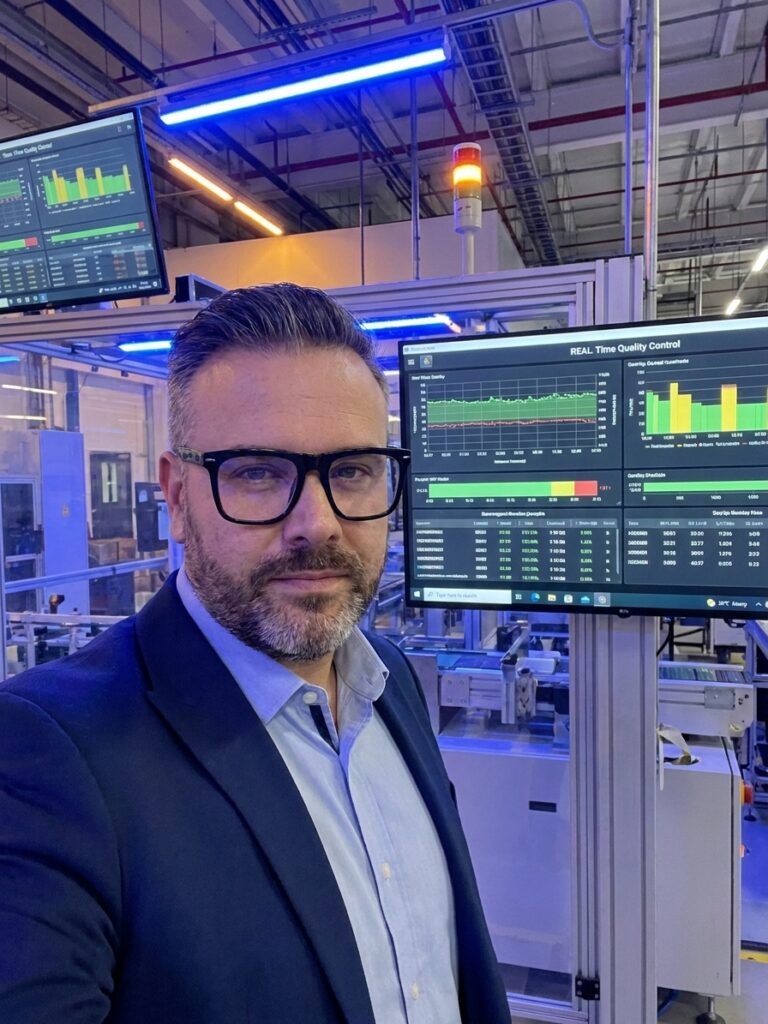
Operator error is not a root cause. It is a symptom of a system that allowed or even encouraged the error. Why did the operator make the mistake? Were the work instructions ambiguous? Was the PFMEA inadequate? Was the process designed in a way that made the error easy to make and hard to detect? Was there a production pressure that incentivised speed over accuracy? Was the workstation ergonomically poor, causing fatigue that led to the mistake?
I have audited plants that documented over a dozen separate operator errors on the same machine across eighteen months. Every corrective action was identical: retrained operator. The actual root cause was a fixture design that allowed parts to be loaded in two orientations, only one of which was correct. Both felt identical to the operator. The fix was not retraining. The fix was redesigning the fixture so it was physically impossible to load the part incorrectly, a poka-yoke that cost a trivial amount and eliminated the defect permanently.
When your Five Whys reaches human error, the real investigation is just beginning. Ask why the system allowed the error, why it was not caught by subsequent inspection steps, and why the process was not designed to prevent it. Retraining the operator without addressing the system conditions guarantees recurrence.
The Blame Trajectory and Conference-Room Analysis
When misused, the Five Whys becomes a weapon for assigning blame rather than a tool for understanding systems. The questions shift from why did this happen to who caused this, and the answers follow the trajectory of blame downward through the organisation until they land on whoever has the least political capital to push back.
I have seen this pattern play out repeatedly. A defect is discovered. Quality blames production. Production blames the operators. Operators blame maintenance. Maintenance blames engineering. Engineering blames procurement. Procurement blames the supplier. The documented root cause becomes supplier nonconformance, even when the supplier had been sending the same material for years without issue and the real trigger was an undocumented process change made on the shop floor.
Closely related is the conference-room investigation. A team assembles with the defect report, the process flowchart, and their assumptions. They ask why five times based on what they think they know. They write up corrective actions. They never once go to the production floor to observe the actual conditions under which the defect occurred. The result is a root cause analysis based on theory rather than reality.
Theory is almost always wrong because the real world is messier than any process document captures.
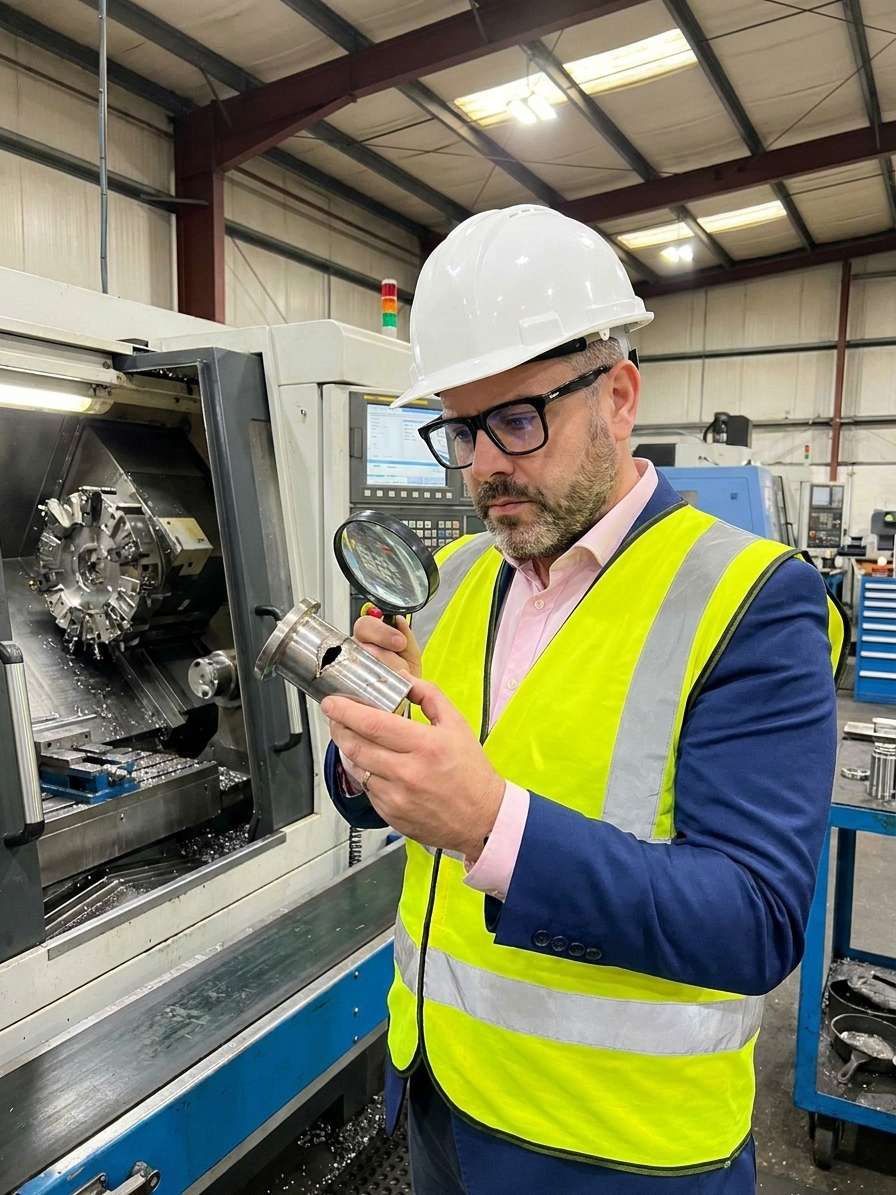
I investigated a persistent burr defect on a CNC-machined aluminium housing that three previous Five Whys analyses had failed to resolve. The documented root cause was tool wear. The corrective action was more frequent tool changes. The defect persisted. On the floor, I found that a coolant nozzle had been repositioned during maintenance two months earlier and was directing coolant away from the cutting zone. The tool overheated and produced the burr. Three conference-room investigations missed it because nobody looked at the machine.
Confirmation Bias in the Questions
The way investigators frame their why questions determines the answers they get. Most frame their questions to confirm what they already believe. If the investigator thinks the problem is tool wear, the whys lead to tool wear. If they think the problem is inadequate training, the whys lead to inadequate training. The Five Whys offers no structural guardrails against this tendency.
Investigation Approaches: Bias Versus Rigour
What teams do
- Frame questions to confirm the suspected cause
- Process owner leads the investigation
- Stop at the first plausible answer
- Accept the conclusion without testing alternatives
What works
- Ask what evidence would disprove the hypothesis
- Rotate facilitator to someone outside the process
- Require a cross-functional team with no stake in the outcome
- Explicitly ask what would make the conclusion wrong
This is especially dangerous when the investigation is led by the person responsible for the process. A process engineer is unlikely to ask why questions that lead to conclusions about their own process design failures. A production supervisor is unlikely to pursue lines of inquiry that implicate scheduling decisions. We protect our own assumptions, and the unstructured nature of the tool amplifies this bias rather than neutralising it.
The fix is structural: have someone outside the process lead the investigation. Rotate the facilitator role. Use a cross-functional team that includes people with no stake in the outcome. And explicitly ask the team what they would have to believe for their conclusion to be wrong, then test that belief against the evidence.
Depth Without Actionability
Not every level of a Five Whys analysis should produce a corrective action. Some root causes, while technically accurate, are so general as to be unactionable. The organisation does not have a culture of quality might be true, but you cannot issue a corrective action against it. Conversely, some intermediate causes are highly actionable and should be addressed even though they are not the deepest root cause.
The best corrective actions sit at the intersection of depth and actionability. You want to go deep enough to address systemic causes rather than symptoms, but not so deep that you end up in philosophical territory where no concrete action is possible. The most effective investigations identify corrective actions at multiple levels simultaneously rather than picking a single intervention point.
Layered Corrective Action Strategy
- 01Immediate fixContain the symptom and protect the customer from the defect now.
- 02Contributing factorAddress the process condition that allowed the immediate cause to occur.
- 03Systemic rootChange the management system, design, or policy that created the contributing conditions.
For every Five Whys investigation, identify corrective actions at all three levels: fix the symptom, fix the contributing factor, and fix the system. A poka-yoke redesign addresses the systemic root. An updated work instruction addresses the contributing factor. A sorting action or containment addresses the immediate symptom. Deploy all three rather than choosing one.
The Verification Gap
The final structural failure is the most baffling. Organisations complete a Five Whys analysis, implement corrective actions, close the 8D report, and never verify that the fix actually worked. A root cause analysis is a hypothesis. Your Five Whys produced a theory about why the defect occurred. Your corrective action is an experiment testing that theory.
If you do not verify the result by tracking the defect rate over time and confirming it has declined or disappeared, you have no idea whether your analysis was correct. In my experience reviewing hundreds of corrective action files across automotive and aerospace plants, the single most common audit finding is the absence of effectiveness verification. The investigation is done, the actions are implemented, the report is closed, and nobody checks whether the problem actually went away.
Every corrective action must include a verification plan with a defined metric, a tracking duration, and a success threshold. For a machining defect, verify Cpk improvement over the next thirty production days. For a supplier nonconformance, verify zero PPM deviations across the next three deliveries. If the defect recurs within the verification period, the root cause analysis was wrong. Reopen the investigation.
The difference between organisations that improve and organisations that merely document is not the sophistication of their tools. It is the honesty of their inquiry. A disciplined Five Whys investigation starts at the gemba, explores multiple causal paths, pushes past human error to systemic causes, challenges its own assumptions, and verifies its results with data. Anything less is paperwork.