
Failure Mode and Effects Analysis is the most powerful prevention tool in quality engineering. It is also the most routinely misused. Across automotive, aerospace, and medical device plants, cross-functional teams gather to fill out spreadsheets, calculate risk priority numbers, and file the document in a quality management system until an auditor asks for it.
The irony is consistent across every industry I have audited. A tool designed to anticipate failures has become a post-failure paperwork exercise that prevents nothing. The FMEA that should have caught a design flaw before launch gets updated after the customer complaint arrives. Its rows are retroactively populated with the failure that already happened, its ratings adjusted to reflect the reality everyone lived through. The document becomes highly accurate. The prevention remains nonexistent.
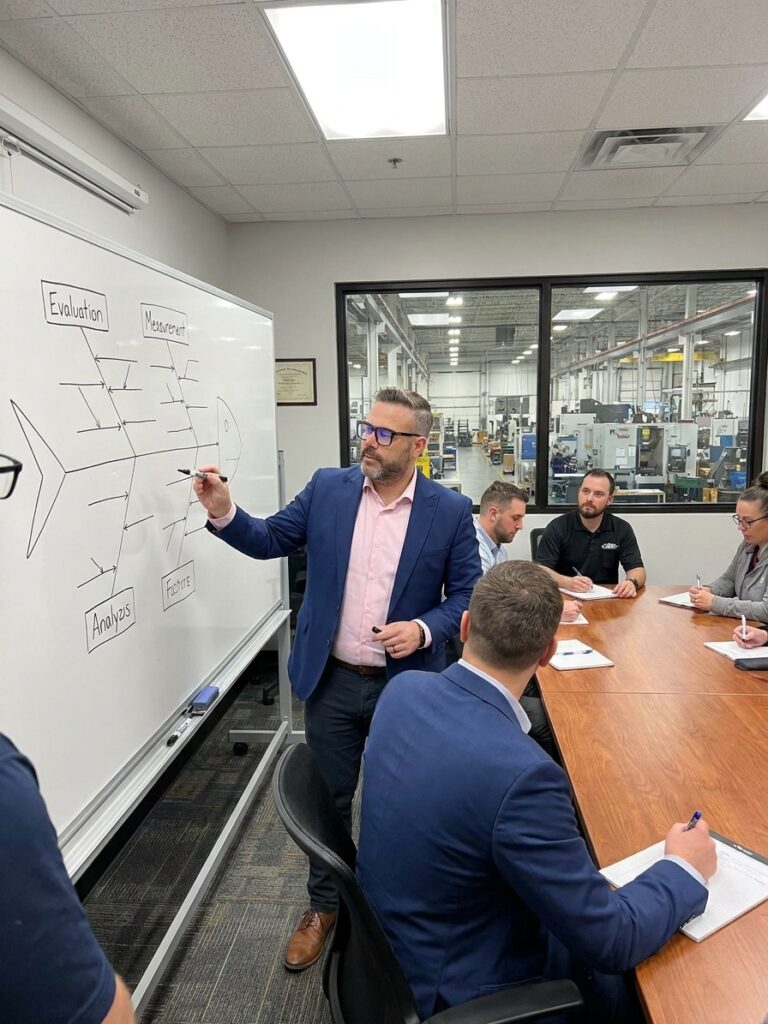
A proper FMEA is not a form. It is a living engineering analysis that drives design and process decisions before the first part is produced. Its purpose is singular: identify what could go wrong, assess how bad it would be, evaluate whether you would catch it, and then execute specific engineering changes to mitigate it.
The Compliance Exercise: How FMEA Becomes Theatre
The most common failure mode of FMEA itself is treating it as a compliance deliverable. IATF 16949 requires an FMEA, so one is produced. The FDA asks for one, so one is produced. The customer audit checklist has a line item, so one is produced. In each case, the goal becomes possessing the document rather than executing the analysis. That difference determines whether the tool prevents failures or merely documents them.
A compliance-driven FMEA has recognizable characteristics. It is completed after the design is frozen, sometimes after production has started. It lists failure modes that are obvious and non-controversial. Its severity, occurrence, and detection ratings cluster in the safe middle of the scale—fours, fives, and sixes—because nobody wants to be the engineer who rated their own design a nine.
The second failure mode is the expertise gap. An FMEA is only as good as the team that creates it. When the session is populated solely by quality engineers who were not involved in the design, the analysis captures only what quality engineers can imagine going wrong. The design engineer who knows the tolerance stack-up is marginal under specific thermal conditions needs to be in the room. The operator who has watched the part crack during assembly needs to speak.
When the right people are absent, the FMEA becomes a map of organizational blind spots rather than actual risks. The failure modes that are documented are the ones that are safe to discuss. The ones that would require uncomfortable conversations about design choices, supplier selections, or budget constraints remain unwritten. Those are precisely the failures most likely to occur in production.
Compliance FMEA vs Prevention FMEA
Compliance-driven
- Completed after design freeze or start of production
- Ratings cluster at 4 to 6 to avoid triggering action
- Recommended actions are vague aspirations with no owners
- Updated only when an auditor or customer demands it
Prevention-driven
- Started before design freeze, revised through development
- Ratings reflect engineering reality, even when uncomfortable
- Actions have named owners, deadlines, and verification methods
- Linked to engineering change control and field feedback loops
The Rating Trap: Subjective Numbers Posing as Objective Data
The one-to-ten scales for severity, occurrence, and detection appear objective. They are deeply subjective assessments colored by organizational politics, individual experience, and the natural human tendency toward optimism. These ratings drive engineering decisions, yet they are often based on professional confidence rather than empirical evidence. When ratings are negotiated rather than calculated, the resulting analysis is fiction.
Severity ratings are inflated or deflated depending on who is in the room. A failure mode that would cause a safety issue might be rated a six instead of an eight because acknowledging an eight would trigger expensive design changes. A cosmetic defect might be rated a seven because the customer has been vocal about appearance, even though the functional impact is negligible. The rating reflects the political reality, not the engineering reality.
Occurrence ratings are perhaps the most manipulable number in quality engineering. The scale asks you to estimate the probability of a failure occurring, but on what data? If the process is new, there is none. If the process is existing, historical data may not account for the specific design change being analyzed. Engineers routinely rate occurrence as a two or three for failure modes they have never tested. The difference between an occurrence rating of two and four is often the difference between an RPN that triggers action and one that does not.
The Action Gap: Where Intentions Replace Engineering
The most critical failure in FMEA practice is the gap between identifying risk and acting on it. Many organizations are genuinely good at the identification phase. They list failure modes, rate them, calculate RPNs, and produce spreadsheets that impress any auditor. Then they stop. The analysis is complete; the engineering has not begun. The recommended actions column is filled with intentions.
Add process control. Improve fixture design. Increase sampling frequency. These are not actions. They are aspirations. An action has an owner, a deadline, a specific deliverable, and a verification method. The statement that a design engineer will validate a new fixture with increased clamping force by a set date, with a validation report demonstrating a measurable reduction in misalignment—that is an action.
Organizations that get value from FMEA treat recommended actions with the same rigor they apply to an 8D corrective action request. Actions are tracked in project management systems. Completion is verified, not self-reported. Effectiveness is measured by re-rating the risk after implementation and confirming that the risk actually decreased. If the occurrence rating was a six and the recommended action was to install a poka-yoke device, the post-action rating must reflect actual performance data showing the device reduced the failure rate.
If the action did not reduce the risk, it was ineffective and a new approach is needed. This is where most FMEA processes break down. The action is checked off as complete, the FMEA is updated, and the failure continues to occur. The closing of an action item without verifying its effectiveness is the silent killer of FMEA credibility. It trains the organization to treat the entire exercise as box-ticking.
Design FMEA vs Process FMEA: Conflating Two Different Analyses
A common organizational mistake is treating Design FMEA and Process FMEA as interchangeable exercises with different column headers. They are fundamentally different analyses asking different questions of different audiences. Conflating them leads to a predictable anti-pattern: using Process FMEA to compensate for design deficiencies that should have been addressed at the source. This shifts prevention cost into recurring detection cost.
The Design FMEA asks: given this design, what could fail, and how can the design be made more robust? Its outputs should drive design changes—material substitutions, geometry modifications, tolerance allocations, redundant features. When a Design FMEA identifies a high-severity, high-occurrence failure mode, the correct response is not to add a process control. The correct response is to change the design so the failure mode cannot occur.
The Process FMEA asks: given this fixed design, how do we manufacture it without introducing defects? Its outputs should drive process changes—fixture improvements, control plan modifications, inspection method selections, operator training. When a Process FMEA identifies a high-risk failure mode, the correct response is to modify the process to prevent or detect it before the part reaches the customer.
When the two are conflated, the organization spends its way around a design problem it refused to solve at the source. The part has a wall thickness that is too thin. The Design FMEA flagged it but the design was not changed. Now the Process FMEA is loaded with expensive controls, 100% inspection, and sorting operations to compensate. The cost of prevention was traded for the recurring cost of detection.
The Revision Problem: Stale Documents and Engineering Change
An FMEA completed once and never revised is a snapshot of organizational knowledge at a single point in time. It is immediately stale. Every customer complaint, every internal defect, every near-miss, every process change, every engineering change order should trigger a review of the relevant FMEA rows. In practice, most FMEAs are updated only when forced—typically during a quality audit or a customer-required PPAP submission.
The revision problem compounds over time. An FMEA created three years ago for a product that has undergone seven engineering changes may bear little resemblance to the product currently being manufactured. The failure modes that were identified may no longer be relevant. New failure modes introduced by design changes may be absent. The process controls referenced in the FMEA may have been modified, eliminated, or replaced.
Effective organizations build FMEA revision into their change management processes. Every engineering change request triggers a documented review of the affected FMEA rows. Every significant quality event triggers a retrospective: was this failure mode identified? If yes, why was the prevention ineffective? If no, why was it missed? The lessons are fed back into the analysis, and the FMEA improves with each cycle.
This linkage between the FMEA and the engineering change order system is where most organizations fail. The change control board approves a modification without asking whether the FMEA needs updating. The FMEA drifts further from reality. When a failure eventually occurs, the investigation reveals that the FMEA was never updated to reflect the change that introduced the new failure mode.
Using Production Data to Validate FMEA Assumptions
Modern manufacturing generates volumes of process data that the original FMEA methodologists could not have imagined. Statistical process control, automated inspection systems, real-time sensor networks—these provide empirical data that can validate or challenge the assumptions baked into an FMEA. Yet most organizations never close this loop. They assume the ratings were correct and move on to the next deliverable.
The Rating Reality Check
The occurrence rating estimated based on engineering judgment can now be compared against actual process data. If a failure mode was rated an occurrence of two and defect data shows it occurs at a rate consistent with a five, the FMEA is wrong and must be corrected. The detection rating assigned based on a planned inspection protocol can be evaluated against actual inspection effectiveness data. If the detection system is catching 60% of defects rather than the 95% the rating assumed, the detection rating is aspirational, not factual.
Some organizations are beginning to integrate FMEA with digital twin simulations, using Monte Carlo methods to generate probability distributions for occurrence ratings instead of relying on single-point estimates. This is a genuine improvement, but a sophisticated probability model applied to an incomplete set of failure modes still produces precise answers to the wrong questions. The quality of the analysis depends on the failure modes identified, not the sophistication of the math applied to them.
A compliance FMEA has no owners, no deadlines, and no follow-up. Its risk numbers are calculated with precision and ignored with enthusiasm.
Building Prevention into the Process
Organizations that derive genuine value from FMEA share a pragmatic understanding: the tool does not prevent all failures. It reduces the probability and impact of failures that could have been anticipated. It is a structured method for applying collective engineering knowledge to the problem of what could go wrong. It will not predict the failure mode that nobody imagined. But it will predict most of the failure modes that experienced engineers could have imagined if given the time, the structure, and the organizational permission to think carefully.
That act of thinking carefully, systematically, and honestly about failure before it happens is worth more than any spreadsheet. The teams that understand this difference build prevention into their process. The teams that do not will keep updating their FMEAs after the fact, documenting failures with precision, and wondering why their risk assessments never seem to prevent anything. The gap between documenting risk and engineering it out of the product is where competitive advantage is built.
I have audited plants where the FMEA was a locked PDF and plants where it was a marked-up working document on the engineering floor. The difference in defect rates, warranty costs, and launch timing was not marginal. It was structural. The plants that treated FMEA as a living analysis caught problems earlier, changed designs faster, and spent less time arguing with customers about who was responsible for the failure. The tool is the same. The discipline is what differs.