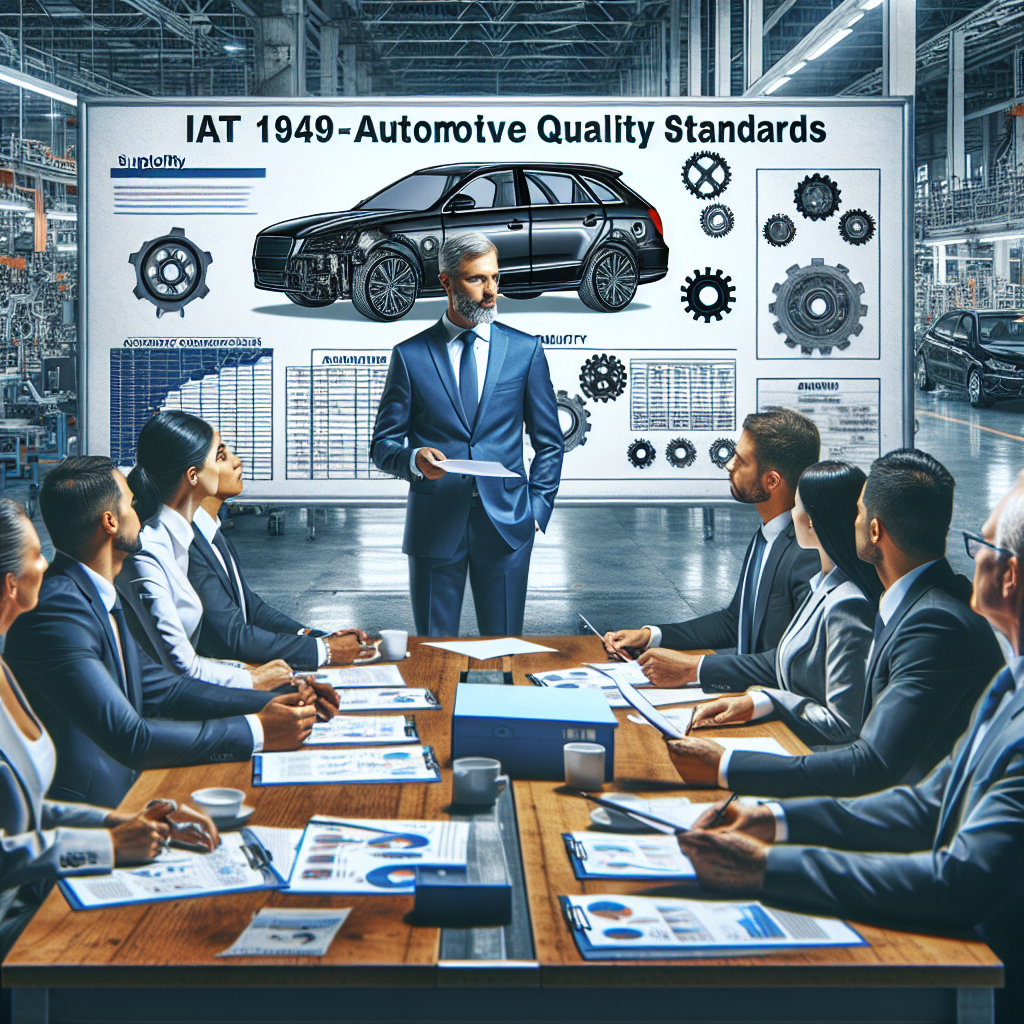
IATF 16949 is the global quality management standard for the automotive industry, developed by the International Automotive Task Force alongside manufacturers like Ford, General Motors, BMW, and Volkswagen. But holding the certificate and operating the system are entirely different things.
I have walked into plants that had pristine manuals on the shelf and uncontrolled scrap on the floor. ISO 9001 provides a framework, but IATF 16949 demands a specific operational rhythm. It requires APQP, PPAP, FMEA, SPC, and MSA not as documentation exercises, but as active production controls.
The standard exists because in automotive manufacturing, a nonconformity is not just a financial loss—it is a safety risk. The supply chain demands a systematic, verifiable approach to defect prevention. Here is what changes when you move from merely certifying a plant to actually living the standard.
The False Equivalence With ISO 9001
Many organisations treat IATF 16949 as ISO 9001 with a few added automotive clauses. This is a dangerous misconception. ISO 9001 allows you to define your own quality objectives; IATF 16949 strictly dictates how you must achieve them through mandated risk-based thinking and process control.
During my early facility walk-downs at ArcelorMittal, I found operators who did not know what a control plan was. Inspectors were measuring dimensions without understanding the tolerance limits. Management feared the annual audit, not the daily process variation.
We fixed this by mapping every process using Turtle Diagrams. We defined the inputs, outputs, resources, KPIs, and specific risks for each operation. We then assigned a Process Owner—not a department head, but a specific individual accountable for that process flow. Internal defect rates dropped by 45% within six months.
Managing Customer-Specific Requirements (CSRs)
Every OEM layers its own requirements on top of the IATF standard. Volkswagen mandates Formel Q. General Motors applies GM1925. When a plant supplies eight different manufacturers, trying to manage these requirements through isolated engineering spreadsheets will cause a breakdown.
To solve this, we built a centralised CSR Matrix. Every customer-specific requirement was mapped to a specific production process and its corresponding control plan. When an OEM updated a standard, the change flowed through the system to the relevant work instructions.
This eliminated the risk of missing a critical requirement. By tracking every CSR in a single location, we reduced the administrative burden on the quality team and ensured absolute compliance. Over two years, we recorded zero missed customer requirements.
Advanced Quality Planning and Part Approval
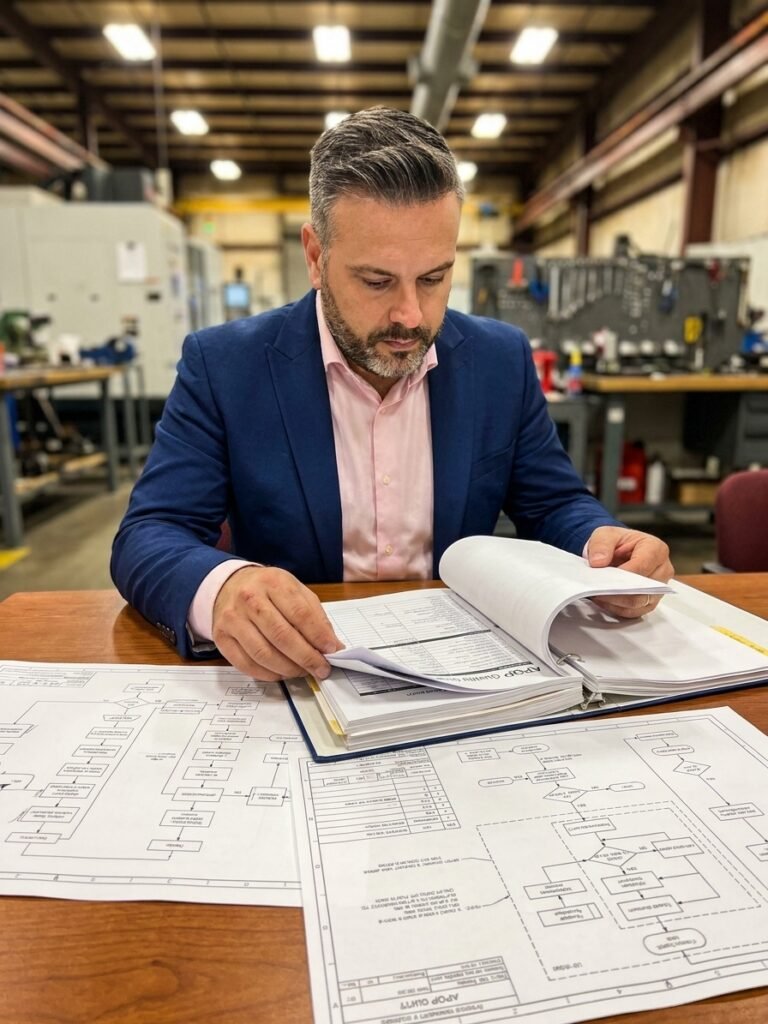
Advanced Product Quality Planning (APQP) and Production Part Approval Process (PPAP) are the mechanisms that force quality upstream. You do not start serial production until you have proven your process can consistently meet specifications. PPAP requires 18 distinct elements, from design records to process flow diagrams and PFMEAs.
The APQP and PPAP Launch Cycle
- 01Program PlanningDefine objectives, customer requirements, and initial timeline.
- 02Product & Process DesignDevelop DFMEA, PFMEA, and the initial control plan.
- 03Prototype & ValidationTest and verify the product against engineering specifications.
- 04PPAP SubmissionCompile the 18 elements and submit for OEM approval.
- 05Serial ProductionBegin manufacturing only after full approval is granted.
We applied this discipline to a new programme. By front-loading the engineering work and rigorously completing the PPAP package, we achieved First Time Quality on the initial parts. The customer approved the parts on schedule, and we avoided expensive post-launch tooling changes.
Mandating Statistical Process Control
In automotive manufacturing, you cannot inspect quality into a product; you must control the process. Statistical Process Control (SPC) is mandatory under IATF 16949. I have seen too many plants display Cpk charts on the wall while ignoring the data coming from the line.
At ArcelorMittal, we were running a line with unacceptably high variation and a 12% scrap rate. The process was out of control, with an initial Cpk of 0.6. We implemented rigorous SPC, identified the sources of variation, and brought the process into a state of statistical control.
You cannot inspect quality into a product; you must control the process.
Within four months, we achieved a Cpk of 1.45—well above the industry standard minimum of 1.33. The scrap rate plummeted to 1.5%. SPC is not a administrative task; it is the primary tool for reducing waste and stabilising the manufacturing line.
Validating Measurement Systems and Risks
Before you can trust your process data, you must trust your gauges. Measurement System Analysis (MSA) is critical. I discovered we were rejecting good parts and accepting bad ones because our Gage R&R was sitting at 25%. Under IATF 16949, a measurement system this unreliable completely invalidates your inspection results.
We recalibrated the equipment, retrained the operators on standard measurement techniques, and standardised the fixtures. We brought the Gage R&R down to 6%, below the strict 10% threshold. The result was a 35% reduction in customer complaints attributed to false rejects.
Failure Mode and Effects Analysis (FMEA) works in parallel with MSA. When a component failed pressure tests at an unacceptable rate, we used DFMEA and PFMEA to systematically identify 15 potential failure modes. We addressed the high-risk items, dropping the Risk Priority Number (RPN) from 150 to 45, and eliminated the defect.
Culture Shift: From Audit Anxiety to Continuous Improvement
The ultimate goal of IATF 16949 is not a clean audit; it is a culture of continuous improvement. An organisation that simply "has" the standard hides nonconformities from the auditor. An organisation that "lives" the standard treats every defect as valuable data to drive process optimisation.
The Operational Shift
Certificate on the Wall
- Audits are annual threats to be survived.
- Quality is strictly a departmental function.
- Process variation is hidden or ignored.
- Manuals sit on shelves gathering dust.
System on the Floor
- Audits are opportunities to verify process control.
- Quality is owned by process operators.
- Variation is tracked via SPC and addressed.
- Process flows dictate daily operations.
Having implemented these systems in heavy automotive manufacturing, I now apply the same principles in the aerospace sector under AS9100. The core mechanism is identical. Without a systematic approach to quality, you cannot compete as a Tier 1 or Tier 2 supplier.
IATF 16949 is not a bureaucratic constraint. It is the architecture of operational excellence. When you map your processes, validate your data, and control your variation, the certificate simply becomes proof of what you already do every day.