Manufacturing organisations systematically misapply their preferred quality methodologies to problems those methodologies were never designed to solve. When a plant invests heavily in Six Sigma, every defect becomes a statistical variation issue. When a plant adopts Lean, every inefficiency becomes a waste-elimination opportunity. The tool dictates the diagnosis, rather than the diagnosis dictating the tool.
This is not a failure of the methodologies. Six Sigma, Lean, FMEA, and APQP are proven frameworks with documented success in specific domains. The failure is organisational: the absence of diagnostic discipline that should precede tool selection. A quality engineer's first job is to classify the problem accurately. Their second job is to select the instrument that fits that classification.
Over twenty years implementing ISO 9001 and IATF 16949 systems across automotive and aerospace, I have audited dozens of plants where the institutional bias toward a single methodology caused months of misdirected effort. The pattern is consistent, the costs are measurable, and the corrective action is structural. The solution is not abandoning your preferred framework. It is building a diagnostic gate that enforces problem classification before resource commitment.
When the Framework Becomes the Blindfold
I worked with a Tier 1 automotive supplier that had invested three years building Six Sigma capability. They had twelve Black Belts and forty Green Belts. The VP of Quality mandated that every defect reduction project above a defined threshold go through the full DMAIC process. This mandate was the first structural error. It removed diagnostic discretion from the engineering team.
A new product launch went sideways. The parts had geometrically complex mating surfaces with tight tolerances. The first production run showed a 34% defect rate on a critical dimension. The Six Sigma team deployed and spent six weeks in the Measure phase. They collected data on material batch, machine temperature, operator, time of day, and tool wear. They ran capability studies, built multi-vari charts, and conducted a DOE on twelve factors identified by their Cause-and-Effect Matrix.
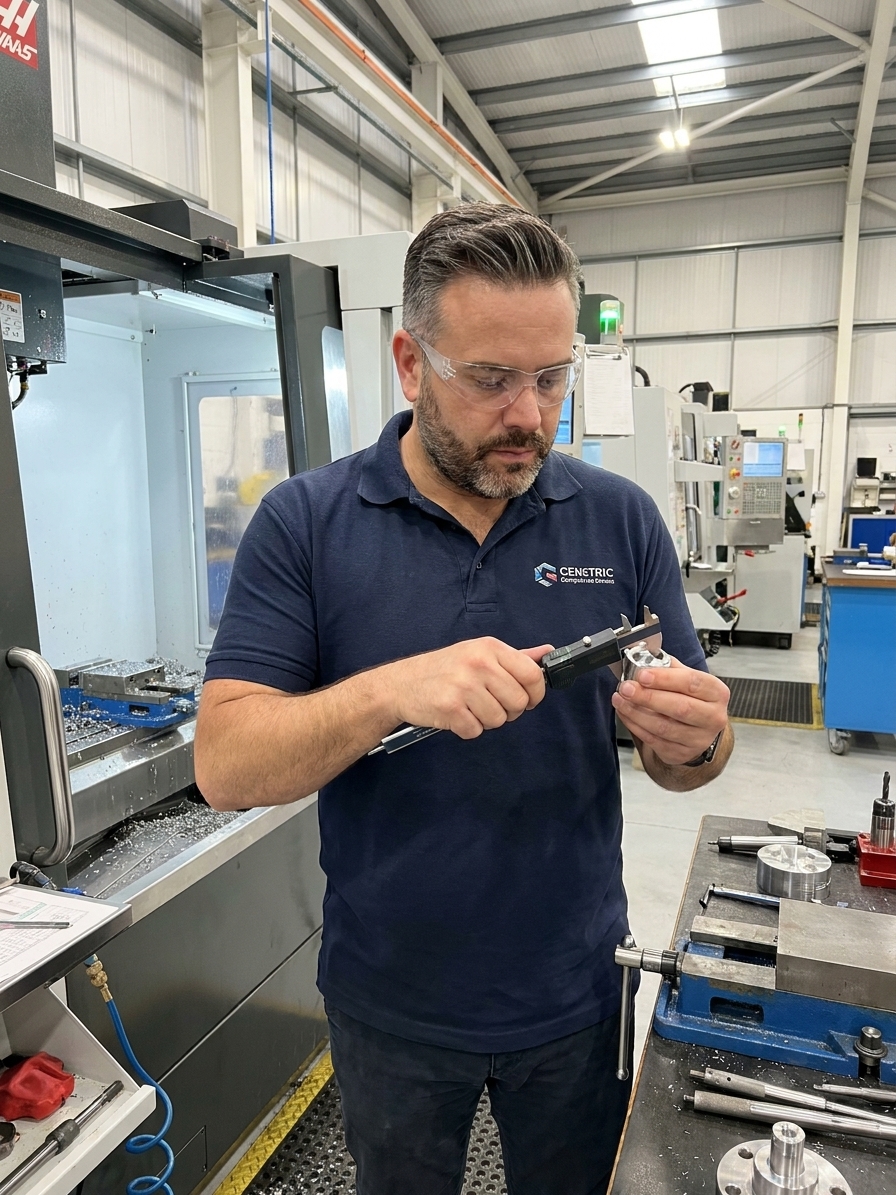
After three months and significant cost, they had a statistical model explaining 67% of variation. They implemented controls on the top four factors. The defect rate dropped from 34% to 28%. The plant manager was not impressed. An outside tooling engineer, brought in as a last resort, discovered the fixture locating pins were 0.15 mm off design intent. The fixture had been manufactured incorrectly. Three days after correction, the defect rate was 0.8%.
Problem Classification Before Tool Selection
The most dangerous thing a quality organisation can do is confuse methodology proficiency with problem-solving capability. Proficiency means you can execute DMAIC, facilitate a Kaizen event, write a proper PFMEA, or submit a PPAP package. These are valuable, measurable skills. Problem-solving capability means you can diagnose what type of problem you face and select the correct approach from the full spectrum of available tools.
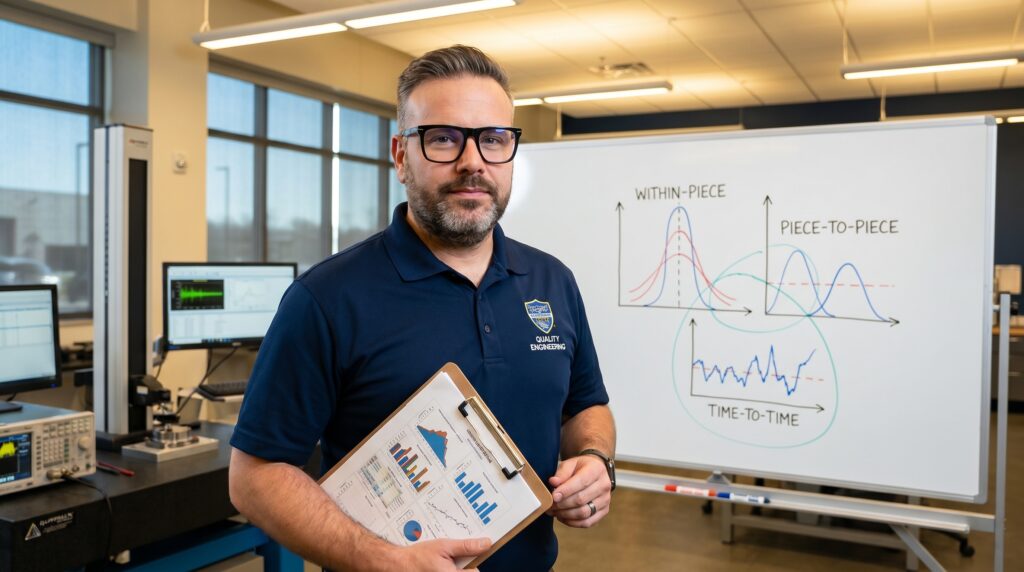
Quality problems fall into distinct categories, each requiring different instruments. Process variation problems, where the process is capable but unstable, belong to SPC and control chart analysis. Process capability problems, where the process is stable but misses specification, require DOE, tolerance analysis, or equipment upgrades. Design problems demand DFMEA, design reviews, and DFMA. Measurement problems need MSA, gage R&R, and calibration verification before any process work begins.
Human performance problems, where trained operators make errors despite correct procedures, call for poka-yoke and standard work simplification. System problems, where departmental handoffs create information loss, need SIPOC analysis and value stream mapping. Supplier problems require PPAP enforcement and incoming inspection strategy. An organisation that approaches all seven categories with one methodology is not practising quality management. It is practising tribal loyalty.
| Problem Category | Diagnostic Signal | Correct Tools |
|---|---|---|
| Process variation | Process capable but unstable over time | SPC, control charts, special-cause elimination |
| Process capability | Process stable but outside specification limits | DOE, tolerance analysis, Cpk improvement |
| Measurement error | Data used for decisions is unreliable | MSA, gage R&R, calibration verification |
| Design for manufacturing | Product geometry prevents consistent production | DFMEA, design reviews, DFMA |
| Human performance | Trained operators make intermittent errors | Poka-yoke, visual management, standard work |
| System or handoff | Defects appear at departmental boundaries | SIPOC, value stream mapping, cross-functional 8D |
| Supplier quality | Incoming material nonconforming to requirements | PPAP, incoming inspection, supplier development |
How Certification Creates Structural Bias
Certification programmes teach depth over breadth by structural necessity. A Six Sigma certification teaches Six Sigma. A Lean certification teaches Lean. An ISO 9001 auditor qualification teaches you to audit against ISO 9001. These programmes produce competent specialists. Specialists become dangerous when they cannot identify the boundaries of their specialty.
The trap operates through incentive structures. An organisation invests in training people in a specific methodology. Those people become experts. Their expertise is recognised, rewarded, and promoted. They build careers on it. Because their professional identity and advancement are tied to their methodology, they develop an unconscious incentive to frame every problem in terms of that methodology. This is not dishonesty. It is structural psychology.
I have seen quality departments where the institutional bias actively suppressed alternative approaches. In a Lean-dominant organisation, an engineer who suggested running a DOE was told: we do not need statistics, we need to go to Gemba. In a Six Sigma-dominant organisation, someone who proposed a Kaizen event was told: we do not do feel-good workshops, we do data-driven analysis. Both statements contain partial truth. Both miss the point entirely. The problem determines the method.
Building a Diagnostic Gate
World-class quality organisations share a trait that distinguishes them from average ones: diagnostic discipline. They accurately classify a problem before committing resources to solve it. This classification step is not complicated, but it requires something many organisations find uncomfortable: the patience to understand the problem before reaching for a solution, and the humility to accept that your preferred tool may be the wrong one.
A diagnostic gate does not require a new methodology. It requires a structured set of questions asked before any problem-solving approach is selected. These questions take thirty minutes to answer in a cross-functional review. They can save three months of misdirected effort and the associated cost of a full-scale study launched against the wrong hypothesis.
The Diagnostic Classification Sequence
- 01Classify variation typeIs variation random or patterned? In the process or in the measurement system? This alone eliminates entire tool categories.
- 02Locate the problem in the value streamSingle station, cross-process, handoff point, or systemic. The location determines whether you need a point solution or a flow solution.
- 03Establish the timelineHas the defect always existed, or did it appear after a change? If after a change, investigate the change directly.
- 04Validate evidence qualityHard data, observational reports, or assumptions? If data reliability is uncertain, MSA and gage R&R come before any analysis.
- 05Select the toolOnly after classification is complete does the organisation commit DMAIC, Kaizen, 8D, or engineering change resources.
Structuring the Multi-Tool Organisation
If your entire quality department is trained in one methodology, you have a hammer factory, not a quality function. Structural correction starts with diversifying team capabilities. Cross-train your Six Sigma practitioners in Lean workshops. Send your Lean specialists to statistical methods training. Hire engineers with different methodological backgrounds. The friction between different analytical perspectives is productive. It prevents the groupthink that kills diagnostic accuracy.
Decouple problem assignment from methodology. Do not automatically route every defect to the Black Belt or every waste concern to the Lean facilitator. Create a diagnostic step, even a brief one, that determines which approach fits before resources commit. Reward teams for solving problems permanently, not for completing projects in a specific format. Measure whether the defect recurred at the next audit cycle, not whether the DMAIC storyboard was well-presented.
The problem should determine the method, not the other way around.
Build a shared vocabulary. Lean calls it waste. Process engineering calls it non-value-added activity. Auditing calls it an opportunity for improvement. These terms describe the same phenomenon. Tribal terminology reinforces methodological silos. A common language helps engineers see that their tools address overlapping problems from different angles, and it reduces the institutional resistance to borrowing across frameworks.
The Cost of Misapplied Methodology
One of the most damaging effects of Maslow's Hammer is that it discredits the tools themselves. When Six Sigma is applied to a problem that needed a fixture replacement, Six Sigma does not fail, but it appears to. When Lean is applied to a measurement system problem, Lean does not fail, but the Kaizen event that produces no improvement makes people doubt whether Lean works at all. The methodology absorbs the blame for the misapplication.
This dynamic drives the cycle of quality programme churn that many manufacturing organisations experience. They adopt Six Sigma, misapply it broadly, become disillusioned, and switch to Lean. They misapply Lean, become disillusioned again, and adopt the next framework. The frameworks were never the problem. The problem was the belief that any single framework could address every quality issue across the entire manufacturing value stream.
The organisations that consistently eliminate root causes, meet specification, and pass IATF 16949 and AS9100 surveillance audits without firefighting are the ones that built a full toolbox and developed the engineering judgement to use it. They do not open an 8D for a customer complaint that is actually a design feature. They do not run a DOE when the gage is uncalibrated. They do not write a PFMEA when the supplier is shipping nonconforming material. They diagnose first, select second, execute third.
Your organisation has a preferred quality tool. That preference probably reflects genuine, hard-won expertise. The problem begins when that tool becomes the default response to every nonconformance, every customer complaint, and every audit finding. The discipline of pausing to classify the problem before swinging is what separates a quality department from a hammer factory.