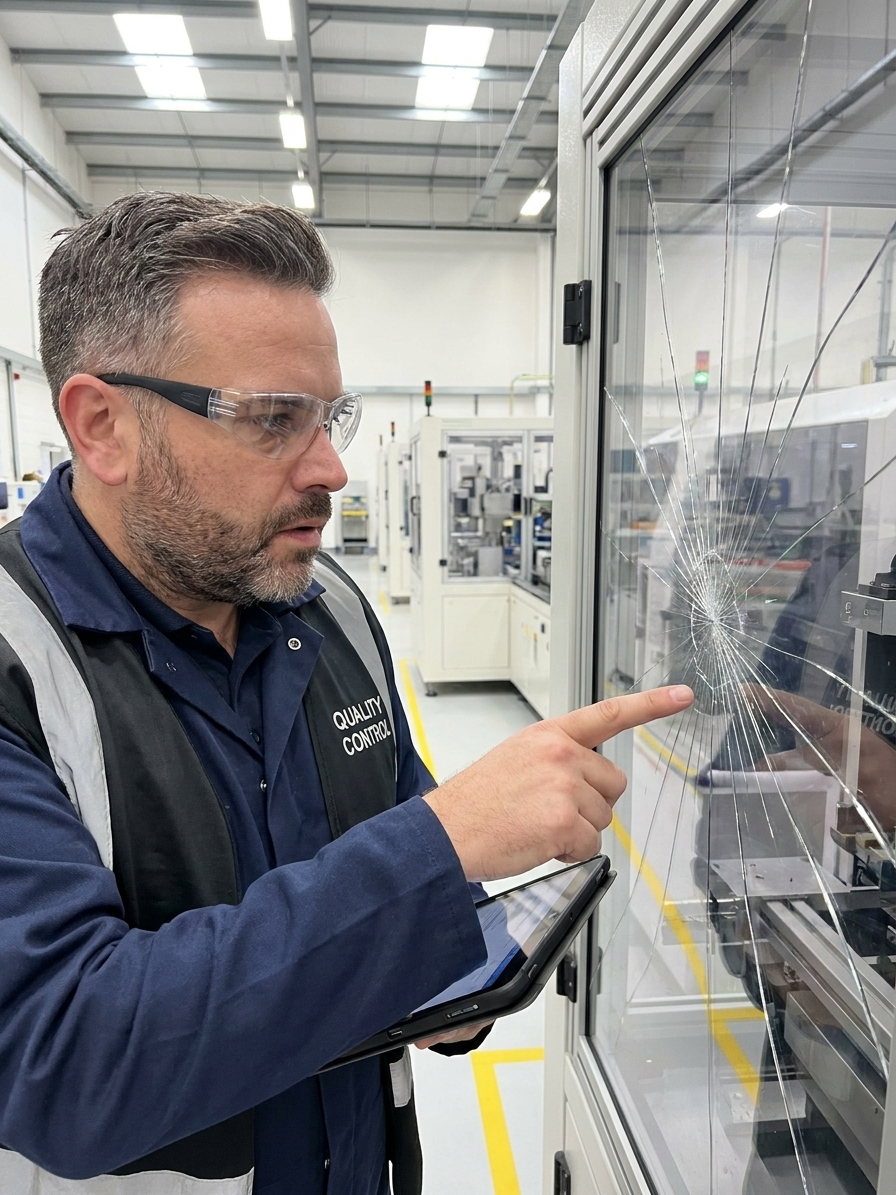
A manufacturing facility communicates its actual quality standards through the deviations it tolerates. When leadership walks past an expired calibration sticker, initials a first-piece inspection without verifying the data, or ignores a temporary fixture modification, they send a clear signal. That signal states the documented management system is aspirational, while the operational standard is whatever prevents the line from stopping.
This behavioural drift operates exactly like the Broken Windows Theory of criminology. Introduced in 1982 by James Wilson and George Kelling, the theory argues that visible signs of disorder invite progressively severe transgressions. I have audited dozens of plants certified to ISO 9001 and IATF 16949, and the correlation is absolute. The facilities experiencing the most severe field failures and customer escapes are always those that normalised minor internal violations first.
Quality professionals typically treat minor procedural lapses as isolated incidents. They are not. Every ignored work instruction revision and every rubber-stamped nonconformance report actively degrades the underlying process discipline required to hold tolerances, achieve Cpk targets, and deliver compliant product.
Mapping the Quality Culture Cascade
Quality system decay is not a sudden event. It follows a predictable, four-stage cascade that transforms isolated procedural lapses into systemic failures. Understanding this progression is necessary to halt the deterioration before it generates an unsalvageable defect rate or a catastrophic customer escalation.
It begins with isolated tolerance and ends with normalised negligence. By the time a defect escapes to the customer, the cultural mechanisms that produced it are fully entrenched. Reversing the trend requires identifying and interrupting the process at the earliest possible stage, long before the deviations multiply into an unrecoverable process failure.
The Cultural Decay Cascade in Manufacturing Quality
- 011. ToleranceA supervisor bypasses a check or signs a log blindly. The action is noticed by operators but not addressed.
- 022. NormalisationThe bypass becomes routine. Skipping an MSA check or using an outdated control plan is accepted as standard practice.
- 033. ExpansionOperators apply the same logic to other processes. If this check is optional, others must be. Systemic risk multiplies.
- 044. Systemic FailureA critical defect escapes, triggering an 8D investigation. The root cause is traced back to a bypass initiated months prior.
Where Broken Windows Hide in ISO 9001 Systems
Dangerous deviations rarely look like overt violations on the factory floor. They disguise themselves as practical workarounds, hidden within daily routines that well-intentioned employees have accepted simply to maintain throughput and hit OEE targets.

Documentation theatre is the most common broken window. This occurs when operators complete quality records, such as SPC charts or torque logs, in a batch at the end of a shift rather than at the point of execution. The ISO 9001 certificate remains valid on paper, but the data is fictional. It trains the workforce that the record matters more than the physical reality of the process.
Escalation avoidance is equally destructive. When an operator flags a worn tool or an out-of-spec detail and management responds with indifference, the feedback loop closes. The operator stops reporting. The reporting system becomes a compliance mechanism rather than a tool for defect prevention, leaving the quality department completely blind to emerging risks on the line.
The Compounding Mathematics of Minor Deviations
Human bias leads us to treat small deviations as additive. The mathematical reality of complex manufacturing is that they are multiplicative. Organisations that calculate risk linearly fundamentally misunderstand how 8D root causes actually materialise.
Consider an assembly with fifty distinct process steps. If a plant culture tolerates just a one per cent deviation from standard operating procedure at each step, the probability of perfect execution across the entire value stream is roughly 60.5 per cent. This means nearly forty per cent of assemblies will contain at least one process deviation.
Because these deviations compound, a slight variation in raw material, combined with a marginal tool wear condition and an ignored torque tolerance, will produce an exponentially larger defect in the final product. This is the mathematical mechanism behind how standardised, heavily audited plants still ship nonconforming hardware to aerospace and automotive customers.
The Real Cost of Acceptable Deviations
IATF 16949 and the Discipline of Fixing Deviations
Repairing a broken quality system requires more than correcting the deviation. You must eliminate the conditions that allowed the window to break in the first place. This means enforcing IATF 16949 and AS9100 standards with absolute operational rigour, regardless of production pressure.
Visual management is the first mechanism. You cannot expect operators to uphold a standard they cannot instantly reference. Specifications, control plans, and PFMEA-driven reaction plans must be posted clearly at the point of use. When the correct state is visually obvious, the broken window becomes impossible to ignore for anyone walking past the station.
The fastest way to destroy a quality culture is to ignore the people on the floor trying to protect it.
Closing the loop on every reported issue is mandatory. If a line operator raises a concern about a marginal measurement and receives no feedback from engineering, the reporting system is functionally dead. A robust CAPA system must burp back results to the shop floor. When the loop closes, the culture of prevention strengthens.
Comparing Healthy and Degraded Quality Environments
The operational difference between a resilient plant and a failing one is rarely found in their capability data or certification certificates. The difference is exclusively found in how they handle marginal readings and procedural friction during a high-pressure production shift.
A healthy plant treats a borderline gauge reading as a stop condition. The line pauses, the supervisor investigates, and the process is corrected. The delay is intentional. A degraded plant absorbs the same reading to save thirty minutes of downtime, unknowingly guaranteeing a much larger operational failure further down the value stream.
Plant Responses to a Borderline Gauge Reading
Compliant Plant Response
- Operator stops the machine and locks the station to prevent further nonconformance.
- Supervisor isolates the last three parts for 100 per cent containment and inspection.
- Quality engineer recalibrates the gauge and investigates the process variation.
- Thirty-minute delay is logged against OEE but prevents a guaranteed field return.
Degraded Plant Response
- Operator sees the reading is close enough and continues running the cycle.
- Supervisor notices but ignores it to protect the shift's output and efficiency targets.
- No MSA is performed; the gauge continues to drift further out of specification.
- Output is met, but the batch requires a recall after the customer flags the defect.
Leadership Signals and Audit Integrity
Leadership behaviour is the strongest signal in any manufacturing environment. A plant manager who stops to pick up a dropped component or challenge an informal workaround sets a different operational tone than one who walks straight past the debris. Every leader either reinforces or undermines the documented quality system with their physical presence on the floor.
This is particularly true during internal audits. If your VDA 6.3 process audits or layered process audits consistently return zero nonconformities, the audit system itself is deeply broken. An audit program is a diagnostic tool. Finding zero issues does not indicate excellence; it indicates blindness, willful or otherwise, to the actual conditions on the floor.
Audits must be performed with the same rigour as a third-party registrar. If your internal teams only audit the clean, controlled areas of the factory while steering clear of the legacy production cells, the organisation is performing compliance theatre. Real quality assurance requires investigating exactly where the process margins are tightest.
The operators, technicians, and inspectors on the production floor already know where the broken windows are. They watch management walk past them every day. The function of a quality leader is to systematically find those deviations, repair them publicly, and prove that the documented standard is the only acceptable operational reality.
Rebuilding the Quality Standard
The Broken Windows Theory operates effectively in both directions. Just as one ignored procedural violation accelerates systemic decay, one repaired deviation signals that the standard still holds absolute authority. The relentless, unglamorous daily practice of fixing quality windows is what separates a certified plant from a genuinely capable one.
Every expired calibration sticker you replace matters. Every incomplete control plan you return to engineering matters. Every informal shortcut you interrupt and every marginal Cpk you refuse to accept defines what your organisation actually believes about quality control. These are not small, administrative acts. They are the operational mechanisms of cultural engineering.
Quality is not a motivational poster or an annual awareness campaign. It is the enforced tolerance level on the shop floor. Fix one broken window today, enforce the standard without exception tomorrow, and observe how quickly the operational environment stabilises to match the documented management system.