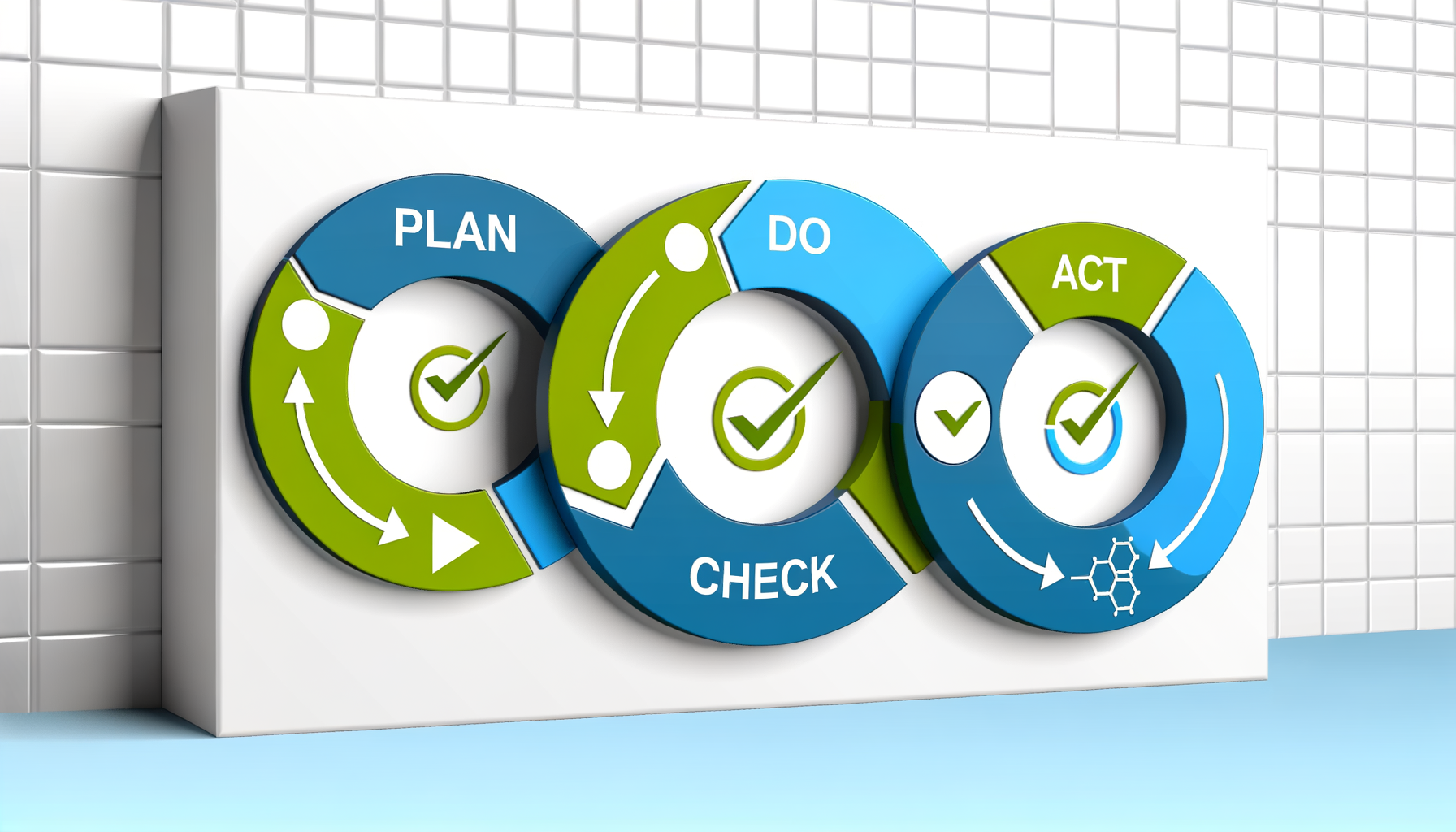
Manufacturing leaders routinely confuse motion with progress. They demand higher output, push for faster cycle times, and exhaust their workforce while customer complaints and internal scrap rates climb. The root cause is rarely a lack of effort; it is the absence of a disciplined, closed-loop problem-solving methodology.
When a plant manager tells me they know the problem but cannot find the solution, they are usually relying on ad-hoc fixes. Shifting from a reactive firefighting stance to proactive process control requires structure. Plan-Do-Check-Act (PDCA) provides that structure, originally developed by Walter Shewhart and refined by W. Edwards Deming for precisely this type of industrial transformation.
I have implemented this exact framework across automotive and aerospace plants, from greenfield launches to mature Tier 1 suppliers. Its power lies in its simplicity. When applied rigorously, PDCA forces teams to test hypotheses on a small scale, measure the actual variance against expected targets, and standardise only what proves effective.
Plan: Defining the Hypothesis and Scope
A PDCA cycle without a concrete baseline is a guess. Before touching the production line, the planning phase must lock down the specific problem, the baseline KPIs, and the resources required. Vague objectives like "improve efficiency" guarantee vague results. The target must be quantifiable and time-bound.
A viable plan isolates a single metric, such as reducing setup time or cutting internal scrap. It defines the team, secures the necessary process engineer, and extracts baseline data directly from the ERP or MES system. During this phase, you document the current state process map and identify the bottleneck constraints you intend to challenge.
In my experience transitioning ISO 9001 systems, the planning phase is where management most frequently disengages. They allocate resources for the pilot but fail to mandate a strict timeline. A plan without a fixed evaluation date allows scope creep. Set the review checkpoint before the pilot begins, ensuring the team knows exactly what data they must present.
Do: Containing Risk During the Pilot
Never attempt to roll out a process change across an entire facility simultaneously. Isolate the intervention to a single cell or production line. This containment strategy ensures that if the hypothesis fails, you disrupt only a fraction of total plant output. It protects the overall OEE while the team learns.
Select a representative line with typical operational constraints. Implement the planned changes methodically: update the standard work instructions, enforce 5S protocols to eliminate motion waste, and install visual management boards at the point of use. The objective during the Do phase is strictly execution and raw data collection, not premature optimisation.
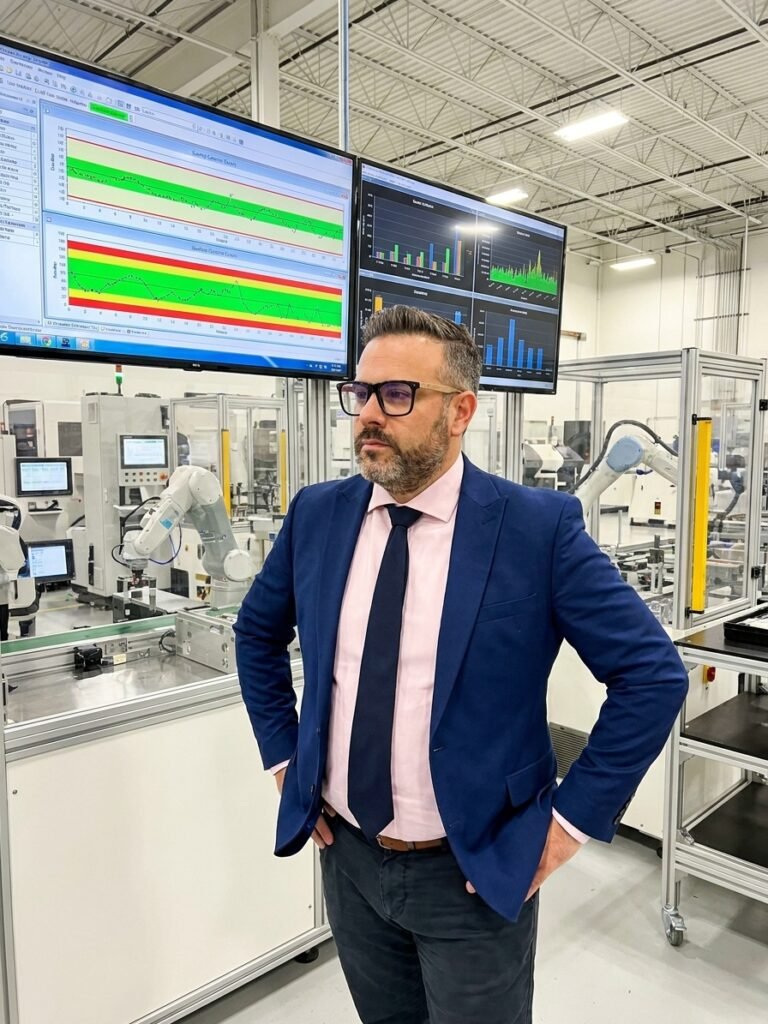
Expect resistance during the initial days. Operators accustomed to legacy routines will test the new boundaries. Supervisors must enforce the new standard work rigidly during this window. Record every deviation, every micro-stop, and every operator question. This qualitative observation is just as critical as the quantitative output data.
Check: Validating Data Against the Baseline
The Check phase separates objective process data from subjective management opinion. After the pilot period, gather the team and compare the actual performance against the baseline metrics defined in the plan. If output per hour increased but scrap rates also climbed, the intervention has failed to generate real value.
Examine the failure modes as rigorously as the successes. If a visual management board became cluttered and ignored, it failed in its primary function of making abnormalities instantly visible. If kaizen meetings devolved into complaint sessions, the facilitation method requires a hard reset. Identify precisely which elements of the change drove the positive variance.
A robust check phase requires statistical validation, not just a glance at the daily production board. Calculate the Cpk before and after the intervention to verify that process capability has actually improved. Ensure that the measurement system itself was not compromised, validating the data through established MSA protocols.
Defining the Pilot Evaluation Targets
Act: Standardisation and Rollout
If the data validates the hypothesis, the Act phase begins. This is where teams standardise the successful interventions into the formal quality management system. Update the PFMEA, revise the control plans, and reissue the standard work instructions. A change does not exist until it is fully documented and locked into the ISO 9001 framework.
Standardisation requires stripping away unnecessary complexity. If pilot work instructions were overly dense, rewrite them. The goal is a procedure an operator can execute flawlessly on a Monday morning. Simplify visual boards to show only critical thresholds and current status. Formalise the new routines so they survive personnel turnover.
A process change does not exist until it is documented in the QMS and verified by an independent audit.
Once the standard is locked, scale the intervention. Roll the proven changes to the next two production lines. Crucially, identify the next bottleneck and immediately launch the subsequent PDCA cycle. Continuous improvement is not a project with an end date; it is the fundamental operating rhythm of the facility.
Scaling PDCA to Complex Equipment Changeovers
The PDCA framework scales seamlessly from micro-process adjustments to major equipment operations. I have applied this methodology to lengthy machine setup and changeover times that severely throttled plant capacity. When setup times stretch for hours, you are not just losing machine availability; you are artificially inflating inventory buffers to compensate.
In one heavy industrial setting, multi-hour changeovers were the standard bottleneck. By applying PDCA and integrating Single Minute Exchange of Die (SMED) methodologies, we targeted an aggressive reduction. The Plan phase involved mapping every internal setup step. The Do phase converted those internal steps to external ones while the machine was still running.
The initial Check showed a significant reduction, but short of the ultimate target. However, the data revealed that tool standardisation and pre-staging were the primary drivers of the improvement. In the Act phase, we formalised the new setup procedures, trained all shift supervisors, and rolled the standard out across every line, securing substantial annual cost recovery.
Executing a Closed-Loop Improvement Cycle
- 011. PlanDefine the problem, isolate the bottleneck, and set quantifiable targets.
- 022. DoImplement the new standard on a single pilot line and collect raw data.
- 033. CheckCompare pilot data against the baseline using statistical validation.
- 044. ActStandardise the gain in the QMS and launch the next iteration.
Building a Resilient Quality Culture
The ultimate yield of rigorous PDCA implementation is cultural transformation. When operators see that their input during the pilot directly alters the standard work, they stop acting as passive bystanders. They transition into active stakeholders. This shift is what drives sustainable OEE improvements far more reliably than top-down mandates.
A facility locked in a reactive loop relies on heroic firefighting. Operators and engineers chase defects downstream, applying containment actions that never address the root cause. Implementing PDCA systematically trains the organisation to hunt for the upstream constraint. It builds an environment where problems are identified visually and solved at the source.
Quality is not a function of luck or intense end-of-line inspection. It is the deliberate output of a systematically controlled process. By institutionalising the continuous improvement cycle, you ensure your plant remains proactive. You engineer systems that do not break, rather than rewarding teams for rapidly fixing systems that should never have failed.