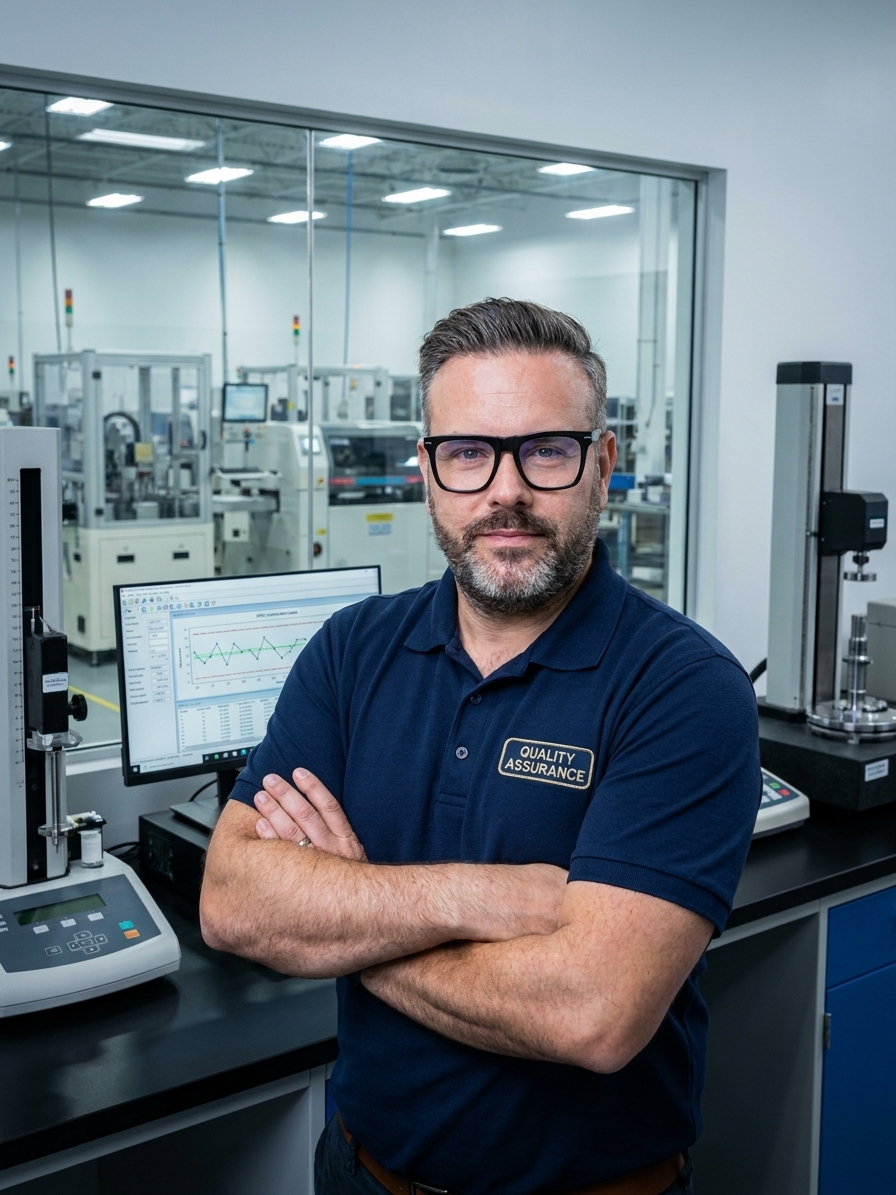
Every quality professional knows the operator who can hear a stamping press drifting out of tolerance. You promoted that person into a team lead or supervisor role. Six months later, your defect rate creeps upward, the new supervisor is overwhelmed, and the inspector vacancy they left behind remains desperately unfilled.
You did not promote them because they demonstrated leadership potential. You promoted them because they possessed extraordinary technical capability. In doing so, you simultaneously lost your best inspector and gained your most incompetent manager.
This is the Peter Principle, defined by Dr. Laurence J. Peter in 1969. Organisations promote people based on performance in their current role rather than aptitude for the next one. In manufacturing, the logic feels meritocratic: reward excellence with advancement. Yet the skills that make an exceptional CNC operator have almost zero overlap with those required of a production supervisor.
The Double Loss in Quality Departments
The Peter Principle hits quality functions with particular cruelty because quality work sits at the intersection of deep technical expertise and broad organisational influence. When a senior inspector is promoted to supervisor, the immediate result is a net negative. You lose their defect-detection capability at the line and fail to gain the managerial competence you actually needed.
This double loss compounds silently. The inspector you promoted was likely mentoring junior staff and catching subtle process drift before it escalated into a customer complaint. They held the institutional memory for why specific measurement protocols exist and what happens when operators shortcut them. All of that operational intelligence vanishes the moment they move into an office to struggle with budget spreadsheets.
Meanwhile, their replacement takes months or years to develop the same intuitive grasp of the process. During that gap, Cpk values degrade, audit findings accumulate, and 8D response times increase. Nobody connects these quality metrics to the promotion everyone celebrated two quarters ago. The causal link is invisible because the system itself is flawed.
Why Manufacturing Hierarchy Accelerates the Problem
Manufacturing plants feature narrow organisational ladders with very few rungs. The jump from operator to team lead to supervisor requires massive shifts in responsibility over just two steps. Unlike software engineering, where individual contributors can progress through multiple tiers without managing people, manufacturing forces every advancement seeker into people management.
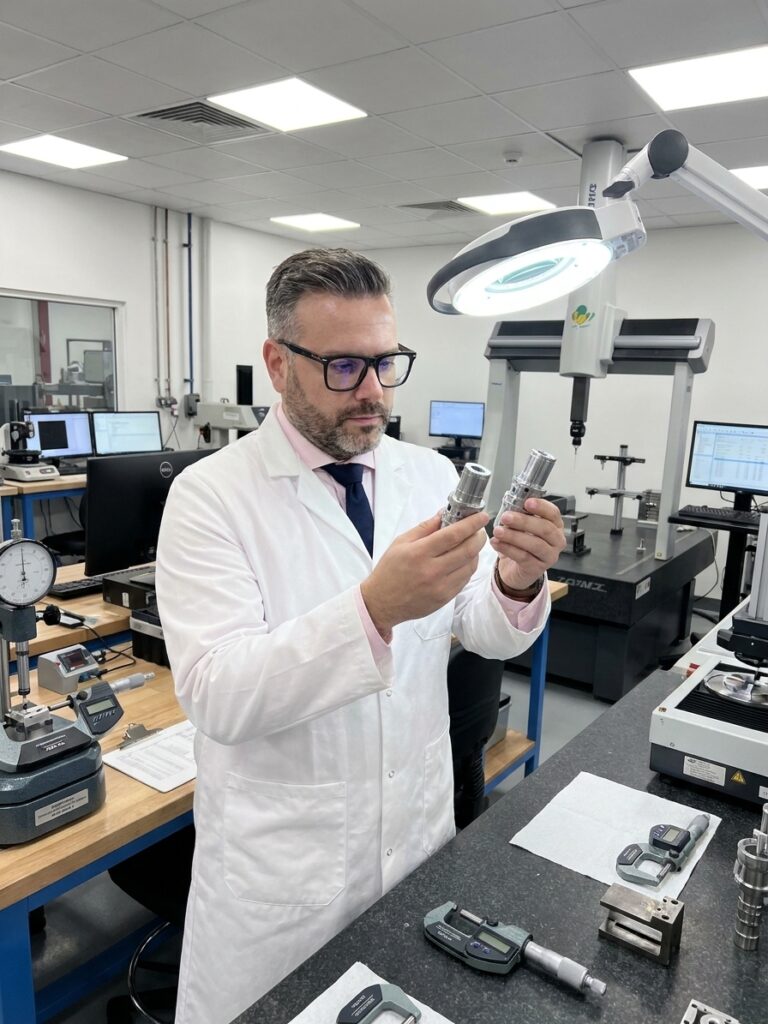
Plant cultures revere technical prestige. The worker who can set up a die fastest, troubleshoot a robotic weld cell, or interpret a CMM report instantly earns immense respect. Management translates this respect directly into promotion consideration, entirely disregarding whether the individual has any aptitude for the interpersonal demands of leadership.
Manufacturing runs on an urgency culture that actively prevents thoughtful succession planning. When a supervisor resigns, the position must be filled by Monday. There is no time to assess leadership traits or run a development pipeline. The best available person gets the job, and "best available" almost always means the strongest technical performer in the adjacent role.
I have audited plants where an exceptional quality engineer was promoted to manager just to fill a vacancy. Within a year, their entire department's capability eroded. They spent seventy percent of their time navigating budget constraints and headcount negotiations they had never been trained for, entirely abandoning the SPC and PFMEA work that had made them invaluable.
Skill Clusters That Do Not Overlap
To stop the Peter Principle, quality leaders must recognise that adjacent organisational roles demand fundamentally different skill sets. Treating the progression from operator to manager as a natural evolution is a category error. It is a fundamental career change requiring an entirely new toolkit.
The core competencies shift dramatically at each tier. What creates value at the operational level actively hinders effectiveness at the management level. An inspector excels by finding defects; a supervisor who treats their team the same way creates an environment of demoralising micromanagement.
Technical Execution vs. Management Capability
Operator / Inspector
- Procedural discipline and strict adherence to control plans
- Pattern recognition for subtle physical defects and variation
- Tolerance for repetition and sustained micro-focus
- Individual output optimisation
Supervisor / Manager
- Conflict resolution and cross-functional coordination
- Delegation, coaching, and resource allocation
- Systems thinking for overarching QMS compliance
- Decision-making under production pressure
An inspector promoted to supervisor who approaches management like inspection will flag people's mistakes but offer no support. The team feels constantly audited. Morale collapses. The technical depth that made them a go-to expert is entirely useless for navigating the competing priorities of production output and strict IATF 16949 quality standards.
Dual Career Tracks: Separating Pay from Direct Reports
The most effective manufacturing organisations prevent double loss by building parallel career paths. A dual track separates recognition and compensation from people management. An exceptional inspector can advance through technical tiers, gaining pay and influence, without ever being forced to manage a single direct report.
This is not a charitable act. It is economic rationality. The value a Level 5 technical expert creates by preventing field failures and mentoring junior staff almost always exceeds the value a mediocre supervisor creates by signing purchase requisitions. By keeping them on the floor, you protect the precise institutional knowledge your PPAP and APQP processes rely upon.
Treating the progression from operator to manager as a natural evolution is a category error.
Building a technical track requires structural commitment. You must define what a senior technical role looks like and map it to a compensation band equivalent to management. If your highest-paid quality professional is always a manager, you are financially forcing your best technical talent into roles where they will fail.
A Level 5 Technical Inspector should be consulted on every critical engineering change and audit. They should be the highest-paid person in the quality department if their defect-prevention metrics warrant it. This requires executive buy-in to ensure the pay structure is genuinely balanced against management roles.
Deliberate Leadership Development and Trial Periods
Organisations that avoid the Peter Principle identify leadership potential early and test it deliberately. They do not wait for technical excellence to become so conspicuous that promotion feels inevitable. Instead, they create structured opportunities for leadership practice long before a vacancy opens.
Potential leaders should be given lower-stakes assignments: leading a cross-functional kaizen event, acting as a spokesperson during an EASA or customer audit, or managing an improvement project. These experiences serve two purposes. They give individuals real practice, and they provide the organisation with tangible data about whether the person actually possesses leadership aptitude.
When a promotion is made, it should not be a permanent, irreversible decision. Implement acting roles with explicit ninety-day trial periods. The individual steps into the role with a clear understanding that either party can decide to revert to the previous position without career stagnation or stigma.
Leadership Validation Process
- 01Identify Operational SignalsWatch for who naturally coordinates group efforts during line downtime.
- 02Assign Micro-LeadershipHave them lead a specific root cause analysis or 8D investigation.
- 03Implement Trial PeriodUse a 90-day acting supervisor role with safe reversion built in.
- 04Confirm or RevertUse actual performance data to make the final promotion permanent.
Crucially, making trial periods work requires a cultural shift. Returning to a technical role must be framed as a mature, self-aware decision rather than a failure. In plants that execute this well, the people who choose to return to their technical roles often become even more valuable, possessing a deeper understanding of the broader organisational context.
Alongside trials, mandate contextual management training before the promotion takes effect. Generic corporate seminars are insufficient. New supervisors need specific training on manufacturing realities: how to give performance feedback to a former peer, how to run an effective shift handoff, and how to uphold quality standards when the plant manager is demanding immediate output.
Assessing the Damage and Acting Now
If you oversee quality talent, map your current team against the Peter Principle immediately. Evaluate every supervisor and manager. Ask whether they were promoted based on demonstrated leadership competence or merely technical excellence in their previous role. Be ruthlessly honest about the findings, even if it exposes critical structural vulnerabilities.
The people stuck in these mismatched roles are rarely to blame. They were excellent at their jobs, recognised for it, and offered more money and security. Saying no to a promotion in a manufacturing culture that equates advancement with personal worth requires courage most people do not possess. The failure belongs to the system that offered them the trap.
If you are a quality leader recognising yourself in this pattern, separate your identity from your job title. You may be a mediocre manager who was once an exceptional engineer. The solution is to acknowledge the gap honestly and advocate for a technical role that better fits your actual capabilities. Your organisation needs your expertise more than your signature on a holiday roster.
Create a technical advancement track today. Even a simple structure with three or four levels allows your best people to increase their earnings without abandoning the work they excel at. The return on investment for keeping a master inspector on the floor vastly outweighs the cost of cleaning up the process failures that follow their departure into management.