
I once watched a quality manager tick boxes on a clipboard during a surveillance audit. The production line was running, operators were focused, and the documented information was pristine. But when I asked an operator about her quality objective for the quarter, she referred me to her supervisor. The facility held ISO 9001 certification, yet the people building the product had no concept of what quality required of them personally.
This gap between a certified management system and actual operational reality is what ISO 9001:2026 targets. The revision forces organisations to stop treating quality as a documentation exercise. It demands verifiable evidence that personnel at all levels understand how their specific tasks drive strategic quality objectives, and that top management is actively steering those outcomes.
Meeting this standard requires dismantling the compliance mindset. You cannot audit a culture into existence by rewriting a manual. The transition demands structural changes to communication, metric visibility, and psychological safety, moving the focus from what the procedure says to what the operator actually does when the auditor leaves.
Defining the Gap Between Paper and Practice
A quality culture exists when every operator makes decisions supporting quality objectives without a supervisor watching. It is the procurement manager who rejects a nonconforming shipment because they understand the downstream assembly risk, not because the procedure dictates a signature. It is an operator who activates the andon cord, trusting the system will reward the intervention rather than penalise the downtime.
Throughout my career implementing systems at a major aerospace manufacturer, SNOP, and WITTE Automotive, I have audited the full spectrum of organisational behaviour. In weak cultures, the quality department operates as a gatekeeper that production engineers actively work around. In strong cultures, defect prevention is so deeply embedded into daily operations that intervention from the quality team becomes the exception.
The difference between these two states is never the structure of the documented information. Both facilities might use identical Control Plans and PFMEA documents. The difference is purely behavioural. One organisation relies on inspection to catch defects; the other relies on operator engagement to prevent them. ISO 9001:2026 is designed to expose exactly this operational difference.
Structural Changes Demanded by the 2026 Revision
The 2026 revision fundamentally alters several core clauses. Leadership engagement under Clause 5 moves beyond signing the quality policy. Top management must now demonstrate active participation in the QMS through regular review of quality metrics and direct accountability for systemic nonconformities. Signing documents is no longer sufficient evidence of commitment.
Competence and awareness requirements now link directly to output. Training matrices alone do not satisfy the auditor. You must demonstrate that personnel understand exactly how their work impacts specific Cpk values, scrap rates, or customer PPAP submissions. The standard now demands evidence of this correlation between daily tasks and organisational goals.
Communication shifts from top-down information distribution to verifiable two-way feedback channels. Clause 4 requirements for interested parties also tighten. Understanding what employees, customers, and suppliers actually require becomes a fundamental input for the QMS, not a contextual box-checking exercise done during the initial certification push.
Embedding Context on the Shop Floor
Quality initiatives fail when they dictate the 'what' and 'how' but bypass the 'why'. If operators are assembling complex mechanisms without understanding the end-use application, they will not recognise critical characteristics. They will blindly follow the control plan, missing the subtle process deviations that cause field failures.
I addressed this directly at WITTE Automotive. Most operators on the door latch line did not know which OEM brand received their components. We installed displays showing the final vehicle application and detailed the safety implications of a latch failure. We framed the customer requirements not as internal procedures, but as safety guarantees to the end-user.
Leading Indicators of Cultural Health
The change was immediate. Operators began identifying assembly variations that our formal inspection routes had missed. We did not change the process instructions; we simply provided the operational context. When people understand the failure mode, they do not need a checklist to tell them to investigate a discrepancy.
Visibility and Psychological Safety in Action
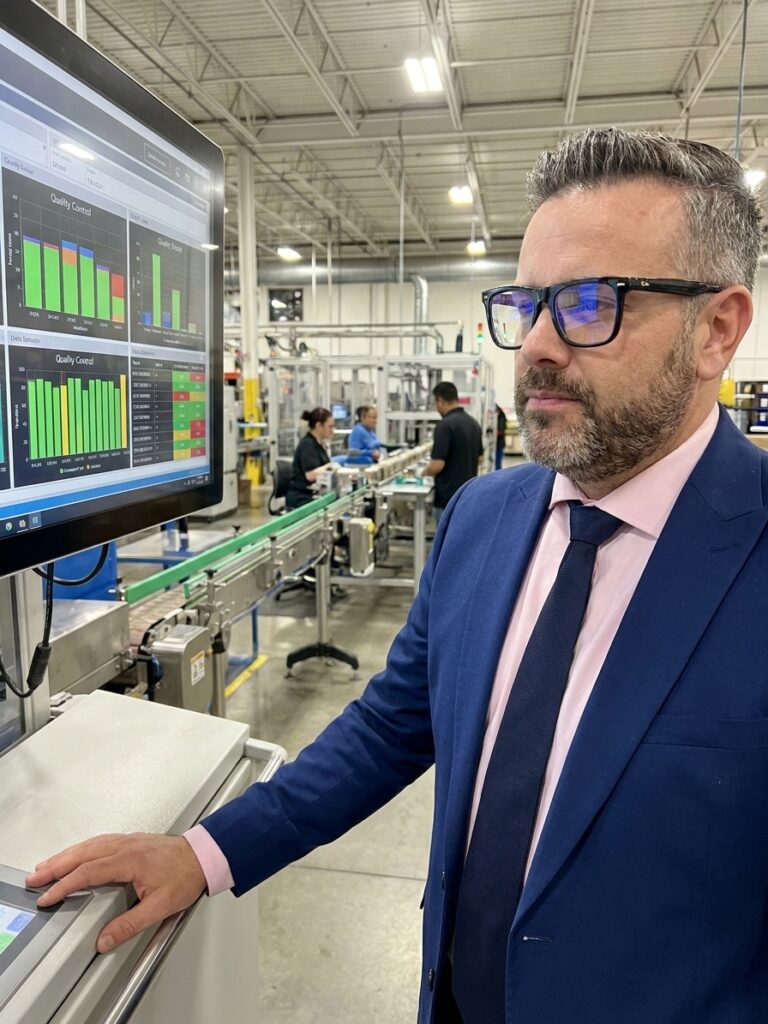
Quality data confined to the Quality Manager's office builds no culture. You must move metrics into public spaces, placing OEE, scrap trends, and open 8D actions on the production floor. Celebrating a caught defect loudly, rather than treating it as a routine interruption, signals to the entire shift what the organisation actually values.
I applied this principle at a major aerospace manufacturer by restructuring the shift handover. Every morning huddle began with a quality review, pushing production metrics to the second agenda item. It required exactly three weeks for operators to start proactively raising concerns during the meeting, rather than waiting for a downstream workstation to discover them.
None of this works without psychological safety. I learned this at SNOP while investigating a persistent, untraceable defect. During a floor walk, an operator casually mentioned he had noticed the root cause months prior but stayed silent because a previous colleague was reprimanded for halting production. The documentation system looked flawless, but fear had completely disabled the QMS.
Culture is what people do when the procedure isn't looking.
We corrected the SNOP environment by mandating that any operator could halt the line for a quality concern with zero risk of penalty. We reviewed stoppages in daily huddles and publicly acknowledged the operators who triggered them. Within three months, our internal defect rate dropped by forty per cent. We changed the behaviour, and the defect metric followed.
Compliance Audit vs Cultural Health
Compliance focus
- Organisation prepares records and rehearsed answers for the auditor.
- Leadership signs policies but rarely reviews systemic quality metrics.
- Training matrices are complete, but operators cannot explain product relevance.
- Defects are tracked, but line stoppages are discouraged to protect OEE.
Culture focus
- Operators proactively flag deviations before the auditor arrives.
- Top management reviews quality KPIs and acts on systemic nonconformities.
- Operators explain exactly how their station impacts customer safety.
- Andon pulls are celebrated as cost-saving prevention, not downtime losses.
Measuring What the Auditor Cannot
Traditional audits are inadequate for measuring culture. An auditor reviews documentation, conducts scripted interviews, and observes a facility on its best behaviour. The conference room is spotless, and the answers are rehearsed. The audit model itself is fundamentally limited when evaluating how people behave under actual production pressure.
ISO 9001:2026 pushes for evidence of effectiveness, but organisations must build their own internal mechanisms to measure cultural health. Generic employee engagement surveys are insufficient. You need targeted surveys asking if personnel understand current quality objectives and feel safe raising concerns to management without retaliation.
Skip-level conversations are critical. When directors speak directly with line operators without the management filter, they uncover the systemic issues that daily reports obscure. Reviewing onboarding feedback is equally vital. Ask new hires what they observed in their first thirty days. Their fresh perspective will expose the true cultural reality faster than any internal audit cycle.
The Operational Cost of Ignoring Culture
Organisations that treat the 2026 revision as a documentation update will secure a compliant system on paper. They will not secure fewer defects, faster problem resolution, or higher employee engagement. Eventually, the gap between the documented system and the shop-floor reality will surface through a major customer complaint, a costly quality escape, or a severe audit nonconformity.
Supply chains are increasingly complex, and customer expectations demand strict adherence to frameworks like IATF 16949 and AS9100. The cost of quality failures compounds when operators do not understand the broader system. If your performance reviews reward only throughput and cost reduction, your workforce will optimise for speed and ignore the critical characteristics they were never taught to value.
ISO 9001:2026 explicitly acknowledges that quality is a human endeavour. If your organisation uses this revision as a catalyst to invest heavily in operator engagement, the returns will extend far beyond audit readiness. You will see it in lower scrap rates, faster 8D closures, and an operator who can explain exactly why their work matters to the final product.