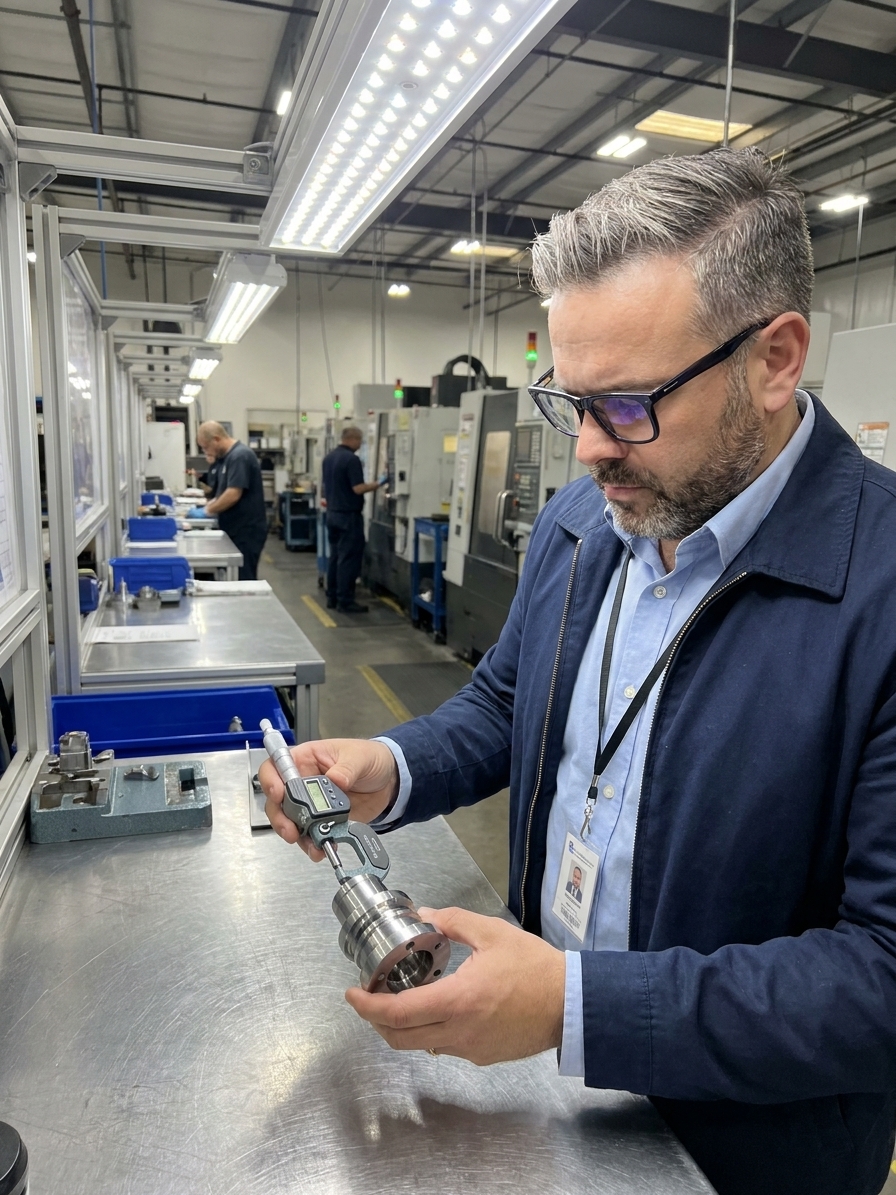
A final inspection station catches 99% of defects before they reach the customer. Customer complaints are rare. Quality dashboards look acceptable. Everyone sleeps well. Now ask the harder question: how many defects would the production floor produce if that inspection station did not exist?
If the honest answer is significantly more, you do not have a quality system. You have a safety net. And the presence of that safety net is changing upstream behaviour in exactly the direction you do not want: toward less prevention, more rework, and flat first-pass yield.
This is moral hazard in a manufacturing context. The downstream function — inspection, sorting, rework — insulates the upstream process from the consequences of its output. The catcher becomes the enabler. The system works exactly as designed while quietly making quality worse.
Recognising Moral Hazard in Production Systems
Moral hazard is an economics concept describing what happens when one party is insulated from risk because another party bears the consequences. In insurance, comprehensive coverage makes drivers slightly less careful — not through malice, but because the incentive structure shifted. The same mechanism operates on every production floor where a downstream function exists to catch what an upstream process creates.
The critical point is that your inspection station is not useless. It is performing two functions simultaneously: catching defects and reducing the incentive to prevent them. Most organisations measure only the first effect. The second goes untracked, unreported, and unmanaged — and it is the one that determines whether your quality is genuinely improving or merely being filtered.
I have audited plants where the rework cell operated as a permanent fixture with dedicated staff, dedicated tooling, and its own KPI dashboard. Management tracked rework cycle time as a performance metric. Nobody tracked first-pass yield. The rework cell was efficient, praised, and busy — and it was the reason the welding department's defect rate had not improved in three years.

Where the Hidden Incentive Lives
Moral hazard does not appear on dashboards. It hides in the gaps between processes — the points where responsibility is transferred and risk is absorbed downstream. A welding department produces parts with incomplete penetration. The rework team fixes them quickly. Management praises the rework team for turnaround time. The welding department never feels the full cost of its poor output because someone else always absorbs it.
The welders do not see the rework paperwork. They do not hear the complaints that rework prevented. Parts move downstream, and the system signals that everything is acceptable. First-pass yield stays flat or declines, not because anyone decided to do worse work, but because the feedback loop that would drive improvement was severed by the rework function itself.
The same pattern repeats in supplier quality. A supplier ships mixed lots. Rather than reject the shipment and force corrective action, you sort in-house. The sorting team is efficient, production keeps running, and the supplier learns that questionable quality will be cleaned up at your expense. Over twelve months, incoming defect rates do not improve. Your sorting headcount quietly grows. You are subsidising the very problem you think you are managing.
Customer service creates the same dynamic internally. The service team handles complaints with professionalism, issues replacements, and smooths over quality failures. Customers stay. But the quality department sees only the formal complaints that survived the service layer — a filtered, diminished data set that systematically underestimates the severity of the underlying problems.
Why Standard Quality Metrics Miss the Problem
The systems that create moral hazard are the same systems that are working as designed. Inspection catches defects — that is its job. Rework fixes parts — that is useful. Customer service retains customers — that is valuable. The hidden second function, behaviour alteration upstream, produces no data and triggers no alarms.
Standard quality KPIs reinforce the blindness. Defects caught at final inspection are tracked going up, and the team is congratulated. Rework cycle time is tracked going down, and the team is praised. Customer complaints are tracked staying low, and the organisation concludes it is doing well. None of these metrics reveal that first-pass yield has stagnated while appraisal and failure costs creep upward.
IATF 16949 and AS9100 both require continuous improvement evidence, but they do not prescribe which improvement metric carries the most weight. Organisations gravitate toward metrics that make the dashboard look green — and the greenest metrics are always the ones measuring the safety net, not the ones measuring whether the net is still necessary.
Cost-of-quality distortion under moral hazard
The Cost Architecture of a Broken Feedback Loop
Organisations suffering from quality moral hazard develop a distinctive cost structure. Prevention costs stay low — because the organisation invests in catching rather than preventing. Appraisal costs rise continuously as inspection scope expands to compensate for stagnant process capability. Internal failure costs stabilise at a level that feels acceptable because rework has been normalised as an operating expense.
The total cost of quality climbs steadily because you are paying for both the defects and the systems to catch them. More importantly, the defects are not decreasing because the catching systems are reducing the pressure to prevent them. You are running a treatment facility that specialises in injuries rather than a prevention programme. Treatment improves every year. Injuries never stop.
This cost structure is self-reinforcing. When appraisal and failure costs grow, they consume the budget that should fund prevention. The prevention investment that would eliminate the root cause never happens because the cost of not preventing — rework, sorting, inspection — has already been absorbed into the operating budget as normal. The system locks itself in place.
Moral hazard doesn't require malice. It requires insulation from consequence — and most inspection systems are engineered to provide exactly that.
Breaking the Cycle Without Removing the Net
Breaking moral hazard does not mean eliminating safety nets. It means redesigning incentive structures so that the nets do not reduce the motivation to build quality in at the source. The safety net stays. The insulation goes.
Make the cost of failure visible to the source. The welding department should see rework hours, material cost, and delivery delay caused by their incomplete penetration — not in a monthly summary that nobody reads, but as real-time data posted at the station where the defect originates. When the source experiences the consequence, the feedback loop closes and the PFMEA gets updated with real entries instead of theoretical ones.
Push quality verification as close to the point of production as possible. When the operator who creates the product also verifies it — using mistake-proofing, in-process checks, or poka-yoke — the incentive structure aligns immediately. The person who makes the error bears the consequence of the error. No buffer, no transfer, no insulation.
Closing the feedback loop at the source
- 01Track first-pass yield per stationMake it the primary metric, replacing downstream defect-catch rates
- 02Push verification to the operatorIn-process checks align creation with consequence immediately
- 03Assign rework cost to sourceReal-time visibility, not monthly summaries that nobody reads
- 04Reject nonconforming supplier lotsStop sorting — let the supplier feel the full cost of poor quality
- 05Eliminate the rework cellTreat rework as an anomaly requiring 8D, not a staffed process
Metrics That Expose the Hidden Cost
First-pass yield — the percentage of product that moves through the process correctly the first time without rework, sorting, or exception — is the antidote to moral hazard metrics. If first-pass yield is 85% and final inspection catches 99% of remaining defects, those two numbers tell a fundamentally different story than the customer complaint rate. Track first-pass yield at every station and make it the metric that drives improvement priorities.
Build a cost-of-quality model that separates prevention, appraisal, and failure costs. Track the trend over time. If detection and failure costs are growing faster than prevention costs, moral hazard is at work. The data is already in your finance system — it just has not been structured to reveal the dynamic.
Rework should be treated as an anomaly, not a process. If you have a rework cell operating every day with dedicated staff, you have institutionalised moral hazard. The cell's existence sends a message: producing defects is acceptable because someone will fix them. Track every rework event as a loss, assign it to the source process through 8D methodology, and set targets to eliminate the cause — not to manage the rework more efficiently.
The goal is not to eliminate the safety net. The goal is to build quality that makes the safety net unnecessary — and then keep the net anyway, because you are serious about quality, not reckless. But if your safety net is the reason your quality is not improving, the net is not protecting you. It is holding you exactly where you are.