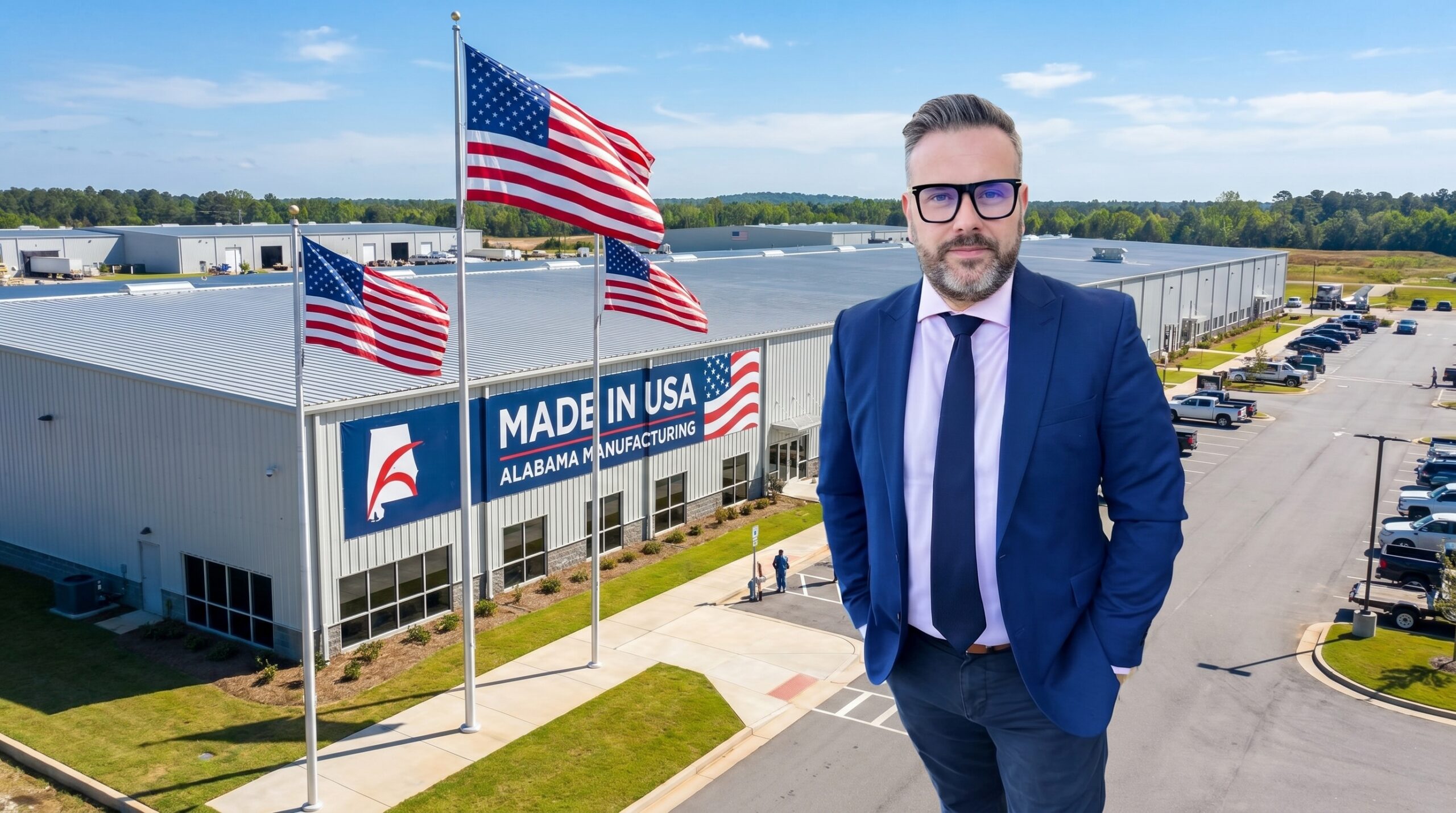
In 2020, I stood in a plant manufacturing components for three continents. The supply chain was fully globalised: material from Asia, assembly in Europe, customers in North America. The model functioned efficiently until successive disruptions exposed its fragility.
The semiconductor shortage, border delays, and container logistics failures forced a strategic shift. American manufacturers began moving production back to the United States. Reshoring is not a political slogan; it is a risk-management decision that fundamentally changes how quality systems must be structured.
When production relocates from Mexico or Asia to the US, the operational parameters shift. Quality professionals inherit higher labour costs, unvalidated local supplier bases, and an undertrained workforce. Simultaneously, customers expect immediate response times and zero-defect performance from facilities located in their own timezone.
Supplier Qualification Under Compressed Timelines
Reshoring demands new local suppliers. Proximity does not guarantee capability. A supplier located fifty miles away without IATF 16949 certification or APQP experience poses the same risk as an unvetted overseas vendor. The qualification process must be rigorous, structured, and immune to launch-schedule pressure.
I have audited plants that shortened supplier validation to meet aggressive ramp-up targets. The consequence is always the same: non-conforming material in the first weeks of production, containment costs, and eroded customer trust. A four-phase qualification approach is the minimum standard for reshored operations.
Phase one is a desktop audit covering QMS documentation, capacity, and financial stability. Phase two requires an on-site audit using VDA 6.3 or an equivalent customised checklist. Phase three mandates trial production with PPAP Level 1 as the absolute floor. Phase four governs volume ramp-up, requiring monitored SPC on critical characteristics and weekly quality reviews.
Four-Phase Local Supplier Qualification
- 01Phase 1: Desktop AuditQMS documentation, certifications, capacity, and financial stability review.
- 02Phase 2: On-Site AuditVDA 6.3 or equivalent customised checklist executed at the supplier facility.
- 03Phase 3: Trial ProductionPPAP Level 1 minimum. Capability data collected on critical characteristics.
- 04Phase 4: Volume Ramp-UpMonitored SPC, weekly quality performance reviews, and containment readiness.

Bridging the Manufacturing Skills Gap
US manufacturing faces a structural shortage of skilled operators. Reshored facilities cannot rely on a pre-existing pool of experienced automotive or aerospace workers. The quality system must compensate through structured, intensive workforce development that certifies competence before an operator touches a production line.
Standardised work instructions must be visual. A twenty-page paper procedure is useless on the shop floor. Operators need single-page, image-based guides that show the correct state and the defect state. Digital work instructions deployed on line-side tablets ensure the latest revision is always in use and eliminate version-control failures.
A buddy system pairing an experienced operator with a new hire for the first month accelerates tacit knowledge transfer. This must be paired with weekly competency assessments. If an operator cannot demonstrate a critical measurement technique or defect identification during a mini-audit, they require immediate retraining before progression.
Training programs must include hands-on simulation in a controlled environment before live production deployment. This is particularly critical for safety-critical or tight-tolerance operations. Two weeks of structured onboarding with a formal certification gate is the baseline, not a luxury.
Building the Greenfield Quality Management System
A new local manufacturing site requires a new quality management system. This is an opportunity to build correct architecture from day one rather than inheriting legacy workarounds. The foundation is a comprehensive quality manual aligned with ISO 9001 or IATF 16949, supported by twenty core procedures covering every aspect of the product lifecycle.
Core Tools implementation is non-negotiable. APQP, FMEA, MSA, SPC, and PPAP must be functional systems, not a binder of documents created solely for customer audits. Control plans must be living documents for every critical process. If the control plan does not match what happens on the floor, the system has already failed.
Layered process audits must begin on the first day of trial production. Waiting until volume production to start LPA means defects are already embedded in the process. The CAPA system must use 8D methodology with mandatory root-cause analysis and verification of corrective action effectiveness before closure.
Calibration programs for all measurement devices and a robust document control system complete the infrastructure. I have seen new plants attempt to operate with informal calibration tracking, only to discover during customer audits that critical gauges were overdue. This destroys launch credibility.
Deploying Technology to Offset Higher Labour Costs
Local production carries higher labour costs than offshore alternatives. Technology is the mechanism for achieving equivalent or lower cost per unit while maintaining tighter quality control. Automated inspection systems using AI vision technology replace manual visual inspection, delivering consistent defect detection rates that do not fatigue at the end of a shift.
Reshored Plant Launch Quality Targets
Digital SPC systems provide real-time monitoring of critical process parameters with automatic alerts. When a process drifts toward a control limit, the system notifies the operator before a non-conforming part is produced. This proactive approach replaces reactive sorting and containment.
Cloud-based QMS platforms unify quality data across multiple locations. For companies operating a reshored plant alongside existing facilities, this provides standardised reporting and immediate visibility into cross-site performance. Predictive maintenance systems complement this by using sensor data to identify equipment wear before it results in process variability.
Case Application: Automotive Connector Reshoring
An automotive Tier 1 supplier relocated electronic connector production from Mexico to the southeastern United States. The drivers were logistics risk, customer demand for domestic content, and lead-time reduction. The target was a reduction from six weeks to five days.
The plant was greenfield. There was no existing operation, no experienced local workforce, and no qualified local supply base. Every supplier required validation from scratch. The quality plan had to run parallel with construction and recruitment.
Months one and two focused on recruiting and training 80 operators and 12 supervisors. A two-week certification program preceded line deployment. Months three and four covered auditing 15 local suppliers, executing PPAP for 8 critical components, and completing MSA for 12 measurement systems.
Trial production in month five implemented SPC on all critical characteristics with a Cpk target of 1.67 for safety-critical features. LPA began on day one. The customer audit scored 94 percent against a 90 percent target. The first run at rate produced zero rejects. After six months of serial production, the plant operated at 12 PPM, achieved an average Cpk of 2.3, recorded zero customer complaints, and delivered 99.2 percent on-time.
The Regional Supplier Ecosystem Reality
Reshoring success depends heavily on regional manufacturing infrastructure. States with established automotive and aerospace corridors offer supply bases, training programs, and logistical advantages that compress the start-up timeline. The southeastern United States has developed a concentration of OEM and Tier suppliers over the past two decades.
Facilities in these regions benefit from proximity to multiple OEMs, port access, and state-funded industrial training programs. However, even within a strong ecosystem, each new supplier must undergo full qualification. Regional concentration does not replace individual process validation.
Companies that prepare their quality systems with integrated Core Tools, a trained workforce, and digital infrastructure will secure a competitive advantage. Those who shortcut the process, skip MSA, or submit PPAP with unverified data will pay for it through recalls, warranty costs, and lost customers.
Proximity does not guarantee capability. A supplier fifty miles away without IATF 16949 poses the same risk as an unvetted overseas vendor.
The Implementation Standard
Reshoring rewrites the rules of industrial quality. The transition from a global to a local supply chain eliminates distance but amplifies the cost of every quality failure. Customers expect domestic production to match or exceed the quality levels they previously accepted from established offshore facilities.
The execution framework is clear. Run the four-phase supplier qualification without concession. Certify every operator before production. Deploy Core Tools as functional systems, not documentation exercises. Layer in digital inspection and monitoring to offset labour costs and drive consistency.
The question for American manufacturing is no longer whether production will return, but how the quality architecture will support it. That answer determines which reshoring investments succeed and which become cautionary examples.