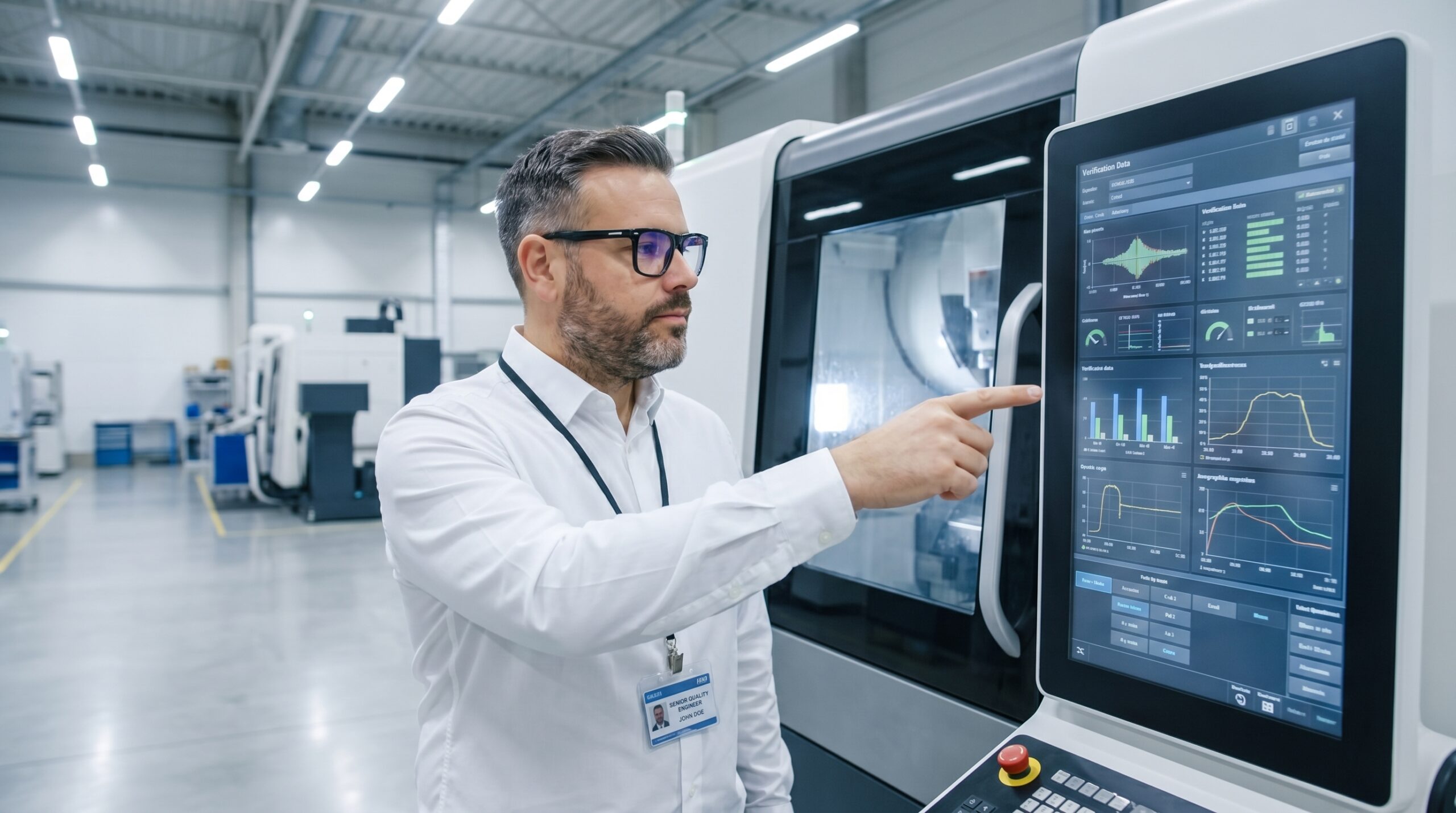
A Tier 1 automotive supplier recently spent three months and significant capital on corrective actions for surface defects on stamped metal components. The OEM rejected their 8D report three times. The core issue was not a lack of effort or capability — the team had executed Ishikawa analysis and implemented tooling decontamination protocols.
The defect returned six weeks later because the identified 'root cause' was merely a contributing factor. Nobody in the problem-solving process stopped to ask the only question that matters: How do we know this is the actual root cause?
I have audited plants that operate exactly this way. Teams jump from symptom identification directly to containment and corrective action, skipping verification entirely. The result is recurring defects, wasted engineering hours, and eroded customer trust.
Identification Versus Verification
Root cause identification uses tools like 5-Why, fishbone diagrams, and fault tree analysis to find a plausible cause. This step is necessary but insufficient on its own.
Root cause verification is the process of proving that the identified cause actually creates the observed defect, and that eliminating it will resolve the issue completely. The distinction is critical. Claiming a cause without proof is an opinion; in quality engineering, as in engineering law, an opinion without evidence holds no weight.
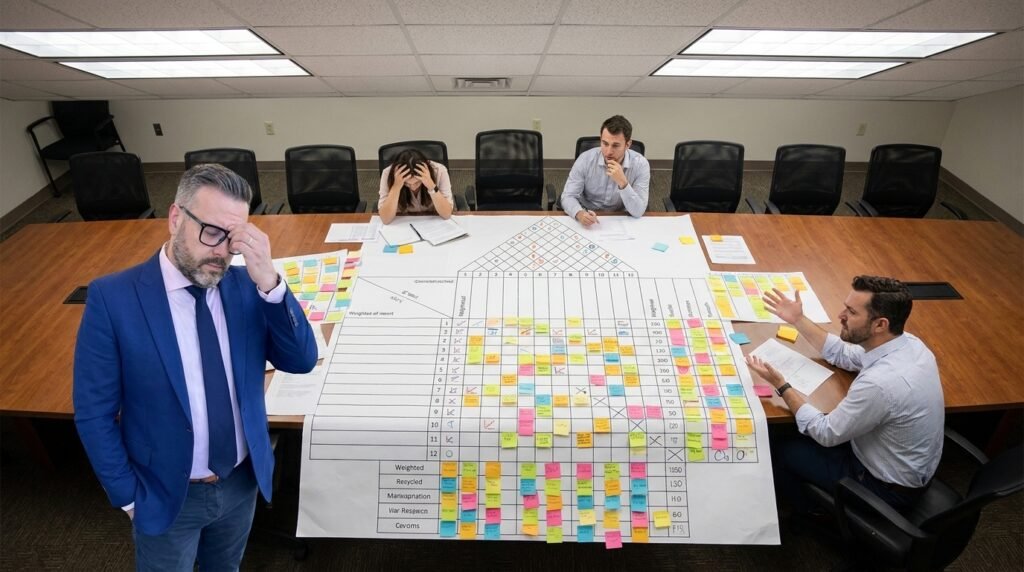
Most 8D reports I review treat identification as the finish line. They list a cause, attach a corrective action, and close the loop. But without a formal verification step, two-thirds of all corrective actions in the automotive industry are likely addressing the wrong problem entirely.
Five Verification Methods for 8D Teams
These five methods move a problem-solving team from hypothesis to demonstrated fact. They are not theoretical constructs — they are field-tested mechanisms that prevent recurring 8D loops.
1. Replication: Can you deliberately cause it?
The strongest form of verification is deliberate replication. If you claim mould contamination causes a surface defect, introduce that specific contaminant under controlled conditions and measure the result. When the supplier I mentioned earlier tried this, the defect appeared — but only in 40% of cycles, versus 90% in production. Contamination was a contributor, not the sole root cause.
2. Elimination: Does removing it make the defect disappear?
The inverse of replication. Completely eliminate the suspected cause from the process and monitor output over at least 30 production cycles. In the same supplier's case, deep-cleaning the mould reduced the defect rate by 60%, but 40% persisted. Partial elimination proves partial causality — you have additional root causes to find.
3. Correlation: Is the relationship causal or coincidental?
Statistical correlation between a process variable and defect occurrence requires production data. I once reviewed a press hydraulic system where oil temperature showed an r=0.87 correlation with the defect. Further analysis revealed oil temperature also correlated with ambient temperature, cycle speed, and seal wear. It was a correlation, not causation.
4. Conditional Reproducibility: Design of Experiments
If a root cause is genuine, varying its level should produce a predictable change in defect severity or frequency. A fractional factorial experiment isolating main effects and interactions will reveal whether the variable carries statistical significance.
5. Logical Falsification: What evidence would disprove your hypothesis?
Inspired by Karl Popper's principle of falsifiability, this method forces the team to actively search for evidence that disproves their root cause. Write down 3-5 predictions that must hold true if the hypothesis is correct, then check each against available data. In the supplier's case, the defect appeared on freshly cleaned moulds — a fact the team had rationalised as 'rapid re-contamination' instead of recognising it as a falsification of their hypothesis.
Applying the Five Verification Methods
- 01ReplicationDeliberately introduce the suspected cause; compare defect rate to baseline.
- 02EliminationRemove the variable entirely; track whether the defect disappears or persists.
- 03DOERun a factorial experiment to test interactions between 3-5 key factors.
- 04FalsificationActively seek data that contradicts the hypothesis; revise if evidence conflicts.
- 05Approved 8DSubmit the report with verified root cause and quantified evidence.
How the DOE Exposed the True Cause
After three failed 8D submissions, the supplier's team applied these methods systematically. During the third week, a factorial experiment tested three variables: mould cleanliness, injection pressure, and melt temperature. The results were unambiguous.
The defect was driven by the interaction between a degrading mould seal and fluctuating melt temperature. Mould contamination was a downstream symptom of the failing seal, not the root cause. The team submitted a revised 8D with replication data, elimination results, and DOE findings. The OEM accepted it on the first review.
If you cannot replicate the defect by introducing the cause, and you cannot eliminate the defect by removing it, you do not have a root cause.
Why Verification Gets Skipped
Three structural pressures drive teams to skip verification and submit untested root causes.
First, customer timing pressure. The OEM demands the 8D by Friday. Management wants to see progress. The team wants the problem closed. Verification takes time, and nobody budgets time for what feels like an extra step.
The paradox is that an unverified root cause costs more time overall, when the defect recurs and the 8D process restarts from scratch.
Second, confirmation bias. The human brain naturally seeks evidence that supports an existing hypothesis and filters out contradicting data. This is precisely why logical falsification must be a formal step — it forces counter-natural thinking.
Third, organisational culture. In many facilities, admitting uncertainty is treated as weakness. Saying 'we have a candidate root cause but need to verify it' sounds less confident than declaring 'we found the root cause.' That cultural posture is what separates professional quality management from amateur guesswork.
| Defect Profile | Recommended Method | Rationale |
|---|---|---|
| Recurring defect | Replication + Elimination | High frequency allows deliberate introduction and removal under controlled conditions. |
| Intermittent defect | Correlation + Falsification | Low frequency demands statistical analysis of historical data and hypothesis testing. |
| Complex multi-variable process | DOE + Falsification | Interactions between variables require factorial analysis to isolate true causality. |
| Safety-critical defect | All five methods | Regulatory and liability exposure demands maximum confidence before containment removal. |
A Protocol You Can Implement Immediately
When a team identifies a root cause, do not accept it for implementation until they complete a one-page hypothesis form. This document forces rigour before any engineering changes begin.
The form requires four elements: a clear statement of the proposed root cause; a description of the exact mechanism by which this cause produces the observed defect; 3-5 measurable predictions that must hold true if the cause is genuine; and a list of conditions that would disprove the hypothesis.
Only after this form is reviewed by an independent function — a colleague from another department or plant who was not involved in the investigation — should the team proceed to corrective action design. That independent reviewer asks one question: Does the logic hold?
Three months after implementing this protocol, the supplier I mentioned at the outset had not only closed the original surface-defect issue permanently, but had also resolved five additional chronic defects that had recurred for years. They changed nothing about their tools, their personnel, or their core processes. They added one step: asking 'how do we know?' before declaring 'we know.'
Root cause verification is not a luxury for when you have time. It is the most frequent point of failure in 8D problem solving. Every recurring defect in your plant is likely traced to an unverified root cause that was closed, celebrated, and then quietly rediscovered.