In 1765, the French philosopher Denis Diderot received a scarlet dressing gown. It was far finer than anything else he owned. He put it on, noticed his old desk looked shabby by comparison, and replaced it. The new desk made his curtains look drab. The new curtains exposed his faded tapestries. Diderot cascaded from one unplanned purchase to the next until he had spent himself into near poverty.
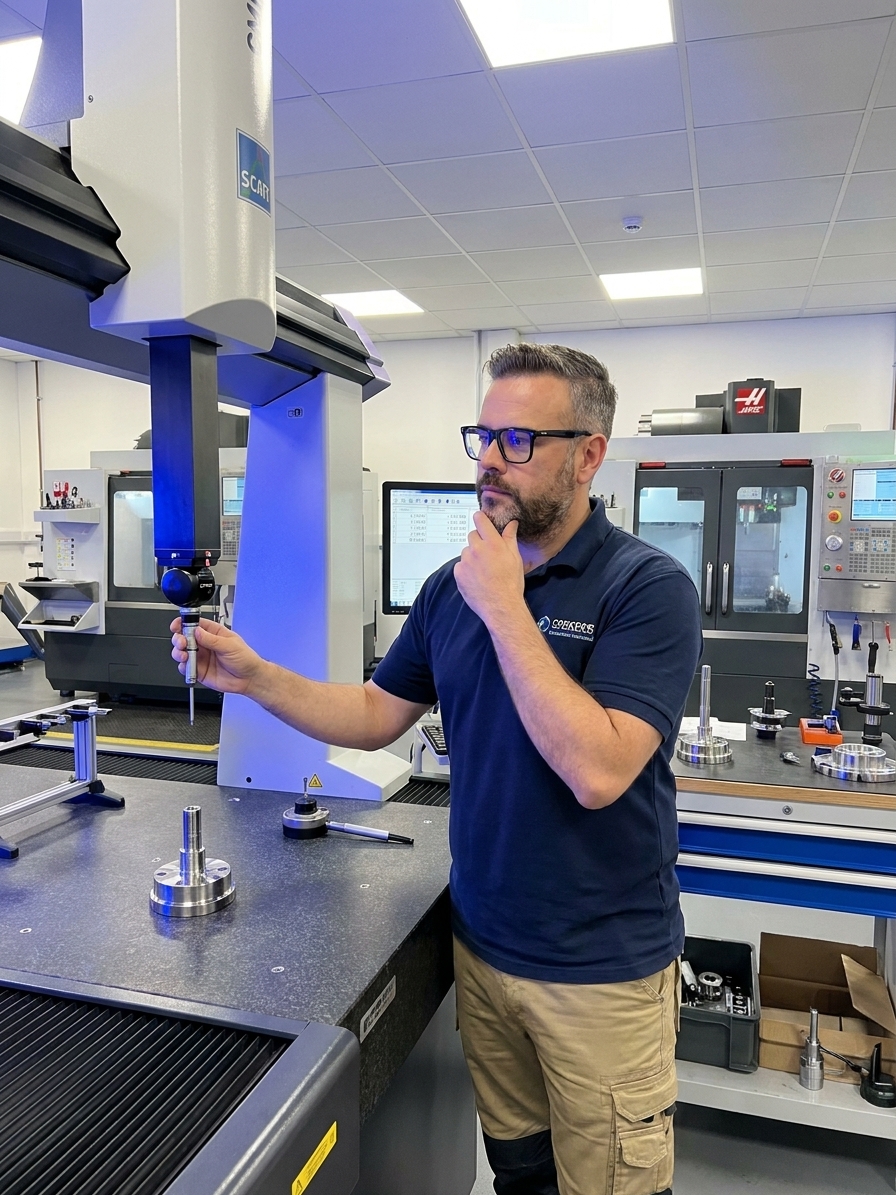
Quality organizations replicate this pattern relentlessly. One justified capital expenditure, such as replacing an aging coordinate measuring machine (CMM), triggers a chain reaction of unbudgeted software, sensor, and infrastructure upgrades. Each individual decision appears rational to the team making it. The cumulative result is a complex, entangled quality data ecosystem that produces dashboards nobody reads and solves problems nobody originally had.
The most dangerous characteristic of the Diderot Effect is that everyone along the chain genuinely believes they are improving the system. They are not acting out of malice or incompetence. They are reacting to newly exposed gaps without realizing those gaps were irrelevant until the first upgrade made them visible.
The Cascade Mechanism in Quality Departments
The pattern is consistent across automotive, aerospace, and medical device manufacturing. An organization replaces an outdated CMM with a modern vision system. The old equipment could not hold the tolerances for a new product line. The purchase is backed by solid capability data, a verifiable return on investment, and a clear business case. This first stage is correct and necessary.
The cascade begins at stage two. The vision system generates significantly more data than the old CMM. The quality engineering team realizes the existing statistical process control (SPC) software cannot handle the data volume, so they request an upgrade. This feels logical. Better measurement data deserves better analysis tools. Nobody asks whether the organization actually needs that volume of data to control the process.
Acceleration follows. The new SPC platform features automated email alerts, mobile dashboards, and integration APIs. Management sees a demonstration and decides all production lines must connect to this system. Suddenly the organization is routing cable, installing sensors on previously unmonitored secondary machines, and pulling operators off the floor for data entry training. The core problem, the defective CMM, was solved months ago.
I have watched this exact sequence unfold in aerospace and electronics plants. The details change. A new PPAP submission tool triggers a subscription to an automated FMEA database. An updated MSA study mandates new calibration tracking architecture. The underlying mechanism, however, remains entirely static.
The Quality Technology Cascade
- 011. Justified UpgradeReplacing an outdated CMM with a modern vision system to meet new print tolerances. Fully justified.
- 022. First CascadeThe vision system's data volume overwhelms legacy SPC software. The team upgrades the analysis platform.
- 033. AccelerationManagement mandates integration across all lines. Network cables and IoT sensors appear on stable machines.
- 044. EntanglementNew sensors reveal micro-conversations. The organization buys predictive analytics software to automate the noise away.
- 055. Systemic DragThe plant operates a sophisticated dashboard ecosystem that nobody reads, diverting focus from defect prevention.
Why Quality Functions Are Highly Susceptible
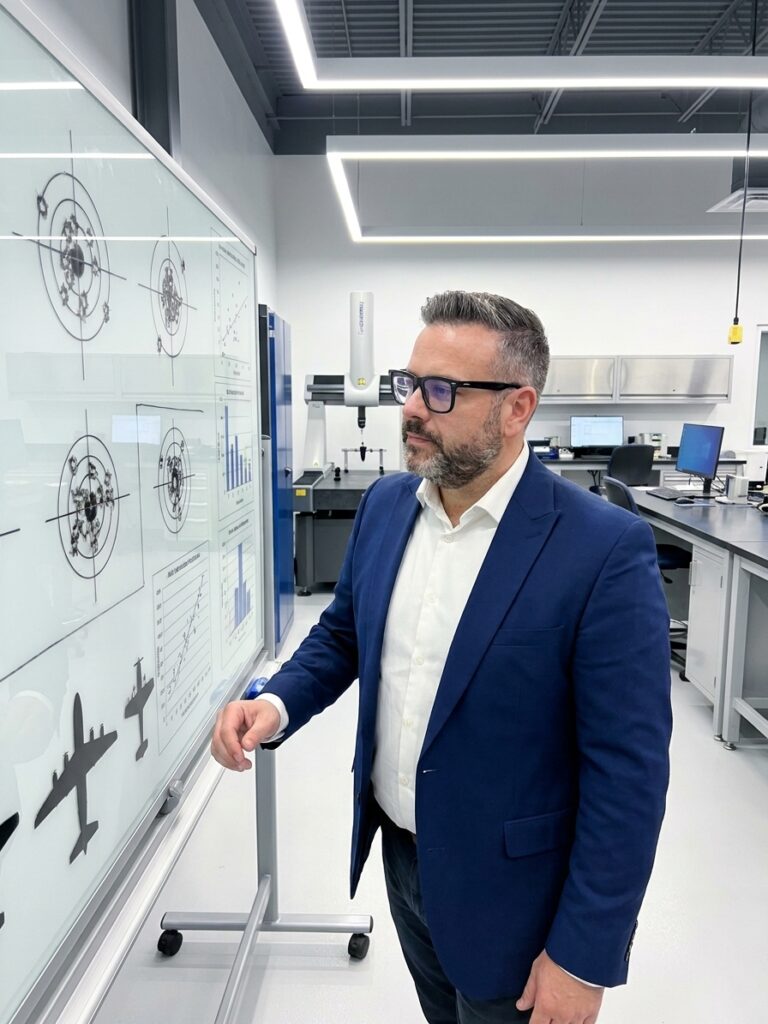
Quality professionals are trained to close capability gaps. IATF 16949 and AS9100 auditors enforce strict traceability, root cause, and corrective action requirements. When a quality engineer sees a delta between current capability and theoretical perfection, their instinct is to eliminate it. This perfectionist drive is highly effective for defect elimination, but it makes the department uniquely vulnerable to unnecessary system sprawl.
Technology vendors understand this psychology intimately. They price entry-level systems affordably, then load higher-tier packages with features that seem indispensable once the base platform is operational. The vision system vendor recommends their proprietary SPC module. The SPC vendor recommends the automated reporting add-on. Each step feels incremental. The cumulative cost is transformative.
Audit and compliance pressure accelerates the spending. A single minor nonconformance regarding gage calibration traceability should result in a revised calibration schedule. Instead, organizations overcorrect, fearing the next surveillance audit. They purchase entirely new digital document control systems or build unstaffed metrology laboratories. The fear of an audit finding replaces objective problem-solving.
The True Cost of Unnecessary Expansion
The financial expenditure of the Diderot Effect is significant, but capital cost is not the primary damage. The true operational cost is attention fragmentation. Quality teams that should focus on reducing process variation and driving OEE improvements become de facto IT administrators. They spend their days managing software licenses, attending vendor webinars, and configuring automated alert thresholds.
Change fatigue sets in across the production floor. Operators, technicians, and inspectors develop deep exhaustion when subjected to a continuous stream of incremental quality initiatives. They stop engaging with new processes because experience tells them today's transformational data entry system will be replaced next quarter. This breeds operational cynicism, and cynicism destroys the operator engagement required for genuine continuous improvement.
Complexity risk multiplies. Every additional software module and integration point introduces new failure modes. The integrated vision-SPC-analytics ecosystem has dozens of connection points, each one a potential source of data corruption. When the automated Cpk alert system fails, the quality engineer cannot troubleshoot it without calling three different software vendors.
Recognizing the Cascade in Real Time
The Diderot Effect is insidious because each individual decision appears logical in isolation. You must evaluate the pattern from a systemic distance. There are specific diagnostic indicators that a reactive cascade is underway. The most prominent is the 'while we are at it' justification during capital approval meetings.
If your quality technology roadmap looks suspiciously like your vendor's product catalog, you are in a reactive cascade.
Watch for escalating weakness in business cases. If the return on investment calculation for each successive purchase is less rigorous than the last, but the purchases keep getting approved because they are 'consistent with our digital direction,' spending has decoupled from value creation. The organization is chasing technology rather than solving engineering problems.
Examine the status of the previous initiative. If the plant has not fully implemented the last quality improvement before proposing the next one, the cascade is active. Full implementation means the system is operational, staff are trained, process data drives decisions, and measurable results are documented. If those four conditions are not met, the organization does not need the next module.
Planned Transformation vs. Reactive Cascade
Reactive Cascade Indicators
- No defined end state or total budget established upfront
- Subsequent purchases justified by sunk costs of prior ones
- Feature-chasing driven by vendor demonstrations and trade shows
- Business cases become progressively weaker with each approval
Planned Transformation Indicators
- Clear end state and total budget defined before the first purchase
- Milestones tied to validated process capability data, not sunk costs
- Technology acquisitions driven by specific defect elimination targets
- Strong, measurable return on investment for the entire project scope
Governance Rules to Break the Chain
To stop unnecessary quality system expansions, institute hard governance rules that force objective evaluation. Require a strict 'solve the problem' mandate for every purchase. Before approving any quality technology, demand a clear, one-sentence statement of the specific manufacturing problem it solves. If the statement focuses on the opportunity it creates rather than the defect it eliminates, reject the purchase request.
Apply the three-month isolation test. Ask the engineering team if they implement this new system and then change absolutely nothing else for three months, will the purchase still deliver its promised value. If the answer is no, the purchase is entirely dependent on the cascade. The cascade is the hidden cost, and it must be added to the initial investment calculation.
Calculate the total cascade cost during the initial business case review. If buying the SPC platform will inevitably lead to purchasing the predictive analytics module and the mobile dashboard extension, include all of those costs in the original authorization request. If the total cascade cost is not justified by the primary defect reduction target, reject the initial platform purchase.
Mandate a strict 'last thing first' review before allowing any new quality initiative to enter the approval pipeline. The team must present the measurable, documented results of the previous technology investment. They must prove the last system delivered quantifiable value before they are permitted to propose the next one. This forces closure on existing projects and builds natural resistance to cascade thinking.
Establishing Good Enough Thresholds
Not every capability gap requires closure. Quality leaders must define explicit, mathematical performance thresholds for their systems and processes. If your automated inspection system delivers a measurement systems analysis (MSA) Gage R&R below ten percent, and your Cpk holds steady at 1.33, the system is functionally robust. You must declare that capability 'good enough' and refuse to authorize upgrades that chase marginal, unneeded perfection.
Define this threshold as a deliberate boundary, not a permanent compromise. Revisit the thresholds annually during the management review cycle required by ISO 9001, not quarterly. Annual reviews align with real strategic shifts and product lifecycle changes. Quarterly reviews create constant agitation for unnecessary optimization, feeding directly back into the vendor-driven cascade cycle.
Core Metrics for Quality System Stability
Make a structural distinction between process improvement and system expansion. Improving existing systems through better calibration, faster cycle times, and more consistent 8D execution should be continuously encouraged and funded. Expanding into new software architectures, additional IoT sensors, and novel cloud integrations must face extreme scrutiny. Treat expansion as a capital risk, not a standard operational upgrade.
Organizations that achieve sustained quality excellence are rarely the ones with the most sophisticated technology stacks. They are the plants that master a small number of core tools, apply them relentlessly, and resist the urge to upgrade before extracting total value from their current capabilities. They focus on the floor, not the dashboard.
Implement a mandatory thirty-day cooling-off period for any quality technology purchase above a defined capital threshold. The purpose is not to delay legitimate manufacturing needs, but to interrupt the emotional momentum generated by vendor demonstrations and trade show environments. If the analytical module is still critical after thirty days of objective analysis, approve it. If the appeal fades, you have saved the organization from its own good intentions.