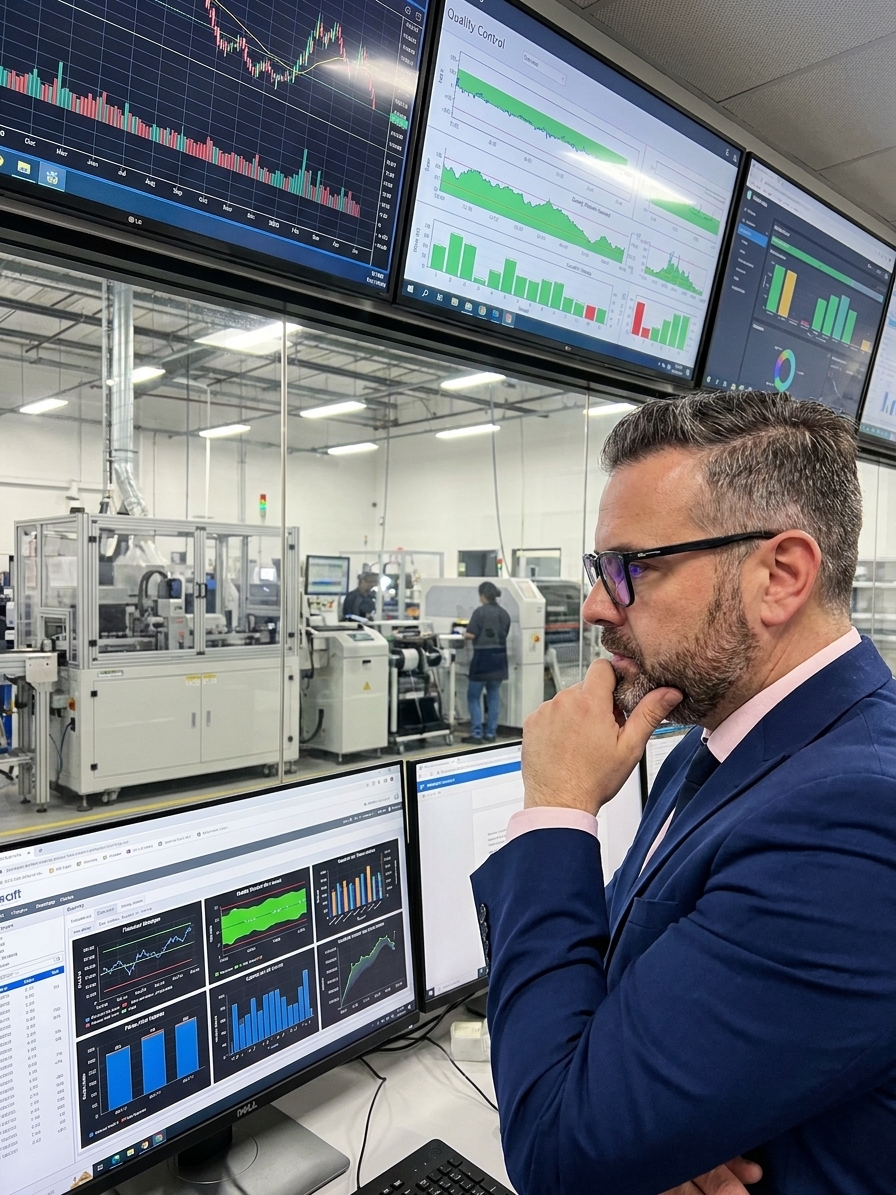
Organisations routinely abandon rational forward-looking decisions to protect prior investments. A manufacturer spends millions customising a quality management system that fails its IATF 16949 audit. Instead of migrating to an established platform, management pours more capital into fixing the broken architecture. The justification is always the same: they have already spent too much to abandon it now.
This is the sunk cost fallacy at work. In quality engineering, past investments that cannot be recovered exert a gravitational pull on judgment. They compel leadership to throw good money after bad, transforming an isolated poor decision into a systemic institutional failure. Having implemented and transitioned ISO 9001 and AS9100 systems across automotive and aerospace plants, I have watched directors defend indefensible QMS architectures purely to avoid writing off sunk capital.
The mathematics of sunk costs are unforgiving. Money already spent is gone. The only variable that should influence a leadership decision is the expected return on future capital. Yet the emotional and political weight of prior investments consistently overrides this logic, starving genuinely effective improvement initiatives of the resources they need to succeed.
The Mechanics of Escalating Commitment
The sunk cost fallacy converts past mistakes into future ones. A single €1.2 million investment in the wrong QMS is an unfortunate error in judgment. Spending an additional €350,000 over two years to patch that same broken system, rather than spending €400,000 on a working alternative, is a failure of institutional courage. The original mistake becomes a pattern of compounding waste.
This dynamic creates severe organisational entrenchment. When enough people have invested time in a failing process, questioning the approach feels like a personal attack. The IT team that built the custom QMS and the quality engineers who championed the software do not want to hear that it requires replacing. Their resistance is emotional, not analytical, which makes the failure highly resistant to standard operational logic.
The consequences extend far beyond the immediate financial loss. Every euro spent propping up a failing system is a euro unavailable for genuine process improvement. Capital that should fund mistake-proofing, measurement systems analysis (MSA), or equipment upgrades is instead consumed by consultants and custom integrations for a platform that will never meet customer expectations.
How the Fallacy Infects Quality Systems
The legacy QMS is the most obvious symptom. An automotive supplier builds a custom system over three years. CAPA closures drag out to 94 days because training records are incomplete and nonconformance tracking is fragmented across disconnected databases. The system fails a major customer audit, yet management refuses to migrate, arguing the prior €1.2 million investment is too large to write off.
Improvement initiatives suffer the same fate. A company launches an ambitious Six Sigma program, trains dozens of Black Belts, and funds dozens of projects. After two years, defect rates remain unchanged because the methodology was applied to symptoms rather than root causes. Instead of reassessing the strategy, leadership points to the training investment and demands more projects, generating thicker PowerPoint decks rather than measurable Cpk improvements.
Supplier relationships fall into the same trap. A key supplier's PPM rates triple and delivery reliability drops below 85%. Production lines shut down due to major nonconformances. Finding and qualifying a replacement supplier would take six months, but the quality manager argues for another year of supplier development. The delay costs eighteen months and twice the projected budget before a replacement is finally sourced.
Cognitive Biases Driving the Fallacy
Loss aversion is the primary driver. Research by Kahneman and Tversky demonstrated that losses feel roughly twice as painful as equivalent gains feel pleasurable. Acknowledging that a €1.2 million QMS investment has failed triggers a powerful psychological pain response. The brain processes this admission as more distressing than the slow, continued waste of future resources.
Self-justification compounds the problem. The individuals who championed the original investment face a direct threat to their professional identity. Instead of updating their beliefs to match new evidence, they subconsciously seek data that validates the original decision. This confirmation bias ensures that every minor system improvement is hailed as proof of eventual success, while catastrophic failures are dismissed as temporary setbacks.
Social pressure seals the trap. In organisational cultures where admitting mistakes is punished, the cost of acknowledging a sunk cost includes professional damage. When leadership rewards consistency over accuracy, managers will defend bad decisions indefinitely. The quality function loses all credibility when engineers and operators watch professionals protect failed investments while preaching data-driven decision-making.
The sunk cost fallacy doesn't just perpetuate failure, it starves the alternatives that could succeed.
Decision Frameworks to Counter Sunk Costs
Overcoming the bias requires structural interventions, not willpower alone. A zero-based decision framework forces a clean reset. Before approving any further investment, ask whether the organisation would choose this exact approach today if it had no prior investment. If the answer is no, the prior capital is irrelevant. The only question is what delivers the best future return.
The opportunity cost test makes the hidden damage visible. List every alternative use for the funds being poured into the failing system. Put the expected returns side by side. A €350,000 patch on a broken QMS looks very different when compared directly against a €350,000 investment in automated gauging or a validated off-the-shelf alternative. The comparison forces objective analysis.
Sunk Cost Logic versus Zero-Based Decision Logic
Sunk cost reasoning
- We have already spent €1.2M on this QMS.
- We cannot abandon the investment now.
- Approve €350K more to fix the existing gaps.
- Maintain fragmented databases and manual workarounds.
Zero-based reasoning
- The €1.2M is spent and unrecoverable.
- Evaluate only future costs and future benefits.
- Spend €400K on an integrated, validated platform.
- Standardise data and cut CAPA closure times immediately.
Pre-defined exit criteria provide the strongest defence. When launching a new initiative or purchasing capital equipment, specify the exact performance thresholds and deadlines in advance. If the program has not reduced defect rates by a defined percentage within eighteen months, it will be discontinued. These criteria must be documented before the investment begins, separating the exit decision from the emotional context of potential failure.
Fresh Eyes and External Triggers
Internal champions are often too invested to see clearly. Bringing in external auditors or colleagues from different facilities provides a critical, objective assessment. People without personal sunk costs in the status quo consistently make better decisions about future investments. A fresh-eyes review also provides political cover. When an external expert recommends replacement, internal teams can frame the pivot as responding to objective analysis rather than admitting personal defeat.
Consider the German automotive manufacturer that invested €2.3 million in an automated visual inspection system. After eighteen months, the system achieved a 91% detection rate. Manual inspectors achieved 96%. The vendor proposed a €600,000 upgrade package, and the internal team pushed for continued investment, trapped by the sunk cost logic.
The quality director made a zero-based decision. She acknowledged the €2.3 million as a learning investment, rejected the upgrade, and redirected the €600,000 toward improving the manual inspection process. Better lighting, magnification, and standardised work instructions pushed manual detection rates to 97.5% within four months. The automated system was repurposed for a less critical station where 91% was acceptable. The sunk cost was gone regardless, but the redirected capital generated immediate value.
The Leadership Imperative in Quality
Every quality organisation has at least one sinking ship. A measurement system everyone knows is unreliable, a software platform that generates more workarounds than insights, or a supplier relationship that consumes engineering time without delivering improvements. The cost of maintaining these failures is not limited to the resources they consume directly. The real damage lies in the credibility lost and the alternative investments starved of capital.
Quality professionals are trained to evaluate evidence objectively, to follow data rather than assumptions, and to make decisions based on measurable outcomes. These analytical skills are necessary but insufficient. Resisting the sunk cost fallacy requires the courage to challenge organisational consensus, the communication skills to frame the argument in financial terms decision-makers can accept, and the persistence to keep raising the issue when it is uncomfortable.
Structured Assessment for Replacing Failing Quality Systems
- 01Isolate sunk costsDocument all prior capital and time investments. Formally acknowledge these are unrecoverable.
- 02Apply zero-based testAsk if the current system would be selected today if no prior investment existed.
- 03Calculate opportunity costList alternative uses for maintenance funds and project their expected quality returns.
- 04Conduct fresh-eyes reviewBring in external auditors to assess the system without personal bias or history.
- 05Execute the pivotRedirect capital toward validated alternatives and formally retire the failing system.
The cure is simple to describe and difficult to execute. Evaluate every quality decision based on future costs and future benefits. The million-euro QMS is gone. The years of training are spent. The fifteen-year supplier relationship is history. The only question that matters is which path forward gives your customers the best quality. Answer that question honestly, calculate the opportunity cost, and act on the data.