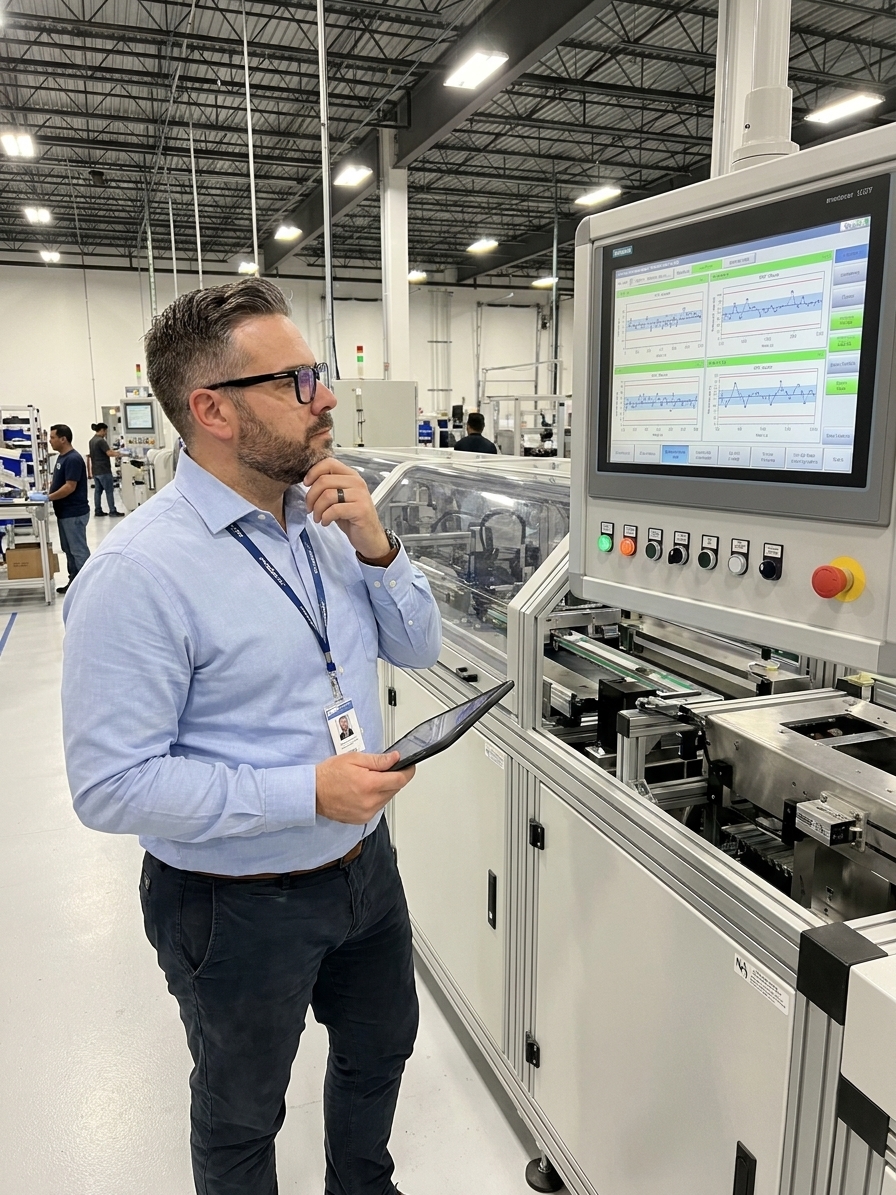
A 100% final inspection station should improve outgoing quality. Too often, it degrades it. I have audited plants where the introduction of mass sorting created a severe bottleneck, forcing inspectors to make rapid judgment calls under immense production pressure. The inspection station, designed to prevent escapes, became a primary defect generator.
The failures occurred not because the initial idea was entirely wrong, but because nobody modelled human fatigue or cognitive overload. When you multiply the inspection volume without parallel changes to cycle time or staffing, the system reaches a breaking point. Inspectors will eventually approve borderline parts simply to clear the backlog. The solution directly engineered the problem.
This dynamic is the Law of Unintended Consequences. It is the most underappreciated force in quality management. Every ISO 9001 or IATF 16949 system operates as a complex adaptive network. Altering one node triggers unpredictable behavioural and operational shifts across the factory floor.
Quality professionals routinely implement changes without asking the second-order question: what happens to human performance when we alter the constraints? Addressing this gap requires disciplining our approach to system design. We must recognise that first-order fixes inevitably produce second-order failures.
Why Quality Systems Are Highly Vulnerable
Manufacturing environments are not mechanical systems where outputs scale linearly with inputs. They consist of interconnected processes, operator behaviours, and measurement instruments constantly adapting to each other. If you increase the torque on a bolt, you can calculate the resulting stress. If you increase the Cpk reporting frequency, the resulting stress shows up in completely unexpected areas.
Pushing on one element of a QMS causes the system to push back elsewhere. You might successfully implement automated SPC and reduce critical dimension variability. However, this formal control mechanism can inadvertently deactivate the informal control mechanism: the experienced operators who used to make manual process adjustments.
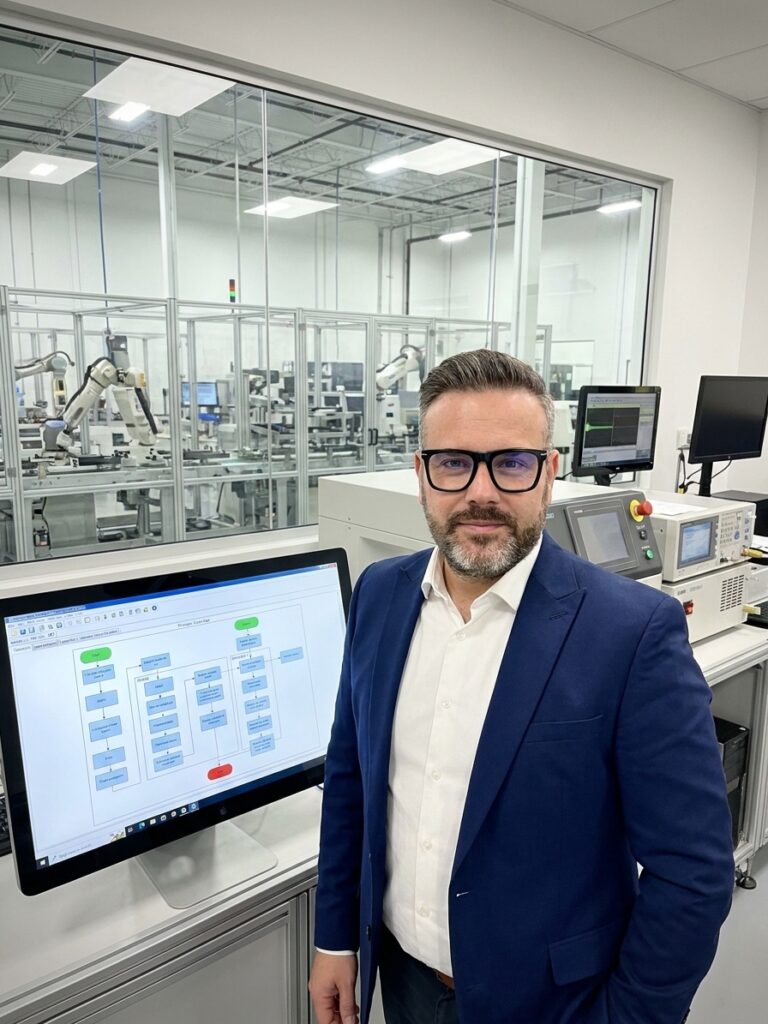
When a new material batch arrives with subtly different characteristics, standard SPC limits might not catch the drift immediately. Experienced operators would have sensed the change, but they have been trained to trust the automated system over their intuition. The formal system displaced the human feedback loop, resulting in a massive scrap event.
System resilience effectively decreases because the total capability of the process was reduced. This systemic rebalancing is predictable. The diagnostic question for any PFMEA or control plan change must be: what existing capabilities, formal or informal, might this alteration displace?
Category One: Behavioural Displacement
The most insidious unintended consequences are behavioural. You alter the incentive structure, and operators change their actions, but not in the way you intended. A zero-defect bonus program seems like a logical way to drive excellence. In reality, it directly incentivises concealment.
When operators receive financial rewards for achieving zero defects, their definition of what constitutes a reportable defect naturally shrinks. Borderline cases are ignored or intentionally hidden. Within a quarter, the documented defect rate drops to zero while the actual defect rate, eventually discovered during a formal VDA 6.3 audit, remains unchanged or increases.
This is Goodhart’s Law in action: when a measure becomes a target, it ceases to be a good measure. The reporting mechanism was corrupted by the very incentive designed to leverage it. Quality managers must always separate the reporting of nonconformances from punitive or highly rewarding performance metrics.
To combat behavioural displacement, map the actual incentives created by your changes. Do not evaluate what behaviour you want the system to incentivise. Evaluate precisely what behaviour it actually rewards on the shop floor.
Category Two: Cascade Effects in CAPA
Sometimes the consequence bypasses the process entirely and infects the surrounding organisation. A medical device manufacturer implemented a rigorous CAPA system in response to FDA regulatory pressure. Every single deviation triggered a mandatory root cause analysis, corrective action, and effectiveness verification.
The paperwork burden was enormous. Because operators knew that reporting a minor issue would trigger a massive investigation, they stopped reporting minor deviations. The early warning signals that normally prevent major failures were systematically silenced by the weight of the compliance process.
The regulatory response triggered a systemic response, which triggered a behavioural response, reducing problem visibility.
Six months later, a major product failure traced back to a deviation that had been highly visible on the floor but entirely unreported. The CAPA file on the failure was comprehensive, but the failure itself was completely preventable. The compliance system had blinded the organisation.
Problem visibility is the lifeblood of quality. If your 8D or CAPA process feels like a punishment to the operators, they will simply stop feeding it information. You must decouple the act of reporting a deviation from the burden of the subsequent investigation for minor, non-safety-critical issues.
The Quality Pre-Mortem Method
The most effective tool for anticipating these failures is the quality pre-mortem. Before implementing any significant process change, gather your core team and establish a specific scenario. Assume the intervention has been an absolute disaster.
This framing bypasses the natural optimism bias of engineering teams. When you ask what could go wrong, people give polite, manageable risks. When you demand to know what did go wrong in the hypothetical failure scenario, they provide the realistic, harsh answers.
Executing a Quality Pre-Mortem
- 01Set the Failure ScenarioAssume the proposed change is implemented and has caused a severe quality crisis within six months.
- 02Divergent IdeationHave cross-functional team members independently list the specific root causes of this hypothetical failure.
- 03Aggregate and ClusterCombine the identified causes and group them into systemic, behavioural, and procedural categories.
- 04Modify the Control PlanAdjust the original change proposal to include specific countermeasures for the identified second-order risks.
Run this exercise with a genuinely diverse group. Do not limit the room to quality engineers. Operators, maintenance technicians, and shift supervisors see the operational realities that design teams miss entirely. The most destructive unintended consequences thrive in the gaps between functional departments.
Documenting these potential failures allows you to build proactive leading indicators into your monitoring plan. If you anticipate that a new measurement system might slow down cycle time, you can immediately track OEE alongside your Cpk data to catch the drift before it becomes a crisis.
Building Consequence Awareness Into Your QMS
Individual pre-mortems are helpful, but systemic resilience requires building consequence awareness directly into your QMS. Every proposed change documented in your engineering change order system should require a mandatory second-order analysis section. First-order effects are usually obvious. Second-order effects are where the latent defects hide.
A dual measurement system must accompany any major transition. Track the immediate first-order outcome of your change, such as a reduction in scrap. Simultaneously, establish leading indicators for potential second-order effects, such as inspector error rates, cycle time impacts, and the degradation of operator self-checks.
Monitoring Second-Order Effects
You must also create fast, low-friction feedback channels from the front line. Formal deviation reports are too slow and heavy to catch emerging behavioural shifts. You need quick signals from the floor indicating that something feels different. These early qualitative warnings are critical data points.
Finally, institute periodic change audits. Standard IATF 16949 internal audits check compliance against the standard. Change audits are retrospective analyses of system-level effects, asking what else happened when you altered the process. This distinction ensures continuous, pragmatic adaptation rather than mere procedural compliance.
Designing Systems With Humility
Underlying all of this is the Humility Principle: the recognition that you cannot fully predict the behaviour of a complex adaptive system. You can anticipate, monitor, and adapt, but you cannot predict outcomes with total certainty. This is an argument against engineering arrogance, not against taking action.
The most sustainable quality improvements come from professionals who design robust solutions, monitor for the consequences they missed, and adapt quickly. The worst quality decisions I have seen in twenty years across automotive and aerospace were not made by incompetent people. They were made by highly competent engineers who were so confident in their analysis that they neglected to look for hidden failures.
The solution to the failed mass inspection station mentioned earlier was a tiered inspection system. Inspection intensity varied based on real-time process stability. More sorting occurred when the process was unstable; less occurred when it was running smoothly. It accounted for fatigue and cycle time constraints.
The tiered system worked because it was designed with consequences in mind, not just problems. If your current quality improvement only addresses the immediate defect, you are already building the next crisis. Anticipate the disguise, and you will control the outcome.