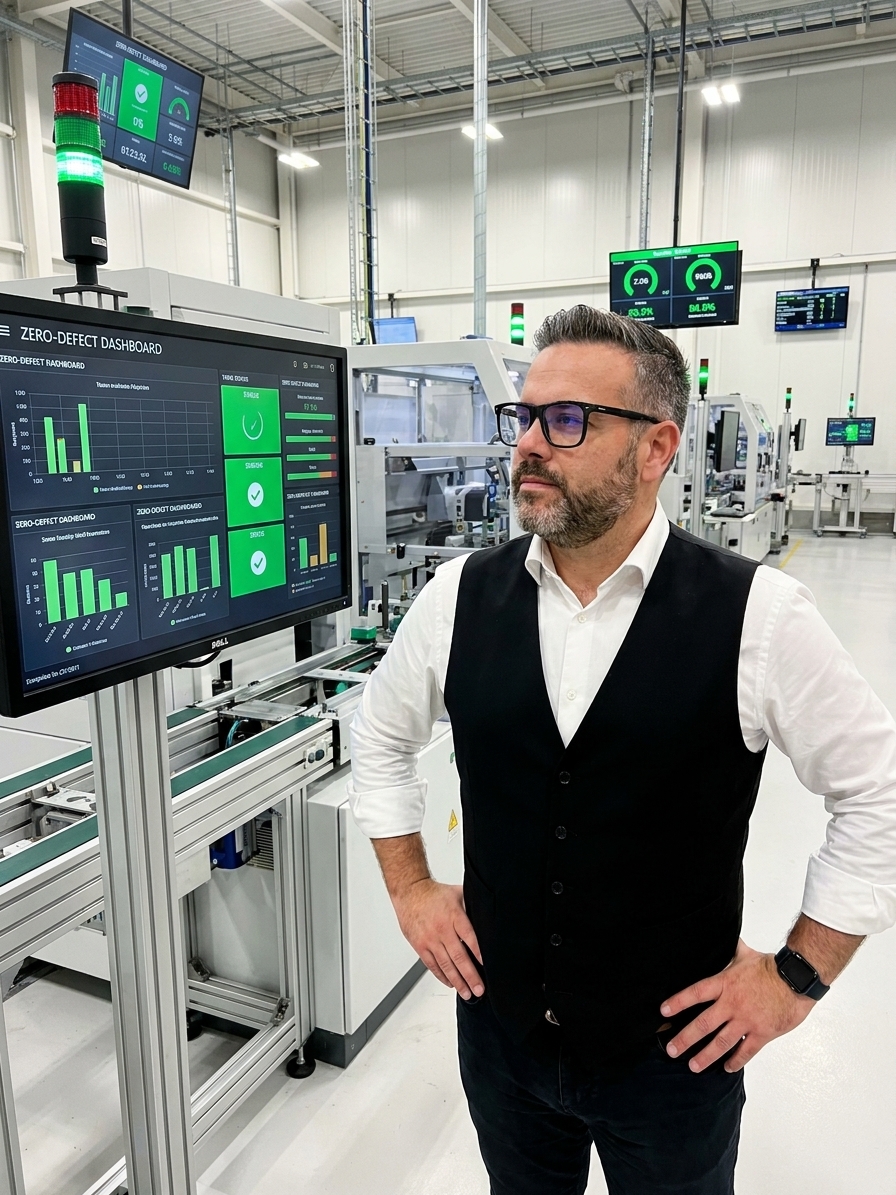
In every production meeting, someone eventually says it: "We can't get to zero. That's just not realistic." In that single sentence lives the entire history of an organization's defect rate. The moment you declare a specific number of defects "acceptable," you have built a hard ceiling into your quality system. No IATF 16949 framework, no SPC software, and no layered process audit will ever break through that ceiling.
You have not described reality. You have created it. When Philip Crosby coined the term "Zero Defects" at Martin Marietta in 1961, he did not introduce a motivational slogan. He identified a massive, untracked financial drain. He called it the price of nonconformance, and it routinely consumed 15 to 20 percent of revenue.
That shadow economy still exists in most manufacturing plants today. It survives because organizations treat defects like friction in physics: an inherent property of manufacturing that can be reduced but never eliminated. Quality departments become elaborate mechanisms for living with failure at an agreed-upon level rather than engineering it out of the process.
The Architecture of Acceptable Failure
Most quality systems operate on what I call the Architecture of Acceptable Failure. You set a tolerance, build an inspection system to catch nonconformances, and track your defect rate on a chart. You celebrate when the rate drops and investigate when it rises. You execute action plans with enormous discipline and sincerity.
Yet the entire time, you are managing defects rather than eliminating them. The defect rate becomes a budget figure you optimize around. Your IATF 16949 or ISO 9001 system devolves into a tool for controlling failure rather than preventing it. This is not incompetence; it is the logical output of a belief system that assumes defects are inevitable.
This architecture requires massive supporting infrastructure. We build rework stations directly into the floor plan, staffed with experienced operators whose sole job is fixing what should have been done right the first time. We establish Acceptable Quality Limits (AQL) that legally codify how many defects we can ship to the customer. It is a negotiated surrender, validated by contract.
None of this infrastructure is hidden. It sits in the plant layout, the scrap budgets, and the organizational chart. What remains hidden is the assumption underneath it all: that this is simply how manufacturing works. Organizations even create dedicated sorting teams whose very existence presupposes that bad parts will be produced in sufficient quantities to justify the labour.
The Mechanics of a Prevention System
Implementing a zero defect mindset is an engineering challenge, not a motivational exercise. It requires redesigning systems so that defects become progressively harder to produce and easier to prevent. This means engineering mistake-proofing into critical steps and validating process capability before full production begins.
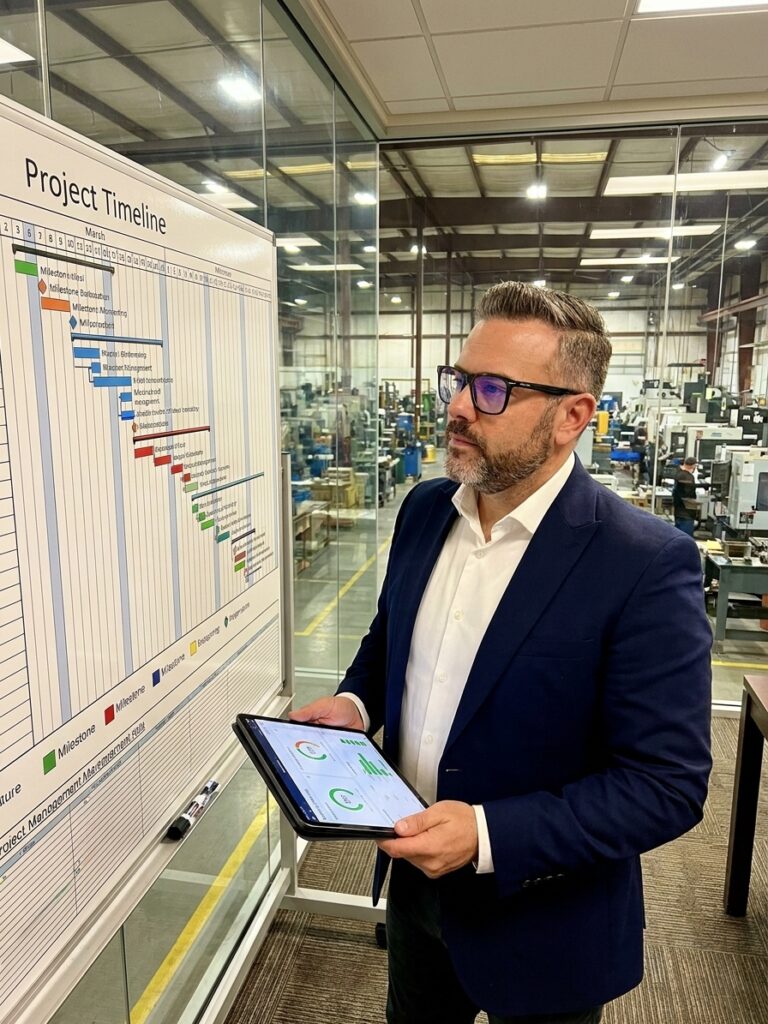
In the Architecture of Acceptable Failure, an out-of-tolerance part is flagged by inspection and sent to the Material Review Board. The MRB routes the part to rework, updates the tracking chart, and sets next month's target slightly lower. The process consumes hours of engineering time to manage a single nonconformance.
In a zero defect system, that same out-of-tolerance part stops production. A cross-functional team executes an 8D root cause analysis. They discover a tooling insert wore past its replacement interval, implement condition-based tool monitoring, and verify the fix with a short production run. The system is changed so the defect cannot happen again.
Managing Defects vs. Eliminating Causes
Architecture of Acceptable Failure
- Defects are detected at final inspection
- Material Review Board routes parts to rework or scrap
- Defect rate is managed like a financial budget
- System assumes a certain volume of failure is inevitable
Zero Defect System
- Processes are designed to be incapable of producing defects
- Real-time monitoring stops the line before nonconformance occurs
- Every defect triggers permanent system corrective action
- System assumes any defect is an engineering failure
Real-Time Monitoring and Process Capability
Statistical process control is not a periodic activity for the quality department. Every critical parameter must be monitored in real time. Control limits must trigger an investigation before the process produces a defect, not after. The goal is to detect drift toward nonconformance and correct it while the output is still within specification.
Process capability must be established before launch, not chased after start of production. A Cpk of 1.67 or higher for critical-to-quality characteristics is not an aspirational goal; it is the entry ticket for a zero defect process. PFMEA must drive actual engineering changes to eliminate failure modes, not merely document risk scores for an auditor.
During my time implementing quality systems at a major aerospace manufacturer, introducing condition-based verification at critical stages fundamentally changed our defect trajectory. When you stop relying on human inspection and start relying on engineered controls, the process begins to police itself. Human error is engineered out of the equation.
The cost of preventing a defect is almost always lower than the cost of managing one, provided you account for the full cost. This includes the obvious scrap and rework labour, but also the hidden costs: warranty claims, customer complaint processing, sorting time, engineering tolerance concessions, and lost future business from customers who quietly found another supplier.
Crosby's Four Absolutes in Practice
Crosby distilled the zero defect philosophy into four principles. They remain the most concise articulation of the mindset shift required to move from defect management to defect prevention. The first absolute states that quality is defined as conformance to requirements. Not goodness, not customer delight. Conformance.
This definition removes subjectivity. It gives every operator a clear test: does this output meet the agreed requirement? If yes, it is quality. If no, it is a defect. There is no gray zone of "good enough" or "within tolerance but not really what we wanted." Requirements must be precise, measurable, and universally understood.
A standard short of zero creates a zone of acceptable failure, and that zone will expand over time as people learn to live comfortably within it.
The second absolute defines the system of quality as prevention, not appraisal. Inspection finds the absence of quality after the fact. Prevention means designing processes incapable of producing defects. Poka-yoke, PFMEA, and SPC are the engineering tools of prevention. The third absolute sets the performance standard at zero defects — no exceptions, no acceptable quality limits.
The fourth absolute changes the measurement. Quality is measured by the price of nonconformance. Not defect rates, not first-pass yield, not Cpk values. Cost. When you frame quality in financial terms, the discussion moves from the quality lab to the boardroom. Executives pay attention when defect management is expressed as lost revenue.
Core Metrics for the Zero Defect Standard
The Organizational Psychology of Zero
If the logic of zero defect is so compelling, why do most organizations resist it? The fear of commitment drives much of the pushback. Zero is a terrifying standard because it is binary. You either achieve it or you don't. There is no partial credit. Organizations prefer targets that allow for interpretation — targets that can be "mostly achieved" or "trending in the right direction."
Critics often conflate zero defect with perfectionism. Perfectionism is an emotional state that leads to analysis paralysis. Zero defect is a systems standard. The perfectionist obsesses over every detail regardless of impact. The zero defect practitioner focuses engineering resources on preventing specific defects that matter, using poka-yoke and SPC rather than willpower.
The "realism" argument is the most common objection. "In the real world, defects happen." This is simultaneously true and irrelevant. In the real world, airplanes occasionally crash. Aerospace manufacturers operating under AS9100 do not set an acceptable crash rate. They investigate every incident, find the root cause, and engineer systems to prevent it. The standard remains zero.
There is also the sunk cost of the current system. Organizations that invested heavily in inspection infrastructure and rework operations face a difficult truth. Adopting zero defect means acknowledging that much of that investment was a response to a problem that should have been prevented. This requires organizational humility, which is often in shorter supply than capital.
Engineering Defects Out of the System
A zero defect system cannot be mandated solely by the quality department. It must be driven by top leadership. When I built a greenfield QA department for a 900-plus employee plant at SNOP, the difference between plants that approached zero and those that plateaued was never the inspection equipment. It was leadership's willingness to stop the line for root cause investigation.
Leadership must demonstrate that a missed shipment is preferable to a shipped defect. A production stop for an 8D investigation is not a failure of efficiency. It is a demonstration of commitment. The operator who stops the line to flag a potential drift is not causing a problem; they are preventing one. The culture must protect and reward that action.
Organizations that embrace this mindset — Toyota, aerospace manufacturers under AS9100, pharmaceutical companies governed by GMP — do so because the economics are unambiguous. Their quality systems are designed around prevention. They may spend more on the front end, but they spend nothing on sorting, warranty claims, or customer recovery.
Zero defect is not a destination. It is a direction. You will not achieve it tomorrow. But if your standard is zero, your continuous improvement never stops. The accumulation of permanent corrective actions builds a quality system that approaches zero not as a statistical anomaly, but as a designed engineering outcome. Your choice of standard determines your defect rate.