Walk into any manufacturing facility struggling with quality escapes and missed delivery targets, and you will find the same root cause: operational ambiguity. Tools are missing, documentation is outdated, and operators spend their shifts hunting for equipment rather than adding value. This environment makes process control impossible. You cannot maintain IATF 16949 compliance or achieve stable Cpk values on a shop floor where the baseline conditions change every shift.
The solution is not a new software platform or a capital investment. It is the rigorous application of 5S: Sort, Set in Order, Shine, Standardize, and Sustain. Originating from the Toyota Production System, 5S is fundamentally a visual operational system that makes abnormalities visible at a glance. When implemented correctly, an operator does not need thirty minutes to prepare for a shift change. A manager does not need to ask if the line is ready. An auditor does not need to open a single record to verify compliance with the standard.
Most organisations underestimate 5S because it looks like cleaning. In my experience auditing and implementing ISO 9001 and AS9100 systems, I have seen highly engineered aerospace plants brought to a halt by a missing torque wrench. Dismissing 5S as janitorial work guarantees sustained operational failure. Properly executed, it is the foundation of predictive maintenance, quality assurance, and continuous flow.
Seiton: Defining Locations to Eliminate Search Time
Once a workspace contains only essential items, you must define where those items belong to ensure retrieval takes under five seconds. Seiton is not about visual appeal. It dictates that the location of every tool is defined, visualised, and logically arranged according to the workflow. A station must function like an operating theatre. A surgeon never asks for sterile gloves because they are always in the third drawer. If they are missing, the absence is immediately obvious.
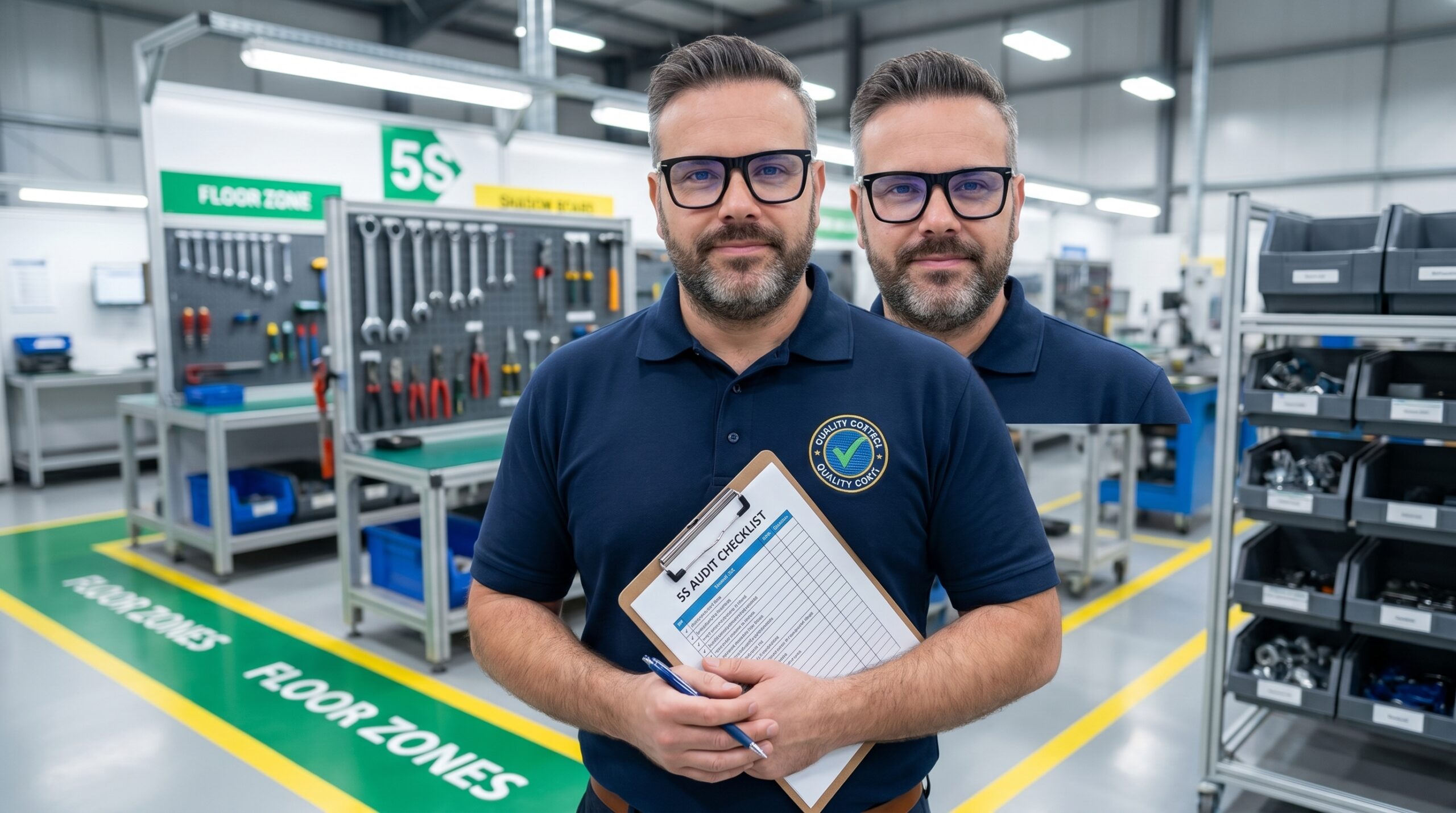
The primary mechanism for achieving this is the shadow board. By outlining each tool on a panel, any missing item creates a visual void immediately recognised by the operator. This must be combined with flow logic. Tools are arranged in the sequence of the process, not grouped by type. Colour-coding zones and numbering rack positions further reduces cognitive load, allowing operators to focus entirely on the technical execution of the task.
The operational impact of Seiton is measurable in OEE. I have tracked lines where operators spent over four minutes per shift searching for equipment. After introducing shadow boards, defined zones, and visualised positions, that search time dropped to seconds. On a three-shift operation, this recovered dozens of minutes of daily capacity per station. That additional capacity requires zero capital expenditure, only disciplined organisation.
Seiso: Treating Cleaning as Predictive Maintenance
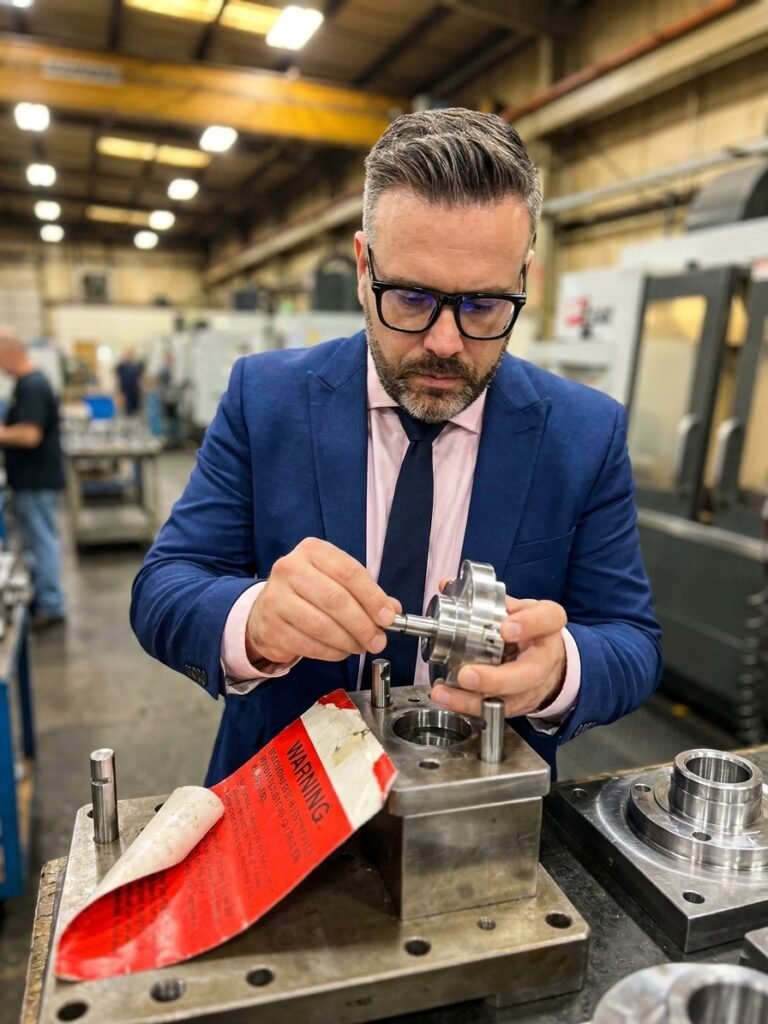
The third phase carries the greatest misconception in Lean manufacturing. Teams routinely dismiss Shine as a janitorial task delegated to the cleaning crew. This guarantees you miss the actual value. Seiso is an inspection process. When an operator cleans their machine, they physically touch it. They identify leaking hydraulic fluid before it causes a catastrophic failure. They spot a frayed pneumatic line before it disrupts production.
Cleaning must be governed by a documented standard. The standard defines what is cleaned, how it is cleaned, the frequency, and who is responsible. Allocate five to ten minutes at the end of every shift strictly for this purpose. The operator must follow a cleaning checklist that targets visible components, high-wear areas, and known leak points. If an area continuously gets dirty, you must identify and eliminate the source of the contamination.
Treat Seiso as your first line of predictive maintenance. During routine cleaning operations on automotive lines, operators have discovered oil leaking from a milling machine seal, cracks in grinder safety guards, and rust on critical product guides. These are safety risks and quality defects caught before they escalate into internal nonconformities or customer escapes. The financial return of preventing a single machine failure justifies the entire 5S programme.
Measurable Returns of a Disciplined 5S Implementation
Seiri: Applying Red-Tag Logic to Remove the Unnecessary
The first step demands dividing everything on the shop floor into what is needed and what is not needed. The unnecessary items must be removed immediately. In practice, this is the most resisted step because operators and supervisors hoard equipment based on hypothetical future needs. The result is workstations where a significant percentage of inventory and tooling has not been touched in over a year.
The mechanism to override this resistance is the Red Tag campaign. Apply a red tag to any item with ambiguous necessity, noting the date, description, and responsible party. Move all tagged items to a designated holding area. If the item is not used within thirty days, remove it through sale, recycling, or disposal. This forces objective evaluation based on actual process data rather than sentimentality.
Frequency of use must dictate physical placement. Daily items belong at arm's reach. Weekly tools go in a local rack. Monthly materials reside in a nearby store, and annual items must leave the workspace entirely. Implementing this logic in body-in-white welding shops has halved the number of containers and tools cluttering assembly zones. Obsolete engineering drawings and duplicate spanners disappear, freeing up square footage for actual production.
Seiketsu: Documenting Standards to Prevent Regression
The failure point for most organisations occurs here. They execute the first three steps, the facility looks pristine, and six weeks later the clutter returns. Regression happens because management relies on verbal understanding rather than documented standards. Seiketsu requires recording exactly how the workspace must look, how it must be maintained, and making those criteria visually and operationally measurable.
A standard is not a sign of mistrust; it is a technical baseline that prevents regression and a guide for the next operator.
Install visual standards directly at the workstation. Mount photographs of the acceptable state and the unacceptable state. Develop a 5S audit checklist with specific criteria, scoring each zone on a standard scale. Management must conduct weekly or bi-weekly audits, rotating responsibilities between supervisors and operators. A standard is a living document, updated whenever a process improvement renders the old baseline obsolete.
I have implemented audit forms with twenty specific control points across aerospace assembly lines. Initial audits routinely score between two and three out of five. Within three months of disciplined application, those scores stabilise above four. The sustained score is the critical metric. When operators know exactly what is expected, and when management verifies those expectations daily, the new standard becomes the operational reality.
Shitsuke: Building Discipline and Leadership Routine
The final phase separates facilities where 5S drives the culture from those where it was a forgotten quarterly project. Shitsuke is not about supervisors policing operators. It is about building habitual discipline until 5S becomes as automatic as washing hands. This habit forms only when leadership actively participates in the process and provides positive feedback to teams maintaining the standard.
Common 5S Implementation Failures
What Failing Teams Do
- Delegate cleaning entirely to the facility maintenance staff.
- Launch a factory-wide 5S campaign simultaneously across all lines.
- Assume experienced operators do not need visual work instructions.
- Treat 5S as a one-off event rather than a continuous operational baseline.
What Successful Teams Do
- Integrate 5S tasks into the standard work of machine operators.
- Pilot one model line, refine the process, and systematically replicate.
- Document visual standards to guarantee consistency for new personnel.
- Enforce daily Gemba walks to verify standard adherence on the floor.
Leaders must walk the Gemba daily. If the plant manager does not inspect the workspace and address 5S deviations, operators will correctly assume it does not matter. Build discipline gradually. Do not attempt to convert an entire factory at once. Select one line, establish it as the model, and use that success to demonstrate the methodology. Engage the operators in designing the layout, because people respect what they help create.
When this discipline takes hold, the dynamic shifts entirely. After six months of sustained practice, management interventions drop. Operators begin self-policing. A misplaced tool is corrected by a colleague because the team recognises that 5S enables them to work faster, safer, and with significantly less frustration. The system transitions from enforced compliance to shared operational value.
The Operational Output of Sustained 5S
The business case for 5S is measured in reduced scrap, higher OEE, and fewer safety incidents. A controlled workspace eliminates obstacles, spills, and misplaced tools, directly reducing minor workplace injuries. Clean environments lower the risk of product contamination, a critical factor for medical device and automotive electronic component manufacturing. Visual standards reduce pick errors and overall process variability.
Quality metrics respond rapidly. By removing outdated drawings and clearly labelling material zones, the risk of assembly errors drops substantially. In automotive stamping plants, I have seen customer complaint rates fall by over twenty percent in the first quarter following a strict 5S implementation. This happens because the process stabilises, allowing quality engineering tools like PFMEA and MSA to function on a reliable baseline.
Ultimately, 5S is the gateway to broader Lean transformation. Kaizen events, Total Productive Maintenance (TPM), and Kanban systems all depend on a stable, visually managed foundation. When operators experience the tangible benefits of an organised workspace—less searching, fewer breakdowns, lower stress—they become receptive to further continuous improvement initiatives. The mindset shifts from resistance to engagement.
Workplace organisation is a question of respect: respect for the process, respect for the product, and respect for the people executing the work. No manufacturing line should operate in chaos simply because it always has. Measure how many minutes your operators spend searching for tools tomorrow. That lost time is your capacity, your margin, and your quality, walking out the door.