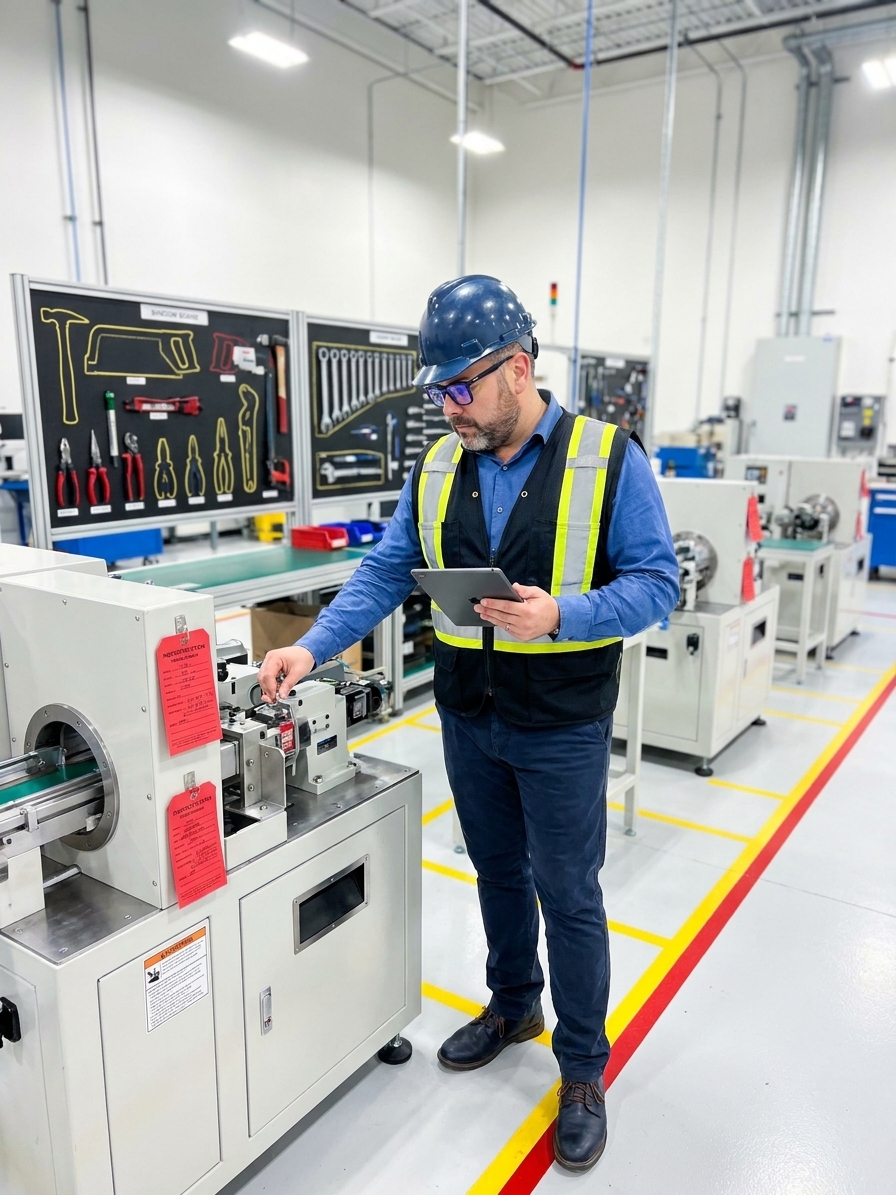
A consultant arrives on Monday. By Wednesday, there are red tags on everything, tape on every floor, and a laminated cleaning schedule on the break room wall. The plant looks immaculate, and the lean transformation is declared a success.
Six months later, the tape is peeling. Shadow boards have gaps where tools went missing. The red tags sit in a drawer. The cleaning schedule became wallpaper.
This is what happens when a methodology designed to build discipline, ownership, and continuous improvement gets reduced to its most superficial element: cleaning.
The Sequential Design of 5S
Developed within the Toyota Production System, 5S is a systematic approach to workplace organisation. Each phase builds on the previous one. Skipping steps breaks the entire structure.
- Seiri (Sort): Eliminate everything from the workspace that does not add value. This is not tidying; it is removal.
- Seiton (Set in Order): Arrange what remains so abnormalities are instantly visible. A missing tool must be obvious.
- Seiso (Shine): Clean to inspect, not to decorate. Wiping down a machine is how you detect the oil leak.
- Seiketsu (Standardize): Build visual controls that make the abnormal stand out at a glance.
- Shitsuke (Sustain): Build the daily discipline required to maintain the system.
Sort without Set in Order is decluttering. Set in Order without Sort is organising junk. Standardize without the first three is writing procedures for a system that does not exist. When organisations skip steps, they are not implementing 5S. They are implementing 1S and calling it a transformation.
Where Implementation Goes Wrong
The failure pattern is remarkably consistent. It starts with an event-driven launch. A cross-functional team gets red tags and tape. They throw away obsolete fixtures and broken gages over three days. The area looks dramatically better in before-and-after photos.
The event created cleanup, not capability. The team did not build a system for deciding what stays and what goes. They just discarded things in a burst of enthusiasm.
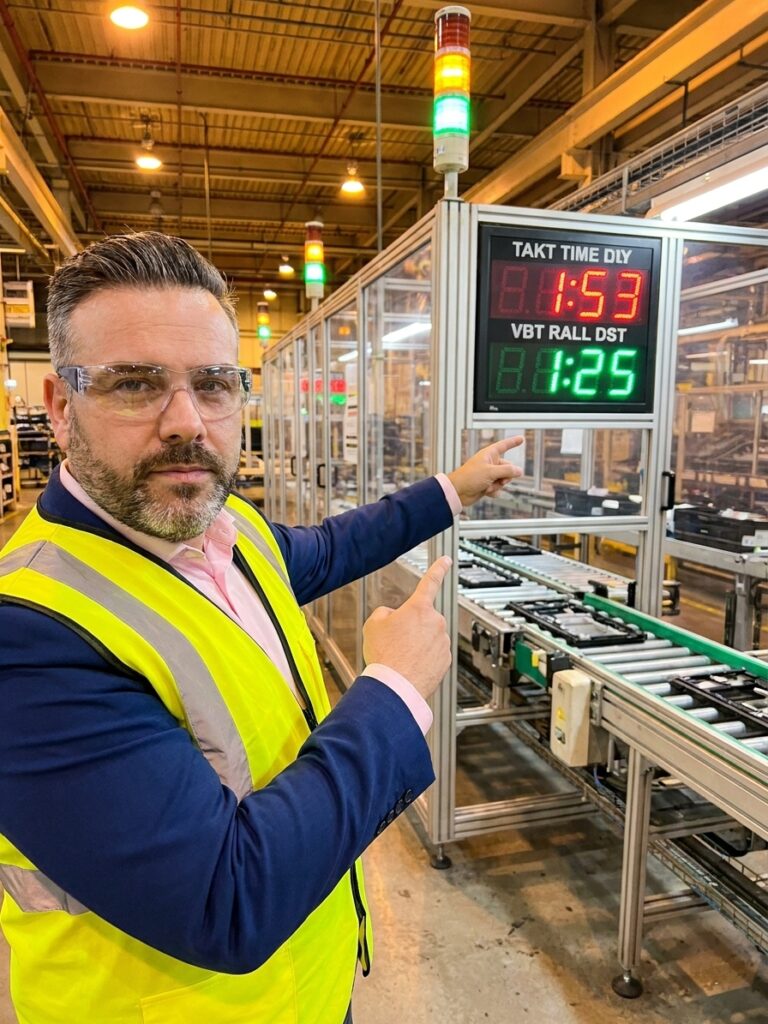
Set in Order gets reduced to shadow boards. Every tool gets a painted silhouette. But nobody asked why those tools were there. The organisation outlined the existing chaos instead of questioning it.
A shadow board for tools you do not need is not organisation. It is decorated waste. Genuine 5S demands that Sort eliminates the unnecessary before Set in Order arranges the rest.
The 5S Implementation Gap
What teams usually do
- Host a 5-day kickoff event and purge the area
- Build shadow boards for all existing tools
- Assign cleaning tasks to the newest operator
- Run monthly, pre-announced compliance audits
What actually works
- Build a permanent system for sorting incoming items
- Eliminate unneeded tools before organising the rest
- Train operators to use cleaning as defect inspection
- Measure the rate of early problem detection
Cleaning as a Diagnostic Tool
Shine was designed as a diagnostic tool. When an operator wipes down a machine, they are supposed to notice the leak, the vibration, or the wear pattern signalling an impending failure.
In practice, cleaning becomes a janitorial function assigned at the end of the shift. Nobody trains operators on what to look for. Nobody creates a feedback loop for the problems they might find. An operator spots a crack in a hydraulic line, but there is no mechanism to act on it, and no incentive to speak up.
They stop looking. The crack becomes a leak, the leak becomes a rupture, and the rupture becomes a shutdown. Nobody connects this to the fact that Shine was supposed to prevent exactly this scenario.
Standardization and Documentation Theater
Standardize is supposed to create visual controls that make the abnormal instantly visible. The workspace should self-report problems.
Instead, Standardize becomes a documentation exercise. Procedures are written. Checklists are created. Three-ring binders are assembled. The documents describe how things should be, but they do not govern how things are.
A standard that nobody follows isn't a standard. It's a suggestion that's been laminated and posted on a wall.
The audit happens once a month, announced in advance. Everyone scrambles to make the area look good for two hours. Then it is back to normal. The audit becomes the goal, and people optimise for the audit, not for the workplace.
Building a Problem Detection System
At its deepest level, 5S is about making problems visible. When you have truly Sorted, any unnecessary item stands out. When you have truly Set in Order, a missing tool is obvious instantly. When you have truly Shined, a fresh oil leak is immediately apparent on a clean machine.
I have audited plants that scored perfectly on 5S checklists but had no mechanism for operators to report the defects they found during cleaning. A high score means nothing if the system cannot surface a leaking seal before it ruptures.
Properly implemented 5S turns the entire workspace into a real-time problem detection system. Every surface, every tool, and every visual control acts as a sensor. When those sensors are working, problems cannot hide. When 5S is reduced to cleaning, those sensors are dead.
The Operator Reporting Loop
- 01Inspect during cleaningOperator wipes down machine and identifies an abnormality, such as fresh fluid.
- 02Flag the abnormalityOperator tags the issue visually on the equipment using a standardised marker.
- 03Log and triageShift lead logs the tag and assigns priority based on safety and operational risk.
- 04Execute repair within 24 hoursMaintenance resolves the issue and removes the tag, closing the loop.
Fixing a Broken System
A facility that has genuinely implemented 5S operates differently. Operators inspect because they have been trained. When they spot something abnormal, they know how to report it. They have ownership of their workspace because they designed its organisation.
Machines are clean enough to show any new leak or wear. Not showroom-clean, but working-clean. Standards are visual, not textual. You look at the workspace and know immediately if it is in its normal state.
If you want to know whether your 5S program is real or theatre, ask one question: When was the last time your 5S process helped you catch a problem before it became a failure?
If the answer is never, you do not have 5S. You have a cleaning program with laminated signs. If the answer is specific, you are on the right track.
Replace audit scores with problem detection rates. Measure how many abnormalities your 5S system surfaces and celebrate those findings. An abnormality found is a failure prevented. Stop calling it a program. 5S is supposed to be the way you work.