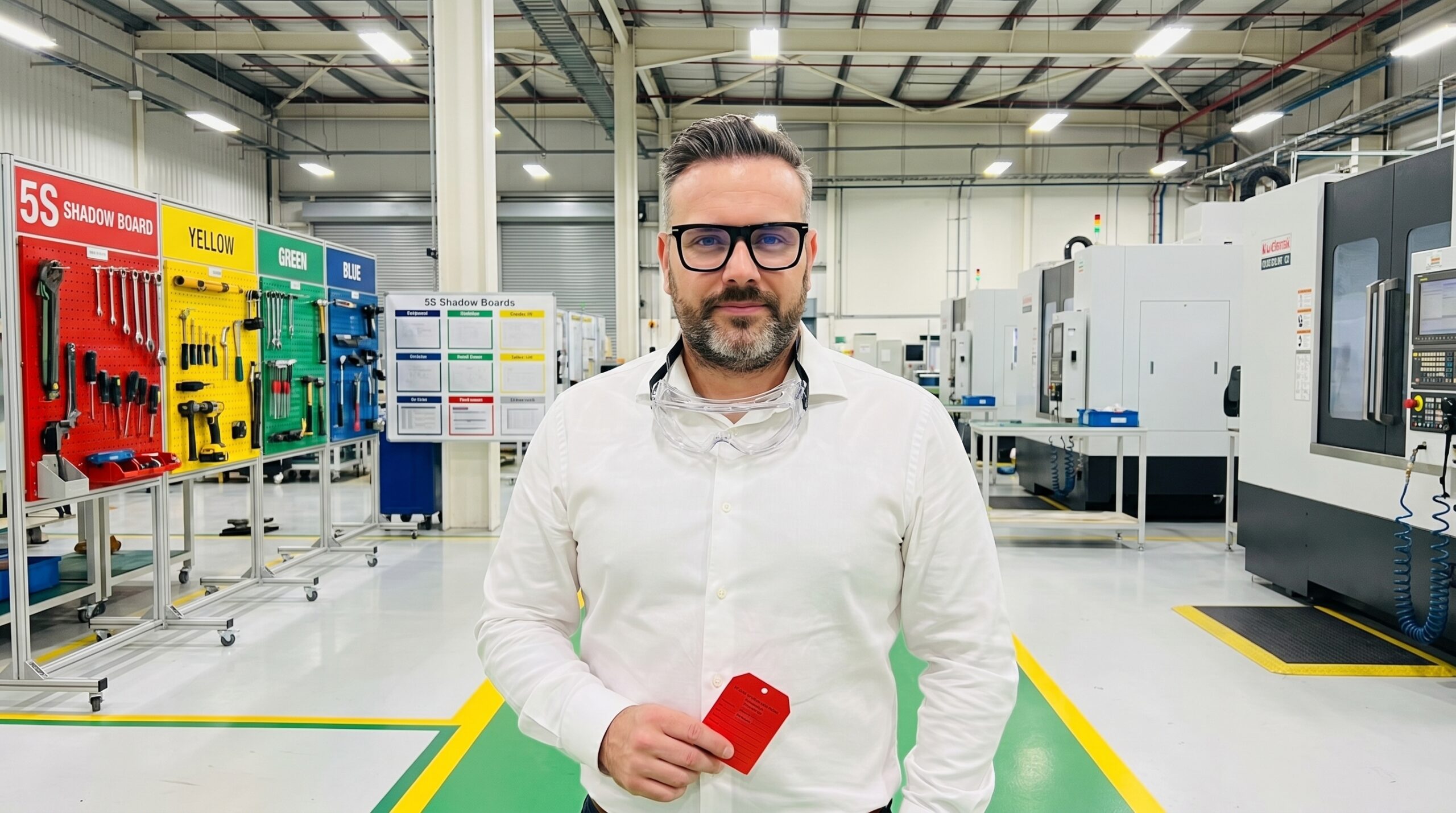
I was auditing a mid-sized automotive component plant — roughly 350 employees, certified to ISO 9001 and IATF 16949. Everything on paper was flawless. When I walked onto the shop floor, the reality was different. Tools were scattered across machines, packaging cardboard was stacked in corners, and oil trails connected equipment like an unwanted process map. Hanging on every single machine was a laminated sign reading '5S Certified Area'.
I asked the operations manager how often they conducted 5S audits. 'Every month,' he replied with visible pride. 'Our scores are excellent.' I opened the audit file. The score stood at 95 percent. I looked at the manager, and he looked at me. The silence in that moment held more truth than the manufacturing documentation.
This scenario is not an exception; it is the industry standard. 5S is arguably the most widely implemented yet least understood lean manufacturing tool in the world. Organisations deploy it by painting floor zones, printing labels, and hanging posters, but they never penetrate the surface. When 5S fails to reduce costs or cycle times, management blames the tool rather than their shallow implementation of it.
What 5S Actually Is — and What It Is Not
Originating from the Toyota Production System, 5S consists of five steps: Seiri (Sort), Seiton (Set in Order), Seiso (Shine), Seiketsu (Standardise), and Shitsuke (Sustain). That is the textbook definition. In practice, organisations fundamentally misunderstand its purpose.
5S is not a one-off aesthetic project, a cleaning competition between departments, or a task delegated to the facility maintenance team. Treating it as such guarantees failure. It is a rigorous diagnostic tool. The physical state of a workstation is a direct reflection of the state of the underlying process.
It functions as a primary safety shield; unmanaged clutter is the precursor to incidents. More critically, 5S is the prerequisite infrastructure for every advanced quality methodology. You cannot implement Total Productive Maintenance (TPM) on a machine buried under debris, and you cannot standardise work where operators spend their shifts searching for equipment.
The Implementation Gap
What teams do
- Treat it as a monthly cleaning audit
- Delegate responsibility to facility staff
- Hang signs declaring areas '5S Certified'
- Chase an audit score in a spreadsheet
What works
- Use it to diagnose process instability
- Make operators responsible for their zones
- Integrate checks into standardised work
- Track time saved and defects prevented
Seiri: The Discipline of Removal
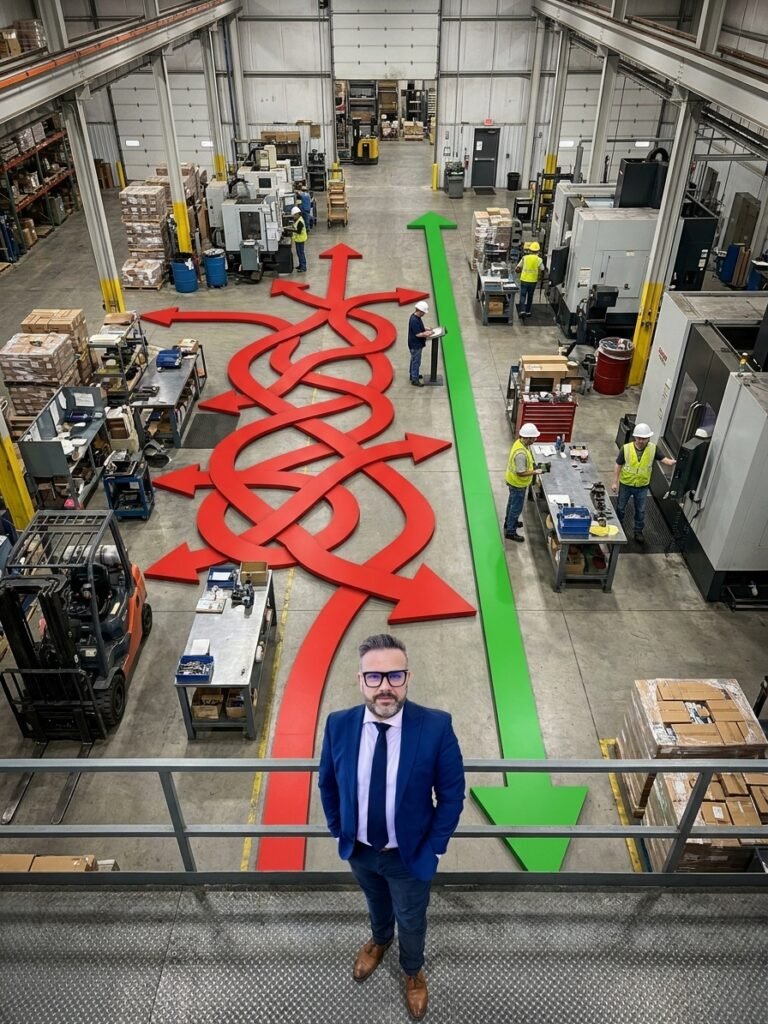
The first step, Seiri or Sorting, is psychologically the hardest. Shop floor personnel hoard items under the assumption that something 'might be useful someday'. During one audit, I found an obsolete die sitting on a machine press. It had not been used in four years. When I asked why it was there, the answer was: 'We do not know where else to put it.'
To force clarity, implement a strict Red Tag system. Any item on the shop floor that is not actively identified as necessary for current production receives a red tag detailing the date, responsible person, reason for tagging, and proposed resolution. Tagged items move to a holding area. If no one proves the item's necessity within 30 days, it goes to scrap.
The operational impact of Seiri is immediate. During a recent sorting event at a manufacturing facility, we removed over two tonnes of redundant material, tooling, and machinery from the active production area. We discovered three 'backup' machines that were entirely non-functional. Clearing this debris opened up enough floor space to reorganise the material flow, reducing internal transport routes by 40 percent.
Seiton: Ergonomics Over Aesthetics
Seiton, or Setting in Order, is where most implementations stall at shadow boards and outline templates. These visual cues are important, but they are only the surface. The true purpose of Seiton is operator ergonomics and cycle time efficiency.
Arrange the workplace strictly by frequency of use. Items used daily belong within arm's reach at the workstation. Items used weekly go to a nearby local store. Items used rarely belong in the central warehouse. I apply the 30-second rule: if an operator cannot find, use, and return a tool within 30 seconds, the layout is defective and requires re-engineering.
I have audited facilities where shadow boards held twenty tool outlines, but operators only ever used three. The rest were kept 'just in case'. That is theatre, not standardisation. When we reorganised an assembly line in an aerospace supplier facility using frequency-of-use principles, average tool search time dropped from over four minutes per shift to roughly twelve seconds. Across 22 operators, this recovered more than 350 production hours annually — pure capacity gained without capital expenditure.
Seiso: Cleaning as Haptic Inspection
Seiso separates genuine lean manufacturing from cosmetic tidying. Cleaning within a 5S framework is not janitorial work; it is defect prevention. When an operator cleans a machine, they physically touch it. They spot leaking hydraulic fluid, feel abnormal heat, and hear grinding bearings before they appear on any digital twin dashboard.
Cleaning is a haptic inspection — the most reliable diagnostic tool available on the shop floor. I implement a 'Clean to Inspect' protocol. Every operator has specifically defined cleaning points, supported by 'before and after' visual standards. Cleaning is integrated into standardised work, not treated as an extra task.
Operators must log abnormalities discovered during cleaning directly into the maintenance system. This directly feeds your TPM pipeline. In an aerospace supply chain, a routine cleaning protocol uncovered a microscopic stress crack on a hydraulic fitting. Left undiscovered until a functional failure, the resulting defect would have cost millions in recall logistics and posed severe safety risks.
Seiketsu and Shitsuke: Standards and Sustained Discipline
Seiketsu (Standardisation) is where 5S implementations typically collapse. Companies write a standard, print it, file it in a binder, and declare victory. The standard becomes a dead document. To function, standardisation must be visual, accessible at the point of execution, and alive — updated continuously based on kaizen feedback and audit findings.
I use Kamishibai boards for 5S audits. These are visual card systems displaying Green or Red verdicts that are visible to the entire plant. There are no hidden scores buried in a manager's spreadsheet. Transparency at the gemba forces accountability and builds operational trust.
If your 5S audit scores are excellent but your cycle times are rising, your audit is measuring aesthetics, not engineering.
Shitsuke (Sustain) is the final, most difficult step because it relies on internal discipline rather than external mandates. You can order an operator to sweep the floor, but you cannot order them to care. Building this discipline requires shifting from forced compliance through audits, to perceived value where operators see the benefit, and finally to internal belief where the standard becomes part of the operational identity.
Measuring 5S as an Engineering Tool
5S as the Prerequisite Infrastructure
5S is not an isolated tool; it is the foundation supporting every other lean mechanism. Total Productive Maintenance cannot exist where operators cannot find grease fittings. Kanban systems collapse when parts lack precise, designated locations. Statistical Process Control (SPC) fails when measurement gauges are dirty, uncalibrated, or inaccessible.
During my transition of ISO 9001 systems at major aerospace and automotive plants, I enforced a strict rule: if the foundational 5S system is flawed, no subsequent lean tool will function correctly. Implementing SMED or Kanban on top of a chaotic shop floor is like installing a modern roof on a crumbling foundation. The advanced engineering is wasted because the base cannot support it.
Even in an Industry 4.0 environment, the necessity of 5S does not diminish — it scales. Digital disorder (duplicate databases, uncontrolled document versions, uncalibrated sensors) causes the same operational paralysis as physical clutter. IoT sensors require clean, accessible environments to transmit accurate data. 5S ensures your digital manufacturing investment has something real to monitor.
Operational Metrics Over Audit Scores
Stop measuring 5S success with generic audit percentages. Measure the engineering output. Track the average time spent searching for tooling, documents, or materials. Count the number of abnormalities caught during operator cleaning routines — a high number means Seiso is actively preventing defects.
Monitor changeover times. A measurable drop in SMED duration is the direct financial return of a properly executed Seiton. Track safety incidents, because physical disorder equates directly to operational risk. Finally, monitor shop floor absenteeism and turnover. Operators do not leave workstations that are safe, ergonomic, and logically arranged.
At one facility, after stripping away the cosmetic 5S programme and rebuilding it as an engineering diagnostic, the plant recorded a 22 percent reduction in changeover times and a 45 percent drop in safety incidents. Kaizen proposals from operators increased threefold. These are not the results of sweeping a floor. They are the results of systematically controlling an operational environment.