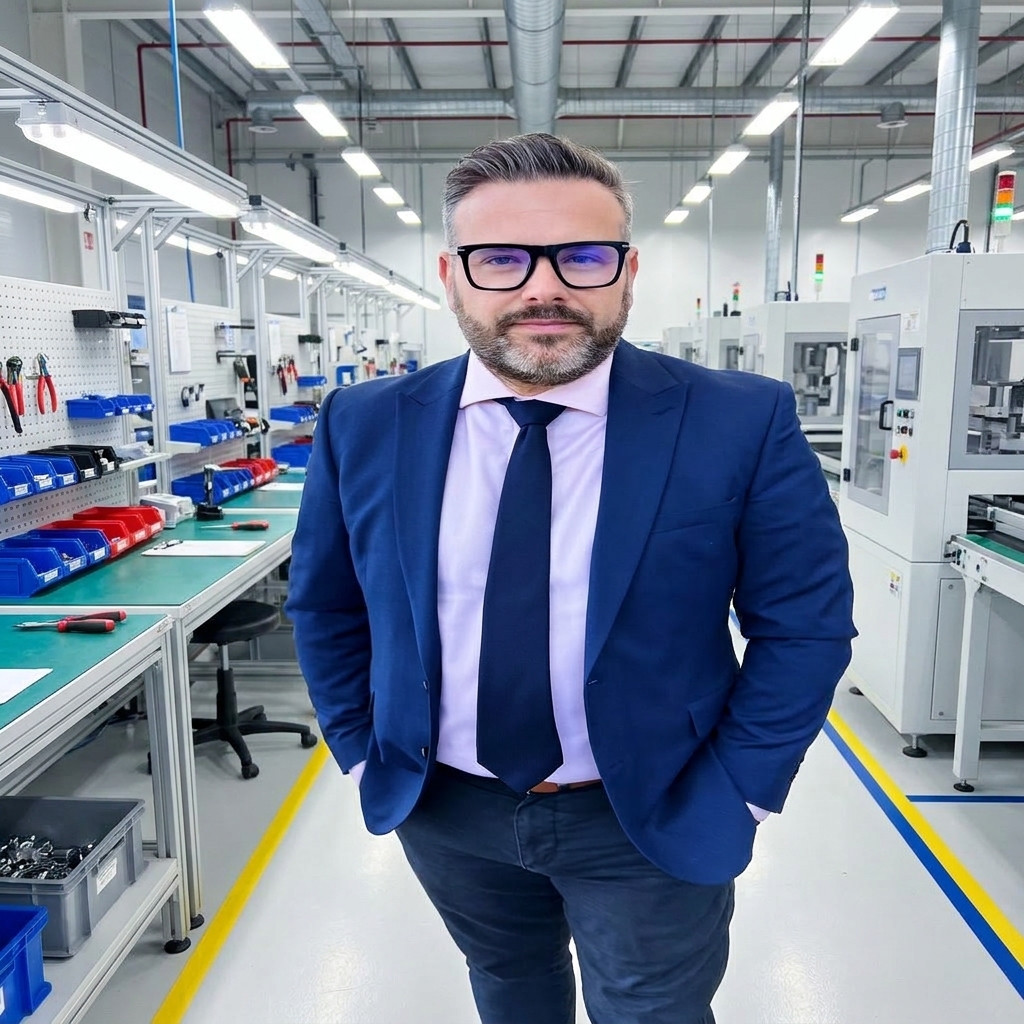
5S fails in most plants because management treats it as a janitorial exercise rather than a foundational quality system. A clean workbench looks impressive during a customer audit, but if the underlying process is not standardised, the mess returns within a week. I have audited plants that passed IATF 16949 with flying colours, yet operators spent twenty minutes every shift searching for the correct torque wrench.
The methodology—Sort, Set in Order, Shine, Standardise, Sustain—must be directly tied to operational metrics. When implemented correctly, 5S reduces variation. Variation is the root cause of defects. Therefore, a disciplined 5S environment directly improves first-time yield, reduces lead times, and strengthens OEE.
I have implemented 5S across radically different environments, from automotive cable assembly to aerospace cleanrooms. The principles do not change, but the rigor of application must fit the specific defect modes of the process. Without this systematic link to quality, 5S remains superficial.
The Mechanics of the First Three Pillars
The first three pillars exist to eliminate process noise. Sort (Seiri) forces you to remove every item not required for the specific operation. In practice, this means physically red-tagging obsolete tooling, excess WIP, and uncalibrated gauges, then removing them from the working area entirely. If an item is used less than once per shift, it does not belong at the workstation.
Set in Order (Seiton) establishes a designated, labelled location for every remaining item. This is where visual management begins. Shadow boards, footprint markings, and labelled bins are not decorative—they are error-proofing devices. If a specialised cutting tool is missing from its shadow board at the end of a shift, the supervisor knows immediately that it might be left inside a machine or lodged in a product.
Shine (Seiso) is not about wiping down surfaces. It is a structured, daily inspection process. Cleaning a machine forces the operator to look closely at it. This is how we detect hydraulic leaks, loose fasteners, or abnormal vibration before they cause an unplanned downtime event or a nonconforming batch. Cleaning is inspection.
Standardisation: Locking in the Gains
A one-off cleanup yields temporary results. Standardise (Seiketsu) converts the cleaned, organised workspace into the documented baseline. The current state must become the minimum acceptable standard. This is achieved by integrating 5S expectations into standard work instructions and visual aids.
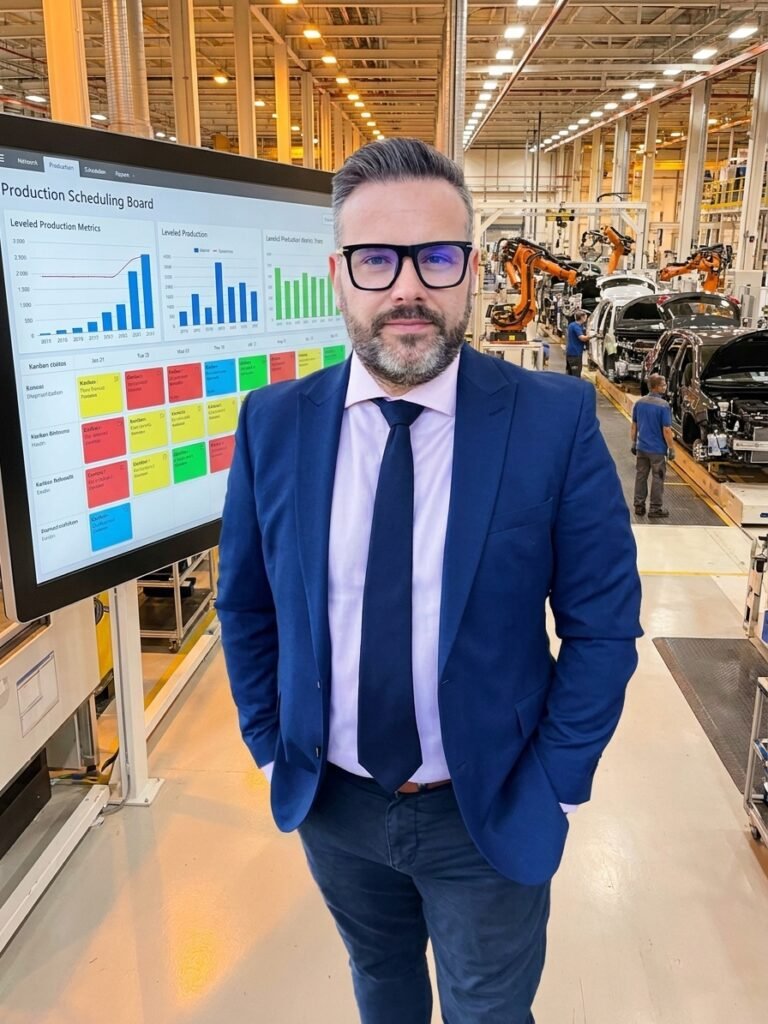
Standardisation requires defining who cleans what, with which specific tools, and at what exact frequency. When a quality defect arises—such as a contaminated surface in a cleanroom or foreign object debris (FOD) in an aerospace assembly—the 5S standard provides the baseline for the 8D investigation. If the standard is ambiguous, root cause analysis stalls.
During a cable assembly project at Molex Slovakia, we mapped the material flow and applied rigorous Sort and Set in Order to the staging areas. By standardising component locations and introducing mobile kanban carts, we cut material retrieval time by 50% and significantly reduced line-side clutter. The efficiency gain was a direct result of removing the physical barriers that slowed down the operators.
Sustain: The Hardest Discipline
Most quality systems fail at Sustain (Shitsuke). Human nature drifts without pressure. Sustaining 5S requires shifting from a project mindset to a behavioural expectation, driven heavily by shopfloor leadership. Supervisors must enforce the standard daily, not just before an ISO 9001 surveillance audit.
This is achieved through layered process audits (LPA) and cross-functional checks. I implement weekly 5S audits scored against a strict rubric. These scores are not hidden in a continuous improvement report—they are posted on the department board and reviewed in the daily shift huddle. Poor scores require an immediate containment action.
Sustaining 5S: The Audit Loop
- 01Define the RubricEstablish specific, measurable criteria for each zone, tailored to defect risk.
- 02Daily VerificationShift leaders verify the baseline state using a standard checklist.
- 03Cross-AuditDepartment managers audit unfamiliar zones to ensure objective scoring.
- 04Address GapsAssign immediate owners to correct deviations before the next shift.
- 05Review TrendsTrack audit scores as a leading indicator on the site KPI dashboard.
Sustaining 5S is fundamentally about accountability. If leadership walks past an unorganised, dirty workstation without correcting it, they have just established a new, lower standard. The pace of decline is rapid.
Adapting 5S to High-Precision Environments
In high-precision manufacturing, the definition of dirt and disorder changes dramatically. At AVX Kyocera, we deployed 5S inside a cleanroom producing advanced electronic components. In this environment, a single microscopic particle constitutes a critical defect.
Standard Sort and Shine protocols are insufficient here. We adapted the Shine pillar to include strict particulate counting and controlled wipe-down procedures using certified materials. The Set in Order phase mandated strict component segregation to prevent any cross-contamination.
By elevating 5S to meet cleanroom particulate standards, we achieved a 90% reduction in airborne particles and a 75% improvement in first-time yield. Zero critical system contamination events were recorded post-implementation. The system worked because the 5S pillars were mapped directly to the technical failure modes of the product.
The Direct Link to Safety and OEE
When 5S is treated as a core operational tool, it drives measurable improvements in safety and Overall Equipment Effectiveness (OEE). Clutter and unmarked aisles are the primary causes of slips, trips, and handling incidents. By aggressively sorting out unnecessary materials and clearly marking boundaries, we eliminate the physical hazards.
Cleaning is inspection; standardised organisation is the cheapest form of error-proofing.
During my tenure as Quality Supervisor at Honeywell, we applied systematic 5S to complex industrial lines. We focused heavily on Shine as a predictive maintenance tool, having operators flag early signs of machine degradation. This proactive approach, combined with strict tool-location standardisation, led to a 70% reduction in recordable incidents and a 60% improvement in line efficiency.
Impact of Systematic 5S at Honeywell (2004-2007)
These results are not isolated to heavy industry. Whether building a greenfield QA department for a 900+ employee automotive plant or transitioning systems at a major aerospace manufacturer, I have found that OEE improvements are impossible to sustain without a rigorous 5S foundation. You cannot run a capable process on a disorganised machine.
Integrating 5S into the Quality Management System
5S must be auditable within your formal QMS framework, whether aligned to AS9100, IATF 16949, or ISO 9001. It cannot exist as a standalone Lean initiative managed by a separate team. The audit findings must feed directly into your corrective action and preventive action (CAPA) system.
When a 5S audit identifies a recurring failure—such as tools consistently missing from their designated location—this must trigger a formal root cause analysis. Is the location impractical? Does the standard work instruction conflict with the physical layout? Treating 5S deviations as quality nonconformances forces the organisation to engineer permanent solutions rather than relying on reminders.
Integrating 5S into the QMS means tying it to VDA 6.3 process audits and layered process audits. It ensures that your 5S system is not just about keeping the floor clean, but about controlling the process variables that generate scrap, rework, and delays. That is how 5S transforms from a visual concept into a structural driver of manufacturing efficiency.