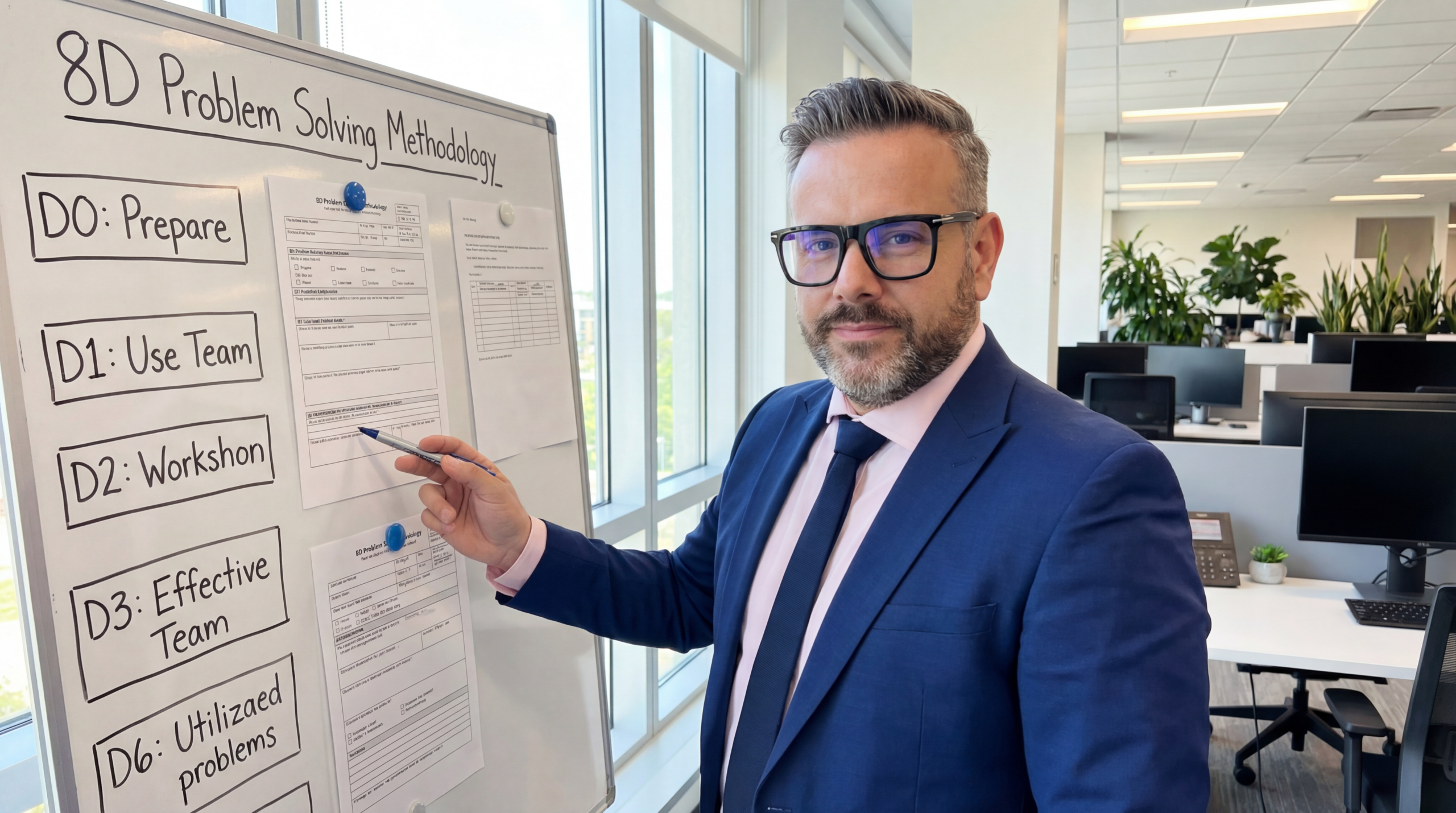
8D: When Problem Solving Changes Manufacturing Future
Problems Are Inevitable. But How You Solve Them Makes the Difference.
Problems are inevitable. But it’s not about whether you have problems—it’s about how you solve them. Companies that treat problem-solving as a crisis to be avoided fail. Companies that treat problem-solving as an opportunity to improve thrive.
“8D is a systematic approach that transforms a crisis situation into an opportunity for improvement.”
What is 8D Methodology?
8D (Eight Disciplines) is a structured problem-solving methodology that originated in the automotive industry. It’s not just a tool for crisis situations—it’s a comprehensive system that:
- D1: Form the team
- D2: Describe the problem
- D3: Implement temporary measures
- D4: Identify root cause
- D5: Select and verify corrective actions
- D6: Implement permanent corrective actions
- D7: Prevent recurrence
- D8: Recognize team and congratulate
The Eight Disciplines in Action
Each discipline serves a specific purpose in the problem-solving process:
Discipline 1: Form the Team
The foundation of any successful 8D effort is the right team. This means bringing together people with the right expertise, the right mindset, and the right authority to make decisions and drive implementation.
Key principles:
- Include subject matter experts from relevant departments
- Ensure team has authority to make decisions
- Appoint a champion to drive the process
- Establish clear timelines and expectations
Discipline 2: Describe the Problem
A clear, precise problem description is essential. Without understanding the problem, you cannot solve it effectively.
Problem description should include:
- What happened?
- When did it happen?
- Where did it occur?
- Who is affected?
- What is the impact?
Discipline 3: Implement Interim Containment Actions
Before you find the permanent solution, you must protect the customer from the problem. This means implementing temporary measures that stop the issue from recurring while the root cause is being investigated.
Interim actions can include:
- Increased inspection
- Separate inventory for suspected defective parts
- Additional testing before shipment
- Temporary process changes
Discipline 4: Identify Root Cause
This is often considered the most critical discipline. Without identifying the true root cause, any fix will be temporary at best.
Common root cause analysis tools include:
- 5 Whys (asking why five times)
- Fishbone diagram (Ishikawa)
- Fault Tree Analysis
- Statistical analysis
- Process mapping
Discipline 5: Select and Verify Corrective Actions
Once you understand the root cause, you need to select the right corrective actions—not just any actions, but the right actions.
Criteria for selecting corrective actions:
- Addresses root cause
- Cost-effective implementation
- No negative side effects
- Preventable with existing processes
Discipline 6: Implement Permanent Corrective Actions
Implementation requires planning, resources, and monitoring. It’s not enough to decide what to do—you must execute effectively and verify it works.
Implementation considerations:
- Create detailed implementation plan
- Assign responsibilities and timelines
- Monitor implementation closely
- Document all changes
Discipline 7: Prevent Recurrence
The ultimate test of problem-solving effectiveness is whether the problem recurs. Prevention requires systemic changes that address the root cause and ensure it cannot happen again.
Prevention strategies include:
- Process standardization
- Training and awareness
- Automated controls
- Regular monitoring and review
Discipline 8: Recognize Team and Congratulate
The final discipline is often overlooked but critically important. Celebrating success reinforces the problem-solving culture and motivates the team for future challenges.
Recognition should include:
- Celebration of successful resolution
- Documentation of lessons learned
- Recognition of team contributions
- Sharing success with organization
Why 8D Works
The success of 8D methodology comes from its systematic, team-based approach to problem-solving. Unlike reactive approaches that address symptoms, 8D addresses the root cause and prevents recurrence.
8D in Manufacturing Excellence
In high-reliability manufacturing environments like automotive, aerospace, and medical devices, 8D is not just a methodology—it’s a necessity. A single quality problem can have catastrophic consequences.
Benefits of 8D implementation:
- Reduced defect costs: 60-80% reduction in quality-related costs
- Improved customer satisfaction: Fewer complaints, higher trust
- Preventive mindset: Problems become opportunities for improvement
- Cross-functional collaboration: Teams work together across departmental boundaries
Implementation Challenges
While 8D is powerful, implementing it effectively comes with challenges:
Challenge 1: Time Pressure
In crisis situations, there’s always pressure to solve quickly. But 8D requires time to do it right. The balance is implementing interim containment to protect customers while taking time for thorough root cause analysis.
Challenge 2: Cross-Functional Coordination
8D requires input from multiple departments. Coordinating busy teams from different functions can be difficult but is essential for success.
Challenge 3: Documentation Discipline
The methodology requires detailed documentation at each step. In fast-paced environments, documentation can feel like a distraction from solving the problem. However, without documentation, there’s no way to learn from the experience or prevent recurrence.
Challenge 4: Ensuring Permanence
It’s easy to implement quick fixes. It’s harder to implement permanent solutions that prevent recurrence. Ensuring discipline to complete the entire 8D process is challenging but necessary.
Success Stories
The effectiveness of 8D methodology is best demonstrated through real-world results:
Success Story 1: Warranty Cost Reduction
An automotive supplier implemented 8D for a recurring quality issue. Root cause analysis revealed a process design problem. After implementing the permanent corrective action, warranty costs dropped 75% within six months.
Success Story 2: Production Uptime Improvement
A manufacturing facility used 8D to resolve chronic equipment failure. The systematic approach revealed maintenance and training issues. After implementing corrective actions and preventive measures, production uptime improved 15%.
Success Story 3: Customer Complaint Reduction
A medical device manufacturer implemented 8D for product performance issues. Cross-functional team collaboration identified a material specification problem. After correcting the root cause and implementing preventive measures, customer complaints decreased 90%.
Getting Started with 8D
Implementing 8D methodology doesn’t happen overnight. It requires training, tools, and organizational commitment.
Step 1: Training
Ensure all team members understand the 8D disciplines and their responsibilities. Consider bringing in external training if needed.
Step 2: Templates and Tools
Develop standardized templates for problem descriptions, root cause analysis, and corrective action plans. Use visual tools like fishbone diagrams and fault trees.
Step 3: Process Integration
Integrate 8D into your existing quality management system. Make problem-solving a standard part of your quality culture.
Step 4: Management Support
Leadership must support 8D by allocating resources, allowing time for thorough analysis, and recognizing successful problem-solving efforts.
The 8D Mindset
Beyond the methodology, 8D represents a mindset shift—from reactive problem-solving to proactive continuous improvement. Every problem becomes an opportunity to learn, improve, and become better.
“When you solve one problem with 8D, you don’t just fix that problem—you build the capability to solve future problems better and faster.”
For more information about Peter Stasko and his work, visit:
peterstasko.online | Email: cv@peterstasko.online