
An andon system is a visual and audible signal mechanism that gives operators the authority to stop production when they detect an abnormality. The concept originated in the Toyota Production System, where Taiichi Ohno recognized that the worker closest to the process holds the most accurate real-time data. If that worker sees a deviation, forcing the line to continue is the most expensive decision a plant can make.
In my experience auditing manufacturing plants, the hardware is rarely the failing point. Organizations install physical cords, stack lights, and digital logging displays, then wonder why activation rates remain at zero. The system exists on the floor, but the psychological safety required to use it does not.
The standard metric for these failures is brutal. A five-minute line stoppage to investigate a suspected die vibration costs roughly thirty units of production. Running the press for four more hours until the die catastrophically fails costs eleven days of downtime, emergency machining, and customer sorting. The mathematics always favour stopping early, yet operators consistently choose to let the line run.
The Compounding Cost of Waiting
Most plant managers resist line stoppages because they calculate quality failures on a linear curve. They see five minutes of downtime as a pure loss of five minutes of output. They fail to account for the compounding nature of downstream defects.
When a process drifts, the defect rate multiplies. A misalignment at Minute Zero produces zero defective parts. By Minute Five, the first marginal part passes visual inspection. By Hour Four, the deviation crosses the specification limit, and the operator at the next station cannot catch it because they are focused on their own cycle. You are now generating scrap at full cycle rate.
By Day Two, the defective parts are in the customer's warehouse, mixed with good inventory. The containment cost includes travel, overtime, sorting, and a formal 8D investigation. The root cause analysis will eventually confirm the abnormality was detectable in the first five minutes. The report will recommend empowering operators to stop the line. The hardware was already there. The protocol was not.
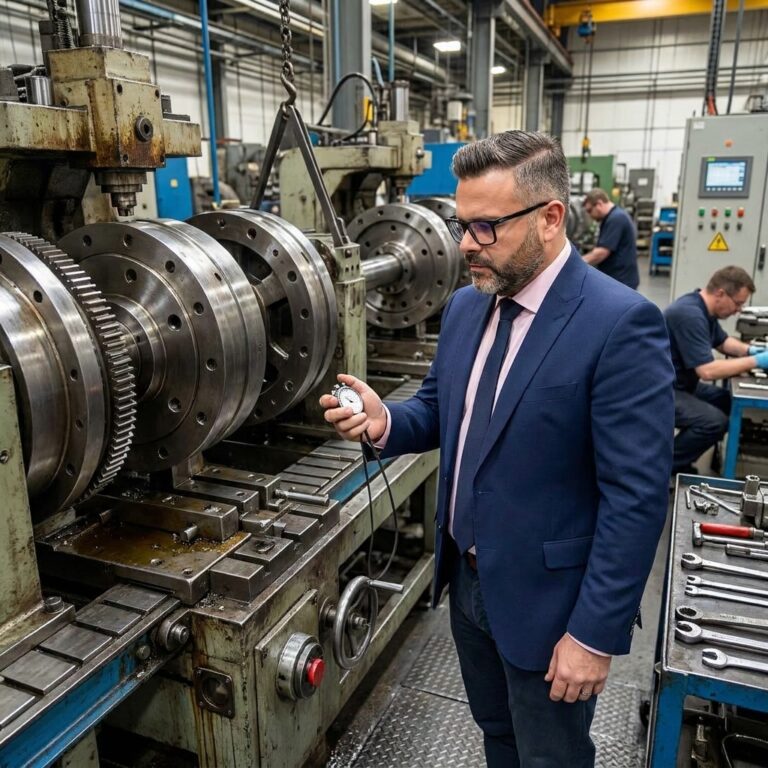
Breaking the Production Pressure Trap
The dominant metric in most automotive and aerospace environments is output. When a supervisor walks the floor, the first question is almost always about hitting the hourly rate. When output is the exclusive focus, stopping the line feels like an act of defiance. The operator calculates that being the person who missed the shift target is more dangerous than risking a defect.
This pressure creates a normalization of deviation. Experienced operators learn to compensate for deteriorating process conditions. They adjust feed rates, tweak offsets, and manually cycle past anomalies. Their expertise becomes the exact mechanism that allows a minor drift to escalate into a major failure. A new hire would flag the issue immediately; the veteran tolerates it.
Layered process audits, a requirement of IATF 16949, exist to break this normalization. Auditors must walk the floor specifically to verify what experienced operators have learned to overlook. If an audit passes because the auditor accepts the operator's workaround, the audit has failed its primary function.
Designing the Response Protocol
If an operator pulls the cord and the response is slow, dismissive, or annoyed, the operator learns to stop pulling it. This is a supervisory failure, not an operator failure. Toyota’s standard for andon response is thirty seconds. The team leader must physically arrive at the station within that window, not in five minutes, and not when they finish their current task.
The first responder assesses the situation and makes one of three decisions. They execute a quick fix to resolve and restart within two minutes. They escalate to maintenance or engineering for diagnostic support. Or they initiate a controlled shutdown because the issue requires deliberate investigation before the line can safely resume.
The line does not restart because a supervisor gives a verbal approval. It restarts because a defined restart criteria checklist has been completed. Every andon event must be documented in a digital system that feeds into the plant’s problem-solving pipeline, directly linking the initial trigger to the final corrective action.
The Structured Andon Response Sequence
- 01TriggerOperator detects abnormality and pulls cord within seconds of noticing.
- 02First ResponderTeam leader arrives within 30 seconds to assess the deviation.
- 03Decision PointLeader executes quick fix, escalates for support, or calls controlled shutdown.
- 04Restart CriteriaLine resumes only after defined safety and quality checklist is cleared.
Integrating Automated Detection
Traditional andon systems rely entirely on human senses. As process tolerances tighten in aerospace and automotive machining, the window between a normal condition and scrap production narrows. A tool wear pattern developing over five hundred cycles, or a temperature drift of two degrees, is imperceptible by feel but immediately detectable by instrumentation.
Statistical Process Control (SPC) systems should be hardwired into the andon logic. When a control chart detects seven consecutive points trending toward the upper control limit, the system should automatically trigger the andon signal. The machine pulls the cord before the operator even realizes the process is drifting.
This requires validating the measurement systems running the automated triggers. If the SPC alarm fires based on a gauge with an unacceptable Gauge R&R percentage, the system loses credibility. Measurement Systems Analysis (MSA) must confirm that the data driving the automated andon is accurate, repeatable, and reproducible.
The cord doesn't have to be pulled by a hand. It can be pulled by data.
Measuring and Building Maturity
If a production line runs for an entire shift without a single andon activation, investigate immediately. Either the process is running flawlessly, which is statistically improbable, or the operators have completely disengaged from the system. Silence is not a victory; it is a critical warning sign of hidden defects.
Organizations evolve through distinct stages of andon adoption. Most automotive Tier 1 and Tier 2 suppliers are stuck in the resistance or compliance phases. They own the hardware, document the procedures, but fail to execute the continuous improvement loop required to make the system function.
Leadership must treat every andon pull as free data. It is a notification of a problem caught before it escaped to the customer. The immediate reaction from management must be constructive, focusing on the root cause, rather than penalizing the operator for the downtime required to fix it.
Andon System Maturity Progression
- ResistanceHardware installed but unused. Operators fear downtime reprimands.
- ComplianceCord pulled only for catastrophic jams. Subtle drifts ignored.
- EngagementOperators flag marginal tolerances. Response is fast and constructive.
- IntegrationAutomated SPC triggers supplement human observation seamlessly.
The Shift to Preventive Quality
An organization without an effective andon system relies on end-of-line inspection to catch defects. By the time a finished good inspection identifies an issue, you have already incurred the full manufacturing cost of producing nonconforming parts. You must then sort, scrap, and potentially recall.
If the defect escapes your facility, the customer discovers it during their incoming inspection. This triggers a formal containment request, potential line-down charges at the customer's plant, and a long-term erosion of the supplier confidence rating. I have driven to customer docks to sort suspect brackets. The cost of those hours alone justifies the andon investment.
Andon shifts the detection point from downstream to the source. It moves the quality conversation from reacting to escaped defects to addressing process deviations before they generate a single nonconformance. The difference between those two operational models is the difference between a plant that constantly fights fires and a plant that reliably ships conforming product.