
In 2009, the theorist Clay Shirky formulated an uncomfortable principle: institutions will try to preserve the problem to which they are the solution. This observation perfectly describes the failure mode of mature quality departments. Organisations build a QA function to solve a crisis, and if leadership is not vigilant, that function will quietly ensure the crisis never fully disappears.
This is not a malicious conspiracy. Nobody sits in a conference room plotting to keep defects alive to protect their job. The dynamic is far more subtle, operating through incentive structures, budget reviews, and the gravitational pull of institutional self-preservation. It happens when a department transitions from solving problems to managing them.
If your quality metrics improve for three quarters and then inexplicably plateau just before they would make the department redundant, you are watching this principle in action. I have implemented and transitioned ISO 9001 systems across automotive and aerospace plants, and I have audited facilities where the quality department became the primary bottleneck to actual continuous improvement.
The Noble Birth and Institutional Trap
Every quality department begins with an acute crisis. A customer returns a shipment, a defect escapes to the field, or an AS9100 audit finds a systemic failure. Leadership invests in resources, and the new quality engineers act as firefighters. They trace root causes, implement 8D corrective actions, and the metrics improve.
But once the crisis subsides, the department institutionalises. It builds necessary systems: PPAP procedures, control plans, approval gates, and layered process audits. It hires more people. It creates dashboards and monthly reviews. All of this is standard and good, yet it creates a new entity whose budget and power depend on the continued existence of quality problems.
The department does not need catastrophic failures to justify its existence. It just needs enough problems to justify the next budget cycle. The Shirky Principle kicks in when the department's metrics shift from eliminating defects to justifying its own headcount, slowly expanding its scope into non-value-added administrative gates.
The structural incentive is dangerous. Leadership must actively design quality systems that aim to make the quality department obsolete. If your organisational structure rewards the department for the volume of problems it manages rather than the problems it permanently eliminates, your system is actively preserving the disease.
Mechanism 1: Metrics That Become the Mission
A quality department creates a dashboard tracking defect rates and scrap. Initially, the dashboard provides vital visibility. Over time, the dashboard becomes the point. The department starts optimising the metrics themselves rather than the actual manufacturing outcomes those metrics were designed to represent.
When defect rates drop, the department often redefines what counts as a defect to maintain a steady flow of actionable items. It adds complexity to the measurement system, or shifts focus to a different metric that still has plenty of room for improvement. The tracking system becomes self-justifying rather than value-adding.
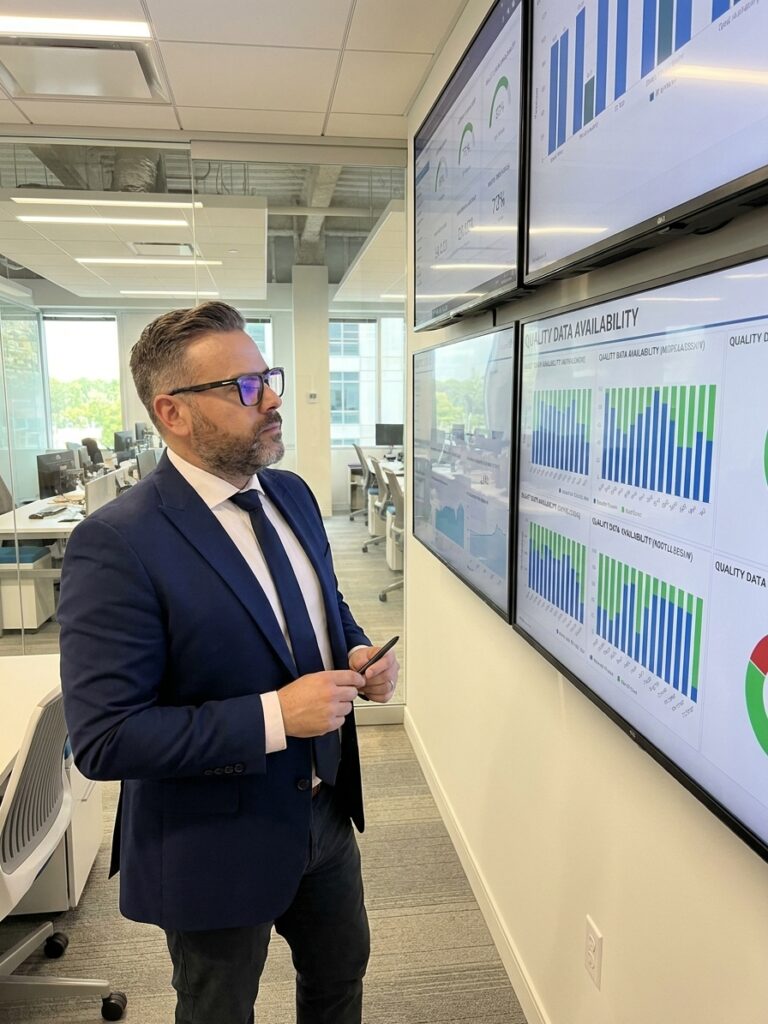
I have audited medical device plants where the quality department tracked hundreds of distinct metrics across various tiers. When asked which five actually drove business decisions, management could not answer. They could, however, explain exactly what would happen to their budget if those metrics showed sustained improvement.
A board will naturally ask why a large quality department is necessary if all metrics are green. To protect headcount, the department ensures the metrics always tell a story of required intervention. You must audit your metrics: if a metric's primary function is to justify a role rather than drive action, it is a Shirky metric.
Mechanism 2: Gatekeeping and the Bottleneck
Quality departments often establish themselves as gatekeepers. Engineering changes must be approved by Quality. New suppliers must be qualified by Quality. Process modifications must be validated by Quality. In regulated industries like aerospace, this gatekeeping is often required by AS9100 or EASA regulations.
But the gatekeeping role creates a structural incentive: more gates mean a more necessary gatekeeper. The department unconsciously expands the scope of what requires its approval. What starts as a review of critical process changes becomes a review of all changes, slowing down engineering and production.
I worked with an automotive supplier where the quality department held twenty-three distinct approval gates between a design concept and a production launch. The average time from concept to launch was fourteen months. When we reduced the gates to the eight genuinely required by IATF 16949, the timeline dropped to seven months.
Gate Reduction Impact
Bureaucratic gating
- 23 distinct approval gates
- 14 months concept to launch
- Quality as a workflow bottleneck
- Engineers waiting on approvals
Value-added gating
- 8 IATF-required gates
- 7 months concept to launch
- Quality as a risk filter
- Engineers implementing improvements
Quality metrics did not get worse after this reduction. They improved, because engineers could actually implement process improvements instead of waiting for paperwork. Every approval gate must have a defined value. If a gate exists purely to justify a quality signature, it is preserving the problem.
Mechanism 3: Expertise That Becomes Dependency
Quality departments develop deep expertise in statistical methods, MSA, regulatory requirements, and problem-solving methodologies. This expertise is valuable, but it creates a dependency. When quality knowledge is concentrated solely in the QA silo, the production floor stops developing its own capabilities.
Operators stop thinking about dimensional variation because that is Quality's job. Engineers stop calculating Cpk because Quality will check it. Supervisors stop investigating deviations because Quality will perform the root cause analysis. The department becomes the only part of the plant that thinks about quality.
This is the cruelest mechanism of institutional self-preservation. The quality department becomes so good at solving problems that nobody else learns how to prevent them. The expertise that should teach the organisation to fish instead ensures the organisation never learns. Dependency becomes the department's primary output.
To break this cycle, you must force knowledge transfer. Track the percentage of quality activities performed by non-quality personnel. A healthy automotive plant has production teams running their own SPC charts and First Article Inspections. If every deviation requires a quality engineer, your system is failing.
Mechanism 4: Initiatives That Replace Outcomes
Departments need to show progress, so they launch initiatives: Lean Six Sigma programs, zero-defect campaigns, quality culture transformations. These initiatives generate visible activity like training sessions, project charters, and belt certifications. To the untrained eye, this activity looks like progress.
But initiatives have a lifecycle. They generate early wins, encounter the hard work of sustaining improvement, and then face a choice. The department can do the unglamorous work of embedding changes into standard work, or it can launch a new initiative that generates fresh excitement and fresh metrics.
A quality department's budget should shrink as its standards become embedded in daily operations.
Most choose the new initiative. The old one gets folded into business as usual and slowly degrades. The portfolio becomes a graveyard of partially completed initiatives. Headcount grows, defect rates might tick down slightly, but the return on investment collapses. The department is managing the effort, not the outcome.
Designing the Self-Eliminating Department
The most effective quality departments I have built share a radical characteristic: they measure their success by their own irrelevance. They do not want to be the heroes who catch defects. They want to build systems where defects do not happen, where operators think in statistical terms, and the department becomes unnecessary.
Stop measuring the quality department by how many problems it solves. Measure it by how few problems require its intervention. Set hard targets for transferring expertise out of the department. Make teaching, not doing, the primary performance metric for senior quality engineers.
Every quality procedure, every approval gate, every inspection point should have a sunset criterion. Build the elimination criteria into the process design itself. If a team cannot state the conditions under which a quality step would be eliminated, that step exists to serve the gatekeeper, not the product.
Quality Capability Maturity
- Level 1: ReactiveSort and contain defects after they occur.
- Level 2: ProactiveControl plans and FMEA prevent known risks.
- Level 3: EmbeddedProduction owns SPC and daily quality tasks.
- Level 4: Self-eliminatingQuality engineers exist only to design systemic capability.
Audit your auditors. Regular external reviews must assess whether the quality department is eliminating problems or just managing them. Ask the production floor if the quality department helps them build better products or simply adds administrative work. The answer will tell you everything.
The ultimate measure of a quality system's success is not how many problems it solves. It is how few problems require solving. When you build quality so deeply into the manufacturing process that the department becomes optional, you have defeated the Shirky Principle.