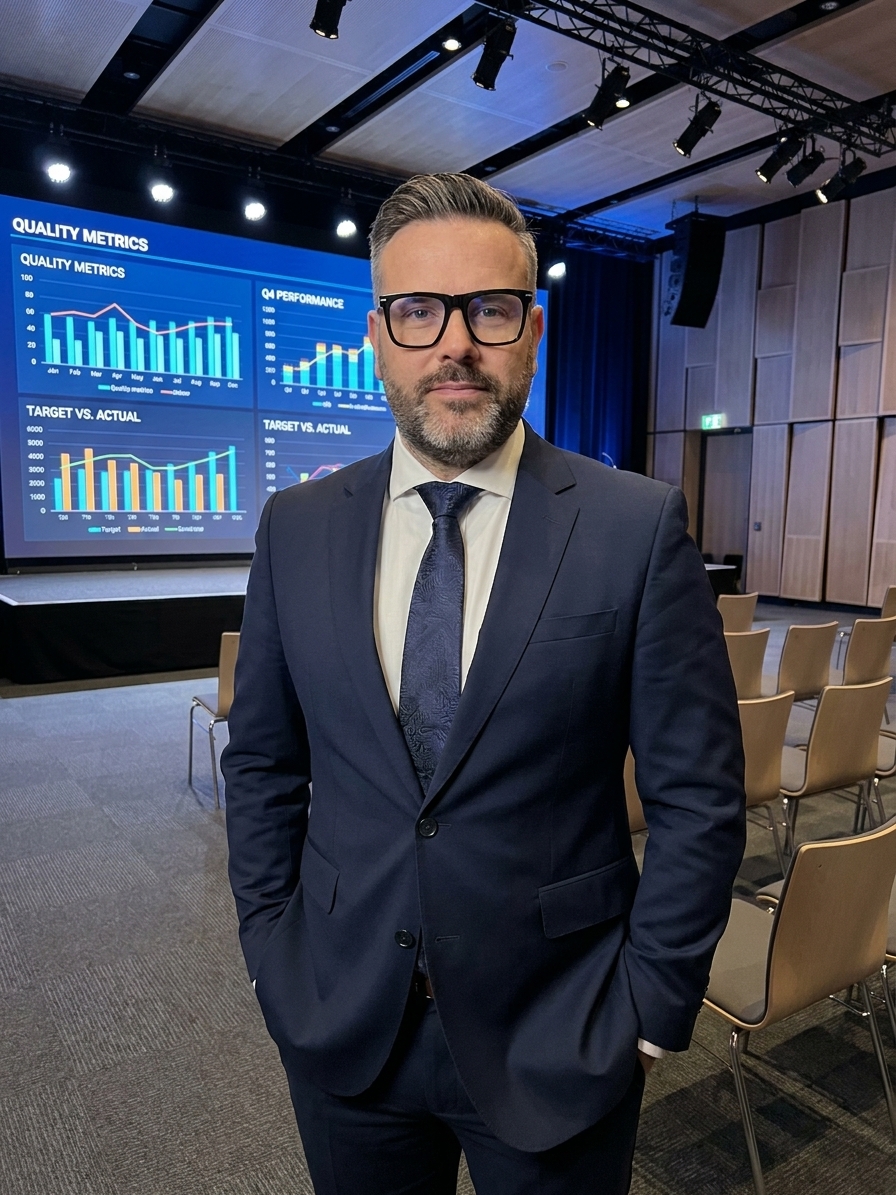
A quality director presents a case study at a major industry conference showcasing a new machine learning inspection system. The metrics are impressive, the slides are polished, and the audience is captivated. A Vice President of Operations in the crowd leans over to a colleague and declares they need to implement this technology immediately.
Notice the absence of evaluation. There is no discussion of current defect rates, data infrastructure readiness, or process capability. The driving force is competitive anxiety. This impulse to adopt a tool because an industry peer did is the bandwagon effect, and it is extraordinarily expensive.
In quality management, this bias manifests as the compulsion to adopt frameworks, methodologies, and technologies because competitors or industry leaders have adopted them. It is the quality profession's version of FOMO. Organizations end up solving problems they do not have while ignoring the actual failure modes on their shop floor.
The Anatomy of a Quality Bandwagon
Quality bandwagons follow a predictable lifecycle. It begins with a deeply contextual case study from a respected organization. The results are real, but they are built on foundations of discipline, measurement system analysis, and infrastructure that took years to develop. These foundations are rarely mentioned because they are not exciting.
Next comes the amplification phase. Consultants, software vendors, and analysts strip away the context and add hype. The conditional becomes absolute. A specific success story becomes a universal promise that a new tool will drastically reduce defects across the board.
The adoption wave follows. Many organizations implement the tool hastily, driven by executive pressure rather than process needs. The thoughtful implementations succeed. The hasty ones become the statistics in next year's failure analysis reports, eventually leading to an industry backlash and the cycle starting over.
The Bandwagon Lifecycle
- 01Contextual Case StudyA leader achieves real results built on years of foundational discipline.
- 02Industry AmplificationVendors and consultants strip context, turning conditional success into absolute promises.
- 03Anxious AdoptionCompetitors implement the tool hastily without the necessary foundational infrastructure.
- 04Inevitable BacklashFailed implementations lead to disillusionment, clearing the path for the next trend.
Why Quality Professionals Are Vulnerable
Quality management has benchmarking baked into its DNA. We study Baldrige winners, attend conferences, and compare ourselves to best-in-class organizations. This comparison is valuable until it shifts from learning to anxious mimicry. Asking what you can learn from an approach produces insight. Asking what others are doing that you are not produces panic.
Certification pressure also forces premature adoption. When competitors hold IATF 16949 or AS9100 certification and a key customer demands compliance, the timeline is dictated by commercial pressure rather than internal readiness. You adopt standards to maintain business, not because your organization has matured enough to sustain them.
Tool-centric identity plays a major role. Organizations define themselves by their frameworks. They claim to be a Lean company or a data-driven organization. This identity creates pressure to adopt new tools to maintain appearances, even when existing methods like statistical process control and 8D corrective action are underutilized.

The Hidden Cost of Trend-Chasing
When organizations adopt quality tools via the bandwagon, the costs extend far beyond the implementation budget. Every hour your quality team spends forcing a trending tool into the ecosystem is an hour not spent on the actual, specific problems your organization faces.
I have audited plants that invested millions in AI-powered predictive quality systems while ignoring chronic calibration failures. Their Cpk data was meaningless because the measurement systems were fundamentally flawed. They could have fixed their gauge R&R for a fraction of the cost. Instead, they bought irrelevant technology.
This behaviour breeds tool fatigue. When an organization adopts a new framework every two years, employees stop committing to any of them. The rational response to continuous initiative churn is cynicism. The organization ends up with a thin layer of competence in many tools and deep expertise in none.
The Mimicry Trap: Tools Without Culture
Copying a solution without understanding the problem it solved leads to failure. Toyota's andon system works because of the surrounding culture: the psychological safety to stop the line, the management commitment to respond immediately, and the engineering discipline to fix root causes.
Organizations that install an andon cord without this culture get a piece of string that nobody pulls. They mimic the visible artefacts of a mature quality system while ignoring the invisible infrastructure of accountability and process control that makes it function.
The tool was never the point. The discipline, culture, and process control were.
This mimicry trap is why copying a PFMEA format from a tier-one supplier will not improve your risk management. If your cross-functional team does not understand failure modes, or if engineering ignores the recommended actions, the document is just compliance theatre.
Implementing Problem-First Quality
The alternative to bandwagon-driven quality is a discipline of starting every initiative by identifying a specific problem. You must understand its root causes through validated data before selecting the tool or approach that addresses it. This methodology sounds obvious, and it is violated constantly.
Before adopting any new technology, you must define the specific problem you are trying to solve. Aspirations are not problems. A problem is a measurable gap in performance, such as a paint defect rate of 2.3% against a customer threshold of 1.5%.
Next, determine if you have exhausted existing capabilities. If your statistical process control program is failing because operators are not maintaining charts, adding AI-powered SPC will not fix the lack of discipline. The problem is enforcement, not technology.
Bandwagon Adoption vs. Problem-First Quality
Bandwagon Adoption
- Catalyst is competitive anxiety or a conference presentation
- Success metric is successful technology deployment
- Scope expands indefinitely into adjacent processes
- Context and infrastructure are ignored completely
Problem-First Quality
- Catalyst is a measurable gap in process capability
- Success metric is the elimination of the specific failure mode
- Scope is strictly bounded by the problem definition
- Infrastructure and organizational maturity are primary focus
A Framework for Resisting the Bandwagon
Resisting the bandwagon requires structural defences. The first is the ninety-day rule. When you encounter a new quality tool or approach that excites you, wait ninety days before acting on it. If it still seems valuable after three months of reflection, it is worth investigating. Most bandwagon impulses fade quickly.
Maintain a living problem inventory. This document lists your organization's top quality issues ranked by business impact. When you encounter a new framework, check it against this inventory. If it does not address a problem in your top ten, do not adopt it, no matter how impressive the case study.
Apply a strict context filter before adopting any practice. Explicitly document the differences between the benchmark organization and yours. Compare culture, product complexity, organizational maturity, and regulatory environment. If the gap list is long and you have no plan to bridge it, the implementation will fail.
Finally, commit to rigorous pilots. Never roll out a new quality approach organization-wide without testing it. Define success criteria before you start. If the pilot succeeds, expand deliberately. The cost of a failed pilot is a line item. The cost of a failed enterprise rollout is organizational trauma.
Mastering Fundamentals Over Novelty
The hardest part of resisting the bandwagon effect is the social cost. When peers at every conference discuss their latest initiatives, admitting you are sticking with existing tools feels like falling behind. Sustainable quality excellence is not achieved by accumulating the most tools.
The best organizations execute the tools they have with relentless discipline. They have mastered measurement system analysis, statistical process control, root cause analysis, and corrective action. They understand that applying these fundamentals consistently yields compounding returns that no trending technology can replicate.
The next quality trend is already on its way, accompanied by confident consultants and impressive case studies. When it arrives, ask the only question that matters. What specific problem does this solve, and is it our problem? If it is not, let the bandwagon pass.