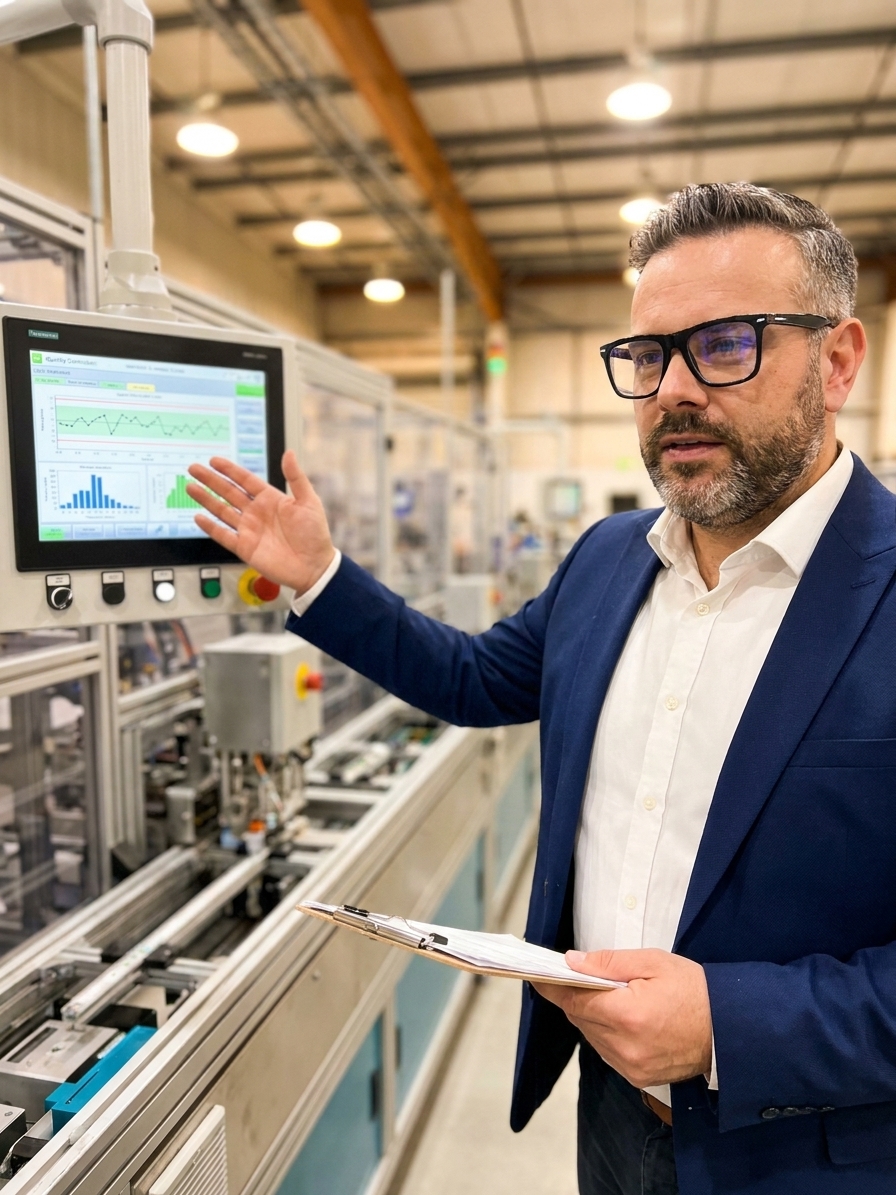
A quality engineer walks onto the shop floor, sees a dimensional deviation, and immediately prescribes the machine adjustment. The operator complies, the Cpk stabilises, and the defect rate drops. For about three days. Then the process drifts back to nonconformance, because the operator never understood the causal relationship between the adjustment and the result.
The engineer returns and prescribes the fix again. The cycle repeats. Somewhere in a conference room, a quality manager reviews the 8D database and wonders why the same failure modes keep recurring month after month, despite a mountain of documented corrective actions that technically closed the nonconformance. The problem is rarely the engineering solution. The problem is the delivery mechanism.
I have audited plants across automotive and aerospace that maintain rigorous PPAP and FMEA documentation yet still rely on a directive model of problem-solving. The quality professional identifies the root cause, dictates the corrective action, and records it in an IT system. This approach is efficient in the short term. It is also the primary reason repeat nonconformances persist. Compliance without cognitive ownership is mechanically fragile.
The Mechanical Limits of Directive Problem-Solving
Most quality departments operate on a command-and-control assumption: the engineer has the statistical training, the MSA data, and the SPC charts. Their function is to analyse the data and instruct the production team on how to execute the fix. This creates a bottleneck. Every process anomaly requires quality engineering intervention, delaying response time and capping the organisation's total problem-solving capacity.
Prescriptive solutions are also technically suboptimal. The quality engineer understands the control plan, but they lack the tacit operational knowledge held by the operator. They do not feel the specific vibration of the spindle bearing under load. They do not notice the minor variation in lubricant viscosity that precedes a tool failure. The most robust corrective actions exist at the intersection of quality methodology and operational reality. This intersection is only accessed through structured dialogue, not directive.
Operators comply with mandated instructions because the hierarchy requires it, not because they understand the engineering logic. When supervision shifts focus, the old parameters return. The quality team effectively polices compliance instead of building capability. As long as the department owns the answers, the production floor remains dependent, and the fundamental capacity of the line to self-correct remains locked.
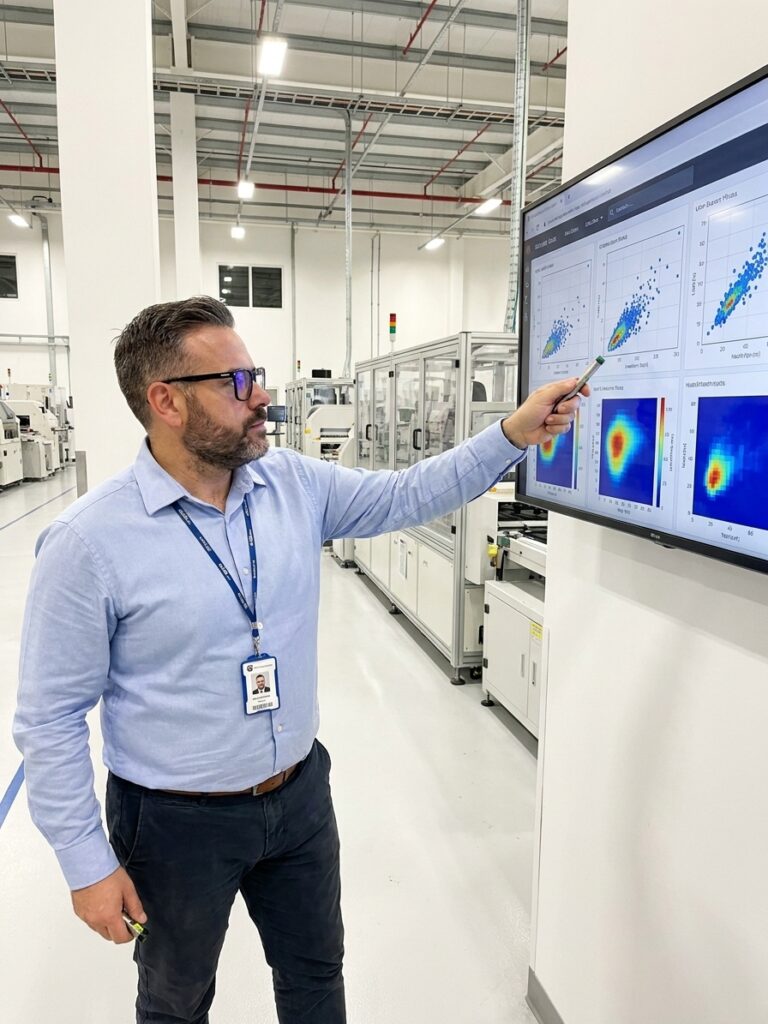
Defining the Quality Coaching Methodology
Quality coaching is not mentoring or consulting. A mentor transfers technical knowledge from expert to novice. A consultant diagnoses a system and prescribes a solution. Quality coaching is the disciplined practice of using targeted inquiry and active listening to help process operators discover root causes they are capable of independently verifying and sustaining.
The coach does not supply the answer. The coach engineers the conditions under which the correct answer surfaces from the individual who must maintain the process. When an operator discovers that a dimensional shift correlates with a material temperature drop triggered by the HVAC cycle, they do not just log a parameter change. They develop a transferable mental model of cause and effect. They become an active quality sensor on the line.
This mechanism is rooted in neurobiology. When an expert dictates a solution, the brain processes the information passively. It is filed as an isolated rule. When an individual generates the insight themselves, the brain releases dopamine, reinforcing the specific neural pathways that executed the analysis. The discovery becomes integrated into their cognitive framework rather than memorised as an arbitrary instruction. Every time you bypass this struggle by providing the root cause, you sacrifice long-term process capability for short-term compliance.
The Core Coaching Sequence for Manufacturing
Effective quality coaching requires a rigorous framework. The first step is observation. Before engaging the operator, the quality professional must observe how the individual approaches the work. What do they check instinctively? Where do they hesitate? This phase establishes the operator's current mental model of quality and identifies their unrecognised competencies, which are often absent from the formal control plan.
The second step is targeted inquiry. The coach replaces directive statements with questions designed to surface operational data. Instead of asking why an operator deviated from a standard, which triggers defensiveness, the coach asks them to explain their thinking. This shifts the dynamic from compliance auditing to joint root cause analysis.
The Shop-Floor Coaching Sequence
- 01Observe the operatorMap the operator's existing mental model and identify tacit quality checks not documented in the control plan.
- 02Targeted inquiryDeploy pattern and awareness questions that guide analysis without triggering defensiveness.
- 03Reflect and expandMirror the operator's observations back to them, then push the logic toward potential variables.
- 04Co-create experimentsDesign a parameter test the operator runs, ensuring they own the data collection and validation.
- 05Lock the new standardThe operator defends the validated parameter and integrates it into the updated work instruction.
The final step is co-creating experiments rather than issuing mandates. Instead of mandating a new coolant temperature, the coach proposes a trial: run the next three batches with the temperature lowered by five degrees and log the surface finish results. The operator designs the observation protocol, records the data, and participates in the evaluation. When the data confirms the improvement, the operator defends the new parameter. They fought for the finding, ensuring the corrective action sticks without requiring ongoing enforcement.
Systemic Impact on KPIs and Corrective Action Effectiveness
When quality coaching is deployed systematically across a plant, the organisation's quality intelligence distributes. Problem-solving capacity is no longer bottlenecked by the quality department. It resides in the personnel actually running the process. This structural shift directly impacts standard quality KPIs, accelerating defect detection and deepening the rigour of root cause analysis.
When the personnel implementing a corrective action are the same ones who designed it, implementation fidelity approaches maximum. Repeat nonconformances drop significantly because the root causes were identified by individuals who understand the daily operational context. The quality department transitions from a policing function, auditing compliance and writing 8D reports, to an enablement function that facilitates process capability.
Coaching is an investment that compounds. Dictating is an expense that repeats.
KPI Shifts Under a Coaching Model
Overcoming Cultural and Structural Resistance
Introducing a coaching model in a traditional manufacturing environment generates measurable resistance. Quality engineers often feel their technical expertise is being marginalised. Their professional identity is built on being the authority with the correct answer. Reframing the role is critical: an engineer solving problems directly impacts one process. An engineer coaching ten operators to solve problems multiplies their impact across the entire value stream.
Production supervisors will object to the time investment. Dictating an adjustment takes thirty seconds. Coaching an operator through the root cause logic takes fifteen minutes. Faced with immediate throughput targets, supervisors will demand the thirty-second fix. What they fail to calculate is the cumulative hours spent re-addressing the same defect week after week because the operator never owned the original fix.
Operators will initially be suspicious. They are accustomed to being told what to do. When a quality engineer suddenly asks for their analysis, they test the sincerity of the inquiry. Trust is built through consistent follow-through. If the coach dismisses the operator's hypothesis without joint verification, the coaching model collapses. You must track leading indicators like operator-initiated improvements to prove the model's viability to leadership during the three to six months required for systemic cultural uptake.
Integrating Coaching with Standard Quality Tools
Quality coaching does not replace standardised tools. Your PFMEA, MSA studies, and SPC charts remain the bedrock of process control. However, the efficacy of these tools is fundamentally limited by the analytical capacity of the people interacting with them. A control plan is inert. It requires an operator capable of recognising when the process is drifting outside the known parameters and initiating a structured response.
Coaching bridges the gap between the static quality system and the dynamic production floor. It equips operators to input accurate failure data into the 8D process. It enables them to identify the subtle process shifts that precede an SPC control limit breach. By building this cognitive framework, the quality professional ensures that the rigorous AS9100 or IATF 16949 systems function as designed, rather than existing purely as documentation for external audits.
The persistent defect rates you are fighting will not be resolved by layering additional inspection gates. They will be resolved by upgrading the problem-solving capacity of your production line. In my experience building quality departments, the most reliable defect prevention system is a workforce trained to analyse and correct process variation in real-time. The quality coach is the architect of that capability.