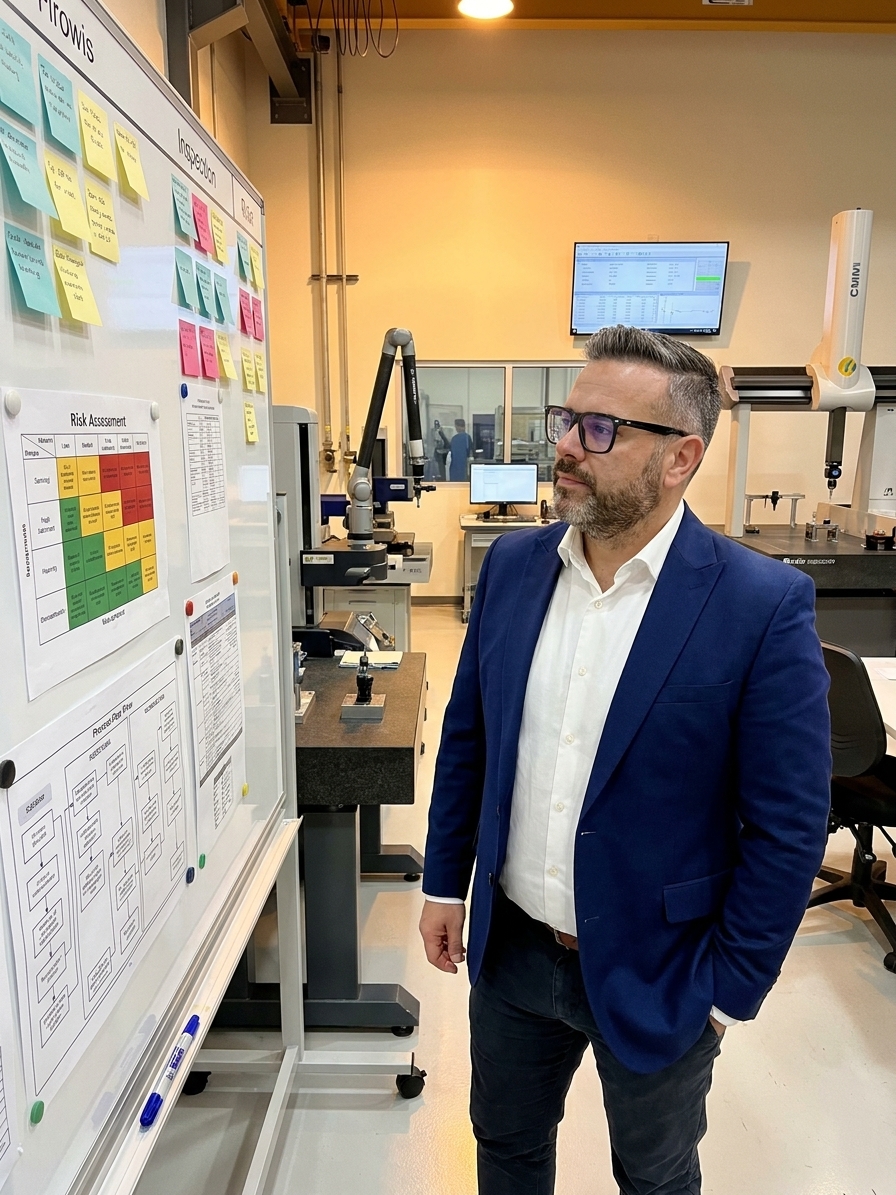
Standard quality tools leave dangerous blind spots. I have audited plants that passed every gate review with pristine PPAP documentation, only to issue a recall a year later. The root cause is rarely a single, overlooked component. It is almost always an interaction failure—a condition that manifests only under a specific, untested combination of variables.
During the subsequent 8D investigation, a junior engineer often admits they saw the potential issue during the design phase but declined to speak up. The social cost of contradicting a room full of confident senior staff is too high. The organization did everything right according to standard procedure, but failed to imagine how the system could break.
This is where the pre-mortem enters the quality toolkit. Developed by psychologist Gary Klein, the technique exploits prospective hindsight. Research demonstrates that individuals generate roughly 30% more failure causes when they imagine an event has already occurred rather than trying to predict it. Framing the exercise around a guaranteed failure unlocks diagnostic reasoning that predictive tools like FMEA actively suppress.
Why Traditional Risk Assessment Falls Short
FMEA assigns severity, occurrence, and detection ratings. Risk matrices plot likelihood against impact. These mechanisms are essential, but they are systematically limited by human cognitive traps. Three specific biases undermine the accuracy of standard risk assessments during the planning phase.
Optimism bias is the first vulnerability. When you ask engineers to predict what might happen, the brain automatically discounts negative outcomes. When presented with evidence that contradicts optimistic expectations, the brain's reward system fails to process the contradiction. Your FMEA team will systematically underestimate occurrence ratings because they are human, not because they are incompetent.
Social conformity pressure destroys objective analysis. In a group setting, the first person to voice confidence sets the tone. If a senior engineer claims the design is solid, the junior engineer who noticed a thermal expansion mismatch will stay quiet. Group dynamics force people to deny evidence rather than disrupt consensus.
The availability heuristic skews the assessment further. People generate risks based on what they can easily recall: recent incidents, dramatic failures, or personal experience. Systemic risks that are novel, slow-building, or emerge from complex variable interactions lack vivid precedents. They go unidentified because memory fails to surface them.
Breaking Through Psychological Barriers
The pre-mortem shatters these traps simultaneously. By asking participants to assume failure has already occurred, you remove the prediction problem. The brain shifts from predictive reasoning to diagnostic reasoning, which resists optimistic distortion. The question becomes how the system failed, not whether it might.
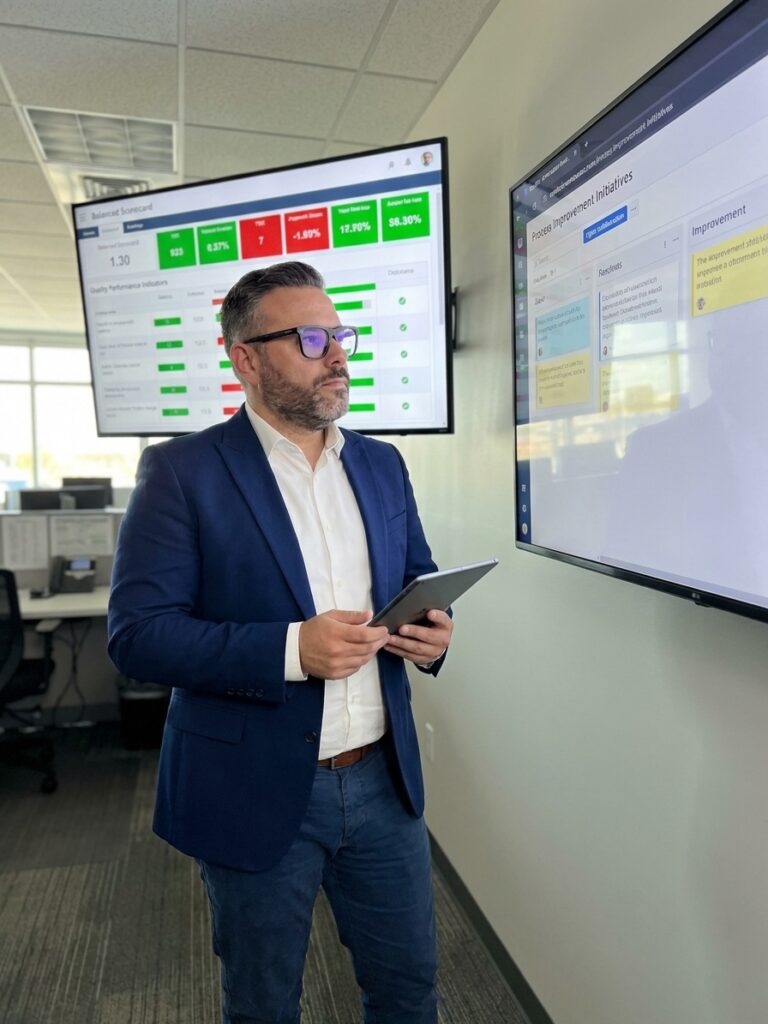
Independent ideation defeats conformity pressure. The format begins with silent, individual brainstorming. Every team member writes down failure causes before any discussion occurs. The junior engineer documents the thermal expansion issue without needing to contradict leadership. Once on paper, the idea cannot be dismissed as negativity.
The failure framing also bypasses the availability heuristic. Instead of searching for recallable examples, participants reason forward from the current state to construct plausible failure pathways. This shift from memory recall to active construction expands the scope of identified risks and exposes interaction failures.
Standard FMEA vs Pre-Mortem Analysis
Standard FMEA Approach
- Decompositional: analyses individual components and steps
- Predictive: asks what might go wrong
- Vulnerable to optimism bias in occurrence ratings
- Limited by the memory of the facilitator and group
Pre-Mortem Approach
- Integrative: analyses system-level and interaction failures
- Diagnostic: asks what did go wrong in the imagined future
- Bypasses optimism bias through assumed failure
- Expands risk pool through constructed failure pathways
Running a Quality Pre-Mortem
The pre-mortem does not replace FMEA or VDA 6.3 preparation. It acts as a complement, timed after your traditional risk assessment is complete but before launch. You have your control plan. You have your FMEA. The pre-mortem asks what you missed.
Cognitive diversity drives the effectiveness of the exercise. Include quality engineers, production operators, maintenance technicians, and design engineers. Aim for six to twelve participants. Fewer than six lacks the necessary perspective. More than twelve makes group dynamics unmanageable. Bring in at least one outsider who has no stake in the project's success.
In my experience implementing ISO 9001 and IATF 16949 systems across automotive plants, the most critical risks are found in the gaps between departments. Operators know machine quirks, while engineers understand theoretical limits. The pre-mortem forces these isolated knowledge sets into a single room.
The Pre-Mortem Execution Sequence
- 011. Frame the Failure (5 min)Facilitator sets a specific scenario: the project has failed catastrophically in the future.
- 022. Silent Brainstorming (10 min)Individuals write causes independently. Demand a minimum of three to force deep thinking.
- 033. Round-Robin Collection (15 min)Each person shares one cause per round. No debate or dismissal allowed.
- 044. Cluster and Prioritize (15 min)Group similar themes and vote on the most likely or impactful failure modes.
- 055. Action Planning (20 min)Define specific actions, owners, and deadlines to mitigate top risks.
The Cultural Shift and Organizational Pushback
Beyond immediate risk identification, the pre-mortem rewrites organizational culture around failure. In most corporate environments, people who raise concerns are labelled pessimists or dismissed as non-team players. The pre-mortem legitimizes pessimism. Identifying failure modes becomes a required exercise rather than an act of rebellion.
Implementing this practice requires overcoming predictable resistance. Engineers will claim FMEA already covers the ground. Project managers will reject the 90-minute time investment. Quality professionals must counter that a 60-minute pre-mortem costs nothing compared to a six-month 8D investigation and a recall.
Fear of the unknown is always worse than fear of the known. Pre-mortems replace anxiety with actionable risk data.
Pushback is a symptom of a weak quality culture. I have watched organizations adopt this tool and undergo a quiet revolution. Junior engineers speak up. Maintenance technicians share the equipment behaviours they have quietly worried about. Psychological safety improves because the structure demands it.
Integrating Pre-Mortems Into QMS Frameworks
The pre-mortem is not a standalone event. It integrates directly into standard quality management system frameworks. Mapping it into existing gates ensures it survives staff turnover and management whims.
In APQP, insert the exercise between Product Design Validation and Process Design Validation. This timing captures product-process interaction risks that separate FMEAs miss. For change management, make it a mandatory step in any change control process that affects validated processes or critical quality attributes.
| QMS Checkpoint | Pre-Mortem Integration | Output Target |
|---|---|---|
| APQP Phase | Between Product and Process Design Validation | Identifies product-process interaction failures |
| Change Control | Mandatory for validated process modifications | Prevents new problems created by corrective actions |
| Management Review | Include findings in strategic inputs | Surfaces systemic risks beyond project data |
| CAPA Closure | Run pre-mortem on the proposed solution | Validates that corrective actions hold |
| Audit Preparation | Before EASA, FDA, or IATF 16949 audits | Finds major nonconformities before auditors do |
The Mechanism of Anticipated Failure
The pre-mortem acknowledges a hard truth about quality engineering. Human cognitive architecture is optimized to expect success, not to detect failure. We are prediction engines built for positive outcomes. This serves us well in general survival, but in manufacturing and quality assurance, it creates a systematic vulnerability.
A single overlooked failure mode can cascade into a recall, a regulatory seizure, or a tragedy. We cannot rely on natural optimism to protect against these outcomes. The pre-mortem acts as a deliberate countermeasure. It asks people to channel their optimism into a constructive exercise: what must we eliminate to ensure this succeeds?
Organizations that adopt this practice discover their teams grow more confident, not more pessimistic. Confidence grounded in honest risk assessment and rigorous prospective hindsight is always stronger than confidence grounded in hopeful ignorance. The 90 minutes spent finding the disaster before it happens is the highest ROI exercise in the quality toolkit.