Quality improvements usually fail at the approval stage, not the execution stage. The data is clear, the engineering is sound, and the return on investment is verified. Yet the proposal dies in committee. Having implemented and transitioned ISO 9001 systems across automotive and aerospace plants, I have watched executives reject process upgrades that would have paid for themselves in under a year, simply because the current process — however defective — was familiar.
The force killing these projects is loss aversion. Daniel Kahneman and Amos Tversky documented the phenomenon in 1979: people feel the pain of losing something roughly twice as intensely as the pleasure of gaining something equivalent. In quality management, this means organisations will defend the failures they understand rather than risk the improvements they cannot yet feel.
The mathematics make this behaviour devastating. An organisation will bleed hundreds of thousands of euros in normalised annual scrap costs while agonising over a €50,000 investment in automated measurement. The visible cost of the investment triggers loss aversion. The invisible cost of the status quo registers as background noise.
The Mechanics of Quality Paralysis
Loss aversion creates a distorted ledger in the minds of decision-makers. The perceived losses of changing a process are immediate, concrete, and personal. They include disruption to operations during the transition, the political capital spent championing a change that might fail, and the personal accountability if the improvement backfires.
The perceived gains are distant and abstract. Future defect reduction is a statistical projection. Cost savings appear on a spreadsheet, not in the factory. Competitive advantage is real but difficult to quantify precisely until the contract is already won or lost.
This asymmetry is why rational business cases fail. The brain does not process a €340,000 annual waste figure with the same urgency it applies to a signed €80,000 purchase order for a new SPC system. The waste is buried in operational budgets. The investment requires a signature, and that signature feels like a loss.
The Distorted Ledger of Loss Aversion
The Endowment Trap and Sunk Cost Fortress
Organisations overvalue the quality systems they already operate simply because they built them. This is the endowment effect in action. I once consulted for a medical device manufacturer using a statistical sampling plan based on MIL-STD-105E, a standard officially withdrawn in 1995. Their defect escape rate was 2.3%.
When I proposed switching to ISO 2859-1, calibrated to their actual supplier performance data, the incoming inspection team pushed back. They did not argue the statistics. They argued the current system worked fine. Comfort with the familiar was masquerading as professional prudence.
Sunk cost fallacy builds a fortress around failing systems. An aerospace supplier I worked with spent €1.2 million over three years implementing a custom QMS. It increased documentation time by 40% due to manual workarounds. When presented with data proving their old paper system was more efficient, leadership refused to migrate to a commercial platform. The psychological cost of abandoning the investment felt worse than the operational cost of keeping it.
Recognising the Language of Inaction
Loss aversion never appears in meeting minutes as a fear of change. It disguises itself as caution and experience. Quality directors must learn to identify the phrases that kill improvement projects. Recognising the rhetoric is the first step to dismantling it.
When a stakeholder requests more data, examine whether the existing data is already sufficient. If a Cpk study, an MSA, and a PFMEA clearly justify a process change, delaying for another pilot study is an emotional delay tactic, not scientific rigour.
Concerns about workforce readiness are frequently projected anxiety. The operators living with the consequences of a broken process are usually desperate for change. The resistance comes from the management tier whose political capital is tied to the current system.
Rhetoric vs. Reality in Project Approval
What teams say
- Let's wait for more data before we commit.
- We need to run an extended pilot first.
- The timing just isn't right for this disruption.
- What if the new system doesn't work as promised?
What it actually means
- The data is sufficient, but deciding feels like a risk.
- Delaying the feeling of commitment to a potential failure.
- The proven status quo feels safer than unproven improvement.
- Preferring a guaranteed high defect rate over a probable low one.
Reframing the Business Case
The most effective way to defeat loss aversion is to reframe the decision. Instead of asking whether the organisation should invest €80,000 in a new automated SPC monitoring system, present the choice as whether to continue losing €340,000 annually by refusing to upgrade.
The data is identical. The decision is identical. The emotional register flips. This framing makes the status quo the active loss, directing the brain's threat response toward inaction rather than investment. Approval rates rise significantly when business cases frame the current state as the expensive option.
Build the case by ascending a ladder of specificity. Start with financial losses from escaped defects, move to competitive losses, then to customer losses. Quantify the contracts lost due to poor PPM performance. By the time you detail the talent drain of quality engineers leaving over outdated tools, the cost of the status quo becomes impossible to ignore.
Structural Mechanisms for Objective Decisions
Individual awareness is insufficient. Overcoming loss aversion requires structural changes to how organisations evaluate quality investments. At WITTE Automotive and SNOP, I saw how institutional rules can neutralise personal bias if designed correctly.
The most dangerous phrase in quality management is not 'we've always done it this way.' That is at least honest about its inertia. The danger is 'let's not throw the baby out with the bathwater.'
Implement cross-functional review boards where the people evaluating the proposal do not own the current system. The person who championed the existing process will always feel a disproportionate attachment to it. Separating the decision from the decider dilutes the personal investment that fuels loss aversion.
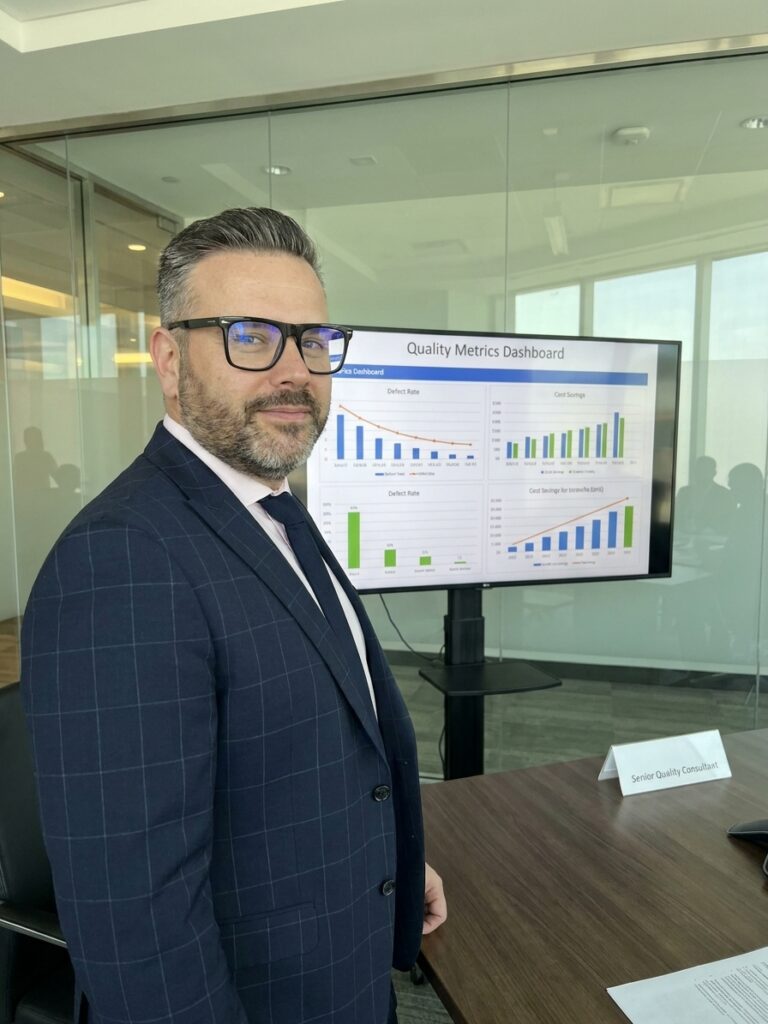
Make invisible costs visible with a real-time Quality Cost Dashboard. Aggregate scrap, rework, warranty claims, customer returns, containment activities, inspection labour, and the opportunity cost of delayed shipments. Display this bleeding alongside the one-time cost of the proposed improvement. When the status quo costs €12,000 per week, it no longer feels safe. It feels expensive.
Pre-Mortem Decision Protocol
- 01Project inactionVisualise two years of maintaining the current failing process and calculate the compounded scrap cost.
- 02Project failureVisualise implementing the new system and having it fail, then calculate the maximum sunk cost.
- 03Compare scenariosEvaluate the probability and impact of guaranteed inaction losses against potential implementation losses.
- 04Force the voteRequire the committee to actively choose between the two quantified scenarios on the record.
The Zero-Based Quality Audit
Every quality system must be subjected to a zero-based audit. If you were designing this process from scratch today, knowing everything you know about your current defect rates, customer complaints, and Cpk values, would you build the system exactly as it operates right now?
If the answer is no, then every day you delay changing it is a day you are choosing the comfort of familiarity over operational excellence. You are not protecting quality or preserving institutional knowledge. You are protecting loss aversion.
The most expensive quality system is never the one that costs the most to implement. It is the one that costs the most to maintain because nobody could bear to replace it. Organisations that achieve world-class quality recognise this trap and build structures to force objective decisions before the competition does.