
Quality circles sound straightforward. You gather frontline operators, provide a structured method to identify and solve local problems, and expect improvement to compound weekly. The concept travelled from Japanese manufacturing into global industry with enormous enthusiasm, leaving behind a trail of failed implementations that rivals any management fad in modern industrial history.
The failure pattern is remarkably consistent across automotive and aerospace plants. A facility launches circles with fanfare and strong attendance for the first quarter. A few projects deliver visible results. Then participation erodes, meetings get rescheduled, and the surviving groups devolve into status briefings. Within a year, the programme exists only on paper.
These programmes collapse because plants extract the circle meeting from its original management infrastructure. Rebuilding them requires treating quality circles not as a motivational initiative, but as a rigorously engineered system with specific, interdependent components.
The Original Model and What Got Lost
Quality circles originated within the Japanese Union of Scientists and Engineers (JUSE) framework in the early 1960s. Crucially, they were never designed as stand-alone entities. Circles operated inside a comprehensive management system that included daily morning briefings, visible problem boards, dedicated supervisor coaching, and a promotion office that actively tracked and supported circle activity.
When Western manufacturers adopted the concept during the 1980s quality boom, they extracted the circle meeting while discarding its supporting infrastructure. The volunteer team meeting weekly became the visible artifact. The essential scaffolding—the problem-tracking system, the coaching cadence, and the visibility of results to senior leadership—was treated as optional or simply misunderstood.
This extraction is the root cause of most failures. A quality circle without a management infrastructure to feed it problems, coach its methods, and implement its solutions is merely a book club with flowcharts. Operators quickly realise the meetings are performative rather than practical, and disengage entirely.
Five Structural Failures That Kill Participation
The first failure is assigning topics rather than allowing discovery. When a team is told to reduce scrap on a specific line instead of surfacing the problems they experience daily, ownership never develops. Self-selection is not a democratic nicety; it is the engineering mechanism that ensures the team works on a problem they understand deeply and have the authority to fix.
The second failure is demanding unpaid time. The volunteer model was never meant to require off-shift meetings. In robust implementations, circle meeting time is paid time—typically one hour per week during the regular shift. Plants expecting operators to meet before shift or during lunch explicitly signal that the improvement work is not important enough to fund.
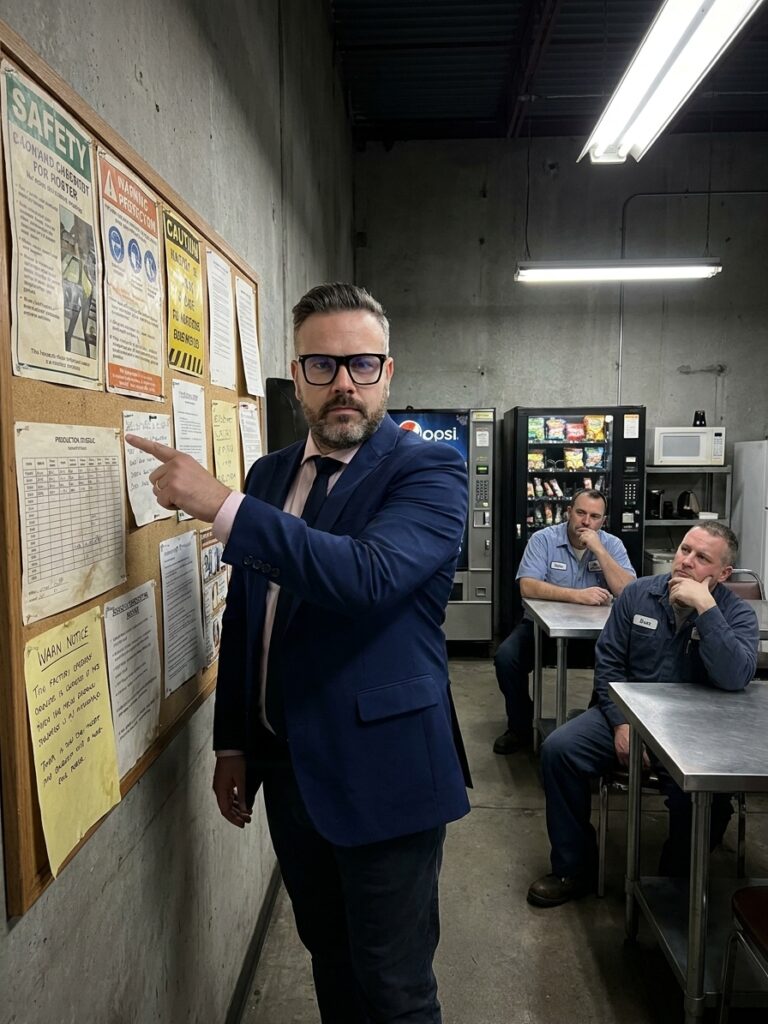
The third failure is omitting methodological coaching. Operators are experts in their processes, not automatically experts in structured root cause analysis, Pareto prioritisation, or statistical verification. Without a facilitator teaching method and preventing teams from jumping to conclusions, circles default to opinion-based debate or simply rehash solutions attempted before the circle existed.
The fourth failure is invisibility to decision-makers. When circle results disappear into a binder in the quality office, motivation collapses. Effective implementations require a monthly presentation cycle where circles report directly to plant management. This briefing is a decision point—management must either approve implementation, request further analysis, or explain why a change cannot be adopted.
The final failure is a lack of programme health tracking. Plants rigorously track OEE, scrap rates, and Cpk, but most have no metric for circle activity. Without tracking active circles, project completion rates, and proposal implementation, circle decay remains invisible until the programme is functionally dead.
Phase 1: Building Infrastructure Before Launch
Before any circle convenes, three infrastructure elements must be formally established. First, management must install a problem registry—a visible method like a digital form or physical board allowing operators to log issues directly at their workstations. This registry becomes the circle’s project pipeline and proves management values problem identification over suppression.
Second, the plant must build a facilitator corps. Identify and train one facilitator per two to three circles. These are typically supervisors or quality engineers trained in group facilitation and the seven basic quality tools. Their performance evaluation must explicitly include circle support activities, ensuring they are rewarded for coaching rather than just hitting production targets.
Third, formally schedule one hour per week of paid production time. This allocation must be approved by plant management and communicated to production planning. If a specific line cannot release operators for one hour, the circle programme is simply not approved for that line. That denial should be documented and reviewed.
Minimum Circle Health Thresholds
Phase 2 and 3: Pilot Execution and Management Review
Resist launching twenty circles simultaneously. Start with three pilot circles in different plant areas, selecting locations where the supervisor is supportive, problems are highly visible, and the likelihood of early success is strong. Each pilot circle runs for six months with monthly health checks from the quality department.
At month three, conduct a rigorous review. If a circle has not advanced at least one problem through root cause analysis to a proposed countermeasure, diagnose the cause. If the failure is structural—such as the facilitator being pulled to other duties—fix the structure immediately. Do not blame the operators for a management failure.
Beginning in month four, introduce the monthly management presentation cycle. Each circle presents a completed or in-progress project to plant management in a strict fifteen-minute briefing. The format forces discipline: problem statement, baseline data, root cause analysis, proposed countermeasure, and an explicit implementation request.
If management cannot respond within seven days to a team that spent weeks analysing a real problem, the programme will not survive.
Management commits to a decision within one week. This deadline is non-negotiable. Across two decades in automotive and aerospace, I have audited plants that claim to empower operators, but if leadership delegates circle attendance to a subordinate or delays decisions by weeks, the entire system interprets the work as performative.
Measuring Programme Effectiveness as a System
A quality circle programme must be measured on two dimensions: activity and impact. Activity metrics include the number of circles meeting within the last thirty days and the average time from project start to proposal. Impact metrics track the number of projects completed per circle annually and the proposal implementation rate.
These metrics are not scorecards for individual teams; they are diagnostic indicators that reveal the health of the system. A programme with high attendance but low implementation rates has a management engagement bottleneck. A programme with high implementation rates but very few completed projects has a scoping or coaching problem.
| Programme Metric | Target Threshold | Failure Diagnosis if Breached |
|---|---|---|
| Active circles (meeting within 30 days) | ≥ 80% of chartered circles | Below 60% indicates structural breakdown |
| Projects completed per circle annually | ≥ 2 | Zero in 6 months indicates an inactive circle |
| Proposal implementation rate | ≥ 70% | Below 50% indicates management disengagement |
| Time from project start to proposal | ≤ 90 days | Over 120 days indicates coaching or scoping gaps |
Track estimated annual savings from circle projects to validate the programme's return on investment. If the plant does not track financial impact, leadership will eventually view the programme as a cost centre rather than a value driver. This tracking belongs in the monthly plant operating review alongside standard cost of quality metrics.
Expansion, Sustainment, and Common Objections
After the six-month pilot, evaluate results. If at least two of the three pilot circles have completed projects with implemented solutions, expand to additional areas. If not, return to the infrastructure phase. For sustainment, escalate circles that go inactive for more than sixty days through a structured intervention rather than a punitive action.
The most common objection is that operators lack the necessary skills. This argument is indefensible in any plant claiming a quality culture. Operators possess deep process knowledge and daily observation that no engineer or manager has. What they lack is method—and structured problem-solving methods like 8D and Pareto analysis can absolutely be taught.
The second objection is that the plant already tried circles and they failed. Document what was actually tried and compare it against this framework. Almost every plant that claims failure tried a fragmented version—volunteer teams meeting occasionally without infrastructure, coaching, or management engagement. The previous failure is valuable engineering data, not a final verdict.
The final objection is time. Plants that claim they cannot spare one hour per week for improvement will spend far longer dealing with the unplanned downtime, rework, and firefighting that the circle would have eliminated. The real question is whether the plant can afford to continue operating with unsolved problems consuming hidden cost.
The Non-Delegable Role of Leadership
Plant management’s role is not to run the circles. It is to engineer the conditions under which they function: protected time, facilitator support, a functioning problem registry, and a responsive decision process. The single most important leadership behaviour is attending the monthly presentation cycle and making timely decisions.
Leadership must also rigorously resist the urge to assign topics. The moment management dictates what circles should work on, the volunteer spirit driving sustained participation is replaced by compliance. Compliance produces attendance records; genuine problem ownership produces measurable improvements in yield, defect reduction, and process stability.
Quality circles fail because implementations remove the infrastructure that makes the concept work. Rebuilding requires the discipline to establish infrastructure before launching circles, the patience to pilot before scaling, and the leadership commitment to treat circle outputs as real business decisions. The reward is a system that channels frontline expertise into solved problems.