
The most catastrophic quality system failures I have investigated rarely stem from a single mechanical breakdown. They emerge from the slow, invisible degradation of shared resources. Coordinate measuring machines, SPC databases, and experienced operators serve multiple departments. When these assets degrade incrementally, the organization loses the ability to distinguish good parts from bad.
This failure pattern follows the Tragedy of the Commons. Individual departments consume a shared resource to meet local targets, while the cost of degradation is distributed across the entire plant. The rational, localized choice to skip a maintenance check or delay data entry produces an irrational, collective collapse.
Standard quality frameworks actively blind organizations to this risk. ISO 9001 and IATF 16949 mandate clear process ownership, but they completely ignore shared resource stewardship. An external auditor can certify a calibration lab on Tuesday that has been functionally degrading for eleven months, because the audit captures a static snapshot, not the trajectory of decay.
The shared resources of quality management
In manufacturing, the informational and physical commons take several distinct forms. Calibration equipment is the most literal example. CMMs, fixtures, and test equipment are shared across shifts and product lines. Each user benefits from immediate access, but no single user bears the cost of preventive maintenance or careful handling.
The result is entirely predictable. A go/no-go gage gets dropped on a concrete floor and returned to active service. A CMM probe accumulates scoring from repeated misuse. Equipment degrades incrementally until measurement variation exceeds process tolerance. By the time the annual calibration audit arrives, a significant percentage of the inventory fails.
Data and information systems suffer the exact same degradation. When everyone can enter corrective action data but nobody is responsible for curating it, the database devolves into a digital landfill. Root cause fields default to 'operator error' across the majority of entries, and hundreds of corrective actions remain permanently open.
The accelerating mathematics of degradation
Commons degradation in quality systems is not linear. It accelerates through self-reinforcing feedback loops. As a shared resource degrades, users compensate by working around the failure. This intensive use degrades the resource further and faster, generating a rapid downward spiral that quality engineering teams rarely see coming.
Consider a surface roughness tester pushed past its calibration interval. The instrument produces measurements that are slightly wrong. Operators make process adjustments based on this bad data, which generate more process variation. This increased variation demands more frequent measurement, putting additional physical load on an already failing device.
This compounding failure mode also dominates shared knowledge. When a senior quality engineer is pulled from their primary role to firefight an immediate line-down situation, their core processes suffer neglect. The localized decision to reallocate expertise degrades the systemic capability of the entire quality function over time.
The Commons Degradation Spiral
- 01OverconsumptionA shared gage is used outside its design limits to hit a production target.
- 02Hidden DegradationThe equipment drifts slightly out of calibration, producing inaccurate data.
- 03Compensatory MisuseOperators make inappropriate process adjustments based on false readings.
- 04Systemic FailureIncreased variation demands more measurement, accelerating equipment wear.
Why audits and metrics miss the collapse
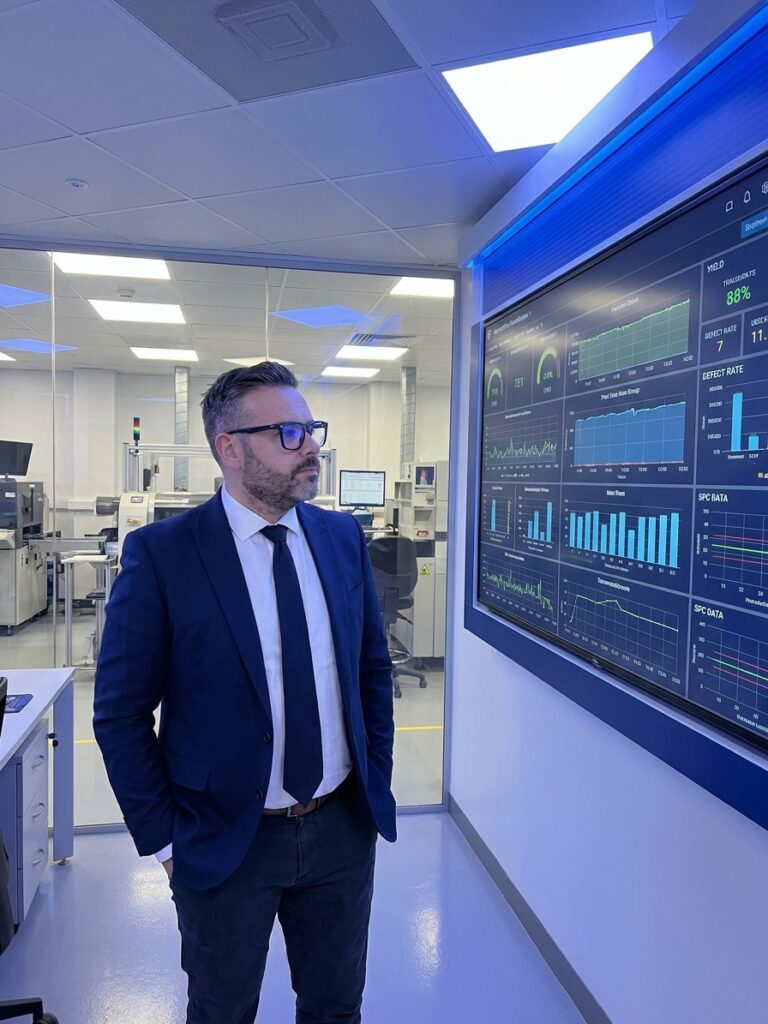
Quality dashboards track defect rates, scrap percentages, and on-time delivery. They virtually never track the health of the shared infrastructure that generates those outputs. The organization operates blind to the systemic risk building inside its own calibration lab and SPC software.
Calibration compliance might appear as a simple green checkmark on a monthly report, masking the fact that instruments are being abused between checks. Standard work instructions are routinely modified without formal engineering change control. Each localized workaround chips away at the process standard until it means entirely different things to different shifts.
The audit blind spot is equally dangerous. External registrars assess whether procedures are defined and records exist. They do not assess the long-term trajectory of the equipment. A plant can easily achieve a zero-nonconformity audit result while actively shipping parts inspected with unreliable, degraded tooling.
Assigning explicit stewardship over ownership
Resolving this requires a structural shift from process ownership to resource stewardship. Instead of assigning a manager who 'owns' the process on paper, you must assign a steward who is explicitly responsible for the health of the shared asset. Their performance metrics must be tied to resource capability, not production output.
A calibration lab steward does not measure parts. Their sole function is to ensure the equipment can measure parts reliably. They enforce checkout protocols, monitor environmental conditions, and track mean time between failures. If the CMM probe feels sticky, the steward pulls the equipment from service immediately.
Ownership implies control, but quality infrastructure requires stewardship. A system needs caretakers, not landlords.
This steward must possess the authority to halt production if a shared resource fails verification. Without this authority, the role is purely advisory, and production pressure will inevitably override quality integrity. Stewardship without enforcement authority is just another form of documentation.
Designing protocols with real consequences
Governance structures only work when they carry actual weight. A checkout system for shared measurement equipment that nobody enforces is worse than having no system at all, because it creates a false illusion of control. Protocols must dictate mandatory data validation rules and standardized competency verification.
In my experience implementing ISO 9001 and AS9100 systems, the plants that sustain their calibration labs for decades enforce strict physical boundaries. Gages are locked in a controlled cabinet. Users must sign them out and log their return condition. If a gage is returned damaged, it triggers an immediate 8D investigation before it re-enters circulation.
Information commons require the same rigid governance. Data entry standards must enforce mandatory fields, reject 'operator error' as a valid root cause, and block submission of incomplete corrective actions. The system must refuse bad data at the point of entry, rather than relying on a quality manager to clean the database months later.
Commons Health Indicators
Building collective responsibility architecture
Quality itself is the ultimate shared resource. Every department, shift, and individual draws from the organization's reputation for defect-free delivery. Every shortcut, borderline lot pushed through to hit a delivery date, and unqualified supplier approved for cost savings represents an individual consuming the commons.
The organizations that avoid systemic collapse do not rely on individual heroics or luck. They build a deliberate collective responsibility architecture. Shared visibility into commons health is mandatory. When degradation becomes visible on operational dashboards, it becomes addressable before it impacts the customer.
This architecture demands aligned incentives. If a production manager's bonus depends solely on unit output while equipment health is a separate, unmeasured metric, the commons will inevitably fall. Individual success must be directly tied to collective resource quality. What gets measured gets managed, but only if you measure the infrastructure generating the output.
The Quality Commons Maturity Model
- Managed CommonsVisible health metrics, assigned stewards with authority, and enforced protocols.
- Tracked ConsumptionEquipment and data usage are logged, but degradation consequences remain unclear.
- Diffuse OwnershipISO processes define individual accountability but ignore shared infrastructure.
- Open AccessAnyone uses any gage or database freely without boundary or consequence.