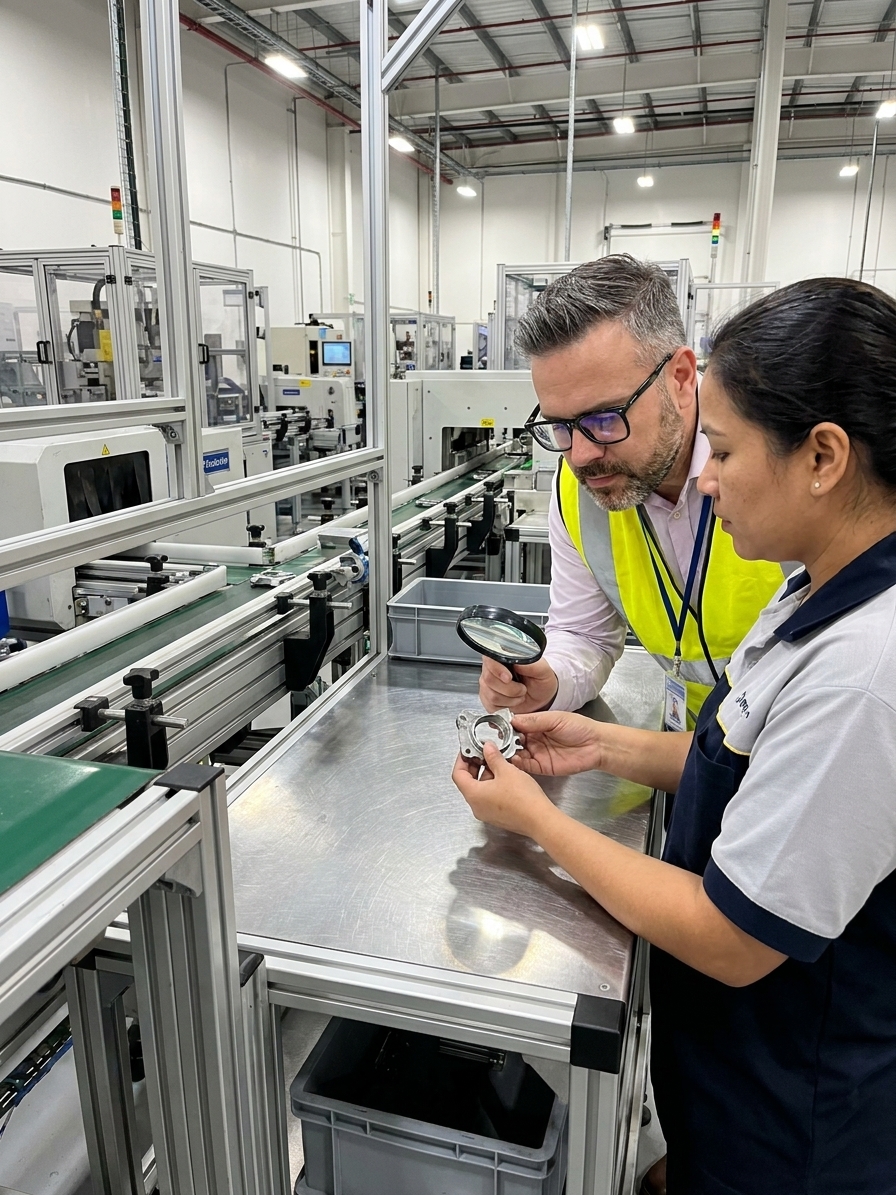
Every quality manager has sat through the same meeting. A defect escapes to the customer, the containment team pulls the production records, and the investigation abruptly shifts from process failure to personnel failure. The operator receives a retraining order or a documented warning, the 8D report is closed, and the CAPA is filed. Three weeks later, the identical defect emerges on a different shift with a different operator. The true systemic root cause was never addressed because the investigation stopped at the last person who touched the part.
This reaction is the Fundamental Attribution Error at work. Coined in social psychology, this cognitive bias describes our tendency to overattribute other people's behaviour to their character or disposition, while heavily underweighting the situational and environmental factors that actually drove their actions. In manufacturing quality management, it is the assumption that every defect stems from a careless operator rather than a process that was engineered, or has evolved, to produce exactly that type of failure.
The contradiction is striking. Engineers who spend weeks conducting rigorous root cause analysis on a failed tool will accept the laziest possible explanation for a human-machine interface failure. Organisations that demand data-driven decision-making will approve “operator error” as a satisfactory root cause for a defect costing tens of thousands of euros. The Fundamental Attribution Error drives organisations to punish the people least responsible for systemic failures while leaving the inadequate fixtures, confusing work instructions, and unstable processes completely intact.
The Bias in the Quality Investigation
The Fundamental Attribution Error is a well-documented feature of human cognition. When we observe our own mistakes, we attribute them to situational context—we were under time pressure, the lighting was poor, the fixture was loose. When we observe someone else make an identical mistake, we attribute it to their intrinsic characteristics: they are careless, incompetent, or unmotivated. We possess rich detail about our own constraints, but almost none about theirs.
This asymmetry is compounded by the actor-observer bias on the shop floor. The operator knows exactly why the assembly failed—the fixture was vibrating, they were covering an absent colleague's station, the machine alarm had been ignored for three weeks. The quality engineer reviewing the nonconformance report sees none of this. They see a deviation from specification and a traceability name. The vast gap between what the operator experienced and what the investigator perceives is precisely where cognitive bias thrives.
When investigators lack operational context, they default to the lowest-energy explanation available. Blaming an individual is cognitively efficient and protects the organisation from uncomfortable capital expenditure truths. If a defect is caused by a bad operator, the existing manufacturing system is fine. If the defect is caused by system design, the organisation must admit that its PFMEA missed a failure mode, its machinery is incapable, or its cycle times are unrealistic. Blame is a convenient shield against engineering failure.
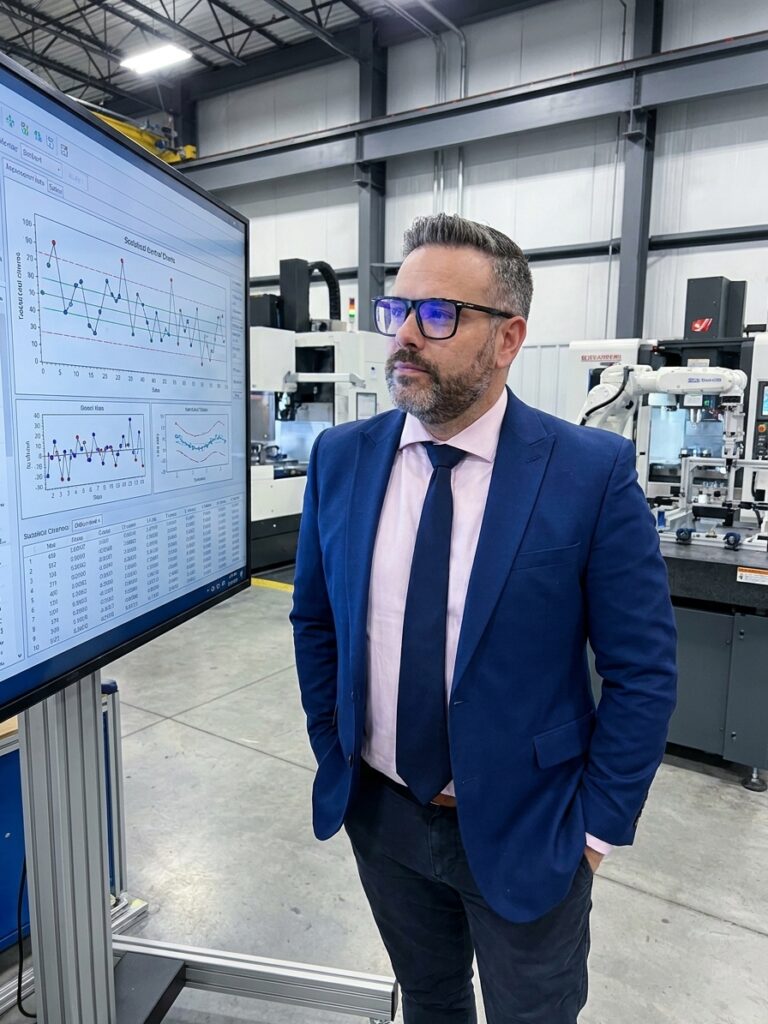
How the Bias Manifests in CAPA Systems
The Fundamental Attribution Error is woven so deeply into manufacturing culture that its symptoms are mistaken for standard practice. The most visible manifestation is the reliance on retraining as a corrective action. When a defect is assigned to operator error, the default response is to sit the operator through the same training module, collect a new signature on the acknowledgment form, and return them to the identical workstation. The CAPA is closed, the defect rate remains unchanged, and the systemic failure mode remains active.
Escalating to disciplinary action is the next logical step in a biased system. Organisations implement progressive discipline matrices assuming that if operators truly understood the consequences, they would simply stop making errors. This assumes the defect is a conscious choice rather than an inevitable outcome of process variation. I have audited plants where this approach produced nothing but high operator turnover and a culture of fear that drove defect reporting completely underground.
Look at the visual management on any factory floor. Banners demanding “Zero Defects” and “Quality is Everyone's Responsibility” are wallpaper. They implicitly communicate that defects happen because operators are not trying hard enough. They place the burden of quality on extraordinary individual effort while absolving the system of responsibility. If a process requires perfect, sustained vigilance from a fatigued operator to yield acceptable parts, that process is not capable. The banners are not a solution; they are an admission of engineering defeat.
System Blame vs. System Design
What teams do
- Close 8D reports with "operator error" and mandate retraining.
- Escalate to disciplinary warnings for repeated defects.
- Rely on exhortation banners demanding vigilance.
- Track defect rates by individual operator performance.
What works
- Mandate system-level root cause for all human factors.
- Implement poka-yoke to prevent the error entirely.
- Redesign fixtures and improve work instruction clarity.
- Track yield by workstation, fixture number, and shift.
The Deming Standard for System Capability
No discussion of systemic versus individual quality is complete without W. Edwards Deming's famous red bead experiment. In this exercise, workers dip paddles into a container of red and white beads, instructed to produce only white beads. Regardless of motivation, incentives, or disciplinary threats, they consistently produce a fixed proportion of red beads. The system itself contains the defects. The workers cannot alter the output of a flawed system through sheer effort.
Deming estimated that the vast majority of quality problems are built into the system, with only a small fraction attributable to special causes. Yet the Fundamental Attribution Error leads organisations to spend the bulk of their corrective effort on individual blame—the factor least likely to yield sustained improvement. Even special causes are frequently the result of systemic failures in maintenance, support, or management oversight. Fixing the system first was Deming's uncompromising mandate.
This means designing processes that are robust against human error. It requires implementing poka-yoke so that defects cannot be physically produced, building automated checks into the line, and simplifying work instructions until they are unambiguous. Organisations must provide the correct tools, poka-yoked fixtures, and an environment that makes doing the right thing the easiest action. Only then does holding individuals accountable for performance carry any engineering validity.
A bad system will beat a good person every time. Blaming the operator is a confession of engineering failure.
Dismantling the Bias in Root Cause Analysis
Breaking the Fundamental Attribution Error requires deliberate, structural intervention in how your organisation conducts root cause analysis. The single most impactful change is to explicitly ban “operator error” as an acceptable root cause in any 8D, CAPA, or nonconformance report. If the investigation identifies human error, the analysis has only just begun. The mandatory next question is what system condition made that human mistake possible, or even likely.
Was the work instruction outdated? Was the fixture worn? Was the inspection point positioned after the value-added step was already complete? Was the operator fatigued from mandated overtime? Every instance of operator error is a signal that the system failed to prevent a foreseeable human variation. Forcing the investigation through this gateway transforms your CAPA system from a disciplinary tool into an engineering mechanism.
Adopt the 5 Whys discipline with a ruthless focus on system design. If an operator missed an inspection step, ask why. If the work instruction did not include it, ask why. If an engineering change notice was not incorporated into the standard work, ask why there is no robust process for tracking ECN updates. When you finally uncover that the revision control loop is broken, you have a systemic root cause and a corrective action that will permanently eliminate the defect.
Correcting the Human Error Investigation Path
- 01Identify the deviationOperator misses a step or assembles a component incorrectly.
- 02Reject human error as the rootMandate that “operator inattention” is a symptom, not a cause.
- 03Interrogate the systemAnalyze work instructions, fixture design, poka-yoke, and environmental factors.
- 04Verify the systemic causeConfirm the missing interlock or ambiguous instruction at the gemba.
- 05Implement engineering controlsRedesign the station so the defect cannot be physically produced.
Engineering the Defect Out of Existence
The most effective way to eliminate the Fundamental Attribution Error is to eliminate the possibility of human error through engineering controls. If an operator can assemble a part backward, redesign the fixture so it only fits one way. If an operator can skip a tightening step, add a sequence interlock that prevents the conveyor from advancing until the torque is verified. Mistake-proofing removes the need to blame operators for variations that the system should have absorbed.
This engineering focus must extend to measurement system analysis. Many organisations track defect rates by individual operator while ignoring process-level metrics. This reinforces the bias. Quality management must implement process-level tracking: first-pass yield by workstation, defect rates by specific fixture number, and error rates before and after layout changes. When you start measuring the system capability, you start seeing the systemic patterns that individual scorecards deliberately obscure.
Critically, you must include the operators in the investigation team. The person closest to the defect possesses the situational context the engineers lack. An operator will immediately tell you that the new lighting audit reduced visibility in the station, or that they were covering two positions due to an unacknowledged staffing shortage. You cannot fix a process you do not understand, and you cannot understand the process without the people who operate it every day. Treat them as subject matter experts, not subjects of investigation.
The Cost of Preserving the Blame Culture
Organisations that fail to overcome the Fundamental Attribution Error pay a compounding price. They suffer chronic, recurring defects that exhaust their quality budgets without yielding improvement. The progressive discipline culture drives reporting underground; operators stop flagging nonconformances because they know they will be punished for them. The quality data becomes corrupted, leaving management blind to the actual process degradation occurring on the floor.
These organisations lose their most capable operators—the ones who can see the systemic failures but are tired of being held accountable for them. The divide between the engineers who design the work and the personnel who perform it widens into outright hostility. No team-building initiative or ISO 9001 audit can bridge a gap created by fundamental unfairness in how the organisation assigns responsibility for engineering failure.
When a defect escapes your process, asking “who did this” is a category error. The correct question is what system you designed, or failed to design, that allowed the defect to occur. The operator did not select the machinery, author the work instructions, or defer the preventive maintenance. They showed up and produced exactly what the process was engineered to produce. Blaming them feels like accountability. Redesigning the system is accountability.