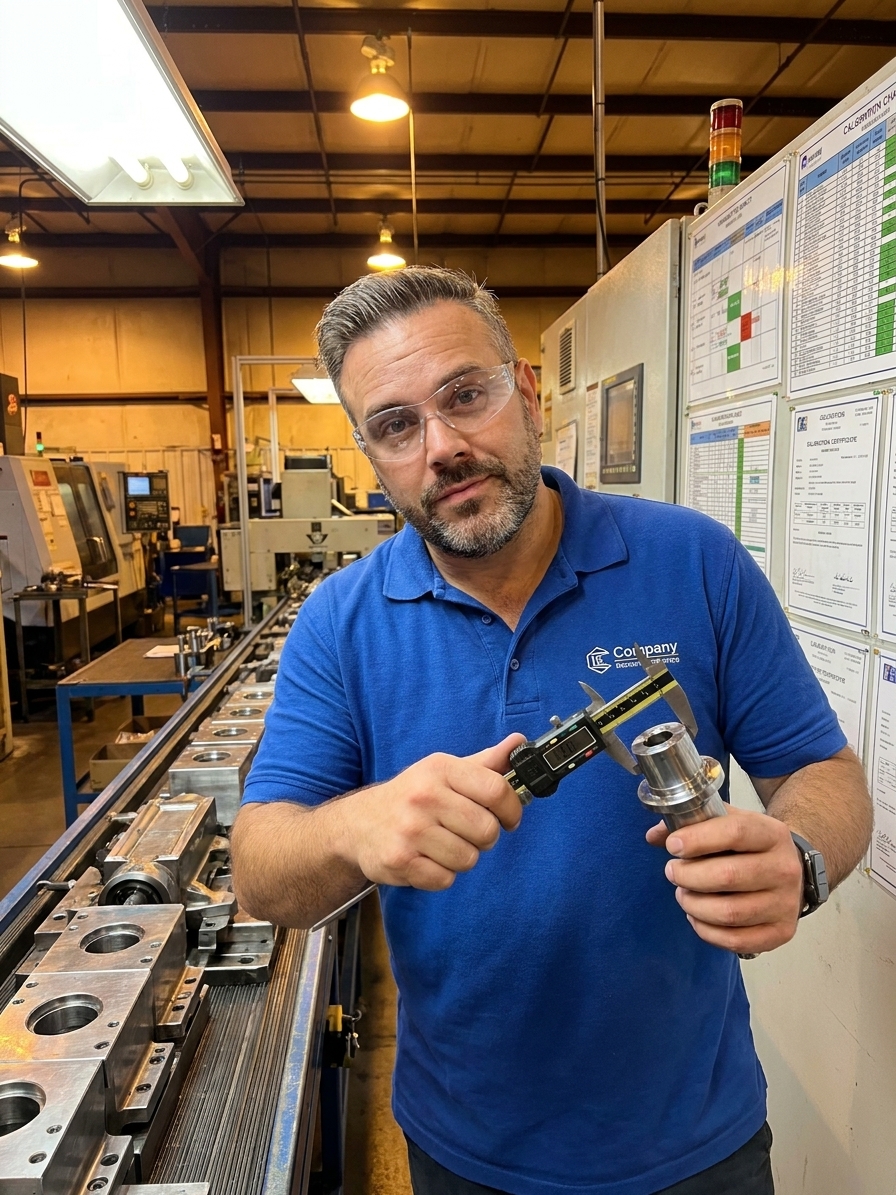
The Dunning-Kruger effect is a cognitive bias where people with limited competence in a domain overestimate their own ability. It is not a question of intelligence. It is a meta-cognitive failure: the exact skills required to perform a task correctly are the same skills required to accurately evaluate one's own performance. If an operator cannot recognise a defect, they also cannot evaluate whether their own defect-detection process is working.
In manufacturing quality, this bias is a structural threat. I have audited plants where operators had run the same machine for years without reading the work instruction, having learned entirely from the person before them. They will tell you with absolute conviction that they know exactly what they are doing. They genuinely believe it.
Meanwhile, the people who actually understand the process parameters will hesitate, qualify their answers, and say things like 'it depends.' Guess whose opinion carries more weight in the morning shift meeting. Unwarranted confidence consistently overrides calibrated understanding.
The Asymmetry of Assurance on the Production Floor
The Dunning-Kruger effect creates a dangerous asymmetry in quality decisions. The inspector who barely understands the specification will flag or pass product with absolute certainty. The engineer who misapplies a statistical tool will present the analysis without a flicker of doubt. Confidence becomes detached from technical reality.
Consider incoming inspection. A receiving inspector checks raw materials against a specification they have never read in full. They measure the dimensions they always measure, using the gauges they always use, and sign off the lot. They have never caught a defect, which they interpret as evidence that no defects exist.
The alternative is the inspector who actually studied the material standard and noticed a tolerance stack-up interference condition at the upper limit. That inspector raises a concern and is told, 'We have never had a problem with this supplier.' The system actively punishes calibrated awareness while rewarding unwarranted confidence.
Process Drift and Measurement Noise
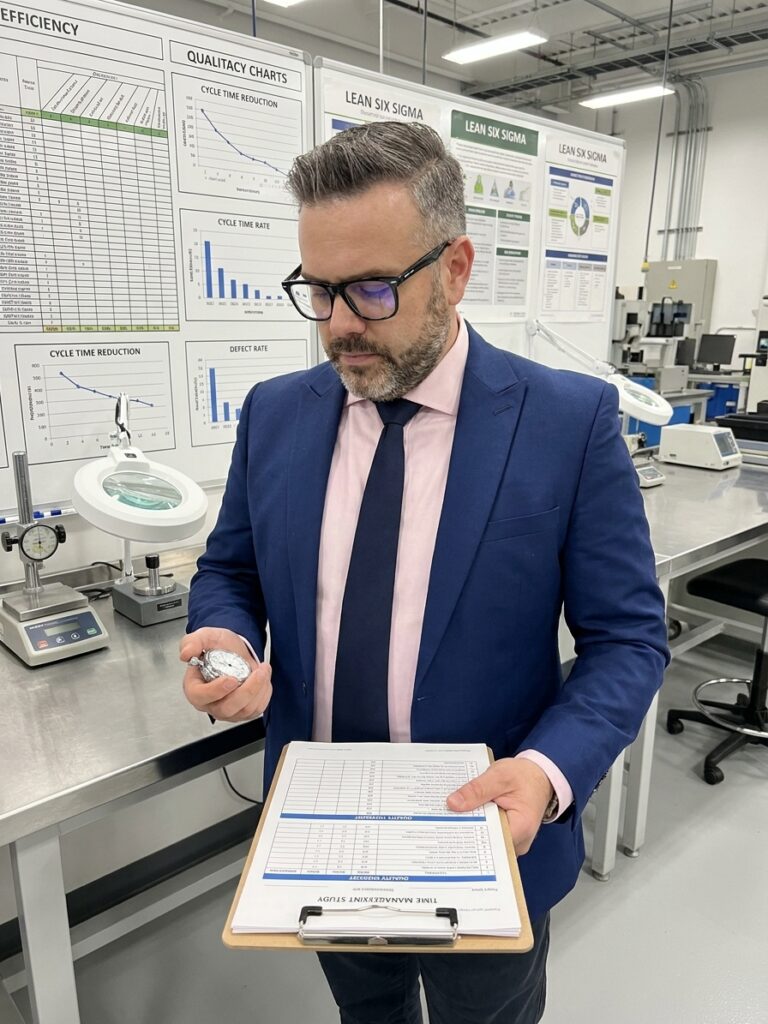
Operators develop a feel for their equipment over time. A CNC operator running the same part number for eighteen months knows the machine sounds, the chip appearance, and the cycle rhythm. They are confident. They produce good parts.
However, they have never looked at the process capability study. They do not know that the process drifted six months ago. The dimensional they are most proud of—the one they check with a caliper and always find within tolerance—is actually riding the edge of a bilateral specification.
The Gauge R&R on that caliper is so poor that half the variation they see is measurement noise. The fact that 'good parts' means 'parts that passed final inspection'—and final inspection uses the same flawed gauging—never occurs to them.
Capability Targets vs. Operational Reality
Why Superficial Training Amplifies the Risk
Counterintuitively, initial training can amplify the Dunning-Kruger effect. A little knowledge does not create a little humility. It creates a lot of confidence. You see this after ISO 9001 awareness training.
Operators attend a two-hour session on the quality policy and the importance of doing things right the first time. They still cannot interpret a control chart if their jobs depend on it—and their jobs do depend on it. But they suddenly feel fully informed about quality management.
This is the equivalent of handing someone a driving licence after they watch a video about steering wheels. They feel licensed to make decisions they are not equipped to make. Their belief is reinforced by the piece of paper you handed them. The training matrix records the event as a success.
The Feedback Vacuum in Preventive Action
The Dunning-Kruger effect thrives in environments with poor feedback loops. Despite its reputation for measurement, manufacturing quality is riddled with feedback vacuums. When an inspector approves a lot, what feedback do they receive about their judgment?
If the lot passes downstream without complaints, they assume their inspection was accurate. But the absence of downstream complaints does not mean the lot was defect-free. It means the defects were not detected downstream either. Two layers of unwarranted confidence reinforce each other.
You cannot distinguish effective prevention from irrelevant prevention using only the absence of failure.
This feedback vacuum is especially severe for PFMEA and preventive actions. When a quality engineer identifies a potential failure mode and recommends a control, and the failure never materialises, who knows whether the control was responsible or the risk assessment was completely wrong? The organisation believes the system works, based purely on zero nonconformances.
Breaking the Cycle Through External Calibration
Blind proficiency testing breaks the feedback vacuum. Stop telling people they are being tested. Embed proficiency checks into normal workflow by sending known-defective samples through incoming inspection without notifying the inspectors which lots contain them.
Compare operator measurements against a reference standard they do not know is being used. The results will be uncomfortable. That discomfort is actionable data. You must also explicitly test calibration: how well an employee's confidence in their answers matches their actual accuracy.
A quality engineer who is 90% confident in their PFMEA severity rating and is correct 90% of the time is well-calibrated. An engineer who is 90% confident and correct 40% of the time is dangerous. They do not know they are wrong, and the system gives them no reason to find out.
Implementing Blind Proficiency Checks
- 01Select critical characteristicIdentify a high-risk dimension or defect type from the control plan.
- 02Introduce covert sampleInject a known-defective part or reference standard into the normal workflow.
- 03Record standard reactionObserve whether the operator or inspector catches or misses the defect.
- 04Analyse the gapDetermine if the failure was due to gauge capability, training, or procedure.
- 05Adjust the processRetrain or retool based on the data, then re-test without warning.
Organisational Overconfidence and Systemic Risk
The Dunning-Kruger effect does not just apply to individuals. Organisations exhibit collective dynamics. The company that has held ISO 9001 or AS9100 certification for fifteen years believes it has a mature quality system. The company that has never had a major customer complaint believes its quality is excellent.
These beliefs may be justified. Or they may be artefacts of inadequate measurement, undemanding customers, and auditors who checked the documentation without checking the reality on the shop floor.
The organisational version is more dangerous because it is self-reinforcing. The company confident in its quality system does not invest in improving it. The lack of investment preserves the status quo. The status quo produces no obvious failures, reinforcing the confidence until a recall or regulatory action forces a reckoning.
The antidote is specific, earned, calibrated understanding. The most reliable defense against this bias is external calibration: actual measurement of performance against an objective standard, performed by someone other than you. The results must be impossible to explain away.