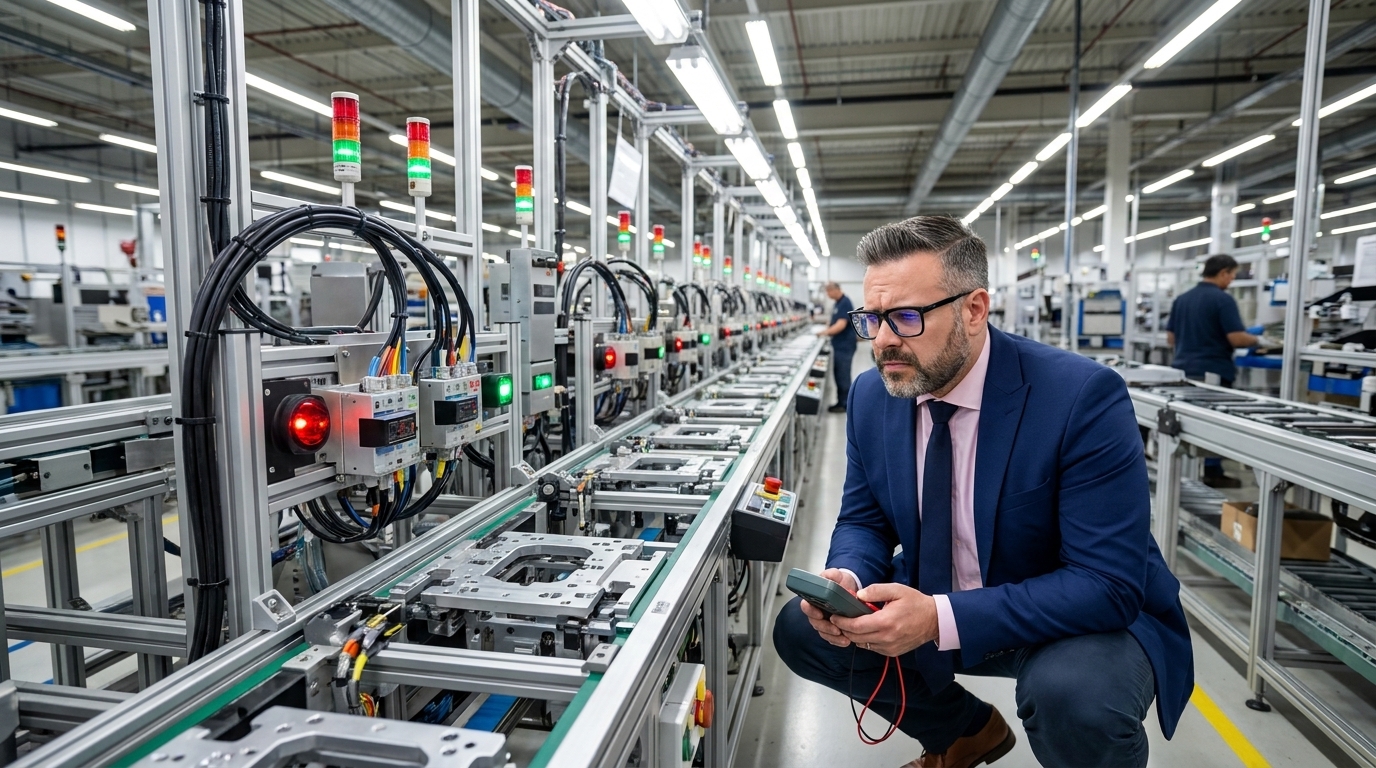
Shigeo Shingo's poka-yoke concept is elegantly simple: design the process so that mistakes are physically impossible. A fixture accepts a part in only one orientation. A limit switch interrupts the press cycle if the operator's hands are not clear. The theory promises prevention over detection, and it sits at the top of the quality hierarchy because it eliminates the need for human vigilance.
Execution is where the concept degrades. In factories operating under real production pressure, mistake-proofing itself becomes a primary source of defects. Safeguards designed to prevent one class of error quietly introduce emergent interaction failures that no PFMEA anticipated. The very systems built to stop mistakes become the errors you can no longer catch.
The failure pattern is predictable. An organisation experiences a defect, identifies the root cause, and installs a poka-yoke device. Then a different defect appears, so they add another safeguard. Fast forward eighteen months: the line has dozens of interconnected devices, each added for a legitimate reason, yet the defect rate has not dropped. It has often increased.
The Original Genius of Prevention
Shingo's insight was profound in its simplicity. Instead of relying on human vigilance, which is unreliable and demoralising, you engineer the constraint directly into the fixture or tooling. This is fundamentally different from detection. A control chart tells you a process is drifting. A poka-yoke device ensures it cannot drift past the point of no return.
An 8D report identifies failure modes after they occur. A poka-yoke device makes the failure mode geometrically impossible. The distinction matters because prevention is always cheaper than detection, and detection is always cheaper than correction. When it works, mistake-proofing is the most effective quality tool available.
The textbook examples are genuinely robust. The asymmetric connector that only plugs in one way. The pin in the fixture that prevents the part from loading backward. These solutions are mechanically simple, address a well-understood failure mode, and do not depend on operator motivation or memory.
Textbooks rarely describe the reality of scaling mistake-proofing across complex, multi-stage production lines. When organisations move beyond clean, simple examples, interactions between safeguarding devices create system-level failures that invalidate the original logic.
The Complexity Trap on the Production Floor
Consider a line that originally required no poka-yoke devices. Over eighteen months, the quality team adds a fastener-verification sensor, then a sequence-detection interlock, then a smart torque driver. Each device addresses a real 8D root cause. Each is justified in isolation. Cumulatively, they create a maintenance and operations nightmare.
Every poka-yoke device is a new component, and every component introduces its own failure modes. Sensors drift out of alignment. Software interlocks glitch. Proximity switches accumulate debris. Each failure is rare in isolation, but when a line has forty interconnected devices, the probability of at least one malfunctioning at any given time approaches certainty.
The Hidden Cost of Accumulated Safeguards
When a safeguard fails, it rarely fails safe. It fails in whatever way its specific failure mode dictates. A sensor might block good parts, halting production, or it might pass bad ones, silently defeating the quality barrier. The line becomes harder to change over, harder to troubleshoot, and the defects that do occur are no longer simple assembly errors.
They are subtle interaction failures between the safeguarding systems themselves. Maintenance teams spend more time fixing sensors and resetting interlocks than maintaining the actual production equipment. The complexity itself has become the primary quality risk.
When Safeguards Become New Failure Modes
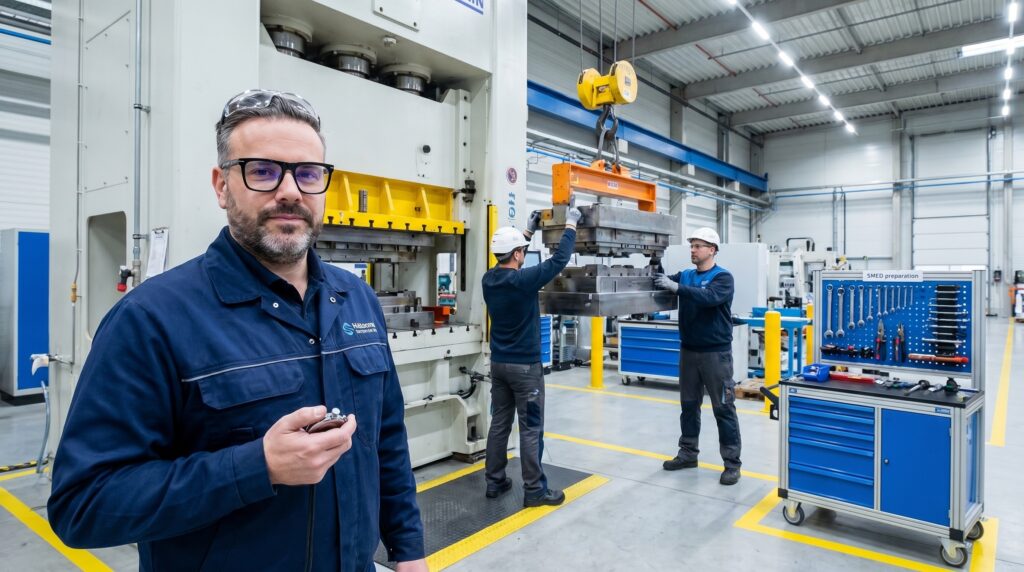
I have audited automotive assembly plants where a poka-yoke system intended to verify correct door panel installation became the primary source of line stoppages. The system used RFID tags on panels and readers at the station. It worked flawlessly for six months, driving the wrong-panel defect rate to zero.
Then the RFID reader began intermittently failing to read tags. It did not fail completely — it failed on roughly one in every fifty cycles, at random. The station locked, the alarm sounded, and production halted. Each stoppage cost twelve minutes of lost build time. The technician could not replicate the fault during testing.
The plant's solution was to adjust the reader's sensitivity threshold to reduce false stops. The false stops decreased, but the reader now also failed to detect genuinely wrong panels. The poka-yoke device had been transformed from a reliable prevention system into a marginal detection step. The organisation still believed it had robust mistake-proofing. In reality, it had an unreliable inspection point that everyone trusted because it was originally sold as poka-yoke.
This pattern repeats across every industry. The pharmaceutical plant installs a vision system to verify labels, then discovers it cannot distinguish between similar label stocks under certain lighting conditions. The aerospace supplier installs torque-monitoring software on critical fasteners, then discovers the data log grows until it crashes the line control system every three days. The safeguard introduces a failure mode harder to diagnose than the original defect.
The Workaround Culture
Complexity in poka-yoke systems creates a second-order problem more dangerous than technical failures: the workaround culture. When mistake-proofing devices make production slower, operators develop bypasses. This is not malicious behaviour. Operators are evaluated on throughput. When a safeguard routinely stops the line for reasons that appear false, the rational response is to find a way around it.
The methods are ingenious. Bypassing a sensor with a magnet. Inserting a shim to hold a mechanical interlock open. Scanning a barcode from a pre-printed sheet rather than the actual part. Taping over a proximity switch that triggers too easily. Each workaround is locally rational — it gets the line moving — but globally catastrophic, because it transforms a prevention system into a placebo.
The device appears to function. The line dashboards show green status. The IATF 16949 audit trail shows compliance. The defect rate is about to spike because the safeguard has been quietly neutralised.
The typical organisational response is disciplinary: retrain operators, post warning signs, escalate consequences for defeating safety devices. This fails because operators are not the problem. If your mistake-proofing device creates more disruption than the defect it prevents, operators will route around it. This is a design failure, not a training failure.
Designing Poka-Yoke That Survives the Factory Floor
The solution is not to abandon mistake-proofing. The solution is to apply poka-yoke with the discipline that most organisations skip because adding a safeguard feels productive even when it is counterproductive.
Disciplined Poka-Yoke Implementation Cycle
- 01Fix the process firstSimplify the operation before adding any safeguarding hardware
- 02Analyse the safeguard's own failure modesDetermine exactly what happens when the sensor, software, or mechanical interlock inevitably fails
- 03Involve operators in designCollect input on debris exposure, changeover time impact, and physical vulnerability
- 04Set a withdrawal review dateRe-evaluate periodically whether the device is still necessary or has become a liability
The first principle is mechanical, electrical, and logical simplicity. The best poka-yoke devices have no moving parts, no electronics, and no network dependencies. A physical feature of the part or fixture that makes incorrect assembly geometrically impossible is the ideal. Every step toward sensors, software, and databases adds failure modes you will eventually have to manage.
The second principle is failure-mode analysis of the safeguard itself. Before installation, ask what happens when the device fails. Calculate the mean time between failures and compare it to the cost of the defect it prevents versus the cost of the false stops it will generate. If the device fails in a way that passes bad parts, you have implemented a false sense of security, not mistake-proofing.
The third principle is regular withdrawal. Every poka-yoke device needs a review date, just like calibration intervals on measurement equipment. At the review, evaluate whether the device is still necessary, whether the underlying process has improved enough to remove it, and whether it has drifted into the grey zone where it sort of works but not reliably.
The fourth principle is operator involvement in design selection. The people running the process daily will tell you that the sensor will get coated in process debris within a week, that the interlock adds thirty seconds to every changeover, or that the mounting bracket sits directly in the forklift's path. A device operators have not endorsed will be defeated within a month.
The Illusion of People-Free Quality
Poka-yoke is seductive because it promises the one thing every quality professional desperately wants: a solution that does not depend on people. A mechanical or electronic guardian that catches errors regardless of operator skill, attention, or motivation. The promise is intoxicating because the alternative — building quality through training, process design, and continuous improvement — is slow, difficult, and never truly finished.
But mistake-proofing does not eliminate the need for human competence. It changes the nature of the competence required. Instead of needing operators who never make assembly errors, you need operators who understand the safeguarding system well enough to recognise when it is malfunctioning.
Organisations that install poka-yoke as a substitute for operator training discover their systems degrade silently until catastrophic failure.
You need engineers who can anticipate the failure modes of the safeguards themselves, not just the process. You need maintenance technicians who can diagnose intermittent sensor faults in complex interlocking systems rather than simply repairing broken mechanical equipment. The skill set changes. The need for skill does not.
Before installing your next poka-yoke device, ask whether you have fixed the underlying process or whether you are adding hardware to compensate for a process you have not bothered to improve. Shingo paired mistake-proofing with process improvement. Simplify the operation first, then mistake-proof what remains. The safeguarding was always the last step, never the first.
The best poka-yoke is the one you never need to install because you fixed the process instead. The second best is simple enough to never fail, specific enough to never false-trip, and transparent enough that operators never feel the need to defeat it. Everything else is engineering theatre — expensive, impressive-looking, and ultimately counterproductive.