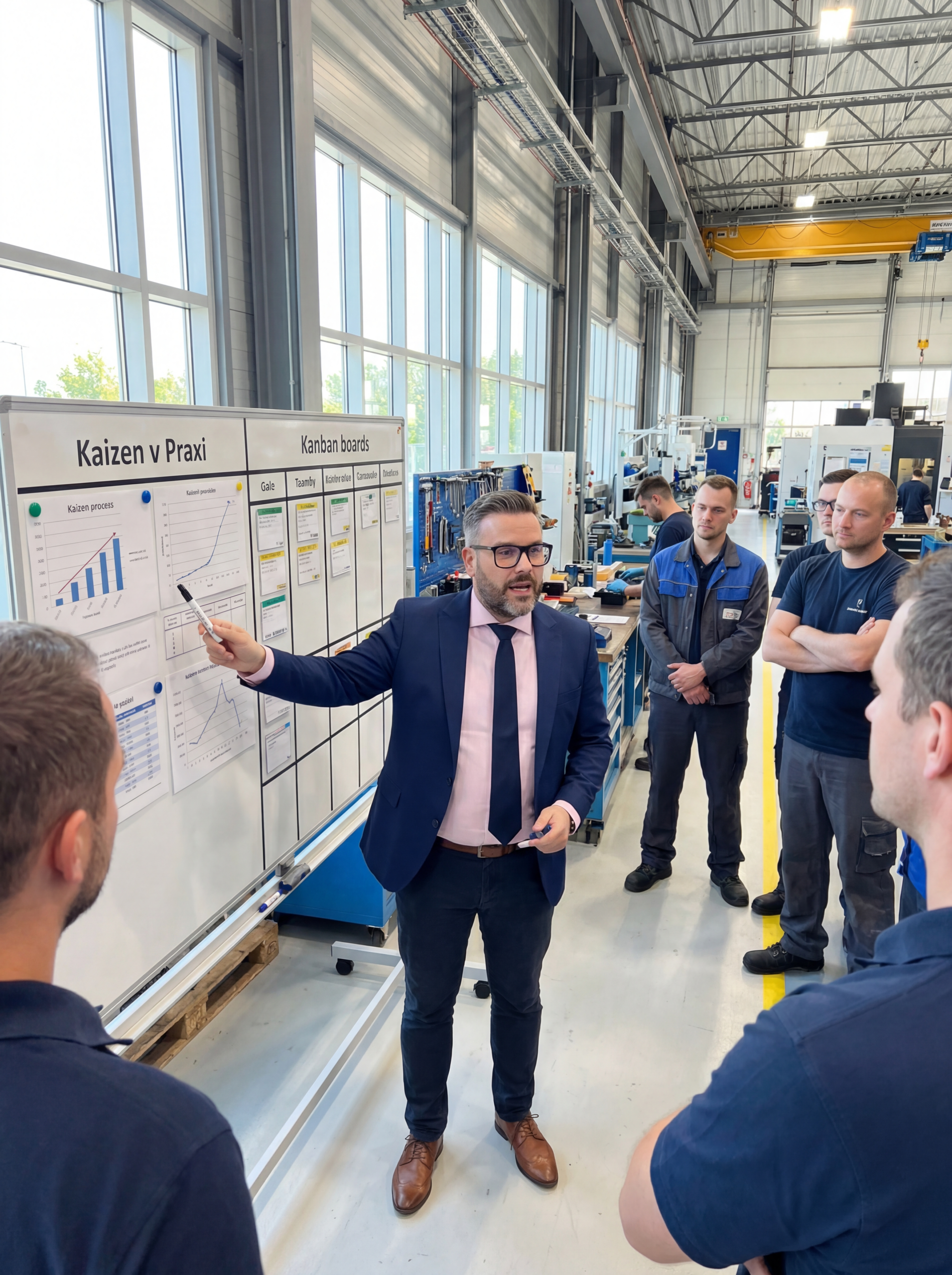
Kaizen is treated as a buzzword in many organisations. Managers invoke it during cost-cutting drives, then abandon it when the next priority arrives. The result is a workforce that has seen every improvement programme twice and trusts none of them.
Over twenty years I have implemented continuous improvement at a 900-employee greenfield plant, at Tier 1 automotive suppliers serving VW and BMW, and at a major aerospace manufacturer. The contexts differ. The mechanism does not. Small, targeted changes — standardised setup procedures, visual management, SPC deployment — compound into measurable shifts in FTY, Cpk, and cost of quality.
What separates a working Kaizen culture from a poster on the wall is operational discipline. The changes must be specific, the results must be measured against a baseline, and the people on the line must see that their input alters the standard. The following sections lay out what that looks like in practice.
Starting With the Process, Not the Toolbox
My first consulting project involved a plastics manufacturer in Poprad supplying automotive Tier 2 customers. Productivity was low, lead times were long, and the plant had no systematic approach to identifying waste. The temptation was to introduce a grand lean transformation. Instead, we identified fourteen specific, localised changes.
We reorganised the floor layout to cut material travel by roughly forty percent. We standardised setup procedures, reducing changeover time by a third. We implemented 5S at each workstation, introduced visual management, and installed quality check points at critical stages. Each change was small. None required capital investment.
The cumulative effect was a forty percent increase in productivity and a twenty-five percent reduction in operating cost. The more important outcome was behavioural. Operators and shift leaders saw that structured changes to their daily work produced results they could measure. That is the foundation of any Kaizen culture: evidence that the process of improvement works.
Integrating Kaizen Into Supplier Quality Systems
At WITTE Automotive, I applied continuous improvement within the supplier quality framework for Volkswagen, Audi, BMW, and Mercedes-Benz. Automotive customers demand PPAP submission, PSCR compliance, and documented process control. Kaizen in this context is not separate from the quality system — it is the mechanism that makes the system perform.
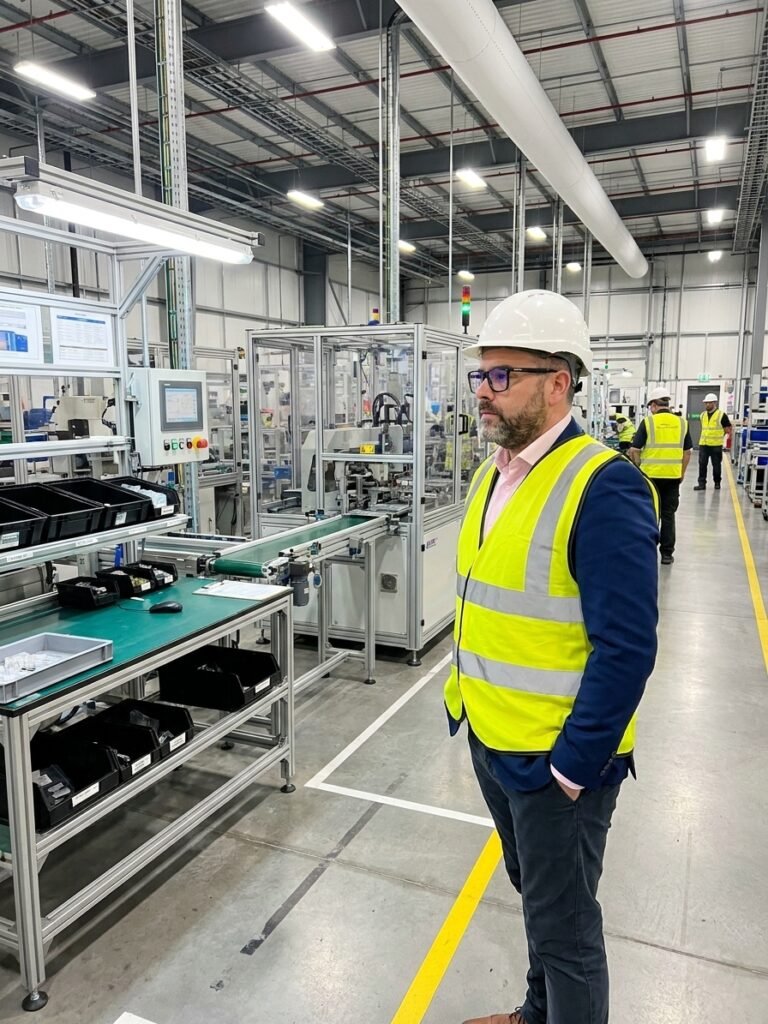
One project targeted high defect rates on components for VW. The standard approach would have been to add inspection layers. Instead, we ran root cause analysis across three domains: design, process, and people. Design for Manufacturing reviews had been inconsistent. SPC was deployed on some lines but not others. Operator training lacked a competence matrix.
We ran parallel Kaizen initiatives in each domain. Design engineers received DFM workshops and checklist tools. SPC was implemented on every critical characteristic, with control charts monitored by shift leaders. A competence matrix tied training to specific process steps. The result was a measurable reduction in customer complaints and a significant drop in the cost of non-quality — without adding inspection overhead.
Deploying Continuous Improvement at Scale
Scaling Kaizen across a global organisation is fundamentally different from running a project on a single line. At SNOP, with over 8,000 employees across 14 countries, the challenge was not technical — it was cultural. A central directive to improve does not change behaviour on a shop floor in Poland or France.
We built a network of 56 Kaizen Ambassadors selected from operational roles, not management. These were people who demonstrated interest in problem-solving. We trained them for six months in lean methodology, communication, and change facilitation. They became the local engine of improvement — translating corporate intent into floor-level action.
A structured suggestion system generated over 4,500 proposals in its first three months. One operator in Poland proposed a data-driven redesign of the warehouse layout. Implementation increased storage capacity and cut pick times significantly. The proposal itself was unremarkable. The system that captured, evaluated, and implemented it was the real achievement.
Centralised Directive vs. Distributed Kaizen Network
What teams do
- Corporate sets a annual cost-reduction target
- Plant managers report compliance monthly
- Frontline operators see no change in daily work
- Improvement is a separate task from production
What works
- Trained facilitators work inside each shift
- Suggestion system captures floor-level ideas
- Every proposal gets reviewed and a decision logged
- Recognition is quarterly, visible, and specific
Adapting Kaizen to Aerospace Quality Requirements
Aerospace operates under AS9100 and regulatory scrutiny that makes automotive IATF 16949 look straightforward. Every process change requires documented validation. Traceability is non-negotiable. At a major aerospace manufacturer, I applied continuous improvement methodology to raise First Time Yield from 88% to 95% — a target that demanded precision, not speed.
We identified five factors driving yield loss: incoming material condition, tooling calibration, process standardisation, operator competence, and environmental control. Each became a focused workstream. Incoming inspection was tightened. A calibration and preventive maintenance schedule was enforced on every tool. Work instructions were rewritten, visualised, and tied to a certification process.
Aerospace Yield Targets: Closing the Gap
Environmental monitoring was installed where humidity and temperature variation affected process stability. The yield gain was real and sustained. The lesson is that Kaizen in aerospace is not about moving fast — it is about moving with evidence. Every change must be validated, documented, and tied to a measurable output. The discipline is heavier, but the method is identical.
The method is identical whether you make door latches or fuselage sections: find the constraint, change the standard, measure the result.
The Common Thread Across Four Contexts
The Poprad plant, WITTE's automotive lines, SNOP's global network, and a major aerospace manufacturer final assembly are radically different environments. The regulatory frameworks differ. The product complexity differs. The workforce size differs by an order of magnitude. Yet the continuous improvement method delivered results in every case.
The reason is structural. Kaizen works because it targets the process, not the person. It replaces variability with standards. It replaces inspection with prevention. And it replaces management-by-directive with operator-led problem-solving. The tools change — 5S in one plant, SPC in another, environmental monitoring in a third — but the logic holds.
I have audited plants that had every lean tool on display and no improvement to show for it. The difference between those plants and the ones where Kaizen actually changed the operation was three things: engagement, systematic execution, and consistency. Tools without those three elements are decoration.
Sustaining the Discipline Over Time
The hardest part of continuous improvement is not the launch — it is month eighteen, when the initial enthusiasm has faded and the suggestion box is empty. Sustainability requires a management system that treats improvement as a daily operating requirement, not a quarterly campaign.
At SNOP, quarterly Kaizen celebrations recognised the best projects and ambassadors publicly. This was not motivational theatre. It was a deliberate signal to 8,000 people that improvement was valued, measured, and rewarded. Recognition closed the loop between the suggestion system and the culture it was meant to build.
The plants that sustain Kaizen are the ones where the standard work is updated whenever an improvement is validated. The new method becomes the baseline. The next improvement starts from there. Without that discipline, improvements decay and the organisation reverts to its original state. Continuous improvement is a present participle — it describes what you are doing now, not what you did last year.