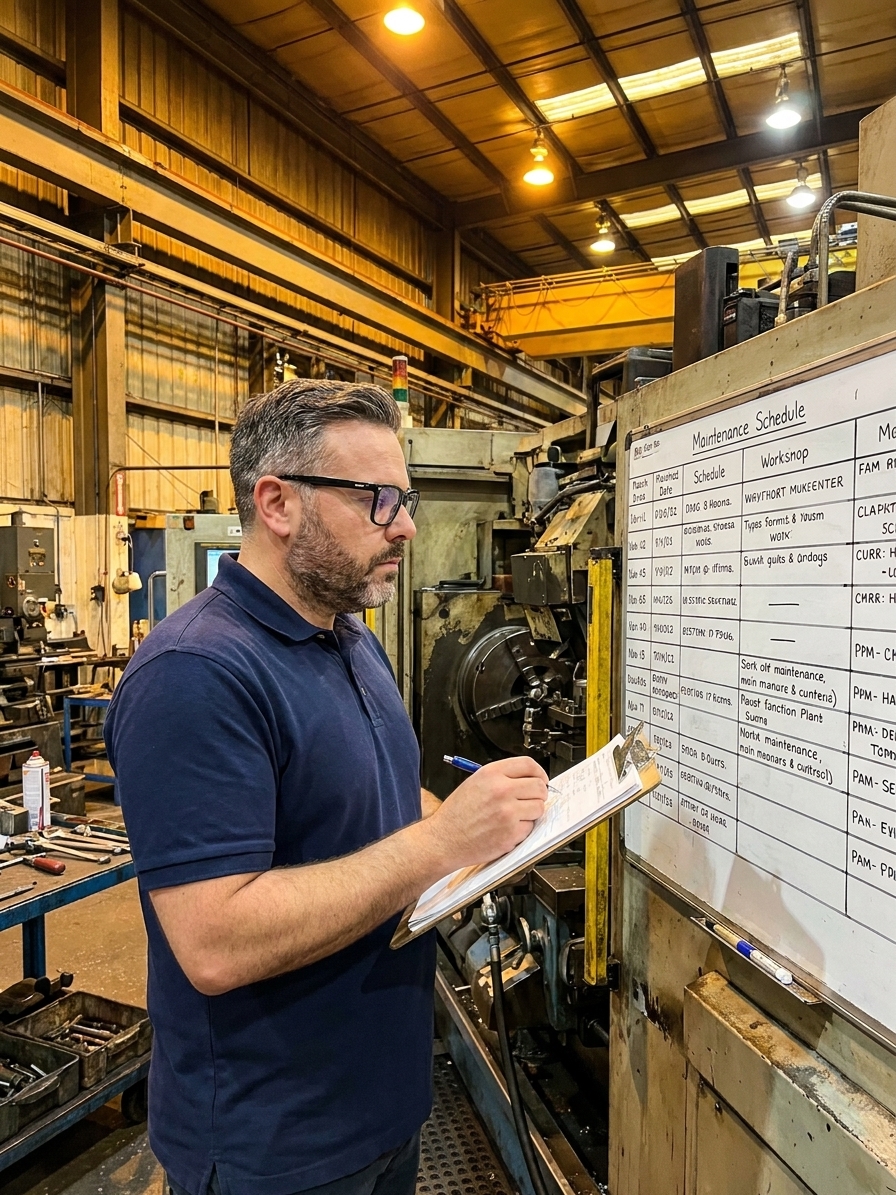
Most Total Productive Maintenance (TPM) initiatives fail predictably and in the exact same manner. Leadership approves a twelve-month rollout, the facility orders whiteboards and cleaning kits for every machine, and the maintenance manager builds a Gantt chart. Six months later, those cleaning kits sit unused in a corner. The whiteboards still display last quarter's metrics in permanent marker. The maintenance manager has transferred, and the replacement does not even know a TPM programme was supposed to be running.
When this collapse happens, Overall Equipment Effectiveness (OEE) remains entirely stagnant. Unplanned downtime actually increases because the preventive maintenance tasks scheduled during autonomous maintenance rounds never materialised. The bearings that required inspection in month two fail catastrophically in month six. The organisation paid for a reliability programme but settled for a temporary aesthetic upgrade.
This is the reality of TPM in most manufacturing organisations. It is not the success story presented at industry conferences. It is what happens when a rigorous methodology gets stripped down to its most visible, least meaningful element: wiping down machines. The cleaning was never the objective; the objective was the early defect detection that occurs during a structured cleaning process. Without a system to capture and act on that intelligence, the exercise is pure waste.
The mechanics of Total Productive Maintenance
TPM was formalised in Japan within Toyota and its supplier network during the 1960s and 1970s. The methodology was designed to achieve zero breakdowns, zero defects, and zero accidents through the complete integration of operations and maintenance. It leverages predictive, preventive, and autonomous maintenance to maximise equipment lifecycle and effectiveness.
The word "Total" defines the scope, yet most implementations ignore it entirely. Total effectiveness means simultaneously maximising availability, performance rate, and quality rate. A machine running at full speed but producing scrap is not effective. Total participation means every operator, technician, and engineer is responsible for equipment performance.
This integration requires operators to act as the first line of equipment care. They are not meant to replace maintenance technicians. They are meant to extend the reach of maintenance by executing routine inspection, lubrication, cleaning, and early problem detection. This allows skilled technicians to focus on time-based and condition-based preventive maintenance rather than constant firefighting.
Why the eight pillars systematically collapse
TPM relies on eight structured pillars, but most organisations only execute the first step of the first pillar. Autonomous Maintenance follows a seven-step process: initial cleaning, eliminating contamination sources, creating standards, and training operators. Companies stop at step one. They run a cleaning event, take photos for the corporate newsletter, and declare victory.
When an operator cleans a machine thoroughly, they discover leaks, loose fasteners, and abnormal vibrations. That intelligence, captured and routed to engineering, is the entire value of Autonomous Maintenance. Without a formal defect logging system and the discipline to follow up, the intelligence is lost. The initiative becomes a cleaning assignment, not a reliability strategy.
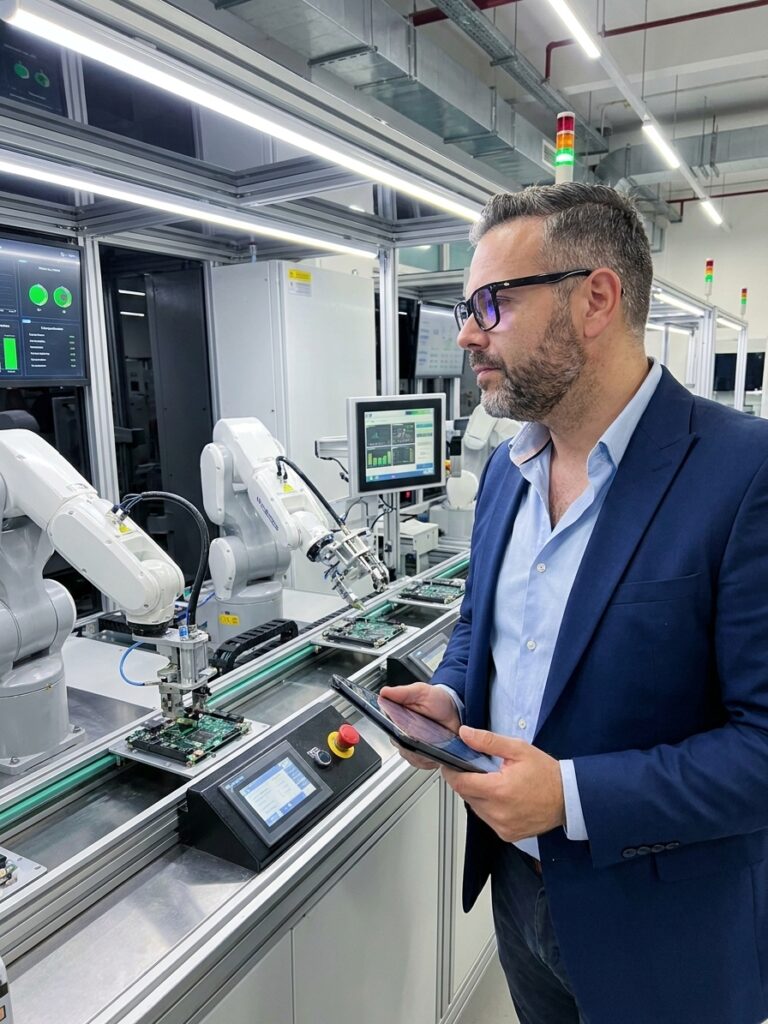
The remaining pillars collapse for similar structural reasons. Planned Maintenance requires failure history and criticality analysis. Most maintenance departments are too busy reacting to breakdowns to build this foundation, so their preventive schedule gets deferred until it is pure fantasy. Focused Improvement attempts to eliminate the six major losses simultaneously across all machines, resulting in scattered effort and zero measurable gains.
Quality Maintenance links equipment condition to product quality. In traditional organisations, the quality engineer investigates dimension drift while the maintenance technician investigates machine health. Neither considers that the failing bearing is the root cause of the dimension drift. Quality and maintenance must converge on the PFMEA to close this gap.
Planned Maintenance Maturity Progression
- 01Breakdown MaintenanceReactive: fixing equipment only after it fails, maximising unplanned downtime.
- 02Preventive MaintenanceTime-based: executing scheduled inspections and part replacements.
- 03Predictive MaintenanceCondition-based: utilising vibration and oil analysis to intervene before failure.
- 04Maintenance PreventionDesigning equipment that inherently requires less maintenance over its lifecycle.
The cultural divide between operations and maintenance
Traditional manufacturing enforces a strict boundary: operators run machines, maintenance fixes them. This boundary is deeply embedded in job descriptions, shift structures, and union agreements. Handing an operator a grease gun does not change this dynamic. Demanding that an operator inspect a drive belt is not a simple task reassignment; it is a fundamental role transformation.
Transforming roles requires trust, structured training, and time. Operators must trust that reporting a minor anomaly will result in action, not punitive scrutiny. Maintenance technicians must trust that operators will execute their autonomous maintenance tasks correctly without introducing new failures. Management must provide the schedule slack necessary for this training and execution to occur.
I have audited plants that attempted to implement autonomous maintenance by simply handing operators a checklist. Without proper context, training, and the engagement of the quality department to validate MSA on their visual inspections, the data collected was entirely useless. The operators complied, but the feedback loop was dead.
When management treats equipment reliability as a maintenance department problem, the entire TPM framework collapses. Equipment effectiveness is too critical to be siloed. It requires the full participation of the operators who run the equipment, the engineers who improve it, and the procurement teams who source the spare parts that keep it running.
Building the TPM implementation that actually sustains
Sustained TPM initiatives share distinct operational characteristics. They start small. Rather than launching all eight pillars across an entire facility simultaneously, they pilot one line, one machine, and one dedicated team. They prove the concept, generate verifiable OEE improvements, and scale based on demonstrated results, not theoretical projections.
They also invest heavily in foundational data. Before you can improve equipment effectiveness, you must measure it honestly. This requires accurate downtime tracking categorised by failure mode, reliable OEE calculation, and a failure history that captures root cause rather than just symptom. Organisations that skip this step are implementing TPM blind.
TPM Execution: Surface Activity vs. Sustained Reliability
What surface teams do
- Launch all pillars simultaneously across the entire plant.
- Conduct quarterly machine cleaning for newsletter photography.
- Track a single, aggregate OEE number that cannot be broken down.
- Treat maintenance as an isolated cost centre.
What reliable teams do
- Pilot one production line to prove the methodology first.
- Use cleaning to identify leaks, wear, and contamination sources.
- Break OEE into availability, performance, and quality loss drivers.
- Integrate operator care with engineering and maintenance feedback.
Successful organisations maintain discipline over years, not weeks. TPM is not a project with a defined completion date. It is an operating philosophy. In functional programmes, the plant manager still walks the floor in year three to verify that autonomous maintenance boards are current and that 8D corrective actions for equipment failures are actively closed.
Measuring OEE with honesty and precision
OEE is the core metric of TPM, but an aggregate number without context is useless. The value comes from understanding the multiplication of its three components: availability, performance, and quality. If availability is 75%, performance is 85%, and quality is 97%, the resulting OEE is 61.8%. That is a failing grade, yet many organisations do not even realise they are operating at this level.
When you try to fix everything everywhere, you fix nothing anywhere. Focused improvement requires targeting one loss on one machine.
World-class OEE is generally considered to be 85% or above. Most manufacturing facilities operate between 50% and 65% because they have never measured all three components with rigour. Micro-stops and speed losses are frequently ignored in performance calculations, inflating the perceived effectiveness of the equipment.
The power of OEE is not the final percentage; it is the conversation the data forces. When you prove that availability is destroyed by prolonged setup times, and that quality drops due to a specific defect appearing only at machine startup, you create a targeted roadmap. Each identified loss gets a specific owner, a quantified target, and a timeline for resolution.
OEE Component Thresholds
Restarting a failed reliability programme
Unlike some frameworks that lose all credibility after a failed rollout, TPM principles are technically robust enough that a second attempt can absolutely succeed. The equipment does not care that management abandoned last year's initiative. The machines will respond to disciplined maintenance prevention, predictive metrics, and rigorous 8D problem-solving regardless of past organisational behaviour.
The true obstacle to a TPM restart is human. Rebuilding trust that this attempt will be different, that resources will not vanish, and that focus will be maintained is the hardest part of the process. If the programme is relaunched with the same superficial metrics and the same lack of engineering support, the workforce will immediately recognise the charade and disengage entirely.
A genuine restart requires anchoring the initiative to measurable reliability targets and integrating it with existing quality systems like IATF 16949 or AS9100. By tying autonomous maintenance steps directly to PFMEA risk reduction and verifying inspection capability through MSA, leadership demonstrates that this initiative is a permanent operational shift, not another temporary corporate campaign.
TPM succeeds when organisations treat equipment reliability as an integrated function rather than a departmental burden. The cleaning is merely the vehicle. The actual objective is building a culture where operators understand their machinery deeply, detect anomalies early, and take ownership of the process capability that ultimately defines the plant's success.