Single-Minute Exchange of Die (SMED) has been taught in every Lean course and continuous improvement workshop since Shigeo Shingo developed it at Toyota in the 1960s. The principles are documented, the techniques are proven, and the financial returns are measurable. Walk onto most factory floors today, however, and you will find changeover times that have not improved in years.
The methodology to fix this is not the problem. The failure lies entirely in the execution — specifically, in the gap between understanding the concept in a classroom and actually implementing it on the shop floor, shift after shift. Organizations routinely confuse documenting a process with improving it.
In my experience auditing and transitioning quality systems at automotive and aerospace plants, I have seen companies buy expensive quick-change tooling while their operators still walk across the hall to find a wrench during a machine stoppage. The technical solution outpaces the operational discipline. Without addressing the organizational and procedural foundations, any SMED initiative will regress to the baseline within months.
The Internal vs. External Distinction
SMED is built on a single, deceptively simple distinction. Every setup operation is either internal, meaning the machine must be stopped to perform it, or external, meaning it can be done while the machine is still running the previous job. The entire methodology revolves around converting internal operations to external ones, then streamlining what remains.
The traditional approach treats every step as internal. The operator stops the machine, finds the tools, checks the specifications, locates the right fixtures, and begins the physical changeover. Each preparatory step eats into available production time unnecessarily. SMED demands a different sequence: pre-heat the dies, stage the material, and lay out the tools before the machine ever stops.
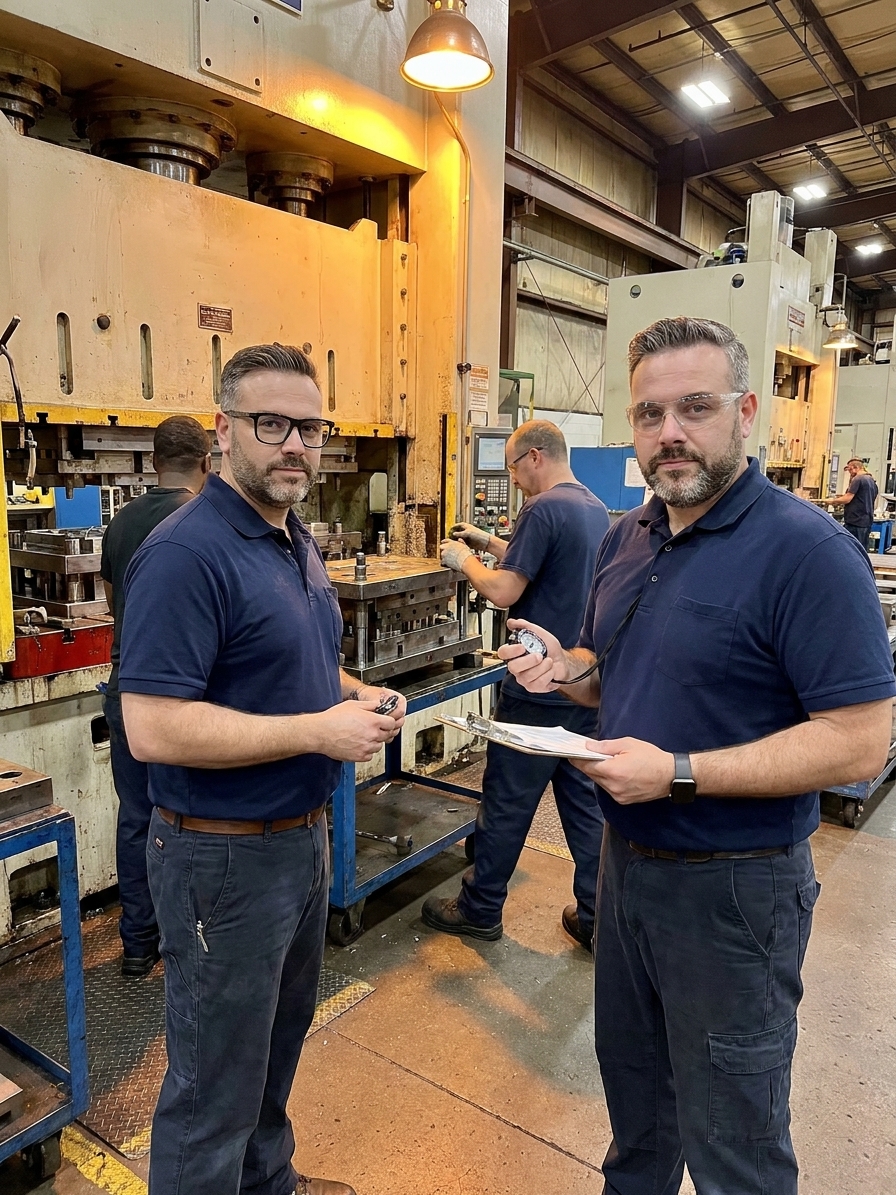
This logic is obvious, but obvious does not mean easy. The first step is to document every operation in the current changeover process — not the official procedure, but the actual practice. This requires filming or timing several real changeovers with a stopwatch, listing every action the operator takes, and classifying each as internal or external. The gap between the official procedure and reality is where the immediate opportunities hide.
Once every operation is classified, the path forward becomes clear. Move every external-capable operation out of the machine-stop window. Bolts can be loosened while the machine is still running. New material can be staged. Specifications can be reviewed. In many plants, this separation step alone cuts changeover time by 30 to 50 per cent without any new technology or capital investment.
Converting and Streamlining Remaining Operations
After the obvious separations are made, the next challenge is converting operations that currently seem inherently internal. Temperature adjustments, calibration sequences, and fixture alignments appear unavoidable. A die that needs pre-heating to 200°C, however, can be heated in an off-line oven while the machine is still running. A fixture alignment that takes twenty minutes of fine-tuning can be eliminated with a locating pin system that makes misalignment physically impossible.
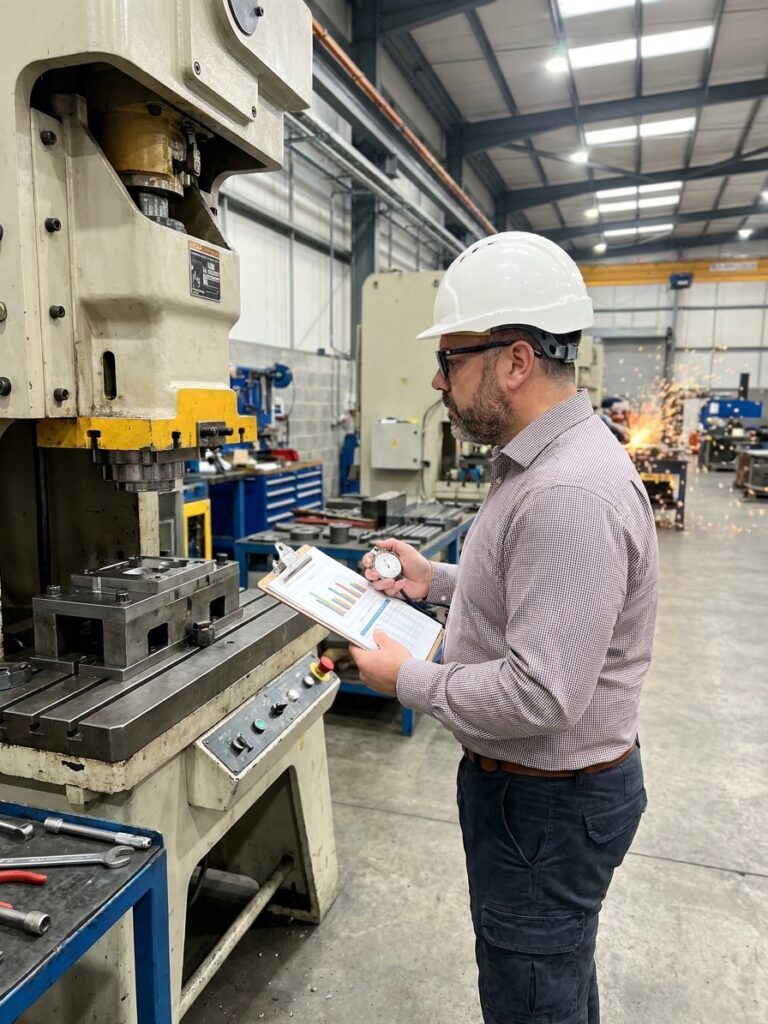
What remains are operations that truly require the machine to be stopped. The goal is to make these as fast as possible. If two operators can work simultaneously on different sides of the press, changeover time is cut in half. Yet many machines are still serviced by one operator performing sequential tasks when parallel work is entirely feasible. Standardizing tooling interfaces across product families also turns a custom reconfiguration into a simple swap.
Shingo's principle for internal operations was eliminate, don't reduce. If an operator needs to adjust a bolt position, the solution is not a faster wrench. The solution is a design that eliminates the need for adjustment entirely. One-way clamps, quarter-turn fasteners, and hydraulic quick-release systems replace threaded bolts and manual tightening, reducing fastening time from minutes to seconds.
Failure Mode: The Stopwatch Exercise
The most common failure mode is the stopwatch exercise. A team decides to implement SMED, brings out the cameras and timers, documents the current state, and then files the report. The documentation sits in a binder. The video footage is never reviewed. Nobody actually implements the changes because the documentation phase felt like progress.
Measurement without action is theatre. The changeover time has not improved by a single second. The operators watched the team film them, went back to their normal routine, and nothing changed. This happens because the analysis lacked something critical: the authority to act. Someone must own the implementation and have the mandate to change tooling, procedures, and machine configurations.
The second pattern is the successful kaizen event followed by gradual regression. An improvement team comes in, reduces changeover from 90 minutes to 35 minutes, celebrates the win, and leaves. Six months later, the changeover time has crept back to 70 minutes. A year later, it is back to 85. The new procedure was imposed rather than internalized.
Sustaining SMED improvements requires more than a new procedure document. It requires visual controls, regular audits, and operator ownership. Did the operators help design the new process, or was it handed to them in a binder? Without these elements, regression is not a risk — it is a certainty.
Event-Driven vs. Systemic SMED
Event-driven approach
- Improvement team imposes new setup steps externally
- Stopwatches and cameras used for a one-time study
- Changeover gains evaporate when the team leaves
- New standard work document sits unread in an office
Systemic approach
- Operators design the new setup alongside engineering
- Visual controls and shadow boards enforce the standard
- Audits catch regression before the old habits return
- Scheduling visibility enables consistent pre-staging
Technology Cannot Replace Methodology
Some organizations try to shortcut the process by investing in technology: automated tool changers, robotic positioning systems, and computer-controlled calibration. These investments can be powerful, but they are not a substitute for the methodology. In fact, they often mask the real bottleneck.
An automated tool changer that completes a changeover in 90 seconds sounds impressive. If the operator still has to walk across the plant to retrieve the new tooling, verify the specifications, and manually position the material, the total downtime has not improved by much. The constraint simply moved from the machine to the material handling process.
Technology accelerates SMED implementation, but it does not replace the four-stage analysis. You still need to separate internal from external, convert where possible, streamline what remains, and eliminate adjustments. The dependency chain is unforgiving: SMED requires pre-staging, which requires scheduling visibility, which requires communication between planning and operations. Buying a robot does not fix a broken scheduling system.
When a quick-changeover solution developed on one line is applied across all similar lines, the total improvement is enormous. Yet SMED improvements routinely stay localized. One production line gets a makeover, but the lessons never spread. Standardization is the multiplier effect, but it requires deliberate effort to document the solution in a way that is transferable to other cells.
The Pre-Staging Foundation and Scheduling Reality
The single most overlooked SMED technique is also the simplest: pre-staging. Before the machine stops, everything needed for the changeover should be positioned within arm's reach of the operator. Tools on a cart, sorted in the order they will be used. New dies pre-heated. Material positioned at the loading point. Specifications posted at eye level.
This requires no capital investment and can be implemented in an afternoon. On most factory floors, however, the operator still walks away from the machine multiple times during changeover to find a wrench, check a spec sheet, or retrieve a fixture from a cabinet across the room. Each walk is minutes of wasted downtime that never appears on the machine's OEE report.
Pre-staging fails because it requires advance preparation, and advance preparation requires knowing what the next job will be.
If the operator does not know what is coming next until the current job ends, pre-staging is impossible. The dependency chain becomes clear: SMED requires pre-staging, which requires scheduling visibility, which requires communication between planning and operations. The failure is rarely in the tooling. It is in the system around it.
This is why SMED cannot be treated as a shop-floor project alone. If production planning operates in isolation from the operators executing the changeover, the scheduling visibility needed for true external preparation will never materialize. The organizational silo kills the technical improvement.
Making SMED Stick as a Core Capability
A manufacturer that reduces average changeover from 90 minutes to 20 minutes does not just save 70 minutes of downtime. They fundamentally change their production economics. Batch sizes can shrink by a factor of four. Work-in-process inventory drops. Lead times compress. The sales team can promise delivery dates that competitors cannot match.
To capture this, start with measurement you can trust. Film multiple changeovers at different times, on different shifts, with different operators. Build a baseline that reflects reality, not the idealized procedure. Then prioritize improvements by impact, not by ease. If your highest-impact opportunity requires a tooling redesign, do not avoid it because it is harder than reorganizing a tool cart.
Involve operators from day one. The people who perform the changeover know which bolts always seize, which fixtures never line up, and which steps can be safely skipped. Bring them into the improvement process as experts, not as subjects to be observed. Make the new procedure visual with setup boards at the machine showing tool layout, step sequence, and standard times.
Sustaining SMED: The First 90 Days
- 01Establish baselineFilm actual changeovers to document reality, not the official procedure.
- 02Implement controlsDeploy shadow boards, visual specs, and pre-staging areas at the machine.
- 03Daily auditsObserve every changeover for the first 30 days to identify persistent friction.
- 04Weekly auditsShift to weekly checks after 90 days to ensure old habits have not returned.
- 05Cross-pollinationApply the standardized setup procedure to similar lines across the plant.
Audit relentlessly at first, then taper. In the first 90 days after implementation, audit every changeover. Do this to identify what is still causing friction, not to catch people doing it wrong. After 90 days, shift to weekly audits. After six months, move to monthly. Never stop auditing entirely; that is precisely when regression takes hold.
The most powerful outcome of a successful SMED implementation is not the reduction in changeover time. It is the shift in organizational mindset. When operators see that a process they have done the same way for fifteen years can be fundamentally redesigned, they start looking at every process with fresh eyes. The methodology teaches that the current state is not inevitable, and that is the foundation of real continuous improvement.