
A well-designed poka-yoke device is useless if the operator removes it. I learned this the hard way at an automotive plant in Eastern Slovakia. We were fighting a recurring assembly defect where operators occasionally installed a cover seal backwards. It happened roughly twice per shift, a low enough frequency to evade standard controls but high enough to cause field failures and customer 8D requests.
I designed a classic mistake-proofing solution: a physical locating pin on the assembly fixture that made it mechanically impossible to load the seal in the wrong orientation. The engineering was elegant, the implementation was fast, and the defect rate immediately dropped to zero. The success lasted exactly fourteen days.
When I walked the line two weeks later, the pin was gone. The operators had removed it because it slowed them down. They were right; without the pin, the cycle was faster. It was also incorrect. A mistake-proofing device without a supporting quality culture is simply scrap metal waiting to be discarded.
The difference between a tool and a mindset
Most manufacturing organisations understand mistake-proofing purely as a set of technical interventions. They deploy presence sensors to detect missing components, mechanical interlocks to prevent incorrect assembly, and digital checklists to catch human oversights. These are all valid engineering responses, but they represent only half of the required solution.
The true leverage of mistake-proofing is not found in the technology itself, but in the mindset of the people operating it. Consider the automotive seatbelt alarm. Engineers designed an intrusive auditory warning to force compliance. Yet, if passengers fundamentally disagree with the rule, they will simply buy metal clips to silence the alarm. The technology fails because the underlying behaviour was never addressed.
Quality control functions in exactly the same way. If you impose a poka-yoke device on a process without explaining its purpose, operators will view it as a bureaucratic obstacle. When cycle times inevitably tighten, the obstacle is removed. Sustainable error prevention requires operators who understand why the control exists and how it protects the end customer.
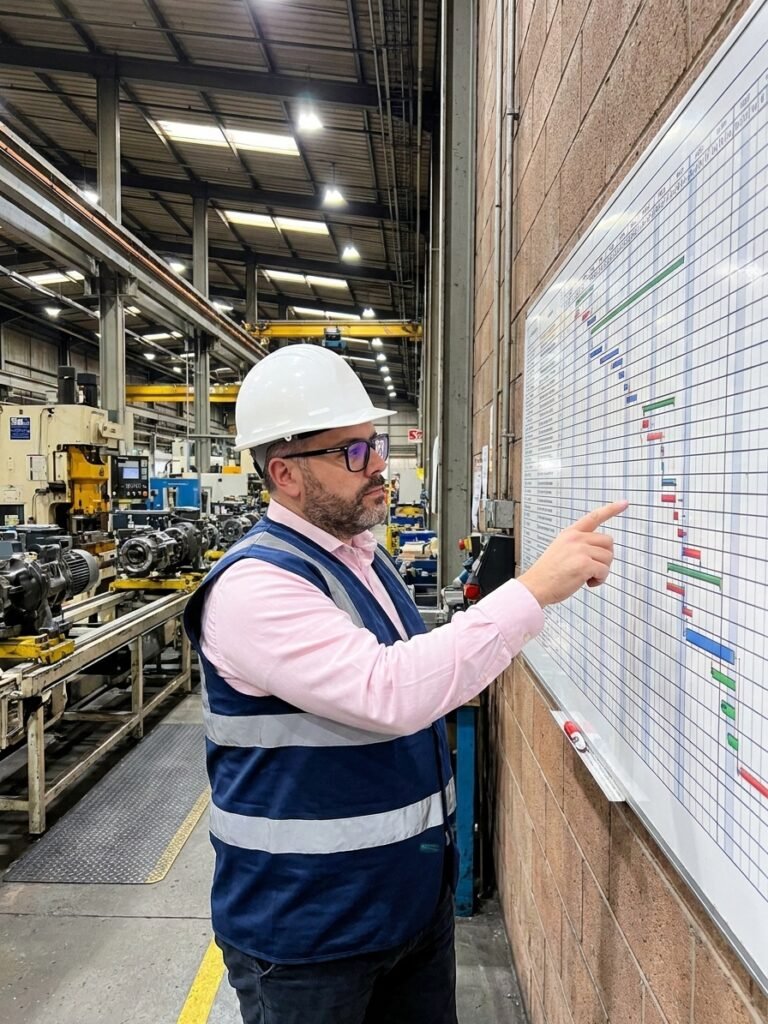
Context and the design of error prevention
When you introduce a poka-yoke mechanism, you must explain the problem it solves. In Slovakia, I made the critical error of simply implementing the pin and dictating the new standard. I provided no context. The operators perceived the physical barrier as an impediment introduced by an engineer who did not understand the reality of daily production targets.
I returned the following week with the actual rejected part from the customer. I showed them the assembly photographs where the reversed seal had caused fluid leakage across a finished engine block. Then, I reframed the engineering challenge: I asked the operators how we could design a locating feature that actually accelerated their assembly motion rather than restricting it.
That interaction was the turning point. The operators collaboratively designed a modified pin that doubled as a guiding radius. The new geometry aligned the seal instantly, reducing cycle time while guaranteeing correct orientation. Because the solution originated from the floor, nobody ever attempted to bypass or remove it.
Design approach and operational survival
Imposed engineering controls
- Designed remotely without operator input
- Dictated via top-down standard work updates
- Perceived as friction against cycle time targets
- Bypassed or physically removed under pressure
Operator-integrated controls
- Developed with the people running the process
- Tied directly to customer failure modes and 8D evidence
- Engineered to assist assembly motion, not restrict it
- Defended and maintained by the operators themselves
Psychological safety in error reporting
In a quality culture where errors trigger disciplinary action, operators hide their mistakes. A hidden defect is invisible to your engineering team. If you cannot see the failure mode, you cannot design a mechanical or sensory intervention to prevent it from recurring in the future.
I worked with a Tier 1 supplier for German OEMs that disciplined operators for every recorded defect. The result was entirely predictable: operators quietly reworked defective parts offline to avoid management scrutiny. The systemic root cause was never analysed, and identical defects continued to escape to the customer month after month.
We eliminated the punitive interviews and replaced them with a strict operational rule: the first person to report a specific failure mode received recognition, not a reprimand. Within three months, the floor surfaced dozens of previously hidden recurring errors. We finally had the data required to design and implement targeted poka-yoke devices across the value stream.
Without psychological safety, you have no data. Without data, you cannot engineer targeted error prevention.
System accountability over individual blame
When an operator makes an assembly error, the immediate question from management should never be about who is responsible. The critical engineering question is why the process was designed in a way that allowed the error to occur. Most defects are not failures of personnel; they are failures of process design.
During my time implementing AS9100 systems in aerospace manufacturing, this philosophy was fundamental. Every non-conformance is investigated as a systemic breakdown. This approach creates an environment where engineers and operators actively hunt for process improvements, knowing their competence will not be attacked during an audit.
Effective process accountability distributes ownership across functions. The process engineer guarantees that errors are physically difficult to execute. The line manager ensures operators understand the controls. The operator follows the standard and reports anomalies. The quality engineer verifies that the overall system functions exactly as intended.
| Role | Core Accountability | Quality Objective |
|---|---|---|
| Process Engineer | Ensuring errors are physically difficult or impossible to commit | Robust fixture and tooling design |
| Line Manager | Confirming operators understand the function of all controls | Sustained process compliance |
| Operator | Executing the standard work and reporting anomalies immediately | Real-time defect surfacing |
| Quality Engineer | Verifying the system captures what it is designed to capture | Accurate containment and data flow |
Continuous evolution of poka-yoke devices
The most resilient mistake-proofing systems share one characteristic: they are never static. Error prevention is not a one-time engineering deliverable completed during a product launch. It is a continuous evolution driven by daily operational feedback and changing failure modes.
I observed this firsthand at a manufacturing facility in Westphalia. Every assembly station maintained a physical poka-yoke logbook. Operators independently documented ideas for new protective mechanisms based on near-misses they experienced during their shifts. The engineering team reviewed these logs weekly and implemented at least one operator-designed fixture per month.
After twelve months of this discipline, the line operated with twenty-three active mistake-proofing devices. Seventeen of those were originally proposed by operators. Internal Non-Conformance Reports (NCRs) for that specific value stream dropped by over eighty percent. That magnitude of improvement is a cultural outcome, not a technical one.
Practical steps to shift the culture
If your organisation relies heavily on poka-yoke tools but still struggles with internal defects, you must audit the surrounding culture. Walk the production floor and physically inspect every existing mistake-proofing device. Determine if operators can explain why the device exists, and critically, ask if any devices have been bypassed or removed to save time.
You must also connect quality metrics directly to the Gemba. Do not rely on desktop reports to verify error prevention. Stand at the station, watch the cycle, and observe how the operator interacts with the control. You will frequently discover that sophisticated engineering solutions only function correctly on paper.
Finally, begin measuring cultural health alongside traditional quality metrics. Track the number of poka-yoke improvement suggestions generated by operators each month. Measure the cycle time between an operator reporting a problem and engineering implementing a physical control. These indicators reveal the true proactive capability of your quality management system.
Indicators of mistake-proofing culture