
Customer complaints were rising for three consecutive months at an automotive plant. Production blamed the material. Procurement blamed the supplier. Quality blamed production. The plant manager blamed everyone. I have audited plants in this exact state dozens of times: the problem is never that people reject quality. The problem is that everyone defends their own silo.
When a defect crosses departmental boundaries, a single function only ever holds a piece of the mosaic. A cross-functional team (CFT) is the mechanism to assemble that mosaic quickly, systematically, and with permanent results.
Not every defect requires a CFT. A broken tool requires maintenance. A single failed part requires an inspector. But when you face recurring 8D failures, cross-functional signals, or complex process changes, you must build a team. If you do not, you will keep treating symptoms while the root cause thrives at the interface of your departments.
What a Cross-Functional Team Actually Is
Organisations operate vertically. Production talks to production. Quality talks to quality. When a multi-faceted problem hits—like a recurring surface defect—no single department has the complete picture.
A CFT cuts across these verticals. It is a mandated group of experts with a single objective: solve a specific problem or implement a change. In practice, launching a functional CFT is one of the hardest organisational disciplines to execute. Most fail because they are structured as reporting loops rather than execution engines.
Mandate and Team Composition
The most common failure mode is management naming a "task force," booking a weekly 90-minute calendar slot, and waiting for a miracle. Three months later, you have pristine meeting minutes, zero results, and frustrated engineers.
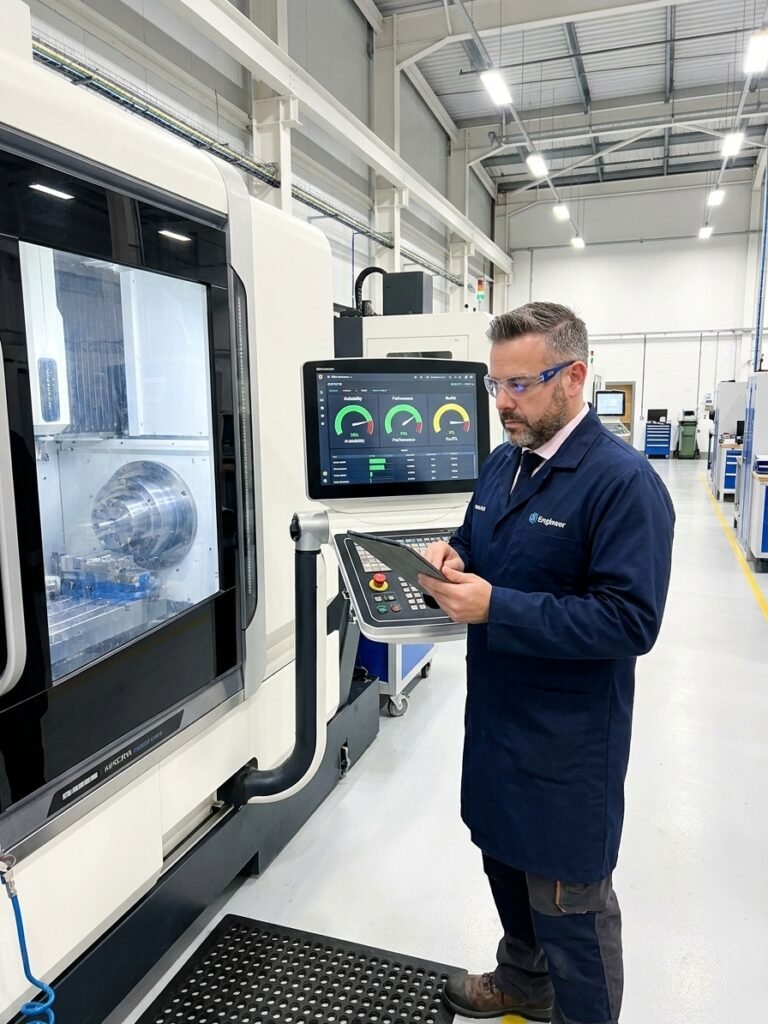
A functioning CFT requires a strict mandate. The team must know exactly what it exists to do. Not "improve quality," but "eliminate surface scuffing on part XYZ within 30 days, targeting 0 PPM at the next customer audit."
The mandate must define the specific problem, a measurable target with a time frame, the escalation path, and an end date. A CFT without a documented sunset clause inevitably morphs into a bureaucratic standing committee.
| Function | Contribution to the Team |
|---|---|
| Quality Engineer | Methodology (8D, Ishikawa), standards, compliance. |
| Process Engineer | Technical solution, process parameters, tooling. |
| Production Supervisor | Shift reality, operability of the proposed solution. |
| Maintenance | Equipment condition, sensor calibration, preventive plan. |
| Supplier Quality | Supplier impact, material specifications, incoming inspection. |
| Logistics | Material flow, storage conditions, transit damage. |
The CFT leader is not a meeting moderator. They dictate the problem-solving approach, coordinate tasks, clear roadblocks, and own the outcome. Ideally, this is a senior quality engineer or continuous improvement manager who has no direct vested interest in the failing process, ensuring no conflict of interest.
Deploying the Methodology
A CFT without structured methodology is just a group of people arguing in a room. The team must operate using standard quality tools to drive logic and isolate variables.
The 5-Day CFT Problem-Solving Sprint
- 01Day 1: Define and BoundUse Is/Is Not analysis to narrow the scope. Identify exactly where, when, and on which parts the defect occurs.
- 02Days 2-4: Cause MappingBuild an Ishikawa diagram across all categories. Run a 5 Why analysis using input from every department present.
- 03Day 5: Verify CausesConfirm the identified root causes through data, trials, or Design of Experiments (DOE). No assumptions are accepted without proof.
- 04Days 6-10: Implement and UpdateExecute corrective actions. Mandate updates to the Control Plan, PFMEA, and preventive maintenance schedules.
How a CFT Breaks the Blame Cycle
At the automotive plant I mentioned, we formed a six-person team. On day one, an Is/Is Not analysis revealed the scuffing occurred only on parts from a specific line, exclusively during the night shift, on one specific surface treatment. We eliminated 70% of hypotheses in one hour.
By day four, the Ishikawa and 5 Why exercises exposed the chain of events. Production admitted they skipped temperature conditioning during night-shift tool changes. Maintenance confirmed cooling system checks were running monthly instead of weekly. Supplier Quality discovered the coating supplier had quietly altered a drying parameter.
Three root causes. Three verification actions. We implemented corrective measures by day ten, updating the Control Plan, maintenance schedule, and supplier specification. Zero defects. Zero recurrence.
If your CFT meets weekly just to hear status updates, it is a reporting ritual, not problem-solving.
Common Failures That Kill Cross-Functional Teams
I have seen more CFTs fail than succeed over the last twenty years. The failure modes are remarkably consistent across automotive and aerospace plants.
Why Cross-Functional Teams Stall
What failing teams do
- Meet weekly to read status reports and protect departmental boundaries.
- Pull members away to fight daily operational fires whenever the line calls.
- Treat the CFT as a permanent standing committee with no end date.
- Solve the immediate defect but fail to update the PFMEA and Control Plan.
What effective teams do
- Work directly on the shop floor together, testing theories in real-time.
- Mandate 30-50% dedicated capacity for members during the active phase.
- Dissolve the team immediately after verifying the corrective actions.
- Systematically document lessons learned to prevent recurrence elsewhere.
Capacity allocation is a structural failure. If members are not given at least 30-50% dedicated time during the active phase, the operational system will suck them back into daily firefighting. The CFT will fail not due to lack of desire, but due to lack of management protection.
Defensive behaviour is the other killer. The leader must enforce a strict rule from day one: we are looking for root causes, not guilty parties. If someone walks in with an attitude of "my department did nothing wrong," they must be reminded that the team exists specifically to prove or disprove that assumption.
Alignment with ISO 9001:2015
A functioning CFT directly satisfies several ISO 9001:2015 clauses. It is the practical implementation of risk-based thinking (Clause 5.1.1) and acts as a mechanism to capture and utilise organisational knowledge (Clause 7.1.6).
Furthermore, a CFT is the natural framework for controlling nonconforming outputs (Clause 8.7) and driving systematic corrective actions (Clause 10.2). For an auditor, a documented, functioning CFT is clear evidence that your organisation actively lives its Quality Management System, rather than just maintaining paperwork.
Measuring CFT Effectiveness
You measure a CFT by its speed and permanence. Track the time from team formation to the implementation of corrective actions—measure this in days, not weeks. If the team is active for more than six weeks without a verified result, the mandate is unclear, the composition is wrong, or management is failing to remove roadblocks.
Most chronic quality problems do not live inside one department. They live at the interface. Between procurement and production. Between maintenance and operations. Between the supplier and your assembly line. No single department can see this interface entirely. The CFT is the only tool that illuminates it, combines partial knowledge into a complete picture, and engineers a technically sound, operationally viable solution.
The automotive plant formalised the CFT into their QMS as a standard operating procedure. Complaints dropped by 68% in the first quarter. When a new defect surfaced last month, the plant manager did not send an angry email. He asked when they were convening the CFT.