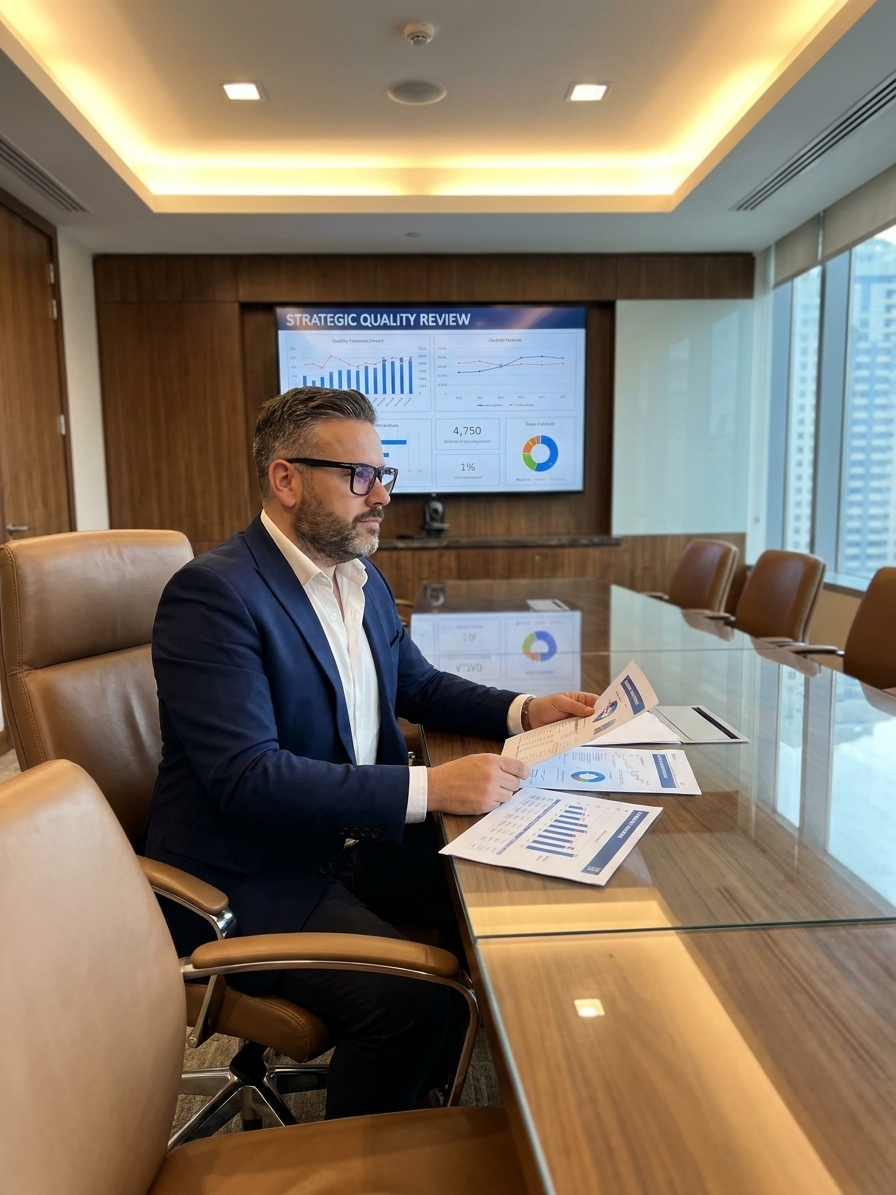
In 1974, management professor Jerry Harvey articulated a phenomenon in which groups unanimously agree to a course of action that no individual member actually wants. A family drives 53 miles through scorching Texas heat to dine at a mediocre restaurant, despite every person privately hating the idea. Each individual assumes the others are enthusiastic, and their collective silence manufactures a false consensus.
If you work in quality engineering, you have been on that drive. Management teams routinely approve complex quality initiatives that privately worry every stakeholder in the room. This dynamic is not a simple communication breakdown; it is the systematic failure to manage agreement. It costs organisations millions in wasted resources, abandoned software implementations, and stalled IATF 16949 transitions.
I have audited plants where a newly launched statistical process control system sat entirely unused because the quality team silently doubted its baseline data. The cost of false consensus is not just the wasted capital expenditure. It is the viable, targeted improvement project that never received funding because the management team was too busy executing a flawed mandate. Organisations must engineer structural dissent to prevent this collapse.
The Anatomy of Unanimous Doubt
Consider a leadership meeting reviewing a proposal to restructure incoming inspection. The initiative demands new automated vision systems, revised statistical sampling plans, and fully integrated vendor scorecards. The proposal carries an 18-month timeline and a multi-million euro budget. The executive team reviews the presentation and rapidly reaches apparent consensus, authorising the capital expenditure.
The Quality Director privately calculates that current gauge R&R studies show unacceptable measurement system variation. Layering automated vision systems over a flawed baseline will corrupt all downstream data. Simultaneously, the Plant Manager realises the production floor lacks the physical layout space for the new equipment. Both leaders suppress their technical objections because the group appears enthusiastic, and the Supply Chain Director has already praised the digital transformation strategy.
This suppression is not a failure of engineering competence. It is an attribution error. Each individual attributes their own silence to professional prudence, while interpreting the silence of their peers as endorsement. A supportive nod from one director becomes the data point another uses to calibrate their own agreement. The result is an 18-month capital project that every single person in the room privately opposed.

Why Quality Functions Amplify Groupthink
Quality organisations are acutely vulnerable to false consensus because our core mechanisms require rigid cross-functional alignment. Developing a PFMEA demands sign-off from design, manufacturing, quality, and supplier representatives. Closing an 8D corrective action requires convergence across engineering, production, and commercial teams. The operational pressure to reach alignment quickly overrides the technical need for critical scrutiny.
Furthermore, an unspoken cultural dynamic punishes technical dissent. There is a pervasive assumption that being 'pro-quality' means supporting any new quality initiative. Questioning an automated data collection rollout feels like opposing progress. No mid-level manager wants to be identified as the obstructionist pushing back against compliance or continuous improvement. They nod, they approve, and they wait for the system to fail.
This fear of professional isolation corrupts critical management review inputs. During AS9100 audit readiness sessions, teams routinely declare themselves fully prepared because admitting otherwise threatens their performance metrics. In customer complaint reviews, cross-functional groups agree on containment strategies that address minor symptoms, deliberately avoiding the deep-rooted process failures that a senior leader champions. The appearance of agreement overrides the reality of the defect.
Mechanisms of the Implementation Collapse
False consensus inevitably triggers a slow, expensive implementation collapse. Management authorises resources and sets strict timelines based on the illusion of universal support. Within weeks, the programme stalls. Cross-functional teams miss deadlines. Data collection remains incomplete. Operators continue to rely on legacy paper travellers while the new digital ERP modules sit unconfigured. The vendor scorecard system launches with data for only three of forty approved suppliers.
Management misdiagnoses this paralysis as a standard execution problem. They hire external consultants to re-energise the initiative. They generate revised Gantt charts and implement stricter project tracking. But the root cause is not a lack of project management rigor. The root cause is that nobody genuinely believed in the foundational strategy. They committed only to appearing committed, leaving the organisation to build a complex quality system on a foundation of manufactured consent.
The Lifecycle of False Consensus in Quality Programmes
- 01Unspoken doubtA stakeholder identifies a technical flaw, such as inadequate MSA baseline data, but suppresses it.
- 02Attribution errorThe individual interprets peer silence as enthusiastic endorsement rather than shared hesitation.
- 03Public endorsementGroup members offer verbal support or passive silence, generating false data for the rest of the room.
- 04Cascading consensusVisible alignment accelerates, making further technical dissent feel socially irrational.
- 05Implementation collapseThe approved initiative stalls as the unstated technical and physical constraints materialise on the shop floor.
Structural Countermeasures for Technical Dissent
You cannot solve the Abilene Paradox by simply asking for more honest communication. You must design structural mechanisms that force genuine technical disagreement to the surface. The standard method of gathering a management team in a room and asking for consensus on a complex proposal inherently manufactures false agreement. It rewards speed and punishes caution.
The most effective countermeasure is separating opinion collection from group discussion. Before convening a cross-functional review, collect individual written assessments from every core stakeholder. A formal pre-mortem exercise works exceptionally well. Require each technical lead to document exactly why the proposed initiative will fail within 12 months. Writing these assessments privately eliminates the group dynamic, ensuring you capture the unfiltered distribution of technical opinions.
When you convene the management review, present the compiled pre-mortem data first. Start the meeting by highlighting the most severe objections. This single process change alters the entire psychological dynamic of the room. Instead of trying to read the group's mood, participants must confront the actual engineering constraints. The Quality Director can finally discuss the gauge R&R failure, and the Plant Manager can address the layout constraints without fearing professional isolation.
High-stakes quality decisions demand mandatory cooling periods. Never allow an executive committee to authorise a multi-year quality transformation at the end of a single presentation. Implement a strict policy requiring a 24-hour delay before finalising any initiative that demands over six months of engineering effort. Furthermore, mandate that an independent technical reviewer, excluded from the initial meeting, evaluate the proposal against the baseline process data before the capital is released.
Quantifying the Organisational Damage
The operational damage caused by false consensus is consistently misattributed to poor project execution. Organisations waste capital expenditure on automated inspection equipment that cannot function because the underlying measurement system analysis remains unverified. Engineering teams spend months developing PPAP documentation for automated processes that will never achieve the required Cpk targets due to unaddressed tooling variation.
The secondary damage is cultural. When quality professionals participate in initiatives they privately know are flawed, they develop deep organisational cynicism. They learn that the appearance of alignment carries more professional weight than rigorous engineering analysis. They stop volunteering critical feedback during management reviews, quietly waiting for the flawed system to collapse under its own technical weight.
The road to failed quality initiatives is never paved with disagreement; it is paved with the dangerous illusion of unanimous agreement.
Compliance Versus Alignment in Management Reviews
Manufactured Compliance
- Rapid head nods during high-level presentations without MSA verification.
- Aggressive timelines set to appease leadership, ignoring actual floor constraints.
- Enthusiastic kick-off meetings followed by months of missed milestones.
- 8D root cause analysis that blames the operator rather than the process design.
Genuine Alignment
- Written pre-mortems identifying exact technical failure modes before approval.
- Timeline adjustments based on verified gauge R&R and process capability data.
- Cross-functional teams that secure physical layout space before purchasing equipment.
- Sustained effort to stabilise measurement baselines prior to automating data collection.
Rebuilding the Foundation of Real Agreement
Senior leaders and quality directors must actively dismantle the conditions that breed false consensus. Executives who present strategic quality initiatives as fait accompli are not making decisions; they are demanding compliance. They project false certainty and signal the correct answer before the technical evaluation begins. This management style guarantees that critical PFMEA inputs and supplier capability data are suppressed in favour of executive appeasement.
The alternative requires modelling genuine intellectual humility during management reviews. Leaders must explicitly outline the risks of their own proposals. Opening a capital expenditure review by stating the known measurement system vulnerabilities gives the engineering team explicit permission to address them. A leader asking what critical data they are missing, and actually delaying the project to acquire that data, transforms the cultural dynamic.
Organisations must differentiate between alignment and compliance. Alignment produces the sustained, cross-functional effort required to stabilise a complex aerospace supply chain. Compliance produces an impressive project charter that inevitably stalls during implementation. When a quality initiative inevitably struggles, examine the system that manufactured the false agreement before blaming the execution team.
Escaping the Abilene Paradox requires hardwiring structural dissent into your management system. The default question in any quality review must shift from asking if everyone agrees, to demanding that someone articulate why the initiative might fail. Recognise that the most dangerous moment in a quality programme is not when an engineer challenges a timeline. It is when the entire management team stays completely silent.