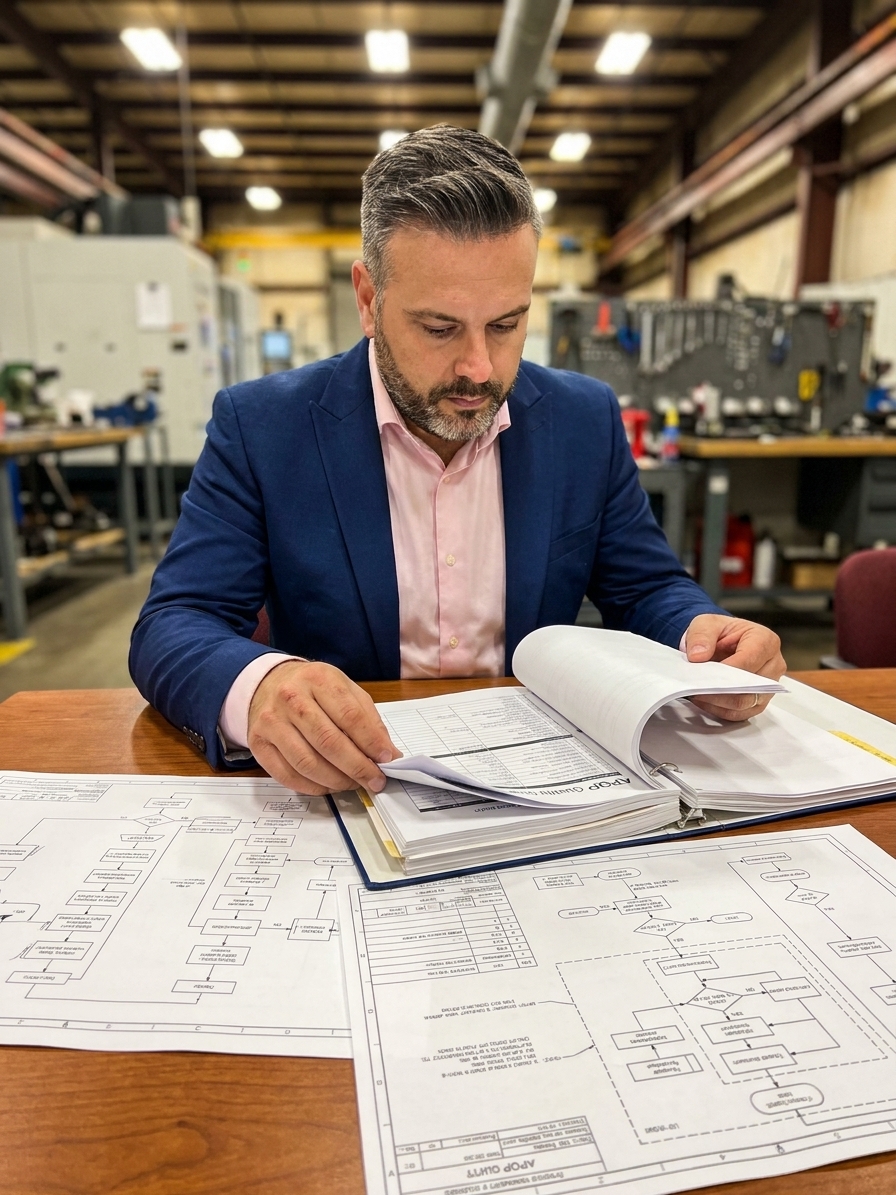
Advanced Product Quality Planning (APQP) is the framework designed to prevent chaotic product launches. Developed by the automotive industry and formalized under the AIAG umbrella, it is the global standard for new product introduction. The premise is structurally sound: plan quality into the process before you build the first part, rather than reacting after shipping defective units. On paper, it is the most rational preparation a manufacturing organization can undertake.
The procedure is a masterpiece of structured thinking. Five phases, twenty-three elements, and a clear sequence from control plans to failure mode analyses and production part approval. Every gate passed is meant to be a failure prevented. Yet the execution often falls short. Organizations build thick binders, populate spreadsheets, and collect signatures, but the launch still goes sideways.
Scrap spikes in week one. Customer complaints arrive in week three. The team that wrote the control plan cannot explain what it actually controls. The Process FMEA was copy-pasted from a previous project, and the PPAP was approved on parts manufactured under conditions that no longer exist. The planning was elaborate, but the failure was inevitable because the framework was treated as a documentation exercise rather than an engineering tool.
Phase 1: Inflated Requirements and Compressed Timelines
Phase 1 defines the program: what you are making, the requirements, the timeline, and the team. The most common failure here is not missing requirements, but collecting too many of the wrong ones. Engineering receives the customer specification and transcribes it verbatim into the APQP documentation. Every dimension and drawing note becomes a requirement without any triage.
Critical characteristics are supposed to be identified—the few dimensions that drive fit, form, and function. In practice, organizations either mark everything as critical, rendering the designation meaningless, or mark nothing, leaving operators without focus. Meanwhile, the unspoken requirements that customers actually judge you on remain absent from the documentation.
Timeline planning deserves its own scrutiny. Organizations work backwards from the customer's required ship date and compress every phase to fit. Phase 1 gets two weeks, Phase 2 gets three, and Phase 3 gets whatever is left. The timeline is not a plan; it is a wish list printed on a Gantt chart. Everyone signs it, nobody believes it, and the planning becomes purely performative.
Capability Displacement in Trial Runs
Phase 2: The Fiction of Design FMEA and Verification
Phase 2 is where the design comes together. Prototypes are built, Design FMEAs are conducted, and verification testing happens. The Design FMEA is the centerpiece, and it is almost universally executed as a numerical exercise rather than an engineering analysis. Teams sit in conference rooms and fill out spreadsheets with severity, occurrence, and detection ratings.
Occurrence ratings are guesses because no one has empirical data on how a brand-new design will fail. Detection ratings are aspirational. The team writes 'statistical process control' as the detection method for a process that does not yet exist, operated by technicians who have not been hired, running on equipment that has not been purchased. The resulting Risk Priority Number looks moderate, and the team moves on.
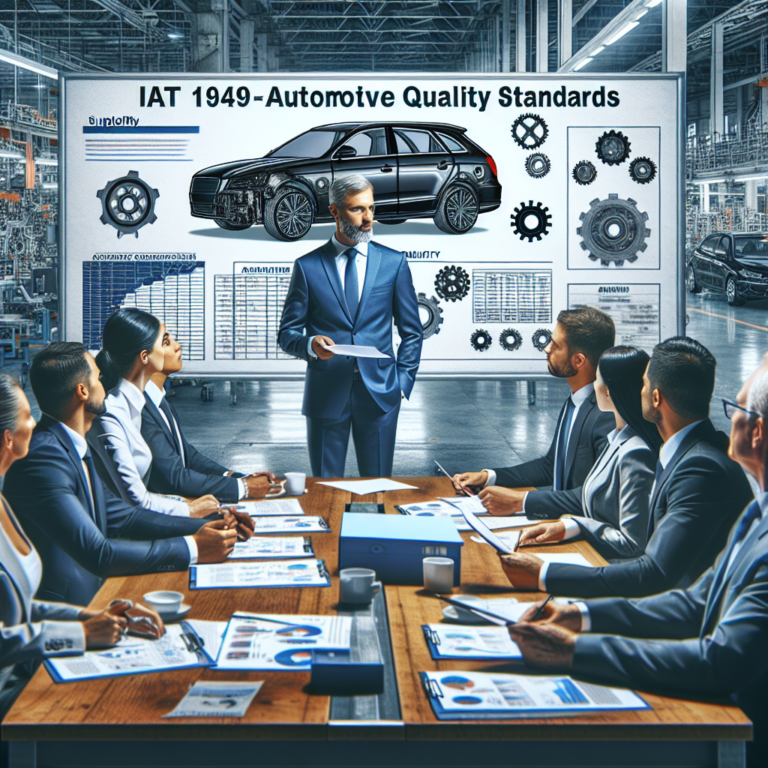
The most dangerous FMEA is the one that looks complete. Every failure mode has an entry and every column is filled. What is missing is the honest, uncomfortable conversation about what could actually go wrong. The failure mode everyone knows about but will not say aloud because the design is already locked. The material substitution purchasing made to save twelve cents. The tolerance that looks fine on the CAD model but cannot be achieved on the actual machine.
Phase 3: Control Plans That Generate Paperwork
Phase 3 transitions from design to manufacturing. Process flow diagrams, Process FMEAs, and control plans are developed. The Process FMEA suffers from the same issues as the Design FMEA, with one added twist: the engineers writing it are rarely the people who will run the process. Engineers write based on how the process should work. Operators run it based on how it actually works.
Control plans are the practical output of Phase 3, and they are deeply misunderstood. A control plan should be a living document dictating exactly what to check, how to check it, and what to do when something goes wrong. In practice, it is a static document written at launch, filed in a binder, and referenced only when the auditor arrives. It lists every drawing dimension with an inspection frequency of 'first article, last article, and every fiftieth piece' regardless of criticality.
Operators are expected to perform hundreds of measurements per shift on a document nobody has reviewed. The inevitable result is that operators measure what they can quickly, skip what they cannot, and record values that look reasonable. Process flow diagrams are similarly optimistic, showing the designed flow but omitting the rework loop that developed in week two or the alternate routing created when a machine went down.
Phase 4: The PPAP Performance
Phase 4 is validation: production trial runs, measurement system analysis, preliminary capability studies, and PPAP submission. The PPAP is the culmination of APQP, and it is the most ritualized exercise in manufacturing. You submit eighteen specific elements to demonstrate process understanding, the customer reviews the submission, and approval is granted.
The production trial run is treated as a special event. The best operator is selected, the freshest material is used, and the machine is thoroughly cleaned and calibrated. Every parameter is monitored and adjusted in real time. The parts that come off this run are beautiful, representing the absolute best the process can produce under the most favourable circumstances.
This is not a production process; it is a performance. The capability studies submitted with the PPAP are based on these optimal parts, yielding impressive Cpk values. When production starts, reality sets in. Different operators, varied material lots, machine drift, and environmental variation take over. The process that produced a Cpk of 1.67 during the trial run drops to a Cpk of 0.89 on a typical Tuesday.
If the capability is not good enough under normal conditions, you have a process problem, not a submission problem.
Measurement system analysis is similarly flawed. It is conducted once, by quality engineers, under controlled conditions, and then filed away. Operators on the floor use different techniques, apply different clamping force, and interpret gauges differently. The MSA said the system was acceptable, but the reality is that it is barely adequate, and nobody checks because the submission is already approved.
Phase 5: The Graveyard of Lessons Learned
Phase 5 is the feedback and corrective action loop. In practice, it is a graveyard. The post-launch review meeting is scheduled, but it happens late or never, because the team has moved to the next project. When it does happen, the tone is retrospective but not honest. 'What went well' gets forty minutes; 'what went wrong' gets ten.
Action items are documented and assigned to people who are already overcommitted. The action items from the previous project's Phase 5 review are still open. Best practices are filed in a database that nobody reads. The same mistakes—tolerance stack issues, material qualification gaps, supplier quality surprises—repeat across projects with depressing regularity.
The most valuable output of Phase 5 is the honest assessment of what your APQP process caught versus what it missed. It requires admitting the control plan did not prevent the critical defect, and the FMEA did not identify the failure mode that shut down the line. Honest Phase 5 reviews force organizations to confront the gap between their documented quality system and their actual one. Most would rather not look.
Executing APQP as an Engineering Tool
- 01Triage RequirementsIdentify five to seven critical characteristics based on risk, rather than transcribing the entire drawing.
- 02Force Honest FailuresConduct FMEA sessions that surface uncomfortable truths and test prototypes until they break.
- 03Shift Process OwnershipHave the manufacturing operators who will run the line write the control plan and Process FMEA.
- 04Run Normal TrialsExecute the production trial run on a typical shift with standard material and an average operator.
- 05Enforce Template ChangesRequire three concrete modifications to the APQP template before closing the Phase 5 review.
Rebuilding APQP for Substantive Execution
APQP is not broken; the execution is. A functioning process looks different from the checkbox exercise most plants run. Phase 1 must produce a short list. Five to seven critical characteristics, not fifty. Requirements triaged by risk and impact, and timelines built from empirical experience rather than compressed from wishful thinking.
Phase 2 must produce honest failures. The best Design FMEA sessions are the uncomfortable ones where an engineer states plainly that a feature has never worked in any application they have seen, forcing the team to confront it. Prototype testing should push the design to failure, not merely demonstrate that it passes under ideal conditions.
Phase 3 must be owned by manufacturing. The personnel who will run the process must write the Process FMEA and the control plan. If they cannot, they have not been trained sufficiently to launch. The control plan should fit on one page per operation and list only the controls that actually matter.
Phase 4 must reflect reality. Run the production trial on a normal shift with a typical operator using standard material. If the capability is inadequate under normal conditions, fix the process rather than optimizing the trial. Phase 5 must produce changes to the launch template, not just documents for a database. If the review does not yield concrete modifications, the assessment was not honest.
Organizations that get APQP right treat it as a thinking tool. They argue about failure modes instead of filling in spreadsheets. They challenge their designs instead of validating them. They run honest trials instead of optimized performances, and they learn from failures instead of filing them. The difference between APQP that prevents disasters and APQP that generates impressive binders is the willingness to use the framework honestly.