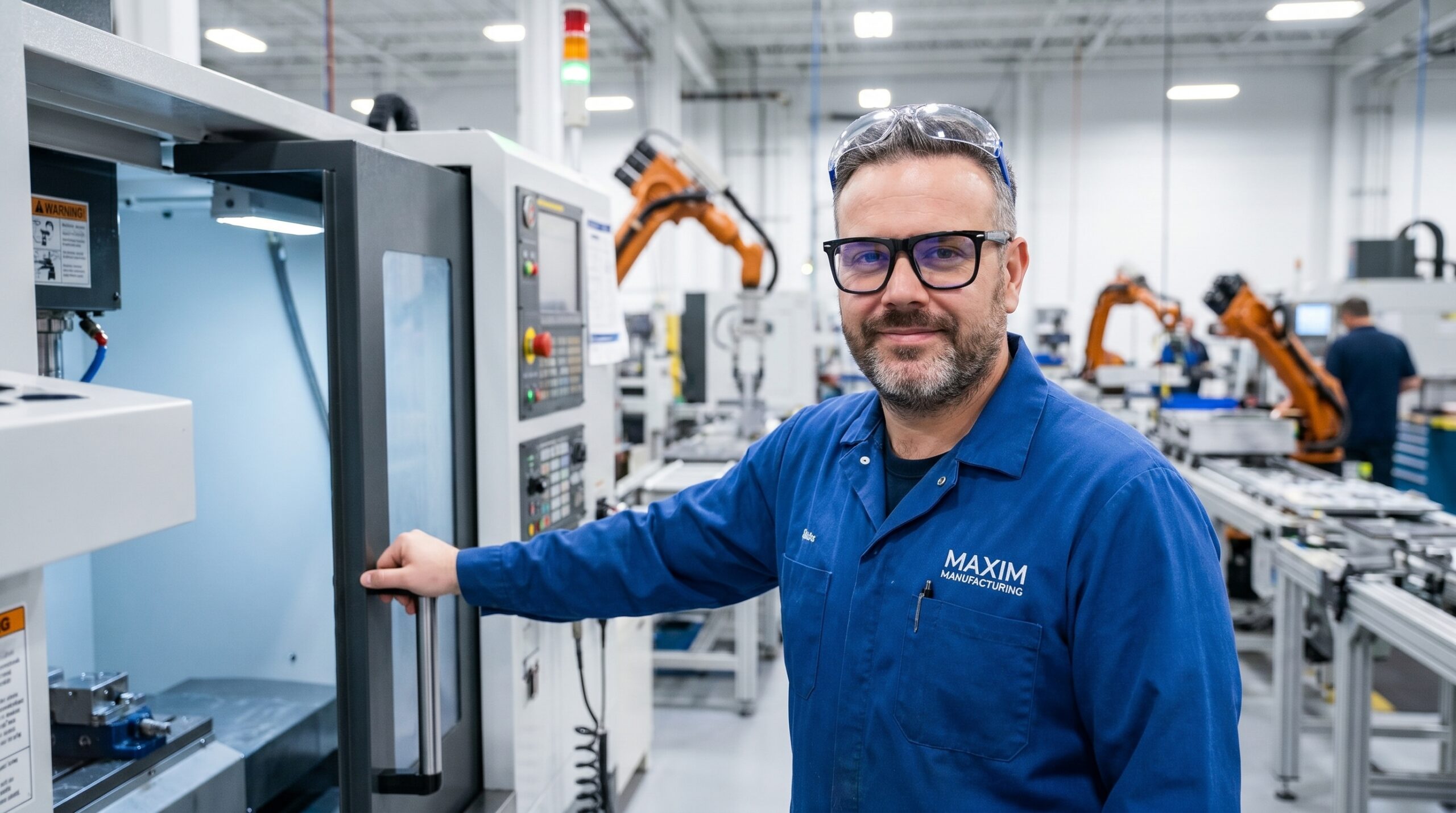
I once audited an automotive injection moulding plant where the maintenance manager admitted his team spent half their shift acting as firefighters. They raced from machine to machine resolving trivial faults — missing lubrication, clogged filters, jammed sensors — that the operators had walked past. The operators firmly believed that equipment upkeep was strictly the maintenance department's problem. This cultural divide was directly responsible for a massive percentage of their unplanned downtime.
Autonomous Maintenance (AM), the foundational pillar of Total Productive Maintenance (TPM), exists to dismantle that barrier. It transforms the operator from a passive button-presser into an active equipment owner. The operator learns to read the machine's signals, perform preventive care, and take direct responsibility for its mechanical condition.
Implementing AM does not replace your professional maintenance technicians. It frees them from reactive, low-level tasks so they can focus on predictive maintenance, deep overhauls, and complex reliability upgrades. The operator takes ownership of basic care — cleaning, lubricating, and tightening — effectively stabilising the production line while maintenance handles the strategic workload.
The Seven Steps of Jishu Hozen
Rolling out autonomous maintenance requires a rigid, systematic progression through seven distinct steps. You cannot skip steps without collapsing the foundation. Each phase builds specific operator competencies and establishes the necessary discipline required for the next level of equipment ownership.
The process forces a shift in daily behaviour. Operators stop waiting for catastrophic failure and begin hunting for latent defects. By formalising this systematic approach, you change the daily operating standards and redefine the exact boundary between production and maintenance responsibilities on the shop floor.
The Jishu Hozen Implementation Sequence
- 01Initial CleaningA detective exercise that exposes hidden defects like leaks and loose fasteners.
- 02Eliminate Contamination SourcesFix the root cause of dirt and improve access to hard-to-reach areas.
- 03Establish StandardsCreate clear, visual SOPs for cleaning, lubrication, and basic inspection.
- 04General Inspection TrainingTrain operators on mechanical, hydraulic, and electrical fundamentals.
- 05Autonomous InspectionOperators execute and refine their own machine-specific checklists.
- 06StandardisationIntegrate AM tasks into the daily standard work and 5S routines.
- 07Full Autonomous ManagementOperators fully manage equipment trends and propose preventive actions.
Why Initial Cleaning is Actually Defect Detection
The first step — initial cleaning — sounds menial, but it functions as a full-scale equipment audit. The entire team, including operators, maintenance technicians, and management, cleans the machine from top to bottom. During this process, they document every hidden abnormality: cracked hoses, missing guards, loose bolts, and unusual sounds.
In the injection moulding plant I mentioned, the first cleaning of a single machine yielded 47 documented abnormalities. An operator who had run that specific press for three years was shocked by the number of missing components and degraded parts hiding under the Guards. This single event creates the baseline kaizen list and immediately establishes the business case for better equipment care.
Eliminating Contamination at the Source
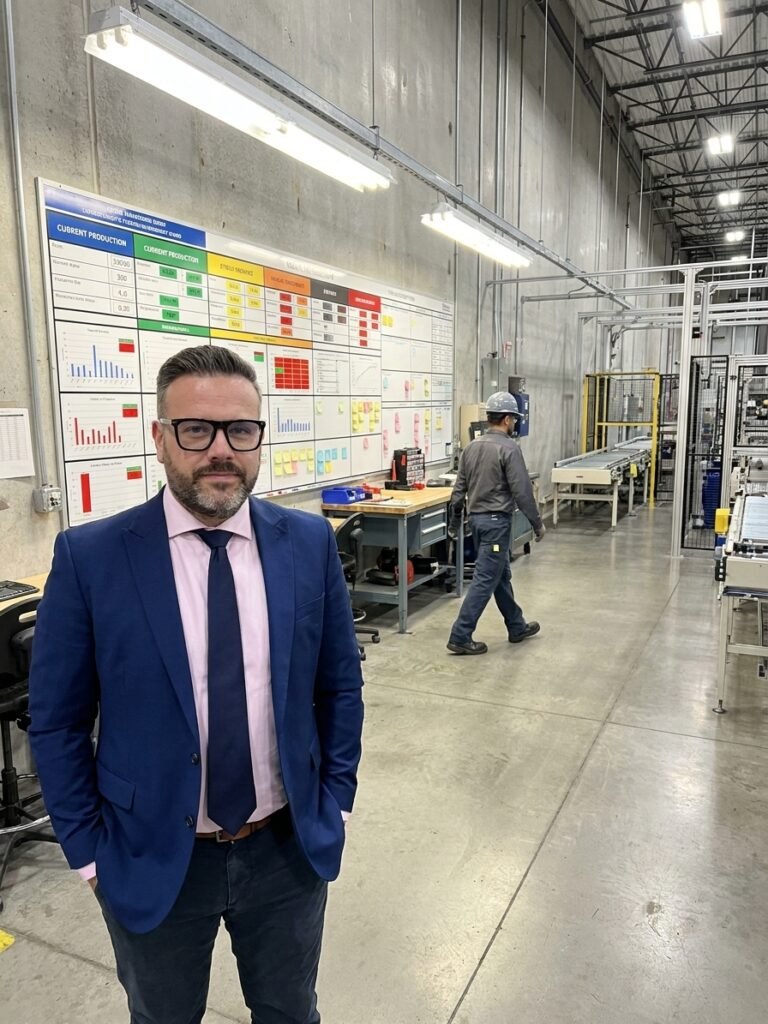
If you only clean the machine, the dirt will return by the next shift. Step two forces the team to eliminate the sources of contamination and fix inaccessible areas. If a fitting constantly leaks fluid, you install a drip tray or replace the seal. If dust falls from an exposed overhead conveyor, you mount a guard.
The core principle here is uncompromising: if cleaning a specific component takes more than five minutes, you are treating a symptom, not the root cause. You must engineer the problem out of the process. Only after the contamination sources are eliminated can you establish sustainable cleaning and inspection standards.
These standards must be highly visual. Operators need one-page SOPs, colour-coded gauges, and direct machine-side checklists. They need exact criteria for what constitutes a pass, a watch condition, and an immediate line-stop trigger. Ambiguity destroys standardised work.
Training Operators to Detect Early Failure Modes
In steps four and five, you train operators in basic mechanical, pneumatic, and hydraulic principles. They are not training to become maintenance technicians. They are training to understand the physics behind the parameters they monitor, moving beyond simply reporting that a machine stopped.
A trained operator will report that a specific bearing on the B-side is vibrating abnormally and running hot. An untrained operator will only notice when the spindle seizes completely and halts production. This shift from reactive reporting to predictive observation is exactly what drives down your Mean Time Between Failures (MTBF).
At this stage, operators begin executing autonomous inspections using customised Jishu Hozen checklists. They log their findings, track degradation trends, and follow a strict escalation matrix. This dictates exactly when they handle the issue themselves and when they must call in professional maintenance support.
Technology without a culture of equipment ownership is just expensive decoration.
The Direct Link Between AM, OEE, and Quality
Autonomous maintenance directly attacks availability and performance losses in your Overall Equipment Effectiveness (OEE). By eliminating minor stops for trivial faults, operations stabilise. When machines run within their designed parameters, process capability stabilises alongside them, directly reducing scrap and rework.
In automotive manufacturing, where PPM (Parts Per Million) targets are ruthlessly low, a dirty or degraded machine will produce out-of-tolerance parts immediately. Proper lubrication ensures consistent mechanical movements. Consistent movements produce consistent, in-spec components. Operator awareness prevents the mass production of defective lots.
Expected Impact of Sustained Autonomous Maintenance
Common Implementation Failures
Most autonomous maintenance programs fail because management treats them as a short-term project rather than a permanent operational shift. If the AM tasks are not integrated into the standard daily work and operator performance evaluations, they will be abandoned the moment a production surge hits.
Another fatal error is rushing the steps. If you jump straight to writing inspection standards before you have eliminated the sources of contamination (Step 2), the standards will be useless within a week. Similarly, you cannot demand hydraulic inspections from an operator who has not received the fundamental mechanical training defined in Step 4.
Finally, the maintenance department must not feel threatened. Professional technicians must understand that operators are taking over preventative care, not stealing their core expertise. If the maintenance team resists the cultural shift, the collaboration will collapse into silence and finger-pointing.
Industry 4.0 Amplifies the Culture, Not the Other Way Around
Digitalisation gives operators better tools. IoT sensors provide real-time condition data. Tablets at the line display dynamic checklists and allow operators to log abnormality flags directly into the CMMS. Predictive algorithms highlight wear patterns before they become critical failures.
However, these technologies do not replace the fundamental principle of Jishu Hozen. I have audited factories that invested heavily in predictive maintenance systems but still suffered catastrophic unplanned downtime because operators ignored the alarm notifications on their screens. An operator who fundamentally understands the machine will always outperform an operator who blindly relies on the interface.
Autonomous maintenance is a daily ritual of responsibility. The machine you actively monitor, clean, and understand will return that reliability. The machine you ignore will fail catastrophically at the exact moment you need it most.