Herzberg’s Two-Factor Theory Applied to Quality Management Systems
ISO 9001 procedures, calibrated gauges, and operator training prevent failure. They do not drive excellence. Here is how to diagnose…
102 articles
ISO 9001 procedures, calibrated gauges, and operator training prevent failure. They do not drive excellence. Here is how to diagnose…
Standard risk tools like FMEA systematically miss interaction failures. The pre-mortem is a structured 90-minute exercise that exploits prospective hindsight…
Unfinished corrective actions do more than violate ISO 9001 deadlines. They act as cognitive parasites that drain the mental bandwidth…
Cross-functional processes degrade predictably when maintenance is voluntary. Here is how to identify governance gaps and assign ownership before shared…
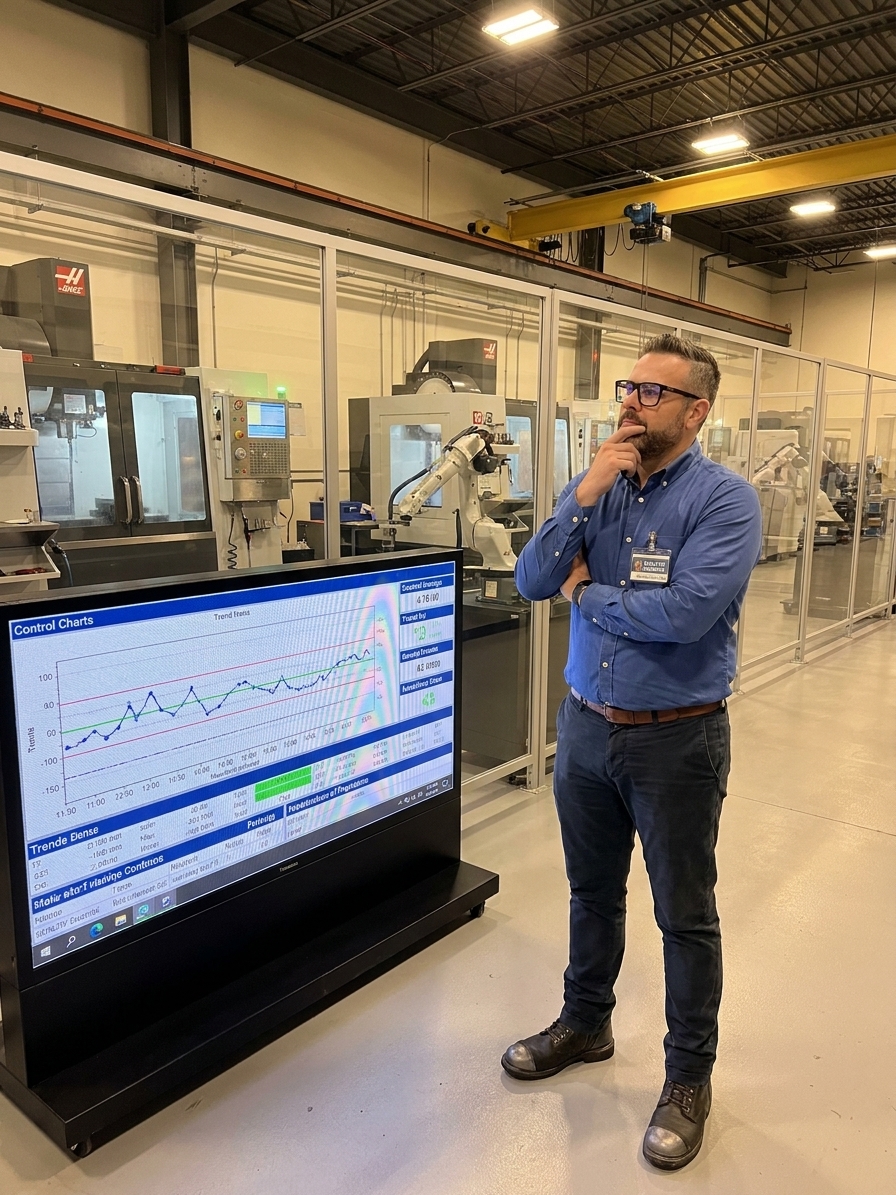
Threshold-based quality systems fail when deterioration happens one PPM at a time. Here is how to build trajectory monitoring that…
Observation changes behaviour. Every audit, Gemba walk, and inspection captures peak effort, not typical performance. Quality systems must account for…
Why lean transformations and cycle-time reductions frequently trigger dormant defects. A practical framework for evaluating legacy process controls before eliminating…
Organisations evaluate quality initiatives by their most dramatic moment and final act, not their actual performance. Here is how to…
Manufacturing organisations routinely override years of stable SPC data because of a single vivid defect. Here is how to engineer…
Why perfectly calibrated SPC charts, clean audits, and zero-defect automated lines can still produce catastrophic escapes — and how to…