Closed-Loop
Quality Management: When Your Quality System Stops Being a Chain of
Disconnected Reactions — and Becomes a Self-Correcting Organism That
Heals Itself
You’ve seen it a hundred times. A defect escapes. The customer
complains. The quality team investigates. Root cause is found.
Corrective action is defined. A report is filed. Everyone nods. Three
months later, the same defect appears again — from a different line, a
different shift, a different supplier. Not because the root cause was
wrong, but because the loop was never closed. The detection didn’t feed
the prevention. The correction didn’t update the standard. The learning
didn’t reach the people who needed it most. What you have is not a
quality system. It’s a quality sequence — a series of events that happen
one after another but never connect back to the beginning. Closed-Loop
Quality Management changes that. It transforms your quality system from
a linear chain of reactions into a circular, self-reinforcing organism
where every signal feeds back into the system and makes it stronger.
Here is how it works — and why most organizations are still running open
loops without realizing it.
The
Open Loop Problem: Why Most Quality Systems Are Broken — But Don’t Know
It
Picture a typical manufacturing plant. Something goes wrong — a
dimensional defect, a surface blemish, a functional failure. What
happens next?
The inspection team catches it (hopefully). A quality engineer logs
it. An 8D or CAPA is opened. A team gathers. Root cause analysis is
performed. Corrective actions are implemented. The CAPA is closed. The
report is archived.
Done. Right?
Not even close.
Here’s what actually happens in most organizations: the root cause
analysis identifies the immediate trigger — operator error, machine
drift, supplier nonconformance. The corrective action addresses that
specific trigger. The CAPA is closed with a tidy conclusion. And the
learning… disappears into a database that nobody reads, a SharePoint
folder that nobody opens, a filing cabinet that gathers dust.
Six months later, the same type of defect recurs. Different operator,
same root cause category. Different machine, same failure mode.
Different supplier, same gap in incoming inspection. Why? Because the
loop was never actually closed. The signal was generated, processed, and
acted upon — but it was never fed back into the system in a way that
permanently changed its behavior.
This is the open loop problem. And it is the single most common
structural defect in quality management systems worldwide.
What Is Closed-Loop
Quality Management?
Closed-Loop Quality Management (CLQM) is not a software product,
though software can enable it. It is not a standard, though ISO
9001:2015 hints at it through its risk-based thinking and PDCA
structure. It is not a methodology, though it borrows from PDCA, 8D, Six
Sigma DMAIC, and lean thinking.
CLQM is an architecture. It is the deliberate design of your quality
system so that every output becomes an input. Every detection triggers
not just a reaction, but a permanent modification of the system itself.
Every lesson learned changes the rules of the game — not just for the
team that learned it, but for every team, every line, every plant in
your organization.
Think of it this way: an open-loop system is like a thermostat that
measures temperature but has no connection to the heater. It can tell
you it’s cold, but it can’t make it warmer. A closed-loop system is a
thermostat connected to a furnace — it measures, decides, acts, and
measures again. The feedback is automatic. The correction is
continuous.
In quality management, this means building five interconnected loops
that feed each other in perpetuity.
The Five Loops of
Closed-Loop Quality
Loop 1: Detection to
Containment
The first loop is the fastest. It operates in hours, sometimes
minutes. A defect is detected — by an operator, by automated inspection,
by statistical process control, by a customer. The immediate response is
containment: stop the bleeding, quarantine suspect product, protect the
customer.
But in a closed-loop system, containment does more than isolate. It
feeds information forward. The containment data — what was found, where,
how much, when — becomes the input for Loop 2. The detection method
itself is evaluated: did it catch the defect at the right time? Was the
reaction fast enough? Is the sampling plan adequate?
Most organizations do containment well. The gap is in what happens
next. The containment data is treated as a cost to be minimized rather
than a signal to be amplified. In a closed-loop system, every
containment event is a data point that sharpens the detection system
itself.
Loop 2: Containment to Root
Cause
This is where many organizations stall. The root cause investigation
is conducted — often under time pressure, often by people who have other
full-time jobs, often with tools they were trained on once and haven’t
used since. The result is frequently a “root cause” that is actually a
proximate cause: “operator did not follow procedure” when the real cause
is that the procedure was ambiguous; “machine drifted out of tolerance”
when the real cause is that preventive maintenance was deferred.
A closed-loop system enforces rigor here. It requires not just that a
root cause is identified, but that it is verified. This means testing
the hypothesis: if we remove this cause, does the defect disappear? If
we reintroduce it, does the defect return? This is the scientific method
applied to quality — and it is astonishing how many organizations skip
it.
The output of this loop is not just a root cause statement. It is a
validated understanding of the failure mechanism — the chain of events,
conditions, and decisions that allowed the defect to occur and escape.
This understanding becomes the input for Loop 3.
Loop 3: Root Cause to
Corrective Action
Corrective action is where the loop starts to close — or fails to.
The most common failure mode is the “administrative corrective action”:
retrain the operator, rewrite the procedure, add a sign-off. These
actions look good on a CAPA form but do nothing to change the system.
The operator was trained the first time. The procedure was written by an
engineer who never stood at the machine. The sign-off adds bureaucracy
without adding value.
In a closed-loop system, corrective actions are evaluated against a
hierarchy of effectiveness. The preferred action is elimination — can we
redesign the process so the failure is physically impossible? Poka-yoke,
foolproofing, design change. Next is prevention — can we build in
controls that detect the condition before it produces a defect?
Automated sensors, SPC with real-time alerts, process interlocks. Last
resort is detection — can we catch the defect before it reaches the
customer? Inspection, testing, final audit.
The key principle: corrective action must modify the system, not just
the behavior. If your corrective action relies on a human remembering to
do something differently, you have not closed the loop. You have added a
hope to the system.
Loop 4: Corrective
Action to Standardization
This is the loop that most organizations don’t even know exists. The
corrective action is implemented, the immediate problem is solved, and
everyone moves on. But the learning has not been standardized. The
control plan hasn’t been updated. The FMEA hasn’t been revised. The work
instructions haven’t been changed. The training materials still reflect
the old way of doing things.
Standardization is what converts a one-time fix into a permanent
improvement. It is the process of taking what was learned and embedding
it into the DNA of the system. Updated standards, revised control plans,
modified FMEA risk rankings, new inspection criteria, revised process
parameters — these are the mechanisms through which the loop truly
closes.
Without standardization, you are counting on individual memory to
preserve organizational learning. This is the tribal knowledge trap: the
fix exists only in the minds of the people who were there. When they
move on — to another line, another plant, another company — the learning
vanishes with them.
Loop 5: Standardization to
Detection
This is the loop that makes the system self-improving. The new
standards, updated control plans, and revised FMEAs don’t just prevent
the old problem from recurring — they create new detection capabilities
that catch future problems earlier.
The updated FMEA identifies new failure modes that weren’t considered
before. The revised control plan adds measurement points at critical
process steps. The improved sampling plan increases the probability of
catching drift before it produces defects. The updated training program
ensures new operators understand not just what to do, but why.
And when the next signal is detected — whether it’s the same type of
defect or something entirely new — the cycle begins again. Detection
triggers containment, which triggers root cause analysis, which triggers
corrective action, which triggers standardization, which enhances
detection. The loop is closed. The system learns. It gets stronger with
every cycle.
The Technology
Enabler: Why Now Is Different
Closed-Loop Quality Management has been conceptually possible for
decades. The PDCA cycle was popularized in the 1950s. The 8D methodology
originated at Ford in the 1980s. What’s different now is technology.
Modern quality management systems — whether purpose-built platforms
like SAP QM, Siemens Teamcenter, or cloud-native solutions like
MasterControl and Greenlight Guru — can automate the connections between
the five loops. A defect detected by automated inspection can trigger a
containment workflow within seconds. The containment data can
auto-populate a root cause investigation template. The root cause
analysis can link to a corrective action tracker with built-in
effectiveness verification. The corrective action can automatically flag
the relevant control plans, FMEAs, and work instructions for revision.
And the revised documents can be pushed to the shop floor in real time
via digital workstations and mobile devices.
But technology alone doesn’t close the loop. I’ve seen organizations
invest millions in quality management software and still operate with
open loops — because the software automates the process but doesn’t
enforce the discipline. The reports are generated, the workflows are
completed, the CAPAs are closed on time — but the learning still doesn’t
reach the people who need it, the standards still aren’t updated, and
the same defects keep coming back.
Technology is the enabler. Discipline is the differentiator.
How to Build a
Closed-Loop Quality System
Step 1: Map Your Current
State
Before you can close loops, you need to see where they’re open. Take
your last 20 significant quality events — customer complaints, internal
rejects, audit findings, CAPA actions. For each one, trace the full
chain: how was it detected? How was it contained? What root cause was
identified? What corrective action was taken? Was the root cause
verified? Were standards updated? Was the FMEA revised? Did the learning
reach other lines, other plants?
You’ll find gaps. Every organization does. The most common gaps are
between corrective action and standardization (the fix is implemented
but the system isn’t updated) and between standardization and detection
(the standards are updated but the detection systems don’t reflect the
new knowledge).
Step 2: Define the
Feedback Mechanisms
For each loop connection, define the specific mechanism that ensures
information flows from output to input. This could be a mandatory field
in the CAPA form (“Which documents require revision based on this
corrective action?”), an automated notification when a control plan is
flagged for update, or a monthly review where quality engineers from
different lines share lessons learned.
The key is that the feedback must be structural, not behavioral.
Don’t rely on someone remembering to update the FMEA — build it into the
workflow so it can’t be closed without it.
Step 3: Measure Loop Closure
What gets measured gets managed. Track the following metrics:
- Time to containment — from detection to
quarantine - Root cause verification rate — percentage of root
causes that are experimentally verified - Standardization rate — percentage of corrective
actions that result in updated standards, control plans, or FMEAs - Recurrence rate — percentage of defects that recur
within 12 months, categorized by whether the original loop was fully
closed - Cross-pollination rate — percentage of lessons
learned that are shared across lines, shifts, or plants
The most telling metric is the last one. If your quality system
generates learning that stays localized — one line learns, the others
don’t — you have an open loop at the organizational level. The system
improves in one place but not everywhere.
Step 4: Build the Culture
Closed-Loop Quality Management requires a culture that values
learning over blame, systems over individuals, and prevention over
detection. This means:
- Celebrate loop closures, not just problem
solutions. When a team not only fixes a problem but updates the
standards, shares the learning, and verifies that the fix is permanent,
that’s worth recognizing publicly. - Punish recurrence, not occurrence. A defect that
happens once is a signal. The same defect happening twice because the
loop wasn’t closed is a system failure. Focus accountability on the
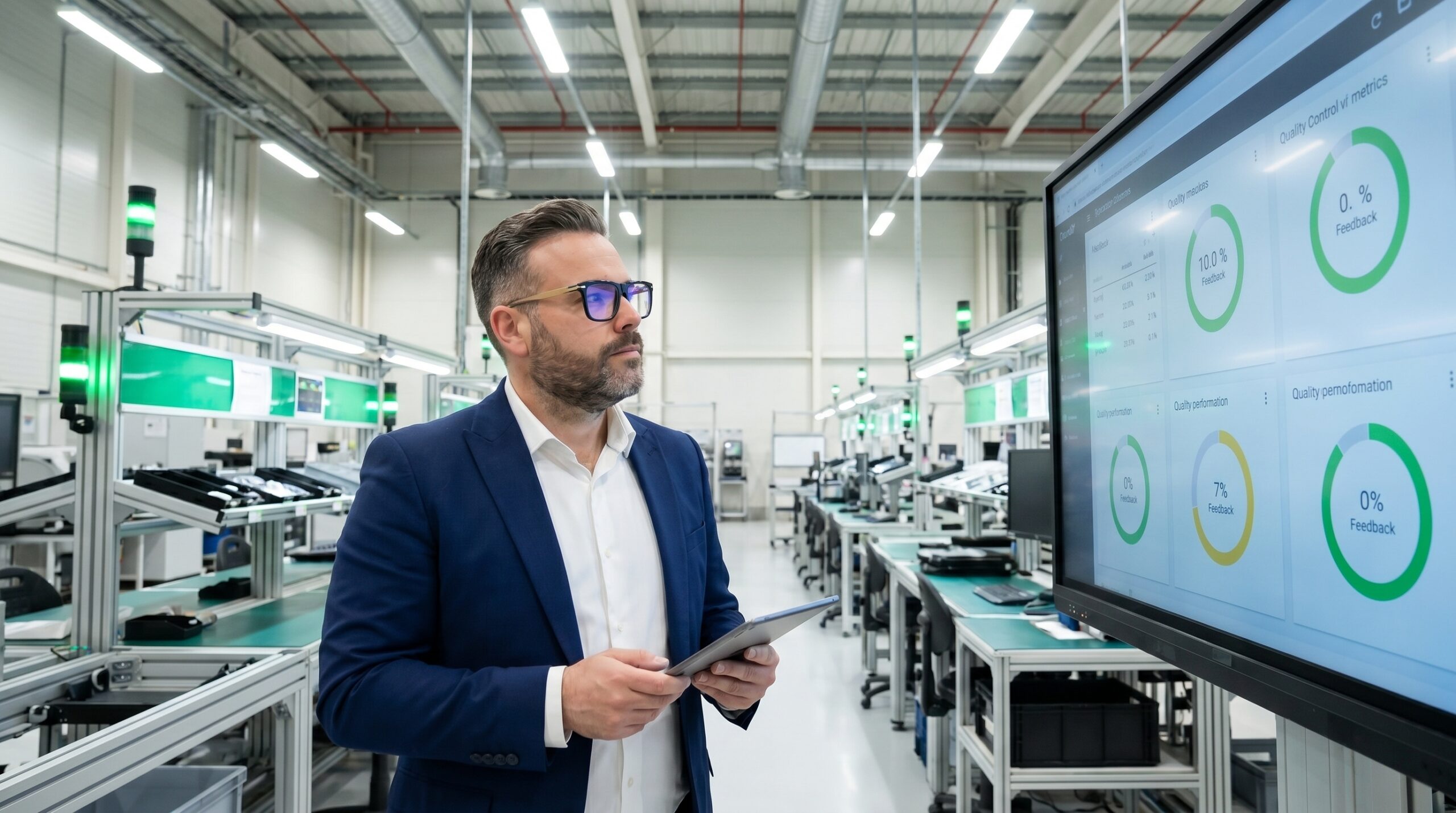
second occurrence. - Make it visible. Use visual management — boards,
dashboards, screens — to show the status of every open loop. Open CAPAs,
pending document revisions, unverified root causes, unshared lessons.
Visibility creates urgency.
The Hidden Cost of Open
Loops
Organizations that operate with open loops don’t just suffer from
recurring defects. They suffer from a slow erosion of credibility. When
the same problems keep coming back, operators stop believing in the
quality system. Engineers stop investing effort in root cause analysis
because they’ve seen too many good investigations lead to nothing.
Managers start viewing quality as a cost center rather than a value
driver.
The cost of open loops is not just the direct cost of defects —
scrap, rework, warranty claims, customer penalties. It’s the indirect
cost of learned helplessness: the collective shrug when a quality
problem is announced, the unspoken belief that “we’ll fix it this time,
but it’ll be back.”
Closed-Loop Quality Management breaks this cycle. It demonstrates,
action by action, that the system works. That when a problem is
identified, it stays solved. That when learning is generated, it is
shared. That when a standard is set, it is maintained. Over time, this
builds something no audit can measure: trust in the quality system
itself.
A Personal Observation
In twenty-five years of quality management across automotive,
industrial, and electronics manufacturing, I can count on one hand the
organizations I’ve seen that truly operate closed-loop quality systems.
Not because it’s difficult — the concept is straightforward — but
because it requires a discipline that most organizations are unwilling
to sustain. It’s easier to close the CAPA than to update the FMEA. It’s
faster to retrain the operator than to redesign the process. It’s
simpler to file the report than to share the learning.
But the organizations that do sustain it — the ones that close every
loop, every time, without exception — are the ones that achieve
zero-defect performance not through heroic effort, but through systemic
capability. They don’t work harder. They work smarter. And their quality
systems don’t just react. They learn. They evolve. They heal
themselves.
That is the promise of Closed-Loop Quality Management. Not perfection
on the first try, but continuous improvement through disciplined
feedback. Not a quality system that never fails, but one that never
fails the same way twice.
Peter Stasko is a Quality Architect with 25+ years of experience
transforming manufacturing quality systems across automotive,
industrial, and electronics industries. He specializes in building
organizations where quality is not a department but a capability —
embedded in every process, practiced by every person, measured in every
product.