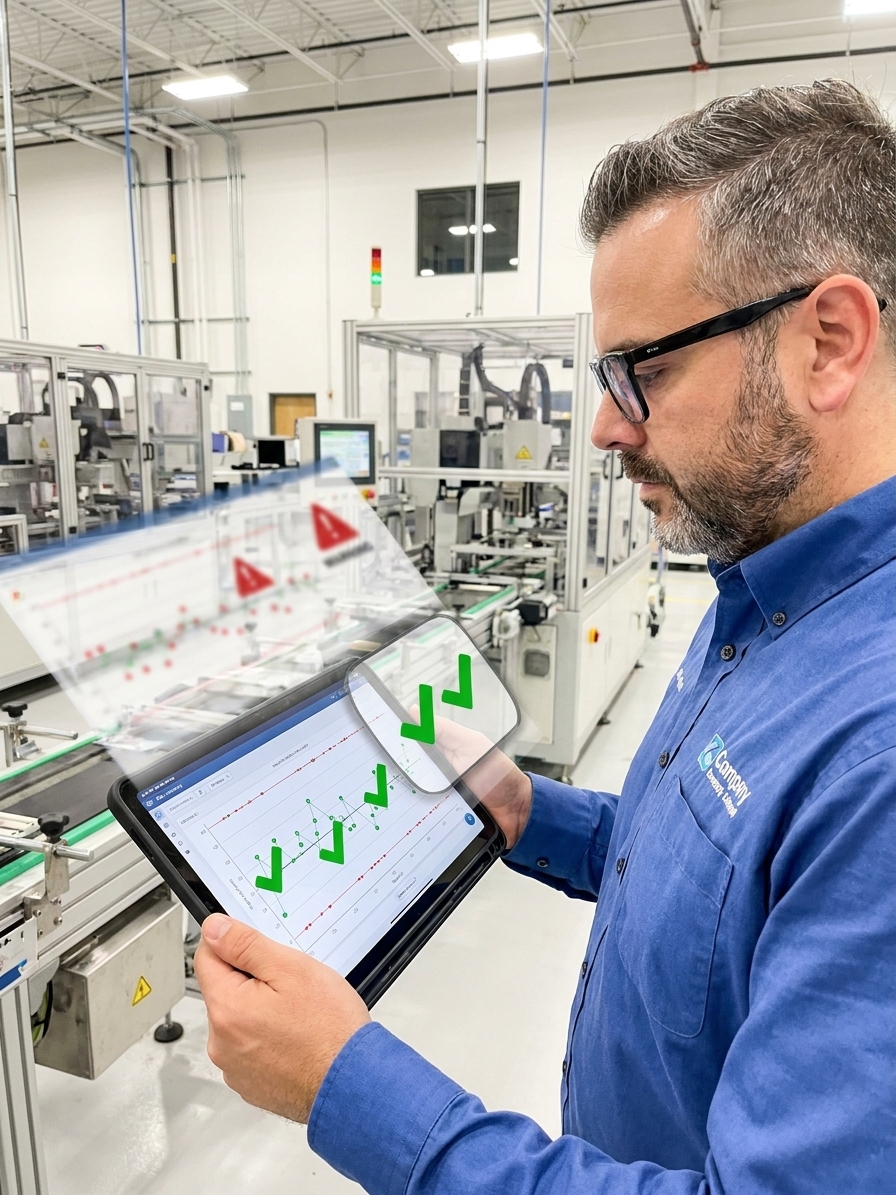
Confirmation bias is the tendency to search for, interpret, and recall information that confirms existing beliefs while ignoring evidence that contradicts them. In manufacturing quality, it is an operational hazard, not merely a psychological curiosity. Organisations collect mountains of SPC data, run exhaustive 8D investigations, and still miss the signals that matter because the humans interpreting the data already decided what they would find.
The mechanism is attention allocation. When an inspector expects a part to pass, their visual system applies less scrutiny. The brain fills informational gaps with assumptions. The part looks acceptable, so it must be acceptable. This is why a supplier return or a customer line shutdown often surprises a quality team that had the data to prevent it. They were looking at the evidence, but only the evidence that agreed with their conclusions.
You cannot eliminate this bias through willpower. Telling engineers to be objective does not work because the bias operates below conscious awareness. The defence must be structural. Quality systems must be engineered to force the consideration of disconfirming data, whether through blind sampling protocols, independent control limit calculation, or formal red-team challenges during root cause investigations.
How Bias Distorts Inspection and Root Cause Analysis
Inspector expectations physically alter inspection outcomes. When a shift supervisor tells an inspector a batch is probably fine, the inspector misses significantly more defects than one told to watch carefully. This is not a character flaw or a lack of diligence. It is a documented cognitive mechanism where the brain conserves effort when the expected outcome is positive.
The same distortion destroys root cause analysis. When an investigation team forms a strong early hypothesis, usually pointing at operator error or raw material, the investigation bends toward confirming it. The team asks leading questions, gathers supportive data, and dismisses contradictory evidence. This is why so many 8D reports end with retraining as the corrective action, and why the exact same defects recur three months later.
The corrective action confirmed the hypothesis, but it did not solve the problem. I have audited plants where the 8D documentation was flawless, the root cause analysis was perfectly formatted, and the defect rates never moved. The teams were highly competent at building a case for what they already believed. They were just blind to the evidence that proved them wrong.
The Corruption of SPC and Data Integrity
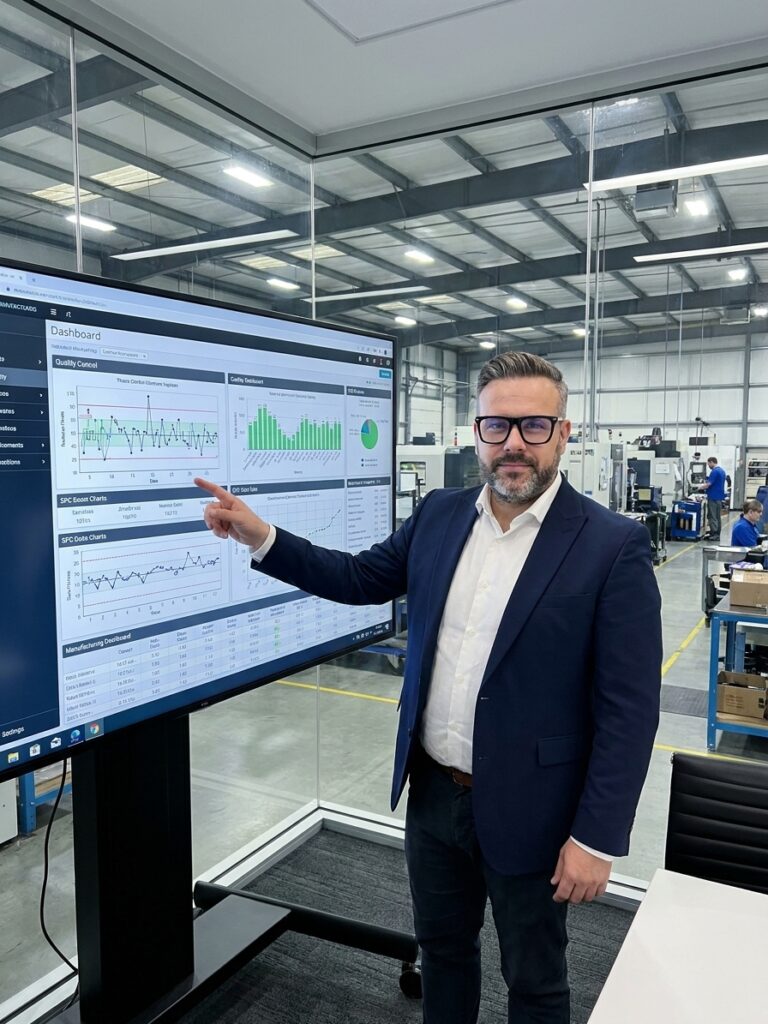
Statistical process control was designed to be objective. Control charts do not have opinions. Capability indices do not play favourites. Yet confirmation bias enters SPC through the humans who create the charts, select the data, and interpret the points. The bias infects the methodology itself through subjective decisions made before the data is even plotted.
Consider which data points get excluded as special causes and which get included as common cause variation. Consider which characteristics get charted and which are ignored. Consider which control limits get recalculated and which stay frozen. A process engineer who believes a process is capable will unconsciously set wider limits, exclude more out-of-control points, and choose charting methods that smooth variation.
Confront that same engineer with a process they distrust, and they will set tighter limits, investigate every anomaly, and choose methods that highlight variation. Same process, same raw data, entirely different conclusions. The difference is not the data. The difference is the expectation the analyst brought to the desk.
Trusted vs. Distrusted Supplier Evaluation
Trusted supplier bias
- Dimensional deviation dismissed as acceptable measurement error
- Late delivery recorded as an unavoidable scheduling anomaly
- Audit finding downgraded to a minor observation
- Process drift accepted without a corrective action request
Distrusted supplier bias
- Identical deviation triggers full containment and 8D
- Late delivery cited as evidence of systemic logistics failure
- Minor audit finding escalated to a major nonconformance
- Normal process variation flagged as a critical stability risk
Supplier Quality and the Benefit of the Doubt
Supplier quality management is fertile ground for confirmation bias. Once a supplier achieves PPAP approval and builds a quality history, the organisation develops a belief that the supplier is good. This belief then shapes how incoming inspection is conducted, how triennial audits are scored, and how deviations are dispositioned.
A supplier with a strong track record gets the benefit of the doubt. A minor dimensional deviation on an incoming part is dismissed as acceptable measurement error. A missed delivery is a scheduling fluke. Meanwhile, a supplier with a poor history faces the opposite bias. Every deviation is evidence of systemic failure, and every late delivery proves they cannot be trusted.
Sometimes the poor-quality supplier has genuinely improved their process, but your organisation cannot see it because the bias has already convicted them. And sometimes the certified, trusted supplier has been cutting corners on their end-of-line testing for years, and your organisation cannot see it because the bias has already acquitted them.
Management Reviews and Metric Manipulation
ISO 9001 management reviews are intended as objective assessments of quality system performance. In practice, they frequently become exercises in confirming that the system works as expected. Managers arrive with beliefs about what is going well. They review dashboards designed to show the metrics that matter to them. They ask questions that elicit answers consistent with their expectations.
When a metric trends downward, the immediate response is often to question the data rather than investigate the process. When a metric trends upward, the response is immediate praise rather than verifying the gain. Managers operate under severe time constraints and a strong institutional need to believe the systems they oversee are functioning. Confirmation bias provides that comfort while engineering the blind spots.
This dynamic creates an environment where dashboards are engineered to reassure rather than inform. The cost is massive but rarely attributed to bias. It surfaces as recurring internal defects, unanticipated customer escapes, and audit nonconformances that shock everyone because the internal data always indicated the process was stable.
If your data always tells you exactly what you expected to hear, your measurement system is broken or your bias is filtering the truth.
Structural Defences: Blind Analysis and Pre-Registration
The most effective structural defence is blind analysis. Separate the analyst from the context that triggers expectations. In visual inspection, implement blind sampling where the inspector does not know the source supplier or the previous batch results. In SPC, have the initial control limits calculated and verified by an engineer who is not the process owner.
In root cause analysis, present the investigation team with the raw data before revealing the incident context. Give them the control charts, the capability histograms, and the measurement results without the narrative of what went wrong. Let them construct the hypothesis from the data, rather than fitting the data to a pre-assigned narrative.
Pre-registration forces discipline. Before beginning an investigation, require the team to formally write down their primary hypothesis and their planned analysis path. This creates a documented record. It makes it significantly harder to unconsciously revise the hypothesis after seeing the data to fit a convenient conclusion.
This is standard practice in clinical trials regulated by the FDA. It should be standard practice in manufacturing root cause analysis. If your quality system allows investigators to retroactively change their hypothesis to match the data they found, the investigation is compromised from the start.
Disconfirming Evidence Protocol for 8D Investigations
- 01Data presentationTeam reviews raw defect data, SPC charts, and parameters without incident context
- 02Hypothesis generationTeam writes down the primary theory and the exact data that would prove it wrong
- 03Disconfirming searchTeam is mandated to spend time looking only for evidence that contradicts the theory
- 04EvaluationAssess if the hypothesis survives the active search for disconfirming evidence
Red Teams, Diverse Perspectives, and Leadership Tone
Assign a red team or an explicit devil's advocate during complex failure investigations. This is not a contrarian exercise; it is a structured quality function. Their sole job is to find the evidence that contradicts the prevailing theory. They must ask what would have to be true for the team to be wrong, and where that specific data is located.
Confirmation bias thrives in homogeneous engineering groups. People with identical training tend to share identical expectations and identical blind spots. Deliberately introduce diverse perspectives. If the quality team blames the material, bring in the process engineer. If the process team blames the machine, bring in the operator who actually runs it.
Ultimately, confirmation bias is a leadership challenge. If leaders punish teams for bringing bad news, the bias will flourish. If leaders demand quick answers and simple narratives over rigorous methodology, the bias will flourish. The alternative is a culture of disciplined inquiry that values accuracy over comfort and truth over consensus.
The most dangerous form of confirmation bias in manufacturing is the belief that your organisation does not have it. The defects you miss will not be the ones you looked for and failed to find. They will be the ones you never thought to look for, because you already knew they could not be there.