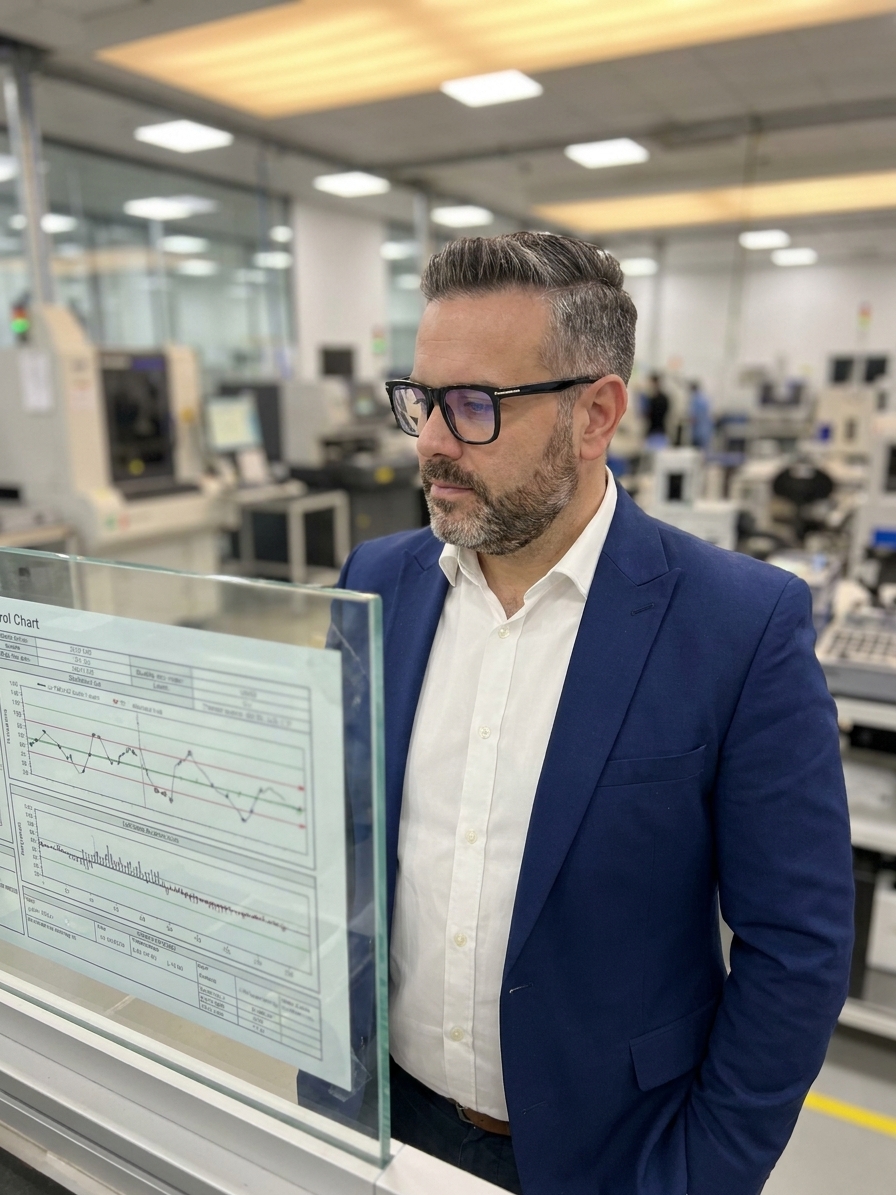
A senior quality engineer stares at an oscillating control chart showing out-of-control signals. He drafts a corrective action based on twenty years of experience: tighten tolerances, increase inspection frequency, add a secondary operation. He is confident and entirely wrong. The oscillation is a tool wear signature amplified by a gauge interaction nobody checked. A twelve-dollar measurement fixture fix resolves it.
This is the Einstellung Effect, a cognitive bias where existing knowledge actively blocks the discovery of better solutions. First documented by psychologist Abraham Luchins in 1942, the phenomenon shows that learned expertise actually reduces problem-solving ability when conditions change.
I have audited plants where this cognitive trap silently drains resources. Quality organizations institutionalise it through standardised CAPA databases and rigid problem-solving procedures. The result is recurring defects, misallocated engineering hours, and corrective actions that perfectly address symptoms while root causes remain untouched.
How Cognitive Rigidity Destroys CAPA Loops
Every quality professional has watched a corrective action close successfully, only for the identical nonconformance to resurface six months later. Standard blame falls on inadequate root cause analysis. The reality is more dangerous. The team executed their methodology perfectly for the wrong problem category.
Consider a welding operation producing porosity defects. The quality team applies their proven playbook: gas flow adjustments, material cleanliness checks, parameter optimisation. Three corrective actions later, the porosity persists. The actual cause was a supplier changing the coating chemistry on the filler wire without notification.
The team's deep expertise in welding process variables actively blinded them to supply chain variables. Their mental set was process-centric. The failure was supplier-centric. The CAPA failed because the team was highly experienced in a specific direction that pointed away from the actual solution.
When a customer escapes a defect and the plant manager is standing in the quality office demanding containment, the engineering team reaches for the fastest familiar solution. Time pressure forces reliance on established mental pathways. The Einstellung Effect becomes a structural failure mode, locking the investigation into the wrong domain before data analysis even begins.
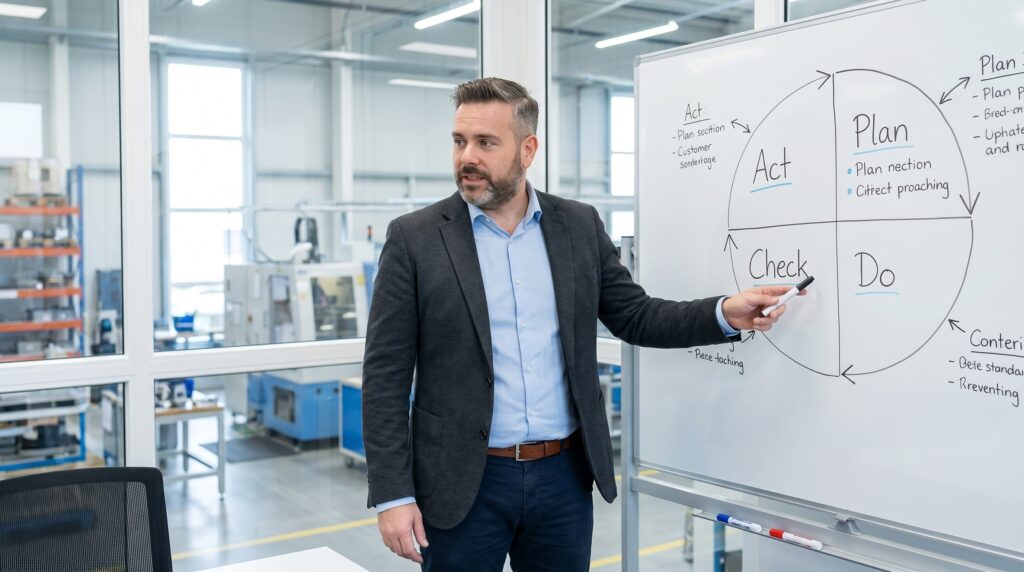
Why FMEA Teams Miss Novel Failure Modes
Failure Mode and Effects Analysis is highly susceptible to the Einstellung Effect. When a cross-functional team identifies potential failure modes, they bring collective experience to the table. This experience helps anticipate known risks but creates a powerful bias toward failure modes they have personally witnessed.
Novel failure modes—those emerging from new combinations, interactions, or operating conditions—often go unlisted. Nobody in the room has experienced them, so the risk assessment proceeds without them. The FMEA scores high on completeness while remaining fundamentally blind to the actual field failure.
An automotive supplier conducted an FMEA on a new sensor housing design. Every identified failure mode mirrored past experience: cracking, moisture ingress, connector failure. They completely missed a resonance issue that emerged only when the sensor was mounted at a specific, new orientation for this application.
The Structural Amplifiers in ISO 9001 Systems
Quality management standards require documented procedures, which are essential for consistency but simultaneously institutionalise mental sets. When a procedure mandates the 8D method for customer complaints, team thinking is constrained before the investigation begins. The framework drives efficiency but limits the solution space.
Corrective action databases compound this issue. The standard instruction to review previous similar CAPAs before starting a new investigation primes the team with historical solutions. This prevents reinventing the wheel but activates the Einstellung Effect before the new root cause analysis even starts.
Functional silos create their own barriers. Process engineers think in terms of process variables. Quality engineers think in terms of measurement systems and inspection. When a problem crosses functional boundaries, each group proposes solutions within their specific domain of expertise.
| System Component | Intended Function | Einstelling Vulnerability |
|---|---|---|
| CAPA Databases | Prevent reinventing solutions and ensure consistency. | Primes investigators with historical fixes, blocking novel root causes. |
| Standardised 8D Procedures | Structure the problem-solving process for speed. | Constrains thinking to expected problem categories before analysis begins. |
| Functional Silos | Build deep technical expertise in specific domains. | Directs cross-functional problems into single-domain solution pathways. |
| Audit Checklists | Ensure comprehensive coverage of standard requirements. | Tunnels auditor attention to familiar findings, hiding systemic risks. |
Why Your Best Engineers Are Most at Risk
Junior engineers, lacking deep experience, are often more open to novel solutions. They ask why things work and have not yet developed rigid mental sets. Their lack of pattern recognition forces them to investigate from first principles, which takes longer but occasionally reveals what the experts miss entirely.
Senior engineers have decades of pattern recognition. This allows rapid diagnosis of common problems but actively suppresses alternative cognitive pathways. When the brain matches a familiar pattern, it optimises for speed by shutting down exploratory analysis. This is neuroscience, not laziness.
Research in cognitive psychology demonstrates that experts in any domain are more susceptible to the Einstellung Effect than novices. Chess grandmasters, shown a board position resembling a familiar pattern but requiring a non-standard move, take longer to find the correct move than intermediate players. Their expertise actively interferes with their perception.
The most dangerous person in your quality organisation is the expert who has never been wrong solving the wrong problem.
Breaking the Mental Set During Investigations
Overcoming the Einstellung Effect requires deliberate structural friction. The Fresh Eyes protocol mandates that before any root cause investigation concludes, someone outside the initial analysis function reviews the data. Their job is not to solve the problem but to ask what assumptions the original team made.
A design engineer reviewing a manufacturing CAPA introduces a different mental model. They ask different questions about tolerances, material properties, and assembly interactions. This cross-functional disruption breaks the established cognitive pattern before it hardens into an 8D corrective action that addresses the wrong cause.
Cross-pollination from other industries bypasses domain expertise entirely. A pharmaceutical company struggling with contamination learns more from semiconductor cleanroom protocols than from standard pharmacopeia practices. An automotive supplier wrestling with measurement variation finds better answers in metrology labs than in AIAG manuals.
Disrupting the Einstellung Effect in Root Cause Analysis
- 01Trigger EventA nonconformance escapes or an internal defect rate spikes, triggering a CAPA.
- 02Initial AssessmentSenior engineers immediately pattern-match the symptoms to a historical fix.
- 03Forced RestatementThe team must articulate three alternative root causes before finalising the report.
- 04Fresh Eyes ReviewAn engineer from outside the function challenges the core assumptions.
- 05Validated SolutionRoot cause is selected based on evidence, not cognitive efficiency.
Implementing Formal Cognitive Checkpoints
Build a formal checkpoint into the corrective action process. Before the root cause is finalised, the team must articulate at least three alternative root causes and explain why each was rejected. This forces explicit consideration of possibilities outside their initial mental set.
Structured problem restatement is another critical mechanism. The statement we have a porosity defect becomes: our process is producing gas inclusions. It also becomes: our customer is receiving parts that fail X-ray inspection. And it becomes: our inspection system is detecting discontinuities that may or may not affect functional performance.
Each restatement activates different solution pathways. The first suggests process adjustments. The second suggests supply chain variables. The third questions whether the specification itself is appropriate. A team operating under the Einstellung Effect will pursue only the first pathway without hesitation.
Rotating problem ownership breaks rigid mental models. When the same individual owns a recurring CAPA, their framework becomes increasingly inflexible. Assigning a new lead to a recurring problem brings a fresh perspective. The new lead should conduct their own independent analysis before reviewing past findings to avoid being primed by previous conclusions.