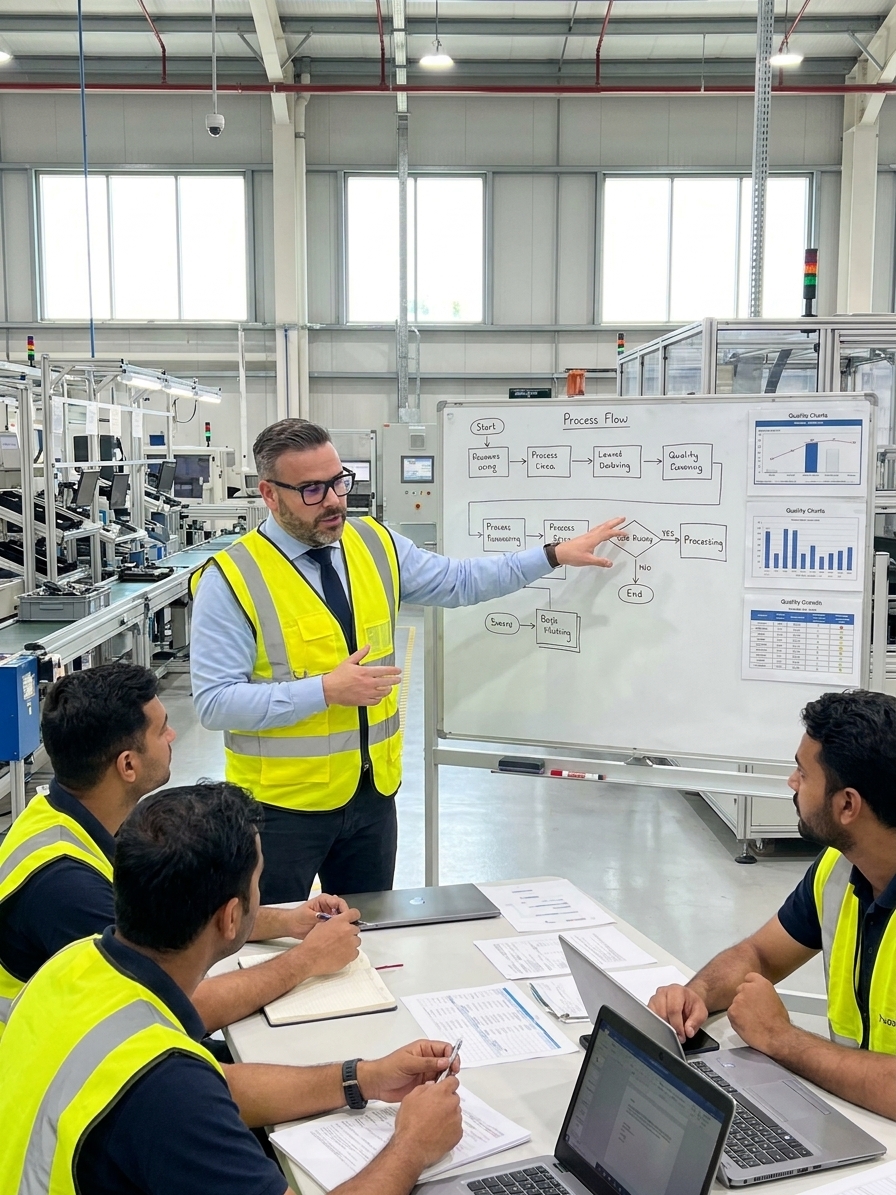
Scaling a single-plant Quality Circle programme across a multi-site network introduces direct financial penalties that standard accounting systems rarely capture. The operator intelligence that identified a drifting forming press at the origin plant does not transfer to the new facilities. Instead, the programme office replicates the meeting cadence and reporting templates. This preserves the administrative budget while systematically destroying the process intelligence that made the investment worthwhile.
Across two decades implementing ISO 9001 and AS9100 systems, I have watched multi-site rollouts hollow out floor-level problem-solving. The corporate office assumes the documentation generates the results. The operators, however, remain silent because the structural conditions—paid time, management presence, and local trust—were never funded at the new locations. The customer ultimately finances this intelligence gap through warranty claims and disrupted production.
The financial leakage manifests across three distinct areas: inflated containment costs driven by undetected process drift, duplicated engineering effort caused by failed initial corrective actions, and severe commercial penalties resulting from systemic audit failures. A programme designed to reduce the cost of quality instead becomes a fixed overhead that generates negligible return. The customer inherits the residual risk, and the supplier pays for the program in lost margin.
Volume Acceleration and the Economics of Containment
When a facility transitions from low-volume niche production to mass manufacturing, the financial exposure of a delayed response multiplies exponentially. A weekly Quality Circle meeting might have successfully contained a defect at a production rate of fifty units per month. At a scaled volume of five hundred units monthly, that same weekly cadence guarantees hundreds of defective parts reach the customer before the group even convenes to discuss the issue.
The containment window collapses under high-volume conditions, directly inflating the cost of external failure. Sorting, rework, and expedited shipping costs replace the cheap internal corrections that once defined the process. Nobody recalibrated the forum's data-collection speed or escalation path to match the new throughput. The process capability studies still show Cpk 1.33 on paper, but the economic reality on the floor is a massive spike in nonconformance charges.
This volume trap shifts the financial burden from the supplier's internal quality budget directly to the customer's incoming inspection line. The supplier saves an hour of operator time by maintaining the old meeting schedule. The customer pays for it through line stoppages and rejected lots. This is the economic mechanism that turns a poorly scaled problem-solving forum into a liability.
Circle Performance Economics Under Volume Scaling
The Financial Cost of Fragmented Process Focus
Product mix complexity imposes a different type of economic drain. A single Quality Circle attempting to monitor fifteen different product variants generates Pareto charts that mathematically dilute the defect signal. The top-three failure list spans eight variants, each with unique root causes. The group lacks the sustained focus to resolve any single failure mode before the shift change introduces a new product and a different problem set.
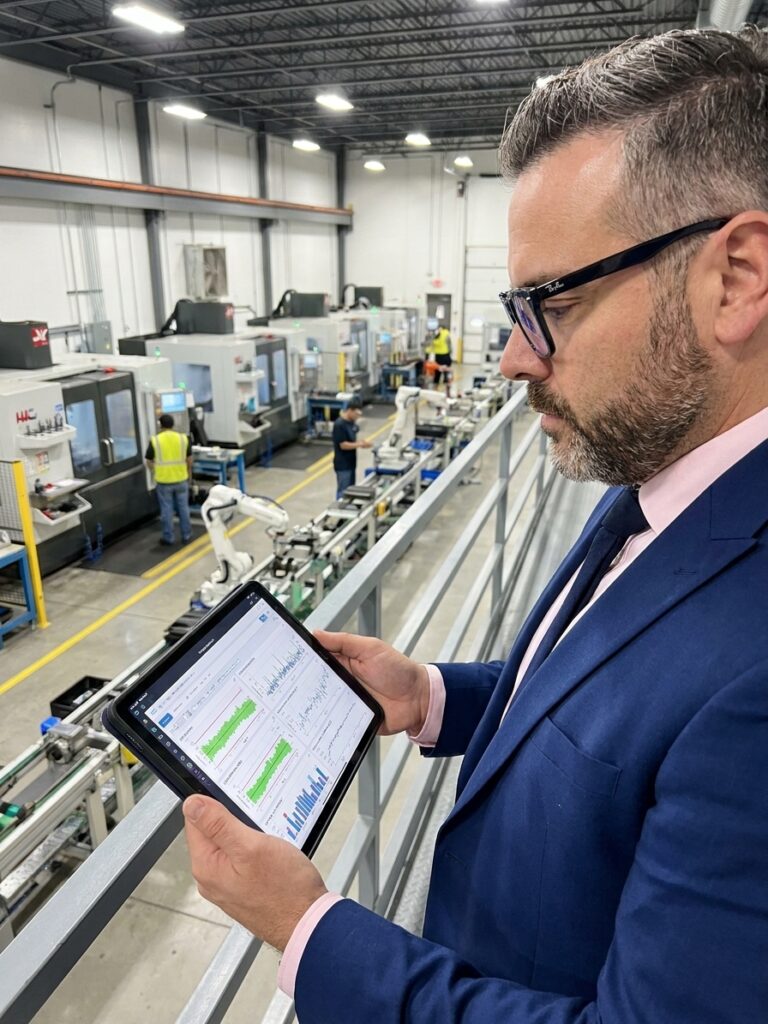
The resulting 8D reports reflect this fragmentation. Because the circle never achieved deep diagnostic focus, the root-cause analysis defaults to generic containment language. The supplier spends engineering hours writing and submitting reports that the customer's supplier quality engineer immediately rejects as inadequate. This cycle of rejected documentation burns premium engineering time without resolving the underlying failure.
High-mix environments require decentralised circles structured around specific process families or manufacturing cells. Funding separate, focused groups costs more in aggregate meeting time. However, this structure preserves the operator depth necessary to solve problems permanently. The alternative—funding a single, generic forum—guarantees recurring field failures and continuous, unbudgeted sorting costs.
The Template Rollout and the Devaluation of Problem-Solving
The most expensive scale-up failure is the template rollout. A corporate quality team duplicates the successful pilot plant's charter and distributes it globally. The management assumption is that the structure produced the financial return. In reality, the pilot plant succeeded because of undocumented conditions: the facilitator's skill in extracting information from quiet operators and the plant manager's willingness to fund countermeasures on the spot.
When only the template travels, the corporate office funds a documentation exercise. Operators attend the meetings because the schedule demands it, but they do not surface the cross-functional issues that cost money to fix. The circle becomes a paperwork generator designed to satisfy internal auditors. Meanwhile, the actual process drift continues to generate scrap, rework, and warranty claims that the quality system fails to capture or address.
A VDA 6.3 auditor evaluating multiple facilities quickly identifies this economic waste. The auditor finds circle minutes that are identically formatted and identically shallow across three different countries. Identical reports across geographically separated plants with different equipment indicate a dead process. The supplier has essentially funded the administrative overhead of a quality programme while realizing none of the defect-reduction benefits.
The distance between the operator who sees the defect and the report that reaches the customer is where quality escapes are born.
Internal Competition and the Suppression of Costly Findings
Multi-site networks create an escalation gap that actively destroys financial value. When a local circle identifies a systemic flaw—such as a material hardness variation caused by an unauthorized supplier substitution—that intelligence must climb through several management layers before reaching the corporate quality office. At each transfer point, commercial pressures incentivize burying the finding to protect cost targets or supplier relationships.
I have reviewed customer complaints where the plant's official 8D response directly contradicted the local circle's own minutes. The circle had correctly identified the expensive engineering fix required. The commercial team, attempting to avoid the capital expenditure, pressured the quality engineer to attribute the failure to operator handling in the official report. This fabricated root cause cost the business its credibility and ensured the defect would recur.
When the customer's supplier quality engineer discovers this contradiction during a process audit, the financial consequences escalate rapidly. The trust penalty is severe. The supplier loses any preferred-status pricing advantages and often faces mandatory incoming inspection mandates. The internal effort spent suppressing the circle's accurate intelligence ultimately costs the organization exponentially more than implementing the original countermeasure.
Template Rollout Versus Condition Replication
Template Rollout (High Waste)
- Identical charters distributed; topics aligned to corporate KPIs only
- Standard reporting templates submitted to a central quality function
- PFMEA updates processed through a shared engineering review gate
- Result: Administrative compliance with zero defect reduction
Condition Replication (High Return)
- Paid meeting time, budget, and voluntary participation guaranteed
- Circles self-select problems based on local process realities
- Facilitator competency and management support verified individually
- Result: Operator findings flow directly into specific 8D records
Systemic Audit Failures and the Network-Wide Penalty
A customer auditing a multi-site supplier does not merely evaluate a single facility; they assess the consistency of the network. If the corporate manual describes a robust problem-solving culture, and the first plant demonstrates living operator engagement, confidence rises. If the second plant presents identical, shallow documentation with no floor-level ownership, that confidence collapses entirely. The financial impact is immediate and severe.
The resulting audit finding is a systemic deficiency citation, not a minor nonconformance. Under IATF 16949, this triggers a corporate-level corrective action demanding proof of multi-site capability. Under AS9100, it initiates increased surveillance audit frequency across all registered sites. The dead programmes at underperforming plants suddenly impose massive certification costs and engineering burdens on the facilities that were performing well.
Scaling Quality Circles successfully requires standardising the conditions for success, not the meeting content. Every site must hold its circle during paid working time, provide a discretionary improvement budget, and connect operator findings directly to the PFMEA and 8D system. The corporate role is to verify that these structural investments exist. When every site owns its process, the network delivers the cost reduction and quality consistency that scale promises.