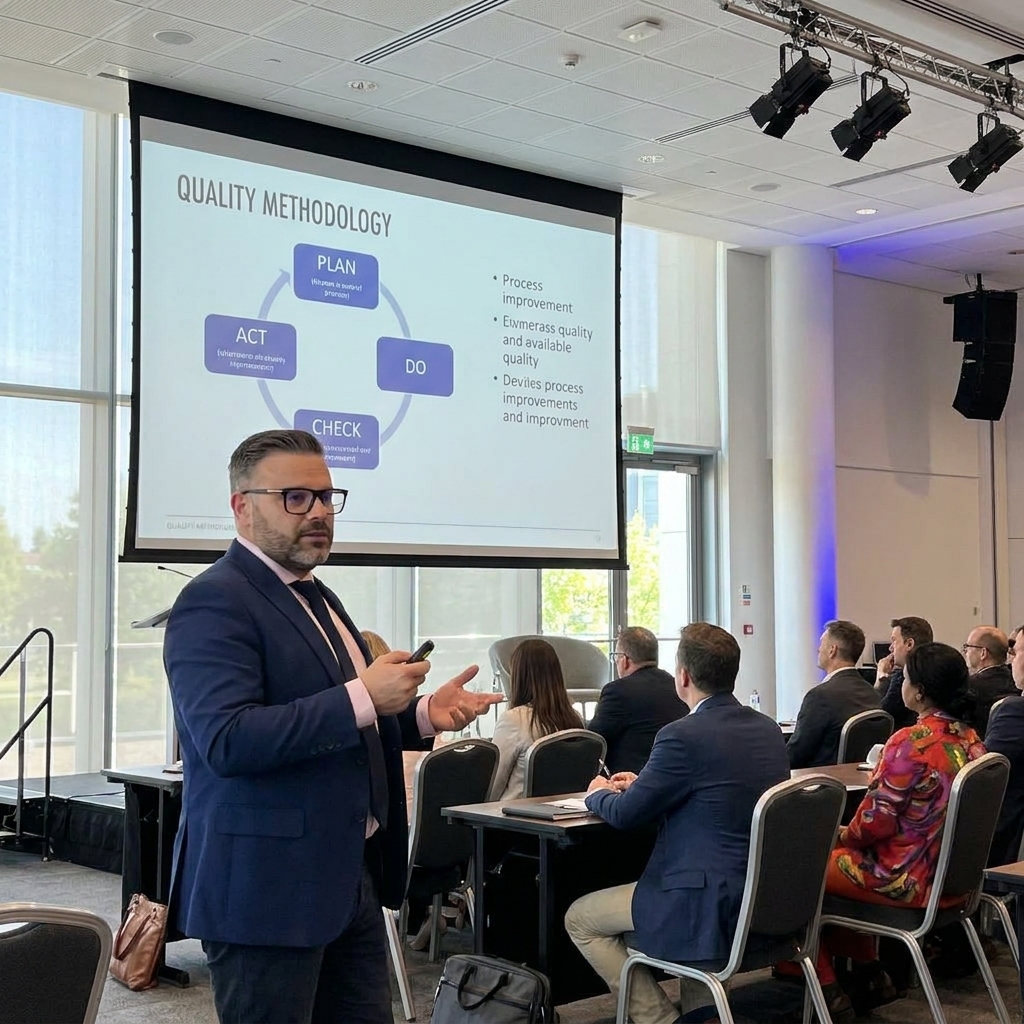
Quality transformations fail most often because they start everywhere at once. Plants deploy new ISO 9001 procedures, launch Lean campaigns, and mandate cross-functional teams in the same week, creating noise instead of systemic improvement. The result is documented activity without measurable process change.
I learned this sequence the hard way. Building a greenfield QA/QC department for over 900 employees at SNOP, and later implementing AS9100 at a major aerospace manufacturer, required a method that forced strict prioritisation. A framework ensures that resources target the constraints crippling delivery first, leaving secondary process issues for later.
The FOREAST method is the sequence I use to drive these transformations. It operates on the principle that discipline, data, and standardisation must precede any attempt to shift shop-floor culture. Skip the structural steps, and the culture resets to its baseline the moment external pressure disappears.
FOCUS: Identifying Critical Constraints Before Action
Attempting to fix every process deviation simultaneously exhausts engineering resources and yields marginal gains. The FOCUS stage demands a rigorous Pareto analysis of the cost of poor quality, scrap rates, and customer escapes. You must isolate the vital few processes driving 80% of the financial loss or delivery risk.
In an automotive stamping environment, this often means targeting a specific press line with chronic downtime rather than overhauling the entire maintenance system. Data from OEE (Overall Equipment Effectiveness) and historical 8D reports identifies the bottleneck. Effort is concentrated there until the mathematical baseline shifts.
The consequence of skipping this step is dispersed effort. Quality engineers chase individual defects rather than systemic failures, filling corrective action databases with low-impact entries. Concentrating resources on a validated constraint forces measurable Cpk improvement and frees capacity for the next target.
ORGANISE and REINFORCE: Structuring Teams for Change
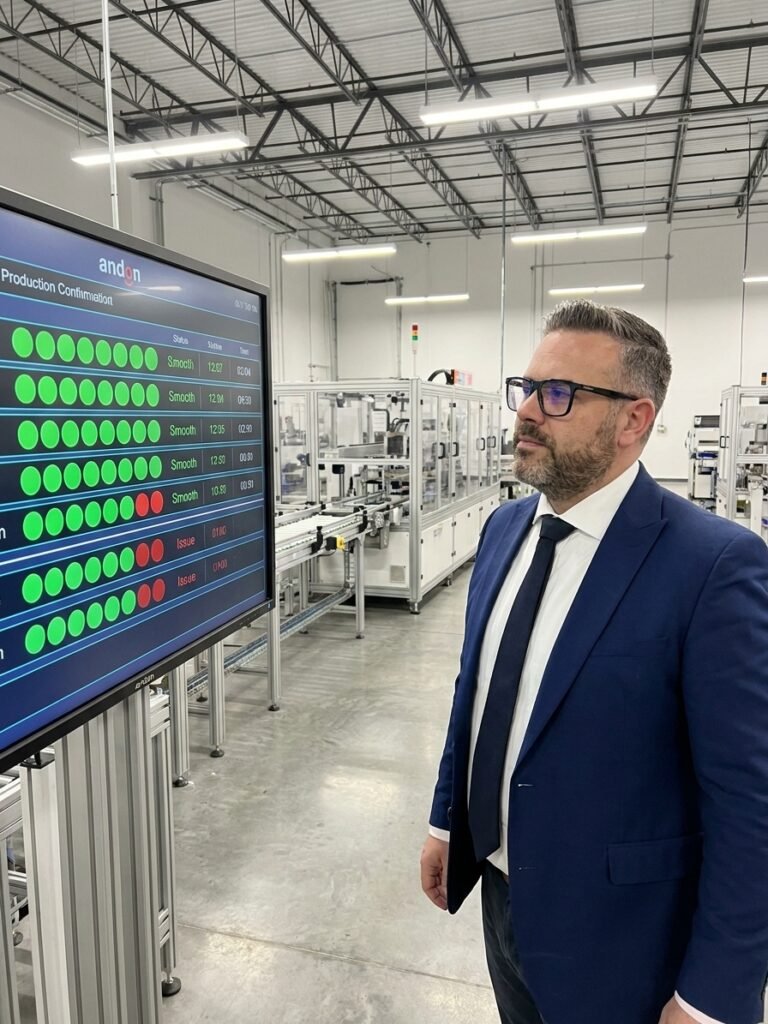
Once the constraint is defined, the ORGANISE phase structures the response. This means assigning a specific, cross-functional team to the targeted process line. In an IATF 16949 environment, this team needs clear mandates spanning engineering, production, and quality, rather than advisory input.
Rapid wins are useless if the process reverts to its former state. REINFORCE is the mechanism that prevents regression. It involves locking the new parameters into the control plan, updating the PFMEA (Process Failure Mode and Effects Analysis), and verifying that operators have the updated standard work instructions at the station.
Sustaining improvement requires removing the ambiguity that allows drift. When a process change is properly reinforced through layered process audits and revised training matrices, the new method becomes the default. The organisation builds a barrier against the old, inefficient way of working.
EXECUTE: Discipline Over Documentation
Implementation fails when execution is treated as a procedural formality. The EXECUTE stage is where theoretical process maps meet the reality of the shop floor. It requires verifying that specified torque values, cycle times, and measurement system analysis (MSA) criteria are followed without exception during the shift.
Many plants struggle here because management assumes that a revised procedure guarantees compliance. Execution demands physical verification. Supervisors must confirm that fixtures are locked out, gauges are calibrated, and the defined routing is followed, closing the loop between the engineering intent and daily practice.
Maintaining this discipline is what drives the routing verification KPIs I implemented at a major aerospace manufacturer. By tracking adherence to the defined process steps in real-time, rather than checking paperwork post-shift, we identified deviations immediately. This specific execution metric cut internal lead times by 97%.
ANALYSE: Driving Decisions Through Data
You cannot improve a process you do not measure rigorously. The ANALYSE phase deploys statistical process control (SPC) and capability studies to verify that the executed changes actually moved the needle. Data must be pulled directly from the measurement systems, not estimated from end-of-line audits.
Baseline Quality Thresholds
If the data shows a Cpk below 1.33, the execution failed, and the team loops back to the ORGANISE phase. Conversely, if the capability target is met, the focus shifts to statistical stability. Analysing the variance ensures the improvement is a result of the process change, not random chance or operator over-adjustment.
Data analysis must be ruthless. Excluding out-of-control data points without a documented 8D root cause is how plants fool themselves into false compliance. The numbers dictate whether the new process is ready for the wider system or requires another iteration of engineering review.
STANDARDISE: Locking in the Gains
Standardisation is the most misunderstood phase of a quality transformation. Teams often assume that writing an SOP (Standard Operating Procedure) is sufficient to standardise a process. True standardisation under FOREAST means integrating the verified improvements into the core quality management system, from PPAP (Production Part Approval Process) submissions to training records.
A standardised process operates independently of the individual who developed it. When a new operator joins the line, the control plan, the work instructions, and the visual management boards must train them to produce conforming parts. If the system relies on the tribal knowledge of a senior engineer, it is not standardised.
The Standardisation Hierarchy
- System CertificationAlignment with ISO 9001, IATF 16949, or AS9100 management frameworks.
- Core Process ControlPFMEA, Control Plan, and MSA updated to reflect the new process reality.
- Shop-Floor ExecutionVisual management boards, single-point lessons, and calibrated gauges at the point of use.
This integration is what separates a quick kaizen win from a structural transformation. By embedding the changes into the audit schedule, the organisation ensures that deviations from the new standard are caught immediately. The standard becomes the baseline for the next cycle of improvement.
TRANSFORM: Shifting the Quality Culture
The final phase, TRANSFORM, is the aggregate result of the preceding steps, not an independent initiative. A zero-defect culture is not achieved through posters or motivational seminars. It is achieved when operators trust their gauges, when supervisors enforce the control plan, and when engineering closes 8D loops effectively.
A quality transformation fails the moment the external pressure disappears; culture is just the system you enforce when no one is watching.
In aerospace manufacturing, this culture shift is heavily regulated by EASA, but the internal mechanics remain the same. When multidisciplinary teams execute disciplined root cause analysis and see the data-driven results, confidence in the system grows. The focus naturally moves from reacting to escapes to preventing process drift.
Methodologies and software platforms will continue to evolve, but the mechanics of quality engineering remain constant. By targeting constraints, organising disciplined execution, and locking in standardisation, plants build a resilient system. The transformation is complete when the adherence to the new standard becomes the default operational reflex.